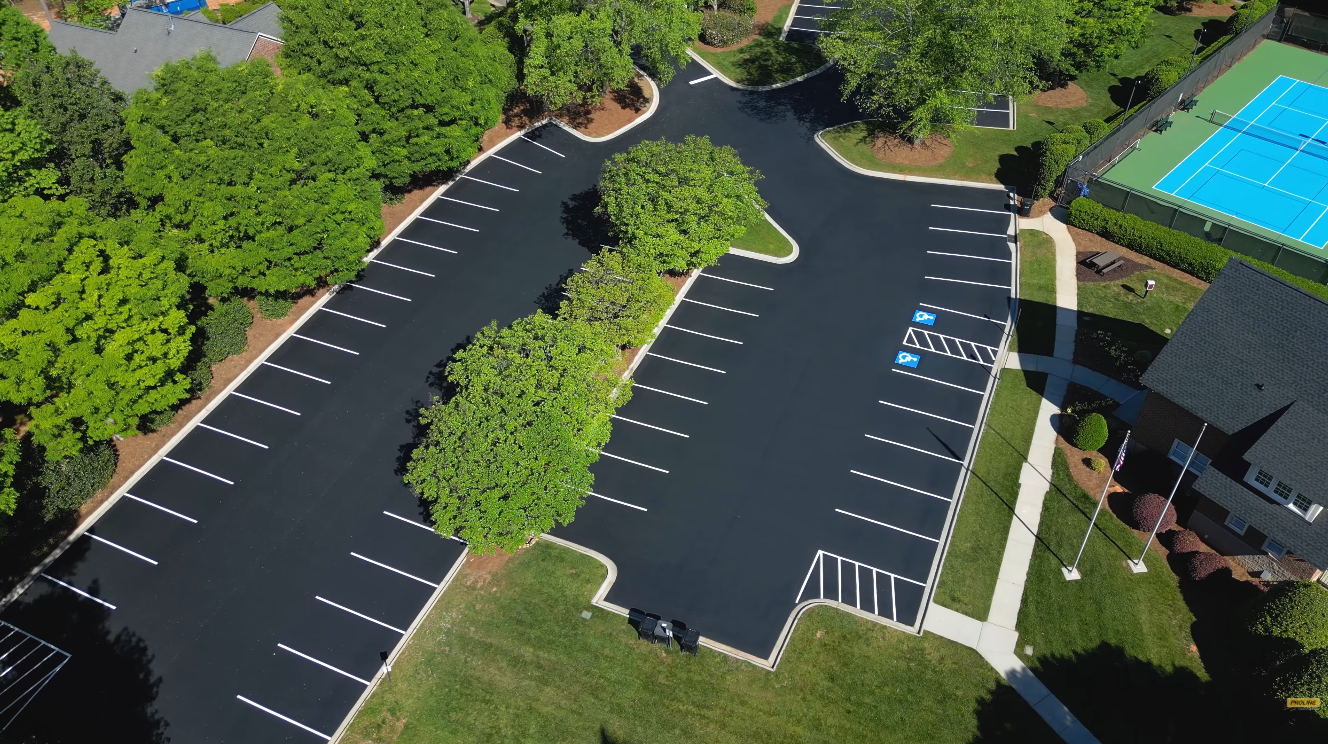

The parking ratio suggested by this parking ratio guide generally calls for 1.5 to 2 parking spaces for each unit. Since many households have two cars, one space per unit is seldom enough. At crowded sites in Charlotte, Raleigh, and Greenville, tandem parking often makes up the difference. When properly marked, tandem parking maximizes available space and helps ensure that both vehicles have clear, designated spots. Clear striping reduces resident confusion and parking disputes, leading to fewer complaints at the leasing office and greater resident satisfaction. Tandem parking, however, only works if the markings clearly show two adjacent residents where to park, and we find that many car parks implement this level of detail incorrectly.
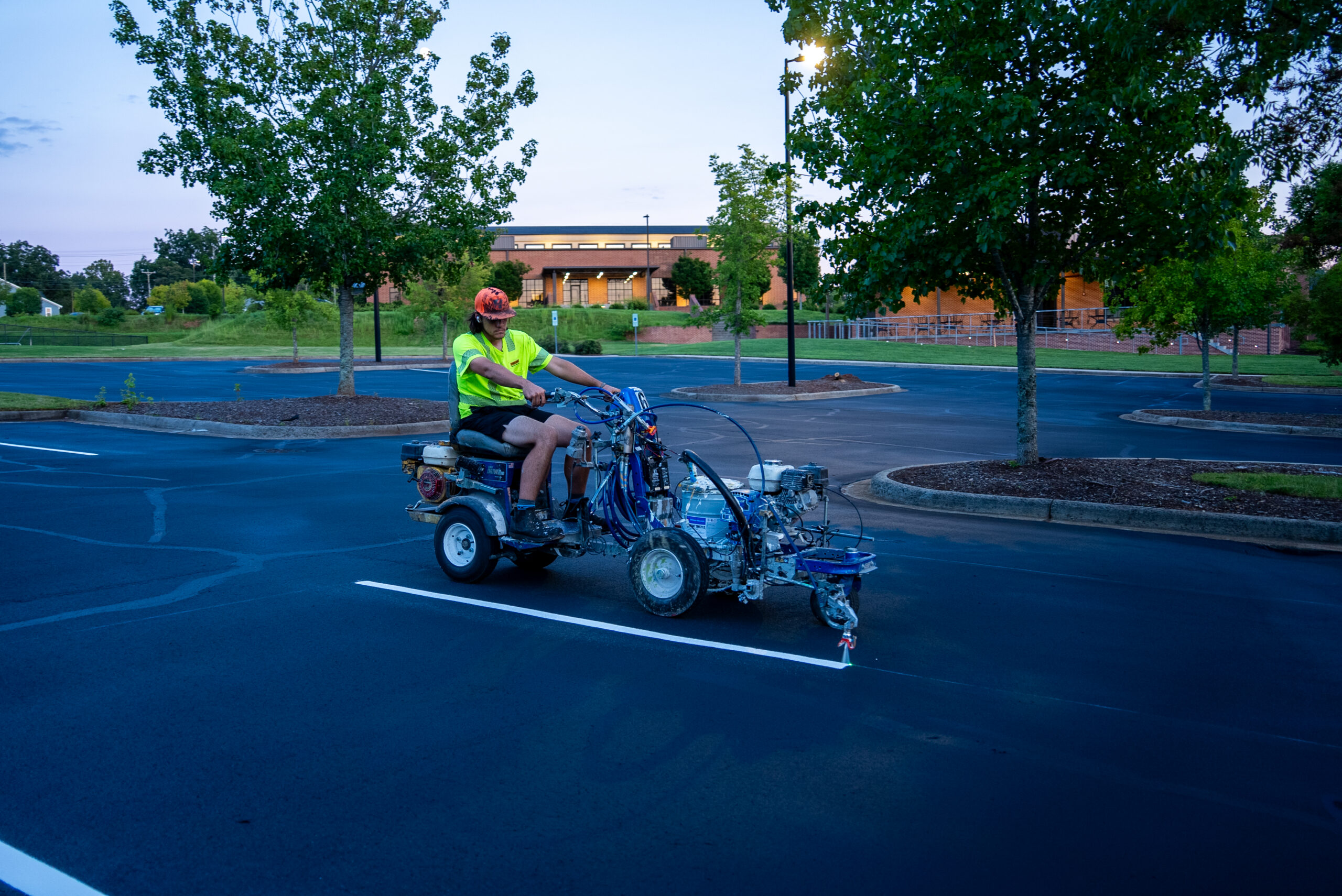
We are Proline Parking Lot Maintenance, located in Denver, NC. We provide striping services for multifamily properties across the Carolinas and throughout the United States, and tandem layouts require more precision than any other stall we paint. That’s how we handle them.
Quick Overview
- Confirm your local tandem rules before you measure anything
- Stripe each pair at 9 feet wide by 36 feet long
- Assign both stalls in a pair to the same unit
- Stencil a unit number and a letter in each stall
- Keep accessible spaces and fire lanes out of tandem rows
- Repair the pavement before the paint goes down
Why Tandem Layouts Fail Without Clear Striping
When two cars are parked together in a tandem arrangement, one is placed directly behind the other so that the outer car shields the inner one each time. People who share a pair with a neighbor or a visitor quickly become impatient. We have seen one unmarked pair cause weeks’ worth of complaints at the leasing office. Clearly marked stripes prevent most of these disagreements because they show each driver which stall belongs to which unit.
Proper striping also helps to protect your drive aisle; if a stall pair appears as a single large space, drivers park too close in and leave a bumper projecting into the lane. This overhang reduces aisle width and creates the same fire-access problem you hired us to solve.
Confirm Local Code Before You Mark a Single Line
Municipalities in Carolina handle tandem parking differently, which is why we review the local ordinance for each situation. The Raleigh UDO permits tandem parking in multi-unit housing and sets a minimum size of 8.5 feet by 36 feet, requiring both spaces to be allocated to the same dwelling unit. By contrast, the Wake Forest UDO sets the minimum at 9 feet by 36 feet and prohibits guest parking in tandem spaces.
The local policies are also constantly changing. Cary is conducting a study on parking demand at apartment complexes because developers continually request lower ratios. As these ratios fall, more properties will rely on tandem parking spaces.
| Source | Tandem requirement | What it means for your striping |
| Raleigh UDO | 8.5 ft by 36 ft combined, both spaces assigned to one unit | Mark one labeled pair per unit |
| Wake Forest UDO | 9 ft by 36 ft, no guest tandem parking | Keep visitor stalls out of tandem rows |
| Parkade restriping guide | 9 ft by 36 ft for two cars | Use as the design target when local code is silent |
Each pair is designed to be 9 by 36 because that size meets the most stringent dimension specified in the table and gives drivers a little extra space.
Measure and Mark the Stall Pair
We begin by drawing up the arrangement using a fixed reference point, typically the curb line or the face of the building, so that all the pairs in each row remain square. Place two 18-foot stalls end to end for each pair; the stall farthest from the drive aisle is the inner stall, and the one nearest the aisle is the outer stall. A short cross line is drawn at the 18-foot mark to indicate where the rear driver should stop and to prevent the pair from appearing as a single long stall.
Then we look at the drive aisle. A typical two-way aisle is about 24 feet wide, and a pair spanning 36 feet at right angles uses up actual pavement. When the aisle is too narrow, we modify the row before we begin painting, since a layout that obstructs turning movements costs much more to correct later.
| Element | Our standard |
| Stall width | 9 feet, centered between side lines |
| Pair length | 36 feet, two 18-foot stalls |
| Line width | 4 inches |
| Divider | Cross line at the 18-foot mark |
| Stencils | Unit number plus A or B, at least 12 inches tall |
Label Every Stall by Unit and Position
Paint alone can’t stop disputes; stencils do. We put the unit number together with a letter in each stall, so that unit 214 has 214A in the inner stall and 214B in the outer stall. Residents can immediately identify their stall, and your team can carry out assignments without guessing. If a dispute arises despite these precautions, establish a clear communication protocol for residents to report parking issues to management. Make sure your team records all complaints and communicates resolutions in writing. For ongoing disputes, consider designating an escalation path—for example, having your property manager or supervisor review the situation and mediate between residents. Quick, transparent responses can prevent conflicts from escalating and help maintain resident satisfaction.
Labeling works best when you decide in advance which household gets which position while you are painting. In many communities, the household that drives less frequently gets the inside stall. Moreover, in many cases the allocation is based on the lease start date, so the person who has lived in the area longer keeps the more convenient position.
When additional work beyond simple repainting is required, our guide on reconfiguring parking spaces shows how we adjust stall and aisle angles. You can also learn when it is time to reconfigure parking so you can spot warning signs early.
Keep Accessible Spaces and Fire Lanes Out of Tandem Rows
An accessible space is never part of a tandem pair; each accessible space must have its own access aisle, which the ADA parking guidelines specify as 60 inches for car spaces and 96 inches for van spaces. Because a stacked stall cannot provide that access aisle for the rear space, the rear spaces remain ordinary single stalls near the accessible entrance.
We also ensure tandem rows do not obstruct fire lanes or hydrant areas. Adding a few stacked stalls never justifies blocking access for emergencies. Before we place a single pair of stalls, we check that each row aligns with the fire lanes you marked.
Prepare Carolina Pavement Before You Stripe
Paint adheres best to smooth, dry pavement, and Carolina weather isn’t always conducive to that. Because summer afternoons are prone to thunderstorms in places like Charlotte and Columbia, the schedule can get washed out, so we start early and keep an eye on the radar. In coastal areas such as Charleston, the sun and salt air fade paint lines faster, making sharp stencils even more valuable.
Before painting, we check for cracks, potholes, raveling, and standing water, and we repair them first, since new lines placed over deteriorating asphalt wear out quickly. If you want a seal coat, we schedule the striping immediately afterward, since the new sealer will cover the old lines anyway. Our line striping services cover every stage, from planning to the final check.
Make Tandem Parking Easier to Navigate With Clear Striping
Poorly marked tandem parking spaces can create confusion, blocked access, and parking disputes among apartment residents. At ProLine Parking Lot Maintenance, we help multifamily property managers plan and maintain clear parking layouts that maximize available space while improving traffic organization. Whether you’re adding tandem spaces or restriping an existing parking lot, our team can help you get the layout right.
Contact UsFrequently Asked Questions
How much does it cost to stripe tandem parking spaces?
The price depends on the number of stall pairs, the condition of your current lines, and whether we need to remove the existing markings first. Because each pair requires longer side lines, a divider, and two stencils, the labor per pair is higher than for a normal single stall. We will provide a written estimate after our site visit and charge you separately for each building or row, so you can plan the project in stages. If you plan to do a seal coat soon, doing both jobs at the same time generally avoids the need for a second mobilization.
How long will a tandem striping job take, and when can residents start parking again?
Small communities typically get the job done in a single day, while larger properties in Charlotte or Raleigh take several days. We work row by row or building by building, so most residents have a nearby area available throughout the project. We post temporary signs and give residents at least 48 hours’ notice via the portal and door hangers. With fast-drying traffic paint, cars can generally resume use about one hour after application in dry weather, and we also establish the exact cure time for the paint we use.
Should we add wheel stops or signs to tandem stalls?
Wheel stops are most effective in the inner stall because a driver can easily roll up against a curb, landscape bed, or building wall. We usually position them about 2 to 3 feet behind the front of the stall so that the part of the car that extends beyond the body doesn’t obstruct the walkways. The signs support the painted markings by informing residents and visitors that this row uses unit-assigned tandem parking. The towing sign’s wording complies with both state and local regulations; therefore, you should check the language with your towing company and your attorney before installing any signs.
What lease language should support our tandem parking assignments?
The lease addendum must identify each stall by its stencil ID (for example, 214A and 214B) so the documentation matches what residents see on the ground. It should also state who has the inner stall, the procedure for residents to swap positions, and who is to contact management when a car obstructs another vehicle. Clear rules are important for changes to vehicles, since the arrival of a new truck or a second car could disrupt an arrangement that has worked for years. We suggest that your lawyer review the final version, as we handle the striping, not the legal aspects.
Can tandem stalls handle full-size trucks and vans?
A pair that is 36 feet long works for sedans and small SUVs, but many crew-cab pickups are almost 20 feet or longer. If the truck is 20 feet long, about 16 feet will remain for the second vehicle, which isn’t enough for anything larger than a compact car. Because local bylaws specify minimum lengths, it is legally possible to mark longer pairs for households with large vehicles. We usually lengthen certain pairs to 40 feet when the aisle permits, in order to keep the bumpers away from the lane.
How often should we restripe tandem stalls?
Walk your lot once a year and look for faded side lines, worn dividers, and stencils you can barely read. Most communities refresh stencils every one to two years, and high-traffic rows near entrances may need attention sooner. Coastal properties often need more frequent touch-ups because sun and salt air wear paint down faster. Restriping on schedule costs far less than rebuilding trust after residents argue over stalls they can no longer identify.