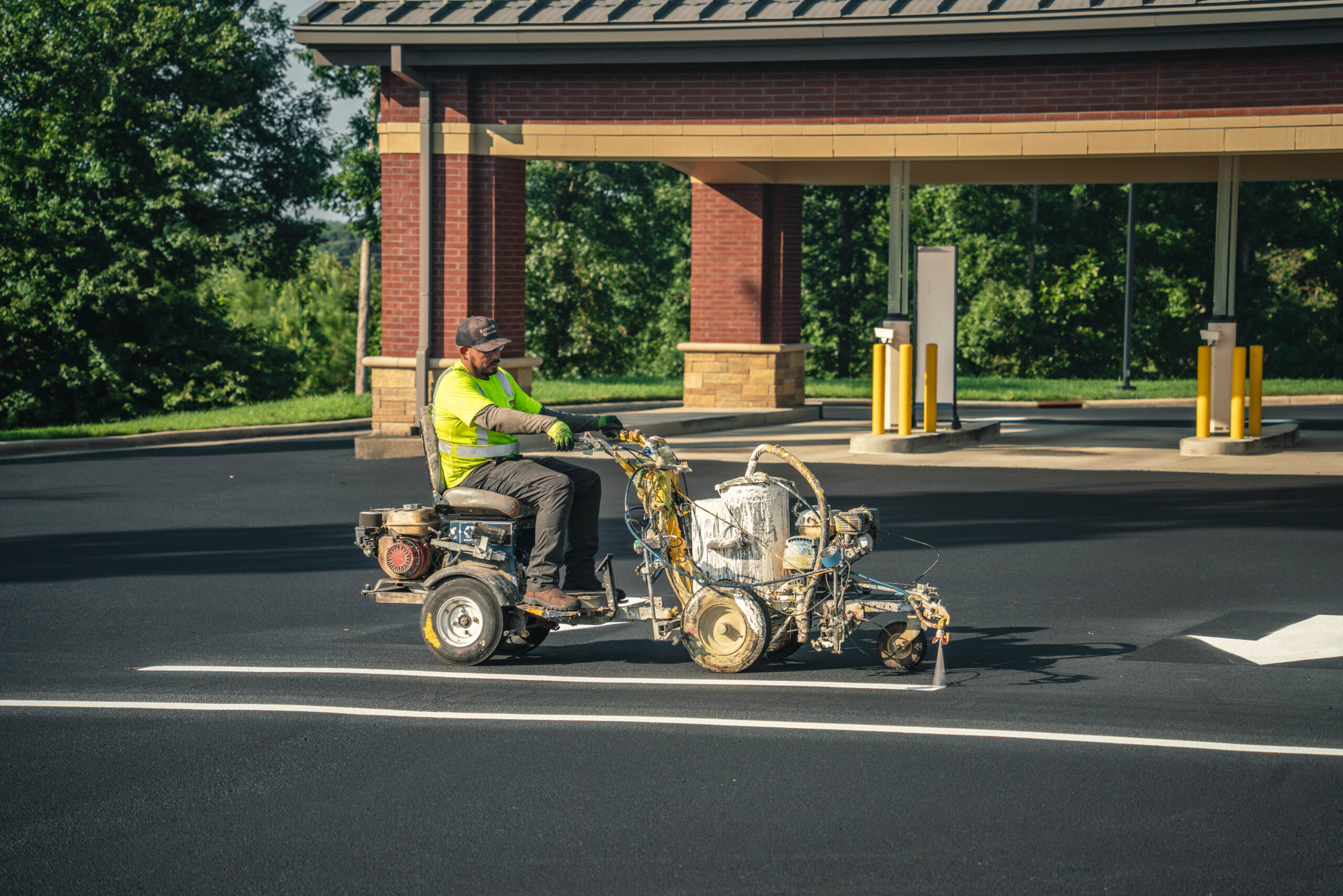
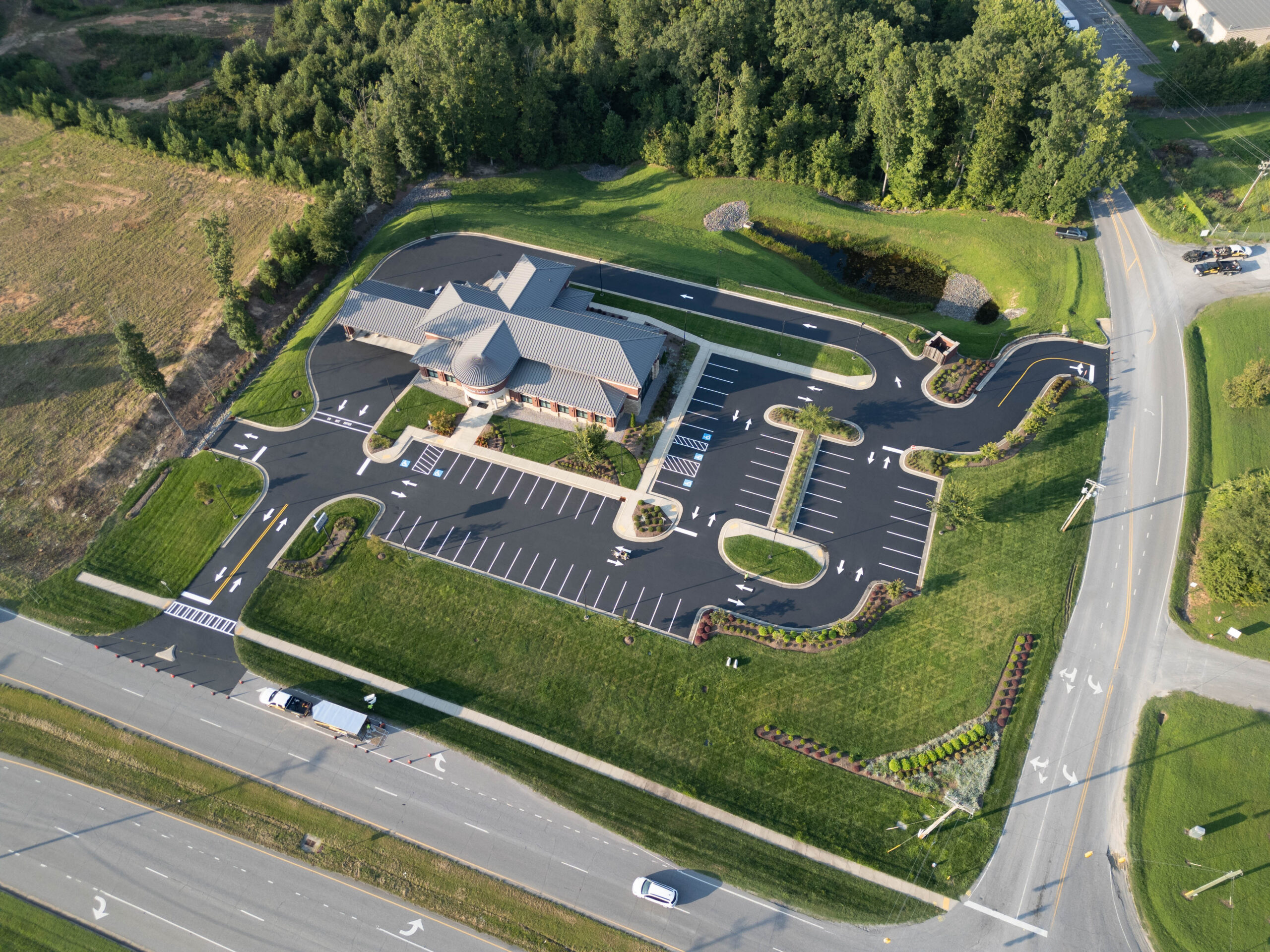
Newly painted parking lot lines should provide consistent color and visibility across the entire property. However, pavement marking performance depends on several factors, including surface condition, paint application, material selection, and the condition of the pavement underneath. The Federal Highway Administration explains that pavement marking performance depends on the materials used, installation practices, and environmental exposure. This means two parking spaces painted during the same project can develop noticeably different levels of fading.
Uneven fading does not always mean the contractor used poor-quality paint. One section may have absorbed more material than another, while a nearby area may contain old sealcoat, oil residue, loose aggregate, or other surface conditions that affect adhesion. Differences in vehicle movement and pavement texture can also cause individual markings to deteriorate at different rates.
At ProLine Parking Lot Maintenance, we provide parking lot striping and pavement maintenance services throughout North and South Carolina. We help property managers understand why new markings lose their appearance and how to prevent premature or inconsistent fading. In this guide, we explain the causes of uneven parking lot line fading, how to identify the underlying problems, and when property owners should consider restriping.
Seven Reasons Newly Painted Parking Lot Lines Fade Unevenly
When some parking lines look bright and fresh while others appear dull, gray, or discolored, the difference often points to an installation or pavement condition issue. We inspect the affected sections rather than assuming the entire parking lot needs another coat of paint.
Here are seven common causes we look for.
1. Uneven Pavement Absorption
Asphalt does not always have a uniform surface texture. Some areas contain more exposed aggregate, while others have a tighter, smoother finish. These differences affect how much paint the pavement absorbs and how much remains visible on the surface.
For example, an older section of asphalt near a parking entrance may have a rough, porous texture. A recently patched section beside it may have a smoother finish. When we apply the same paint across both areas, the markings can develop different appearances because each surface interacts with the material differently.
The Texas Department of Transportation explains in its Pavement Marking Handbook that pavement roughness and porosity influence marking performance and bonding.
2. Inconsistent Paint Thickness
Paint thickness directly affects the color and coverage of parking lot markings. If the striping equipment applies too little material in certain sections, the pavement may show through the paint, making those lines appear lighter than the surrounding markings.
This problem can occur when spray tips become partially clogged, application pressure changes, or the striping vehicle travels at inconsistent speeds. A worn nozzle can also produce an uneven spray pattern, leaving one side of a line thicker than the other.
The Texas Department of Transportation identifies these application issues in its water-based paint application guidance. We check the equipment settings and spray pattern when we find repeated differences in line coverage.
3. Oil, Grease, and Other Pavement Contaminants
Parking lots collect oil leaks, fuel residue, tire rubber, dirt, and other contaminants. These substances can interfere with paint adhesion when crews apply new markings without properly cleaning the surface.
Parking lots collect oil leaks, fuel residue, tire rubber, dirt, and other contaminants. These substances can interfere with paint adhesion when crews apply new markings without properly cleaning the surface.
We commonly inspect areas near restaurant parking spaces, loading zones, drive-through lanes, and frequently used residential parking stalls. These locations may contain more vehicle fluids and surface contamination than less-used sections.
For example, a parking line running through an area with repeated oil leaks may lose its color or begin peeling sooner than a line in a clean section. Simply applying another coat over the contaminated surface will not correct the underlying adhesion problem.
According to the Texas Department of Transportation’s surface preparation guidance, pavement must be clean and dry before crews apply marking materials to achieve proper bonding.
4. Different Pavement Materials Within the Same Parking Lot
Some commercial properties and apartment communities contain multiple pavement surfaces. A parking lot may have asphalt parking stalls, concrete loading areas, concrete entrance aprons, and repaired sections with different surface characteristics.
Even when crews apply the same marking product, these materials may not support the same adhesion or appearance.
Asphalt and concrete differ in porosity, texture, and bonding characteristics. A paint application that performs well on one surface may require different preparation or material considerations on another.
The Texas Department of Transportation discusses these differences in its roadway surface characteristics guidance.
We recommend identifying each pavement type before selecting the marking material and application method. This is particularly important when restriping properties that have undergone several asphalt and concrete repair projects.
5. Premature Vehicle Traffic Before Paint Cures
Newly applied parking lot paint needs sufficient time to dry or cure before vehicles drive over it. When drivers enter a newly striped section too early, tires can drag, smear, or remove paint before it develops adequate adhesion.
This problem often affects the first few parking spaces near entrances and areas where property managers cannot completely restrict vehicle access.
The damage may not appear immediately across the entire line. Instead, you may notice tire-shaped smudges, missing sections, or lighter patches where vehicles crossed the wet markings.
We coordinate striping schedules with property managers to reduce this risk. We also follow the paint manufacturer’s recommended drying conditions instead of assuming every marking is ready for traffic after the same amount of time.
6. Incompatible Existing Coatings or Old Pavement Markings
New paint does not always bond properly when crews apply it over an unstable previous coating. Old paint may contain loose flakes, dirt, or deteriorated material that prevents the new layer from attaching securely to the pavement.
Different marking products can also have compatibility limitations. Applying a new material without checking the existing coating can lead to peeling, discoloration, or inconsistent performance.
For example, one parking row may have relatively intact old markings, while another contains heavily deteriorated paint. Applying a fresh coat to both without addressing those differences can produce inconsistent results.
The FHWA guide to maintaining pedestrian facilities discusses how existing marking materials affect the performance of new applications and when removal may be necessary.
We inspect old markings before restriping and determine whether cleaning, removal, or another preparation method is appropriate.
7. Different Levels of Tire and Abrasive Wear
Parking lot lines do not experience equal amounts of vehicle contact. Some markings receive repeated tire pressure, turning friction, and braking activity, while others remain relatively undisturbed.
Consider a parking lot with two adjacent rows. The row beside the main entrance receives frequent turning movements throughout the day. The row at the back of the property serves only a few employees. Even if both rows receive the same paint application, the first row may lose its appearance sooner.
The Federal Highway Administration identifies abrasive wear, paint-layer failure, and adhesion failure as separate pavement marking deterioration mechanisms in its Roadway Delineation Practices Handbook.
We evaluate where tires repeatedly cross or turn over the markings before recommending a maintenance schedule. This helps property managers address high-wear sections without automatically repainting every parking space.
How to Identify the Cause of Uneven Parking Line Fading
The appearance of the damaged marking can provide useful clues about the underlying problem. We compare the affected lines with nearby markings that still have good coverage.
| What you observe | Possible cause | Recommended inspection |
|---|---|---|
| Lines look translucent or lighter in certain sections | Insufficient paint thickness or uneven absorption | Check application coverage and pavement texture |
| Paint flakes or peels away | Poor adhesion or incompatible existing coating | Inspect the old marking and surface preparation |
| Dark spots appear over white or yellow lines | Oil contamination or asphalt tracking | Check for fluids, asphalt bleeding, and surface residue |
| Tire-shaped smears appear shortly after striping | Vehicles entered before the paint dried | Review curing conditions and traffic control |
| Lines fade faster near entrances and turning areas | Repeated tire abrasion | Compare vehicle movement and turning patterns |
| Markings differ where asphalt meets concrete | Different surface characteristics | Review material compatibility and preparation |
| One edge of a line looks thinner than the other | Uneven spray pattern or equipment problem | Inspect spray tips, pressure, and application height |
A contractor should not recommend another coat of paint until the inspection identifies why the original application deteriorated. Otherwise, the same problem may return even after the property pays for another striping project.
How We Prevent Uneven Fading During Parking Lot Striping
At ProLine Parking Lot Maintenance, we focus on consistent preparation and application rather than relying on paint quality alone.
We use a systematic approach to reduce differences in appearance and performance across the property.
Inspect the Pavement Before Applying Paint
We examine the asphalt or concrete for cracks, loose aggregate, oil stains, old markings, and repaired sections. These conditions can affect how the new material bonds with the pavement.
If we identify a problem area, we determine whether it needs additional cleaning, repair, or surface preparation before striping begins.
Clean the Entire Striping Area
We remove loose dirt, dust, debris, and poorly attached old markings. We pay particular attention to parking spaces near dumpsters, loading areas, and vehicle entrances because these locations often accumulate contaminants.
We also check for moisture. Applying paint over damp pavement can interfere with bonding and lead to premature deterioration.
Check the Striping Equipment
We inspect spray tips, paint pressure, application height, and equipment settings. These adjustments help maintain consistent line width and paint coverage throughout the project.
If the spray pattern changes during application, we correct the equipment rather than allowing the problem to affect additional parking spaces.
Apply the Correct Marking Material
We consider the pavement type, existing coating, expected traffic, and property requirements when selecting the marking product.
Water-based traffic paint may work well for many parking areas, but properties with specific durability requirements may benefit from other marking systems. The right choice depends on actual site conditions, not the assumption that one product works equally well everywhere.
Allow Adequate Drying Time
We coordinate with property managers to establish temporary parking restrictions and prevent vehicles from crossing fresh markings too early.
We follow the manufacturer’s application and drying recommendations, taking temperature, humidity, and pavement conditions into account.
Inspect the Completed Markings
After application, we review the finished lines for consistent coverage, width, alignment, and appearance. We also look for smearing, gaps, and areas that may require correction before reopening the affected parking sections.
Where Property Managers Should Pay Closer Attention
Uneven fading can develop in isolated parts of a property, so inspecting only the main parking rows may overlook the actual problem.
We recommend checking these locations during routine pavement maintenance:
- Parking entrances and exits: Turning tires repeatedly cross markings near access points, which can accelerate surface wear.
- Loading and delivery zones: Heavy vehicles and frequent maneuvering can cause faster abrasion than ordinary passenger vehicle parking.
- Recently repaired pavement: Patches may have different textures and absorption characteristics from the surrounding asphalt.
- Concrete-to-asphalt transitions: Different pavement materials may require different preparation and marking considerations.
- Areas with oil and fluid leaks: Contaminants can interfere with paint adhesion and affect the finished appearance.
Property managers in Charlotte, Raleigh, Greensboro, Columbia, and other Carolina communities should include these locations in their routine parking lot inspections. Identifying isolated deterioration early can help prevent larger restriping projects.
What Our Clients Say About ProLine Parking Lot Maintenance
We understand that property managers want a contractor who delivers consistent work and communicates clearly throughout a pavement maintenance project.
Our clients have shared positive feedback about their experiences with ProLine Parking Lot Maintenance.
Emily Mills, Operations Manager at North Point Development, praised our team’s reliability, communication, and quality of work.
Tucker Griffin, Senior Account Representative at Sherwin-Williams, also highlighted ProLine’s commitment to quality materials.
Brad Smith, Owner of Point Blank Range, praised our professionalism from the initial estimate through the final walkthrough.
You can read their feedback and other customer experiences on our ProLine Parking Lot Maintenance testimonials page.
Keep Your Parking Lot Lines Bright, Clear, and Consistent
Uneven fading of newly painted parking lot lines can make parking spaces difficult to identify and affect the overall appearance of your property. Factors such as inconsistent paint application, surface conditions, weather exposure, and vehicle traffic can contribute to premature fading. ProLine Parking Lot Maintenance provides professional parking lot striping and pavement marking services to help maintain clear, durable, and visible markings. Let us help restore consistency to your parking lot and keep your property looking well-maintained.
Contact Us TodayFrequently Asked Questions
Can newly painted parking lot lines change color after the first few days?
Yes, some marking materials may appear slightly different as they dry and develop their final appearance. Environmental exposure, the original pavement color, and the material’s opacity can influence the finished result. Property managers should distinguish normal drying-related changes from actual peeling, discoloration, or missing paint. If certain sections remain noticeably different after the manufacturer’s recommended drying period, a contractor should inspect the application. Persistent color differences may indicate inconsistent coverage or a problem with the underlying surface.
Can sealcoat discolor newly painted parking lot lines?
Yes, asphalt-based sealcoat can affect pavement markings if the sealer has not cured properly or begins to bleed through the surface. Heat can soften certain asphalt materials and contribute to discoloration or residue appearing on top of painted lines. This issue may become more noticeable in areas that receive direct sunlight or experience elevated pavement temperatures. Property managers should coordinate sealcoating and striping schedules according to the product manufacturer’s curing recommendations. If black residue develops over the markings, the contractor should determine whether asphalt bleeding or another surface contaminant caused the discoloration.
Should property managers request a paint thickness measurement after striping?
Requesting information about the applied paint thickness can help property managers evaluate whether the contractor followed the product specifications. Paint thickness affects coverage, drying time, and the amount of material left on the pavement. Managers can ask for the product data sheet, specified application rate, and any available quality-control records. These details are particularly useful when a property experiences repeated premature fading after multiple striping projects. A contractor can use the information to compare the actual application with the manufacturer’s recommendations.
Can pressure washing damage newly painted parking lot lines?
Yes, pressure washing too soon or using excessive water pressure can lift or damage markings that have not developed adequate adhesion. The risk depends on the paint product, curing time, equipment pressure, and distance between the nozzle and pavement. Property managers should follow the manufacturer’s cleaning recommendations instead of applying a standard pressure-washing schedule to newly striped areas. For routine maintenance, we recommend allowing the markings to reach the required cure before cleaning them. If paint begins lifting during cleaning, the contractor should inspect whether the coating had sufficient adhesion before the washing began.
Is it better to repaint only faded parking spaces or restripe the entire parking lot?
TThe decision depends on how many markings have deteriorated and whether the existing lines still provide a consistent layout. Repainting isolated spaces can be practical when the surrounding markings remain in good condition, and the replacement paint matches the existing appearance. However, spot restriping may produce noticeable differences in color, brightness, and line definition across the property. When deterioration affects several rows, or the original layout has become inconsistent, a complete restriping project may provide a more uniform result. We recommend inspecting the entire parking area before choosing between localized repairs and full restriping.