Overview
- Each gate zone should have its own striping plan because it involves queuing, braking, turning, and emergency access.
- The stop bars have to align with the keypad, the detection loop, and the driver’s reach.
- Queue storage, escape lanes, and fire lane markings keep the street and fire access clear.
- The no-park zones hatch to protect the swing path, the slide track, and the keypad island.
- High humidity in Carolina, summer heat, and coastal rain all affect when these zones should be striped.
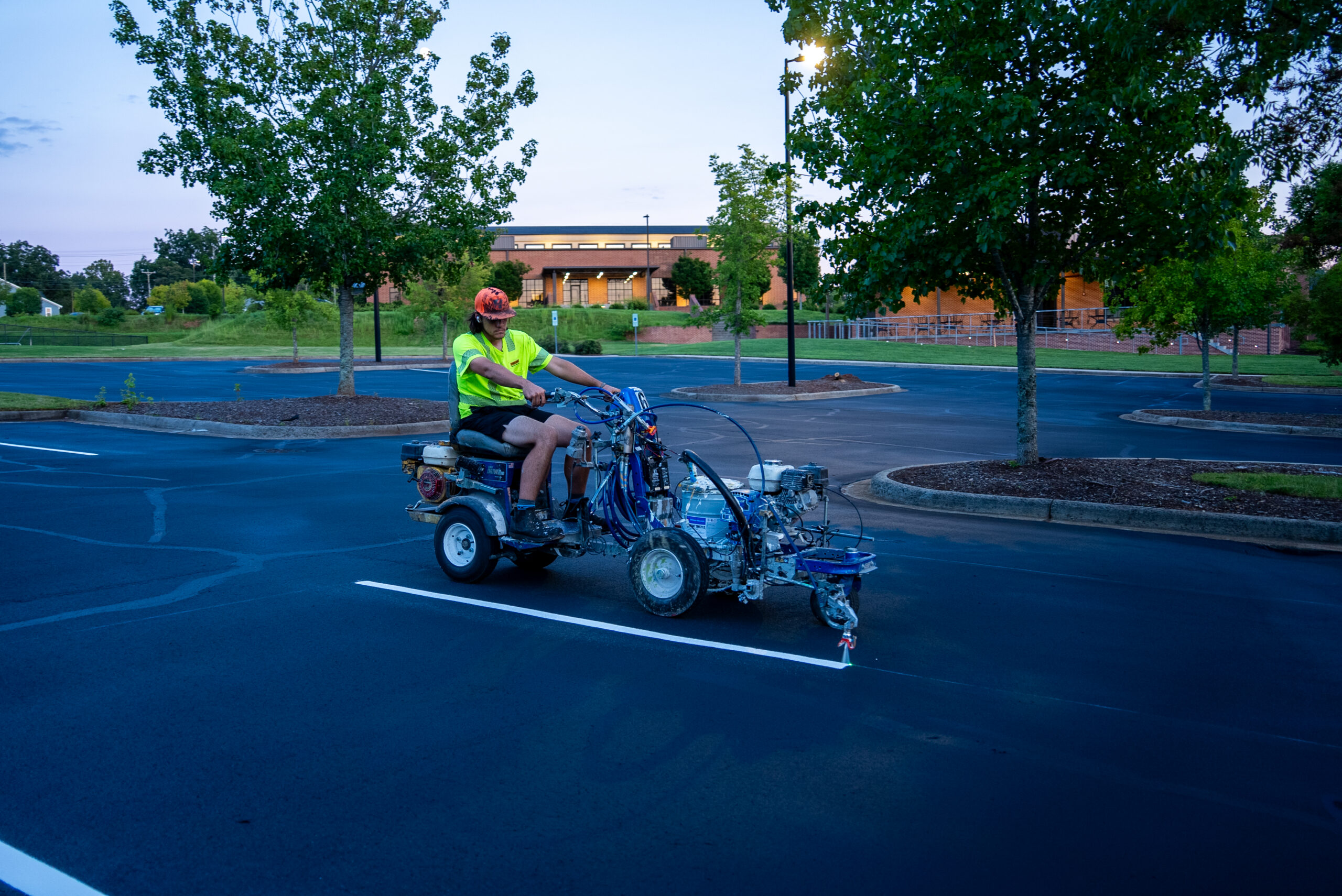
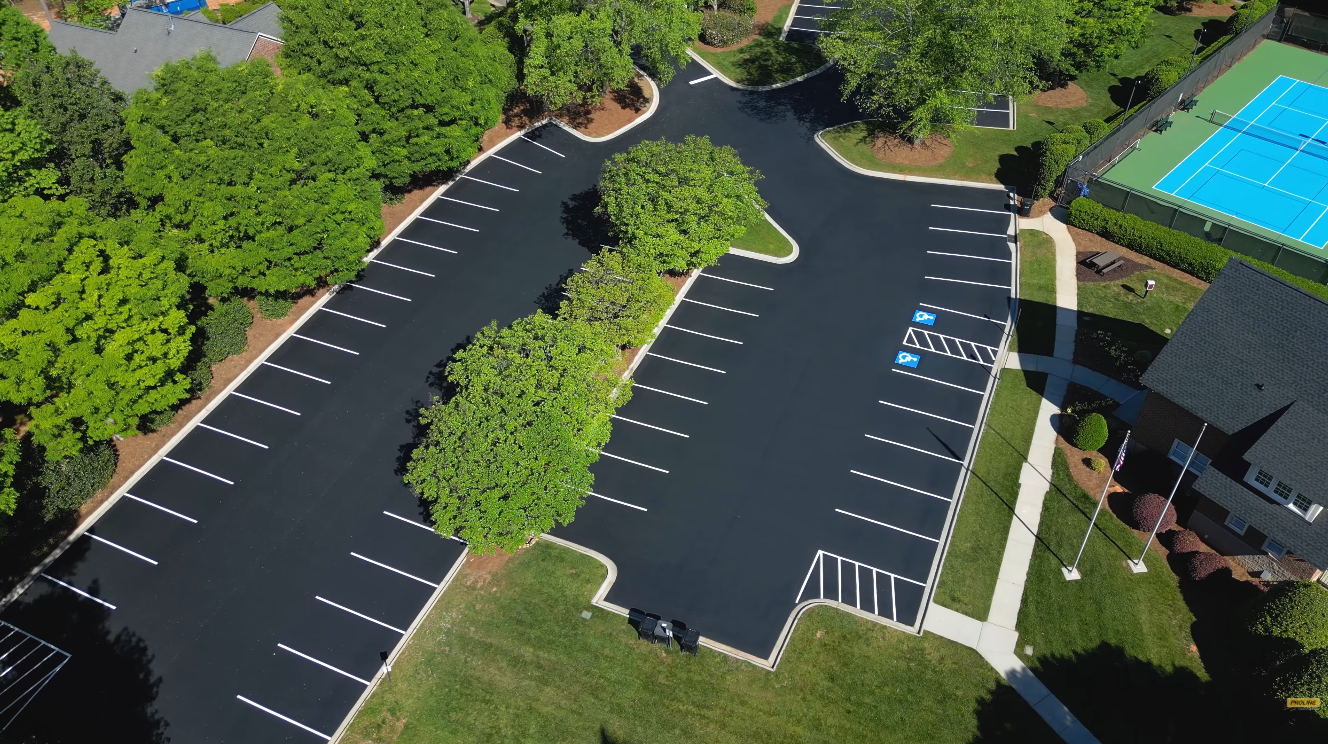
In Tyler, Texas, every entry gate must be positioned at least 40 feet from the street curb, with stacking spaces and an escape lane included in the approach. Similar stacking rules are prescribed by the codes in Durham, North Carolina, and in Knox County, Tennessee. These rules exist because a gate shapes how vehicles behave in the 100 feet immediately before it, and paint influences that behavior. However, requirements for gate setback, stacking, and fire lane markings vary widely by city, county, and fire district. We strongly recommend confirming the specific rules in your area with your local building department or fire marshal before starting any work to ensure full compliance and avoid costly rework. At ProLine Parking Lot Maintenance, we stripe apartment complexes from Charlotte and Raleigh to properties across the country, and the gate approach is the most demanding striping job at our site. We therefore want to show you in detail how we lay out the approach so your residents, visitors, and the fire department all know where to stop, where to wait, and where to pass.
Why Gate Zones Need a Separate Striping Plan
In a standard parking row, drivers park and then walk away. In a gate zone, however, drivers must stop at a specific place, use a keypad, wait for a barrier to lower, and then accelerate again, usually with other cars behind them. This process involves frequent hard braking, sharp turns, and repeated tire contact within a small area of pavement. The faded stop bar in this location causes more difficulty than a faded parking space anywhere else on the property.
For each gate project, we begin with a site visit and ask the gate supplier for the as-built drawing. We need to know the keypad pedestal location, where the vehicle detection loops are located, how the gate opens, and where the fire department access device will be mounted. Any striping that omits one of these four points causes a daily problem for residents. If the barrier is positioned too far forward, the driver’s window will be out of reach of the keypad; if it is placed too far back, the vehicle will be off the loop, so the gate will not open.
Placing the Stop Bar for the Keypad and the Loop
Position the stop bar first, since it forms the basis of the entire layout. We place a mid-size sedan on the loop, position the driver’s window within easy reach of the keypad face, and note the front tire location. In our usual procedure, the window ends up about two to three feet from the pedestal. We then repeat the check with a pickup truck and a compact car, then adjust the bar to reach the best possible compromise.
Give detection loops respect when laying out the layout. Before the saw cuts the surface, we mark the pavement with saw-cut lines and clean up old paint using methods that don’t grind through the loop slot. If a loop is damaged, the gate will stop working, and repairing it costs much more than the striping work. The stop bar must also have the legend STOP and a clear arrow in the approach lane so first-time visitors know exactly what to do. We also document the positions of all striping, loop placements, and key markings during the process, which can help with inspections and insurance reviews. This documentation provides property managers with peace of mind and helps demonstrate compliance with local regulations.
Queue Storage and the Escape Lane
There must be enough space for cars to wait without them spilling out onto the street. The City of Durham’s unified development ordinance includes a section on vehicle stacking that specifies the minimum number of spaces for waiting when the gate is unstaffed. Tyler’s code goes even further by requiring an escape lane situated before the gate for drivers who are turned away. At every apartment gate equipped with a visitor call box, we mark out that escape lane because a visitor without a code needs a way to turn around without backing into traffic.
The lane width is also important; since Tyler’s standards specify a minimum opening of 14 feet for one-way traffic and 24 feet for two-way traffic, we mark an inbound and an outbound lane, about 12 feet each, where space allows. We place directional arrows at the beginning of the approach and a solid double yellow line or hatched median between the opposing lanes. This lets residents see the traffic pattern before they reach the keypad, so they no longer cut across the island.
Marking Fire Lanes and Emergency Access
Gates along a fire access route are subject to different rules. According to a guide prepared by the Knox County Fire Bureau, the minimum clear gate width should be 20 feet when there is a single road and 40 feet of vehicle stacking is required from the road it intersects. The fire code also requires approved markings on fire lanes. For instance, a fire district in Colorado requires the use of NO PARKING FIRE LANE letters, with the letters being at least four inches high and in reflective red on a white background, in all cases where the fire chief requires it.
The fire marshal in Charlotte, Greenville, or Charleston may specify different wording, color, or spacing, so we check the exact requirements before painting. Around any emergency key switch or key box, we keep the area entirely clear and put a hatched zone in front of it to prevent residents from parking there; this small measure lets the fire crew reach the device within seconds.
The Striping Elements We Install at a Typical Gate
| Gate area element | Where we place it | Specific layout detail | Purpose |
| Stop bar | Aligned with the keypad and loop | Solid white bar, 12 to 24 inches wide | Positions the vehicle for the keypad and detector |
| STOP legend | 25 to 35 feet before the bar | White lettering in the travel lane | Warns drivers before the gate |
| Directional arrows | Start of the approach lane | One arrow per lane | Separates inbound and outbound traffic |
| Hatched keypad island | Around the pedestal and median | Diagonal white or yellow lines | Keeps vehicles off the keypad base |
| Gate swing or slide zone | Along the gate path | Crosshatched no-park area | Keeps cars clear of the moving gate |
| Escape lane | Before the gate | Marked lane with an exit arrow | Lets denied vehicles turn around safely |
| Fire lane marking | Curbs and the emergency device area | Red curb paint and approved lettering | Keeps emergency access open |
| ADA stall near the gate | Closest accessible route | Stall, access aisle, and signage | Serves residents with limited mobility |
Climate and Timing in the Carolinas
The weather in the Carolinas offers less time than most property managers anticipate. In Charlotte, Columbia, and Charleston, high summer humidity and afternoon thunderstorms can soak the pavement in minutes, and in Wilmington and Myrtle Beach, coastal dew remains on the surface until morning. We mark the gate zones on dry pavement in the late morning or afternoon and check the forecast for the next several hours before starting work. Properties in Raleigh and Durham also experience winter cold spells that delay drying, so we do the work during the warmer parts of the day.
Get a Gate Zone Your Residents Can Read at a Glance
Properly stripe the gate to protect the keypad, loop, and gate arm, and to save your residents’ patience. Proper striping not only guides drivers but also supports code compliance and smooth inspections, giving you peace of mind that your property meets all local requirements. A well-marked gate area helps ensure a smooth review process with inspectors and makes it easier to satisfy the expectations of insurers and regulatory authorities. ProLine Parking Lot Maintenance serves apartment complexes, property managers, and HOAs nationwide, and we’d be happy to review your gate area with you, the vendor, and the fire marshal to ensure we meet their requirements. You may also refer to our guides on coordinating striping with landscaping and on striping for overflow parking in order to plan out the rest of your parking area. Contact us today for a gate zone assessment and a clear striping plan.
Keep Your Apartment Entry Gates Clearly Marked
Poorly marked entry lanes, keypad access areas, and vehicle stopping points can create confusion and traffic backups at gated apartment communities. At ProLine Parking Lot Maintenance, we provide professional parking lot striping and pavement marking solutions to help property managers organize vehicle flow, define safe stopping areas, and maintain clear access around controlled-entry gates. Let us help you create a more organized and accessible entrance for residents and visitors.
Contact UsFrequently Asked Questions
Do we need to restripe after the gate operator or keypad moves?
Restripe the area whenever you move the keypad, pedestal, or detection loop, since the stop bar depends on all three. If the keypad shifts by as little as two feet, it affects the driver’s window position, and if the loop is replaced, the gate will detect the vehicle in a different position. It’s best to do the striping after the gate supplier completes the work so the lines match the final setup rather than the previous one; afterward, we remove the old markings completely, since ghost lines confuse drivers and reduce the effectiveness of the new layout.
What material holds up best at a stop bar that sees constant braking?
Thermoplastic and epoxy markings last longer than ordinary traffic paint at stop bars because braking tires quickly scrape and tear away standard paint. Although standard paint works for stalls and arrows, a stop bar sees hundreds of stops each day in a busy community. We usually recommend a more durable material for the stop bar, the legend, and the hatched island, while reserving paint for markings that see less wear. The additional cost is generally recovered within one or two years because the gate area stays legible between full restriping operations.
How do we keep the gate working while crews stripe the approach?
Before any work starts, we contact both your gate supplier and your leasing office. The vendor can put the gate in an open or free-exit position so residents won’t get trapped by wet paint, and we use cones and barricades to direct cars around the wet section. We carry out the striping in stages, one lane at a time, so at least one lane remains available during the entire operation. Posting notices to residents a day or two in advance helps reduce confusion and keeps the schedule on track.
How should we handle the pedestrian gate beside the vehicle entrance?
A pedestrian gate should have a clear, accessible path, with striping intended to keep it free of parked cars and vehicles that drive onto the path. According to the 2010 ADA Standards for Accessible Design, doorways and gates must have a clear width of 32 inches, which is why we marked a hatched no-park area along the path and kept it clear of bollards, trash cans, and stall overhangs. We also ensure the path surface aligns with the gate threshold and has no lip. This lets a resident using a wheelchair or stroller pass through the gate without leaving the paved route.
How often should we refresh gate area markings?
Gate area markings wear faster than the rest of the lot, so we recommend inspecting the stop bar, legends, and arrows annually. A community with heavy delivery traffic or a high unit count may need a refresh every 12 months, while a smaller property may stretch to 18 months. We judge the timing by visibility, not by the calendar. When the stop bar loses its sharp edges, or the arrows lose contrast at dusk, residents start guessing where to stop, and that is the signal to repaint.