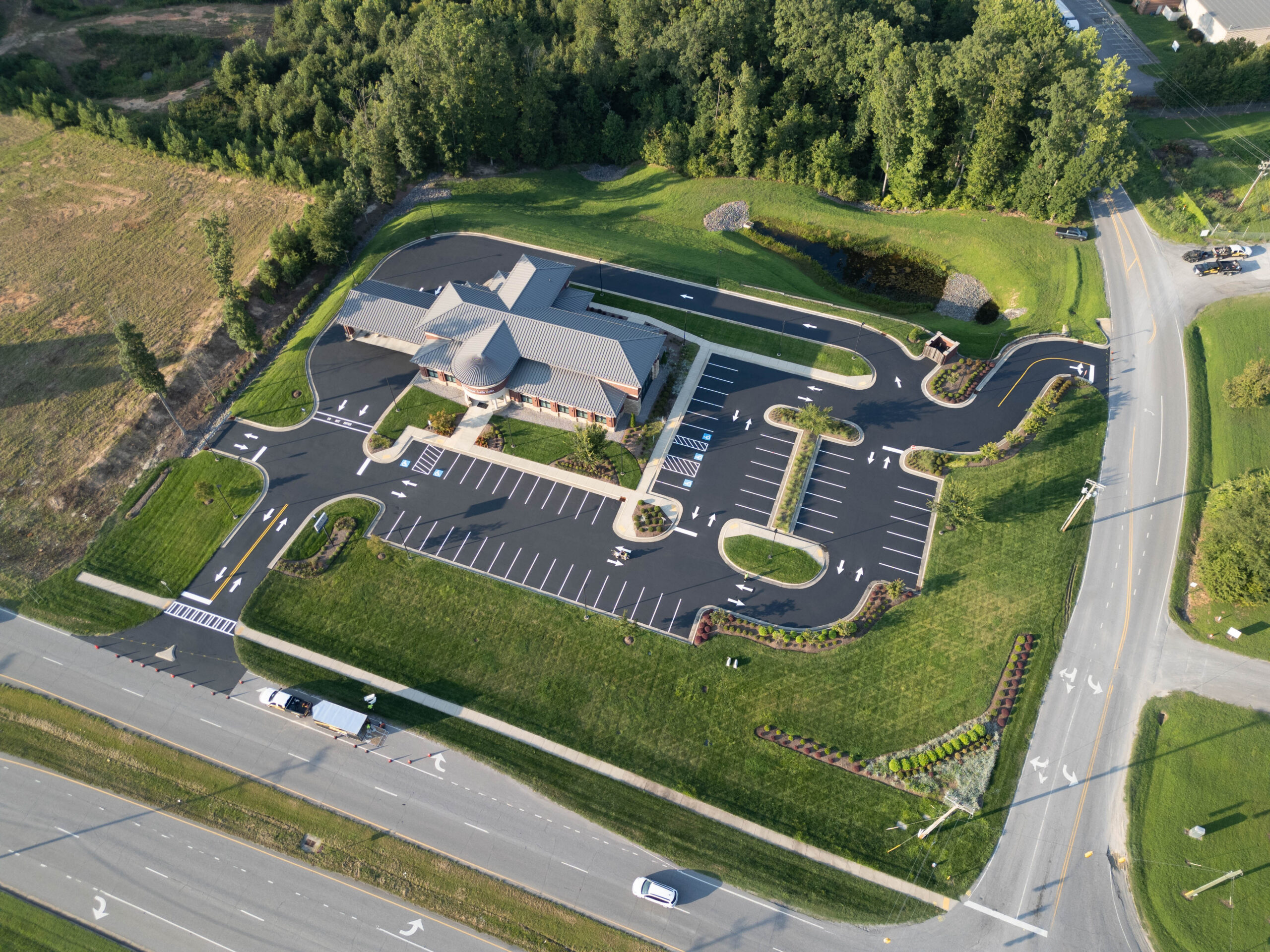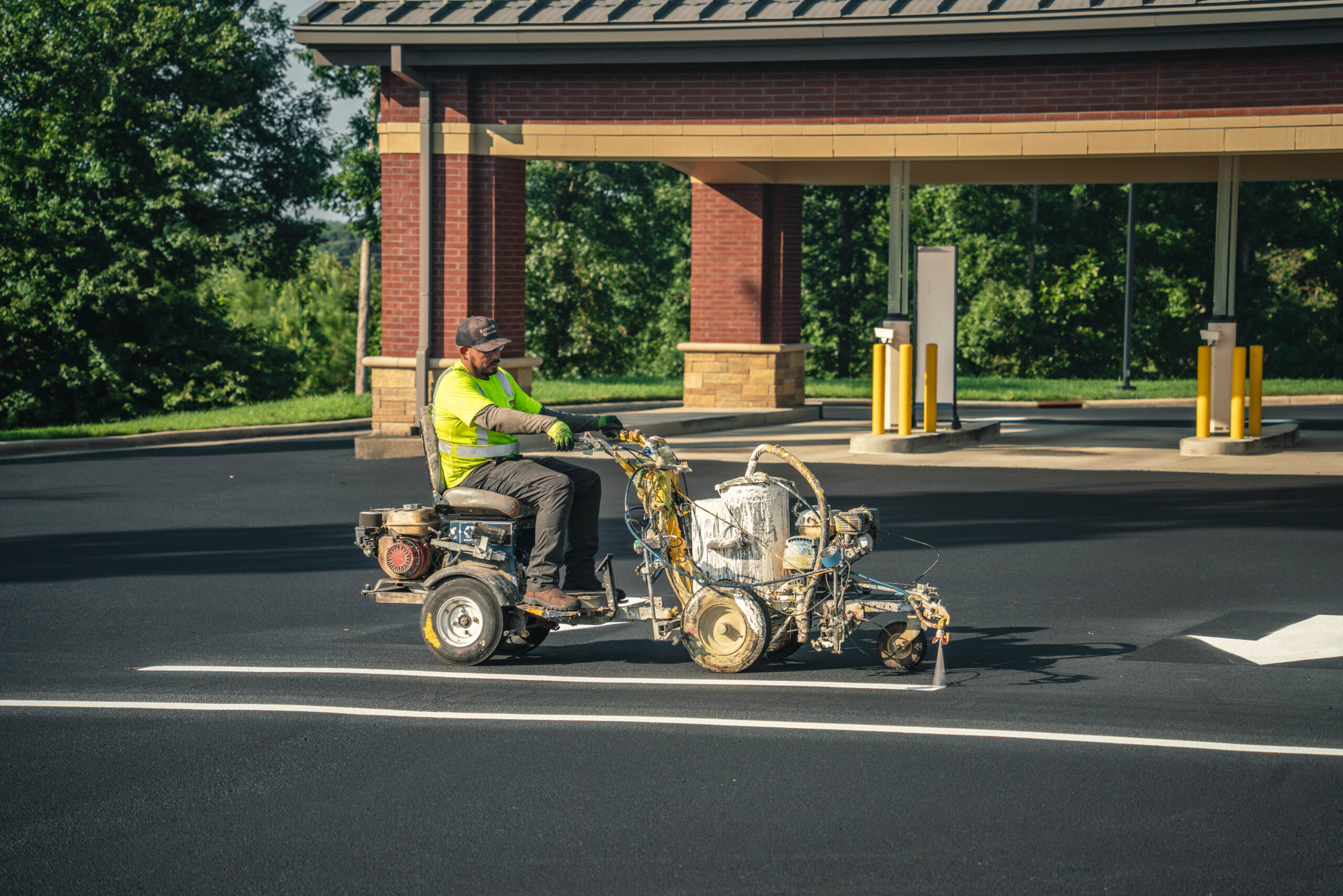

In a study of Raleigh parking lots, researchers from NC State examined 110 parking lots, measured over 1,800 trees in 502 planting areas, and estimated that the city’s parking lots contain roughly 44,000 trees. All of those trees sit next to pavement, and each planting island changes how drivers use the adjacent parking spaces. Parking lot markings either help the landscaping team rebuild a bed at your apartment complex or hinder their work.
We are Proline Parking Lot Maintenance, based in Denver, NC. We do striping work in apartment complexes across Charlotte, Raleigh, Greenville, Columbia, and the Carolina coast, and we also serve properties nationwide. Since fall is the ideal time for planting in the Carolinas, landscape and striping projects currently overlap. Here’s how we prevent them from interfering with one another.
Quick Overview
- Schedule striping after the final curb, island, and irrigation work
- Stripe stalls that leave room for bumper overhang at every planting bed
- Keep irrigation, mulch, and red clay off wet paint
- Protect fire lane markings, accessible routes, and sight lines from plant growth
- Choose tree species that will not crack the pavement you just striped
- Walk the site with both crews before anyone leaves
Why Striping and Landscaping Need One Shared Schedule
Property managers generally hire a landscaper and a striping contractor separately, so the two teams don’t see each other’s plans. When the landscaper shifts the curb line by 18 inches, the stall lines e painted last spring no longer align with the pavement. The striper then paints new lines on Monday, only for a sprinkler zone to soak them out on Tuesday morning. Because of both issues, you end up paying twice, and the residents hold the property responsible for the mess.
A single shared schedule solves most of these issues; we request the landscape plan before quoting and let the landscaper know exactly when our team needs each area clear. To further reduce the risk of misunderstandings, we recommend that property managers set up a shared calendar for both crews and organize joint walkthroughs before work begins. During these walkthroughs, both contractors can walk the site together, review upcoming work, and clarify access points or areas that need special attention. Keeping an open line of communication by sharing schedules and contact information helps both teams coordinate efficiently and resolve questions as they come up during the project.
Sequence the Work From Hardscape to Final Paint
We always do stripping toward the end, since all the other work involves altering the surface or layout we are painting. We apply the sequence listed in the table below to most apartment projects.
| Phase | Crew | Work | Our handoff |
| 1 | Paving or concrete | Repairs, new curbs, island edges | We confirm final curb lines before layout |
| 2 | Irrigation and electric | Trenching, sleeves, sprinkler heads | We request the irrigation map and head locations |
| 3 | Landscaper | Trees, shrubs, soil, mulch | Soil and mulch stay inside the beds |
| 4 | ProLine | Stall lines, hatching, stencils | We cure the paint with irrigation off in the work zone |
| 5 | Manager and both crews | Final walk and punch list | We touch up any spot the walk uncovers |
Phase 4 relies on Phase 1, so if the curbs have moved, we don’t draw up the stalls from a previous plan; instead, we mark out the new layout according to the actual curb face and take measurements again before painting.
Mark Stalls Around Planting Islands and Curb Lines
Because the landscape affects stall performance, we alter the striping accordingly. According to Cary’s landscape standards, planting areas must be sized to provide a 2.5-foot bumper overhang from the back of the curb, showing how seriously Carolina authorities take the problem of cars and plants. We apply the same reasoning to all our projects, even when the local code makes no provision.
| Landscape feature | Our striping response | Why it matters |
| Curbed island with shrubs | Full 18-foot stall, plants set back from the curb | Bumpers clear the leaves without crushing them |
| End-of-row island | Hatched clear zone at the corner | Drivers see around the planting when they turn |
| Tree near a tandem row | Straight 36-foot path with no trunk inside it | Both cars in the pair fit without scraping bark |
| New buffer at an overflow edge | Edge line moved to match the bed | Residents stop parking on the buffer |
If a new island enters a row of parking spaces, we must redesign the arrangement. The guide on striplining tandem parking spaces outlines the 36-foot pair that we guard. In the case where landscaping occupies some of your additional parking space, the guide on overflow parking areas explains how we reconstruct that capacity somewhere else on the premises.
Protect Wet Paint From Irrigation, Mulch, and Red Clay
The new landscaping will create water, loose debris, and heavy foot traffic, all of which tend to damage freshly painted surfaces. We request that the landscaper switch off the sprinkler zones near the striping area for the day and provide written confirmation of the timer settings. For example, a zone that is set to activate at 5 a.m. could blur a newly painted stencil before the first resident goes to work.
Loose material leads to the second issue. When it rains for the first time, mulch and pine straw blow onto the pavement and cover the lines faster than most managers expect. In the Piedmont area near Charlotte and Greenville, the red clay from the recently tilled beds runs across the lot and stains the white paint orange. To prevent this, we suggest edging the beds, compacting the soil, and sweeping the pavement before painting so the lines start clean and stay visible.
Keep Plant Growth Off Fire Lanes, Signs, and Accessible Routes
Landscaping can create safety issues because mature plants can conceal the parts protected by striping. According to the Charlotte fire lane specification, property owners must keep fire lane signs and markings in good condition; this includes ensuring shrubs don’t cover a sign and mulch doesn’t cover a painted lane marking. Before the landscaper begins work, we photograph every fire lane marking so you have a record of what must remain visible.
Accessibility follows the same principle: ADA guidelines for parking apply to accessible spaces and access aisles, and we never allow a planting bed to reduce an aisle’s width or block an accessible path. We also keep plants low and close to the corners of drive aisles so drivers can see pedestrians before they reach the crosswalk.
Choose Trees That Will Not Crack Your New Lines
The choice of trees determines whether your striping will last five years; according to the Virginia Tech tree guide, trees planted close to pavement often suffer from restricted roots, and the guide advises avoiding species with large surface roots, which can damage the paving. Roots that lift the asphalt can also crack the paint, and a bent line looks worse than one that has faded.
Although property managers typically don’t choose tree species directly, you can ask your landscaping vendor to share the planting list before installation begins. By reviewing the planned species, you can flag any that may be problematic with your contractor. We can help by identifying risky trees on the landscape plan before planting. A five-minute discussion with your landscaper or arborist can help you choose the best options for long-term pavement health and save you from having to restripe a raised stall the following summer.
Frequently Asked Questions
Can new landscaping change how many parking spaces our community must provide?
That’s right, it frequently happens. In many areas of Carolina,, you must have landscape islands at regular intervals; for instance, Cary standards permit no more than 14 consecutive parking spaces before a tree-containing island must be inserted. Each island you install frees up a parking space, and a reduced total number of spaces can also lower the requirement for accessible spaces. We recommend having your civil engineer or the zoning office check the figures before the landscaper starts work, and we will rework the parking space calculation before we begin painting.
Who pays when a landscaping crew damages fresh striping?
The contract should specify this, so make sure that your reply is in writing before any work begins. Generally, managers make the crew that caused the damage take the blame, and the clearest terms include a touch-up fee or requiring the landscaper to pay for the painting. We take dated photographs to document the finished striping, providing evidence of the original condition. Without a written clause and those photographs, both contractors can point fingers at each other, and you may end up paying twice.
How do you remove old lines after landscaping moves a curb or island?
We choose the method based on the existing paint and the asphalt beneath it. With water blasting or grinding, we remove the lines cleanly, whereas black paint covers them but eventually fades and often reveals the original layout again in a ghostly way. Since removal can leave scars on the asphalt, we first test a small area and advise you of any noticeable marks. On newer pavement, we usually opt for removal since a shadow line can confuse drivers for several months.
What should we put in writing before the landscaper and striper start?
Create a one-page scope that both contractors sign. It should list the final island dimensions, the sprinkler zones near the striping area, each crew’s work dates, and who handles touch-ups if one crew damages the other’s work. Attach the site plan and fire lane map so neither crew has to guess at boundaries. This short document prevents the most common conflicts, and it takes less than an hour to prepare.
Can landscape trucks and equipment drive over fresh striping?
The paint doesn’t cure until it has fully hardened. In dry weather, fast-drying traffic paint generally allows light vehicles to pass after about an hour, but stencils and heavy coverage may require more time, and humidity along the Carolina coast delays curing. Additionally, tracked equipment and loaded trucks damage the still-soft paint on hot afternoons. We place cones around the work area and instruct the landscaper on which routes remain open so your crews can keep working without damaging the markings.
How do we stop residents from parking on newly sodded or seeded areas?
Immediately block off the area with clear temporary barriers, since new turf takes weeks to establish and a single parked car can destroy it. Barriers consisting of stakes, caution tape, small signs, and a resident notice sent through your portal are effective, and you can reinforce the message by including lease terms that allow charges for turf damage. If vehicles continue to drift into the bed, we can install wheel stops once the grass has become established. Consistent enforcement during the first month is most important, as residents will soon figure out which areas you actually protect.