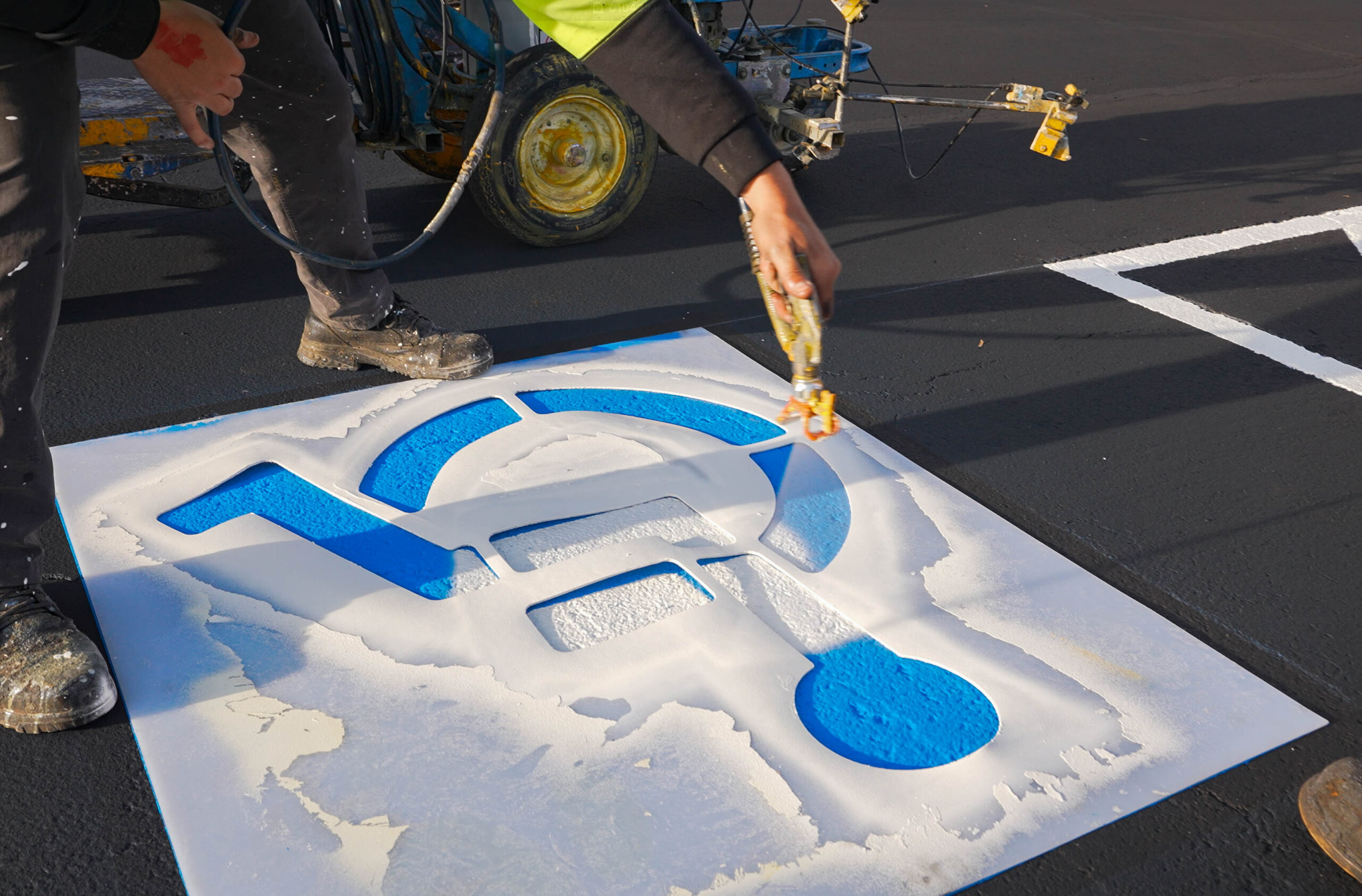
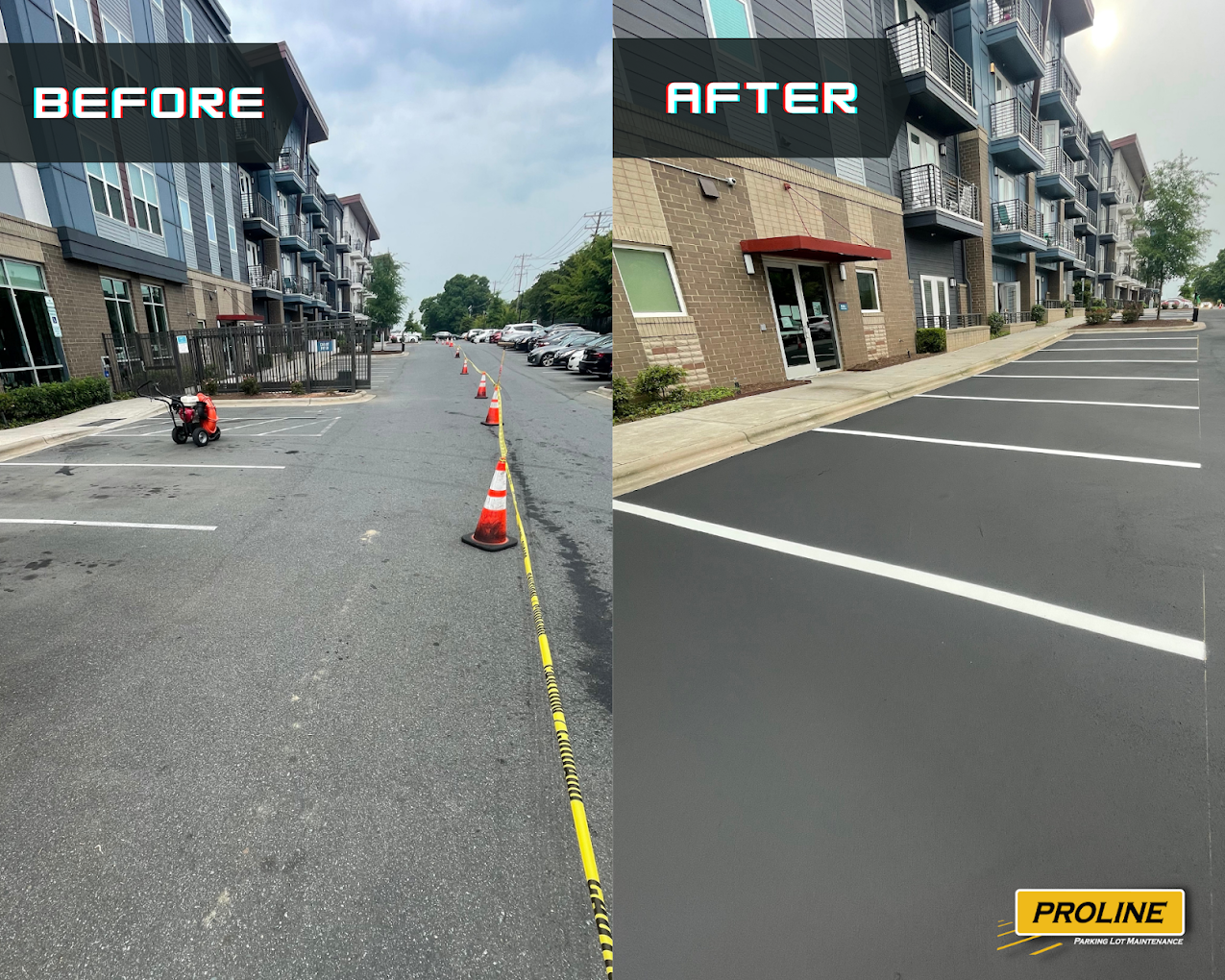
A useful apartment striping plan starts with an inventory of the markings the property needs. Separate stall lines, accessible spaces, access aisles, fire-lane markings, arrows, and stencils so the team can see the full scope before scheduling work.
This guide explains how to document a striping project, coordinate it with other pavement maintenance, and build a condition-based inspection schedule for a multifamily property.
Give Striping Its Own Maintenance Plan
Record striping separately from sealcoating, patching, and sweeping. Note the locations, marking types, and work completed so future inspections can distinguish routine wear from a change in the layout.
Keep an updated site map and photographs. These records make it easier to compare conditions over time and identify zones that need attention.
What to Include in a Striping Scope
Define the work by parking area: stall lines, accessible spaces and access aisles, directional arrows, fire-lane markings, and any numbering or stenciling. Document pavement condition, existing markings to remove, materials, traffic control, and the proposed work phases before scheduling.
| Work item | What to document |
|---|---|
| Site setup | Cones, signs, vehicle relocation, and access arrangements |
| Surface preparation | Cleaning, contamination, repairs, and old-marking removal |
| Layout and measurement | Approved stall positions, aisles, and any proposed changes |
| Material | Product suitable for the surface, traffic, and application conditions |
| Symbols and stencils | Accessible markings, fire-lane lettering, arrows, and numbering |
Build a Marking Inventory for Your Property
Count each type of marking and record its location. An inventory gives the contractor a useful starting point for a site assessment.
| Component | Record before the site visit |
|---|---|
| Standard stalls | Count, layout, and current condition |
| Accessible parking | Spaces, access aisles, signs, and connecting routes |
| Fire-lane markings | Locations and requirements confirmed with the local authority |
| Directional arrows | Count and traffic direction |
| Numbering and assignment stencils | Current identifiers and any planned changes |
Walk the property with the inventory and flag any differences between the markings and the approved plan. Include damaged pavement, confusing old lines, missing signs, and access restrictions in the project notes.
The Multi-Year Striping Calendar
Different areas of a parking lot wear at different rates. Inspect entrance lanes, turning areas, accessible parking, and pedestrian crossings closely rather than assigning every marking the same replacement date.
| Zone | Inspection focus |
|---|---|
| Entrances and turning areas | Tire wear, visibility, and directional clarity |
| Accessible parking and crosswalks | Legible markings and unobstructed connections |
| Standard stall lines | Clear boundaries and consistent layout |
| Fire-lane lettering and curbs | Visibility and consistency with local requirements |
Use inspection records to plan touch-ups and broader restriping. Refresh markings when their condition requires it and coordinate with planned pavement repairs.
Coordinate Site Access and Approvals
Confirm who approves the layout and schedule before work begins. Property-specific access, occupancy, and pavement conditions should drive the plan.
| Planning item | Action |
|---|---|
| Resident access | Identify alternative parking and accessible routes during each phase |
| Work sequence | Complete required repairs and allow suitable curing before striping |
| Local requirements | Confirm any layout or fire-lane approvals |
| Weather | Allow for product-specific application conditions and delays |
Follow the ownership group or management company’s approval process. Provide the marking inventory, proposed schedule, and any layout changes early enough for review.
Contact ProLine Parking Lot Maintenance to discuss your property’s existing markings and planned striping work.
Plan Your Parking Lot Striping Project
ProLine Parking Lot Maintenance provides parking lot striping for multifamily properties. Contact the team to discuss routine restriping, accessible markings, fire-lane markings, or a proposed layout change.
Contact UsFrequently Asked Questions
How should striping fit into the property’s maintenance plan?
Include striping in the property’s maintenance records alongside pavement repairs and inspections. Identify who approves the work and how changes to the scope will be documented.
What questions should a property manager ask before work begins?
Confirm what surface preparation, old-marking removal, materials, stencils, traffic control, and cleanup are included. Agree on how weather delays and changes discovered on site will be handled.
When should old markings be removed?
Old markings may need removal when the layout changes or the existing coating will not support the new material. Have the contractor inspect the surface and select a method suitable for the pavement and coating system.
What should be checked before changing marking materials?
Choose marking materials for the pavement type, traffic, weather exposure, and required visibility. Ask the contractor to identify the proposed product and follow its surface-preparation, application, and reopening instructions. Inspect completed markings regularly and refresh them based on their condition.
How should shared parking areas be coordinated?
For shared parking areas, confirm responsibilities with the association or property manager before scheduling. Identify who approves the work, communicates with occupants, and maintains the completed markings.
How should striping be coordinated with other pavement work?
Complete necessary pavement repairs and surface treatments before striping, then allow the surface to meet the selected marking product’s requirements. A shared schedule can help the teams coordinate access and communicate closures to residents.
How can a property prepare for unexpected touch-ups?
Keep a process for checking markings after utility repairs, pavement patches, storms, or layout changes. Record the affected area and arrange corrective work when markings are damaged or unclear.
See also: How Line Striping Helps Maximize Parking Capacity at Apartment Communities, How to Reconfigure Parking Spaces in a Multifamily Apartment Lot