

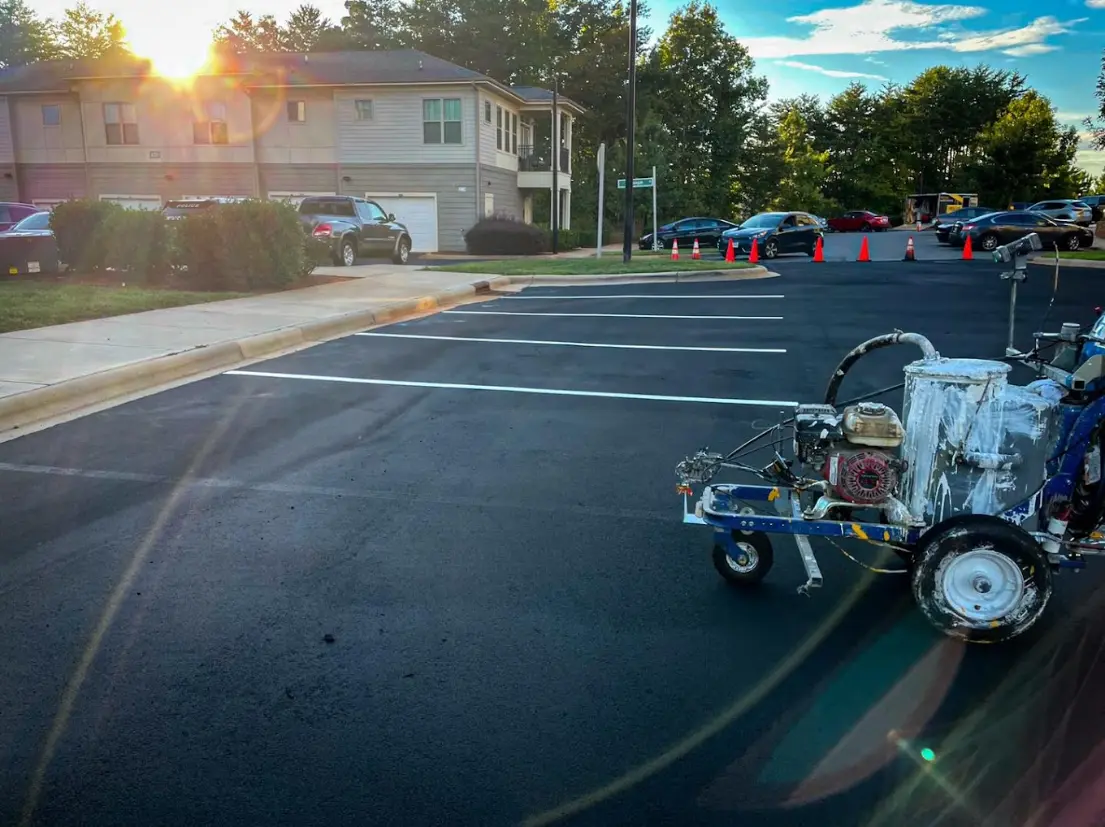
Marking materials differ in application requirements, durability, and suitability for the pavement and exposure. Confirm the selected product’s current technical data and applicable requirements before use.
Quick answers:
- Traffic-marking systems include waterborne paint, epoxy, thermoplastic, and preformed tape, each with different preparation and installation requirements.
- According to the EPA, VOC regulations have shifted the industry toward waterborne formulations, which means some older solvent-based products are no longer standard, or even available, in many states.
- Cure time and temperature range vary significantly by material, which means the “best” product on paper isn’t always practical for a specific project’s timeline or season.
- Matching material to traffic volume and location on the property, rather than using one material everywhere, often produces better value than a single uniform choice.
- “Durable” covers more than lifespan alone. Adhesion quality, abrasion resistance, and color retention are separate performance factors that don’t always move together.
The Main Paint and Marking Material Categories
Waterborne paint, two-part epoxy, thermoplastic, and preformed tape are different marking systems. Product suitability depends on the surface, traffic, weather exposure, and installation method. Use the manufacturer’s technical data rather than assuming that one material is always the most durable.
Why VOC Regulations Have Changed What’s Actually Available
State-level VOC limits have meaningfully narrowed what’s practical to use in many parts of the country. According to the EPA, these regulations exist to reduce air quality impacts from solvent-based coatings, and the practical effect for property owners is that waterborne formulations have become the default recommendation in most markets, not simply a preference. If you’re working with a supplier or contractor still offering an older solvent-based product, it’s worth confirming that it’s actually compliant with your state’s current regulations rather than assuming any product on the market is automatically legal to use.
Cure Time and Temperature Range: Why the “Best” Paint Isn’t Always the Right Choice for Your Timeline
Every material has a temperature and moisture window it needs to cure properly, and these windows vary significantly. Waterborne paint needs dry conditions and a reasonable temperature range to cure without washing out. Thermoplastic requires specialized heating equipment and specific ambient conditions to bond correctly, which limits when it can realistically be applied in colder weather. Epoxy’s chemical cure is also temperature-sensitive, curing faster in warm conditions and more slowly in cold ones. A property with a tight scheduling window, before a specific event or during a narrow seasonal opportunity, sometimes needs to choose based on what a chosen material’s cure requirements actually allow, not purely on which option has the longest theoretical lifespan.
Matching Material to Traffic Volume and Location on the Property
Materials can be selected by zone when different parts of a property have different traffic or exposure. Confirm compatibility, application requirements, and maintenance needs for each selected system.
What “Durable” Actually Means: Adhesion, Abrasion Resistance, and Color Retention
Lifespan alone doesn’t capture everything that matters about a marking material’s performance. Adhesion quality determines how well a material bonds to the specific pavement surface it’s applied to, which can vary depending on the age and condition of the asphalt underneath. Abrasion resistance determines how well a marking holds up specifically against tire wear in high-traffic areas, separate from how it holds up against sun and weather exposure. Color and pigment retention is its own factor, since a marking can remain structurally intact while still fading enough to become harder to see, which matters more for compliance-critical markings than for general stall lines.
Maximize Mark Longevity with High-Performance Traffic Paint
In high-traffic multi-family communities, low-grade contractor paint quickly flakes, fades, and wears away under constant vehicle tire friction and harsh weather exposure. Selecting the right paint formulation—whether fast-drying waterborne acrylics, heavy-duty alkyds, or high-durability thermoplastics—is essential to keeping your stall lines, fire lanes, and directional arrows bright and legible for years to come.
ProLine Parking Lot Maintenance utilizes commercial-grade, traffic-rated paint coatings engineered to withstand intense vehicular wear and deliver long-lasting clarity for apartment properties.
- Premium Material Selection: Fast-curing, high-durability paint formulations selected specifically for your pavement type and traffic volume.
- Maintenance Planning: Inspect for fading, coating damage, and tire wear, then arrange corrective work when needed.
Frequently Asked Questions
Does the type of asphalt or pavement surface affect which paint will adhere properly?
Yes, surface condition matters more than most property managers expect. Newer, well-cured asphalt generally provides a cleaner, more consistent surface for any marking material to bond to, while older, oxidized, or oily pavement can compromise adhesion regardless of how good the paint itself is. Properly cleaning and preparing the surface before application, and in some cases waiting for new asphalt to finish its curing period, matters as much to the final result as which specific product gets applied.
Are low-VOC waterborne paints as durable as older solvent-based paints were?
Modern waterborne formulations have improved significantly and perform reasonably close to older solvent-based options in most conditions, though some performance differences can still exist depending on the specific products being compared. For most standard applications, the durability gap has narrowed enough that waterborne paint is a genuinely solid choice rather than a compromise, though for the most demanding high-traffic applications, epoxy or thermoplastic still generally outperforms either type of standard paint.
Can different paint types be mixed on the same property, like thermoplastic in drive aisles and standard paint in stalls?
Different materials may be appropriate for different zones. Confirm that each selected system is suitable for the pavement and intended use, and document it in the project scope.
Does preformed tape or cold plastic marking work as well as heated thermoplastic?
Preformed tape may be suitable for some applications. Check the manufacturer’s requirements for surface preparation, adhesion, installation equipment, and traffic reopening before selecting it.
How does material choice affect project planning?
Materials can require different surface preparation, equipment, application conditions, and reopening times. Include these requirements in the work plan before selecting a marking system.
Is there a paint or material specifically better suited for concrete parking structures versus asphalt lots?
Yes, concrete surfaces have different adhesion characteristics than asphalt, and some marking materials perform better on one substrate than the other. Certain epoxy formulations are specifically designed with concrete adhesion in mind, which is worth confirming directly if your property includes a parking structure or garage rather than assuming a product formulated primarily for asphalt will perform identically on concrete.
Do manufacturers offer warranties on traffic paint itself, separate from a contractor’s labor warranty?
Some manufacturers do offer product warranties covering material defects, separate from any warranty a contractor provides on their own workmanship and application. These two warranties cover different things; a product warranty generally won’t cover a marking that failed due to poor application technique, and a labor warranty generally won’t cover a marking that failed due to a genuine material defect, so it’s worth understanding which warranty would actually apply if a specific problem comes up.
Can old paint markings be fully removed before applying a different, more durable material?
Yes, and this is generally recommended when upgrading to a different material type rather than simply repainting over old markings. Removal methods like grinding, shot blasting, or waterjetting clear the old material so the new one bonds directly to the pavement surface rather than to a layer of old paint that could affect adhesion or create visible ghosting underneath the new markings.
See also: Visitor Parking Line Striping Ideas for Apartment Communities, The Benefits of Repainting Handicap Parking Spaces at Multi-Family Properties


