According to the National Apartment Association, guest and visitor traffic is a planning factor multifamily properties are expected to accommodate, not an afterthought handled with whatever space happens to be left over. We see visitor parking treated as an afterthought constantly anyway, usually just a handful of stalls with a stenciled label wherever room allowed. There’s a lot more design flexibility available than that, and the right approach depends on your property’s layout, guest volume, and how much you want visitor parking to actually stand out.
Quick answers:
- A simple stenciled “VISITOR” label works, but a distinct color or border treatment for the entire zone reads more clearly from a distance and reduces confusion for first-time guests.
- Clustering visitor spaces near the leasing office makes them easier to find, while distributing them near individual buildings is more convenient for the resident being visited, and the right choice depends on your property’s layout.
- Pairing striping with a time-limit sign is one of the more effective ways to prevent visitor spaces from becoming unofficial long-term resident parking.
- QR code signage paired with a physically marked visitor zone is a newer approach some properties use to track guest registration digitally.
- According to the International Parking & Mobility Institute, thoughtful visitor parking design is a real part of overall parking facility management, not a minor detail to handle after everything else is finalized.
Color-Coded Zones vs. Simple Labels: Two Different Approaches
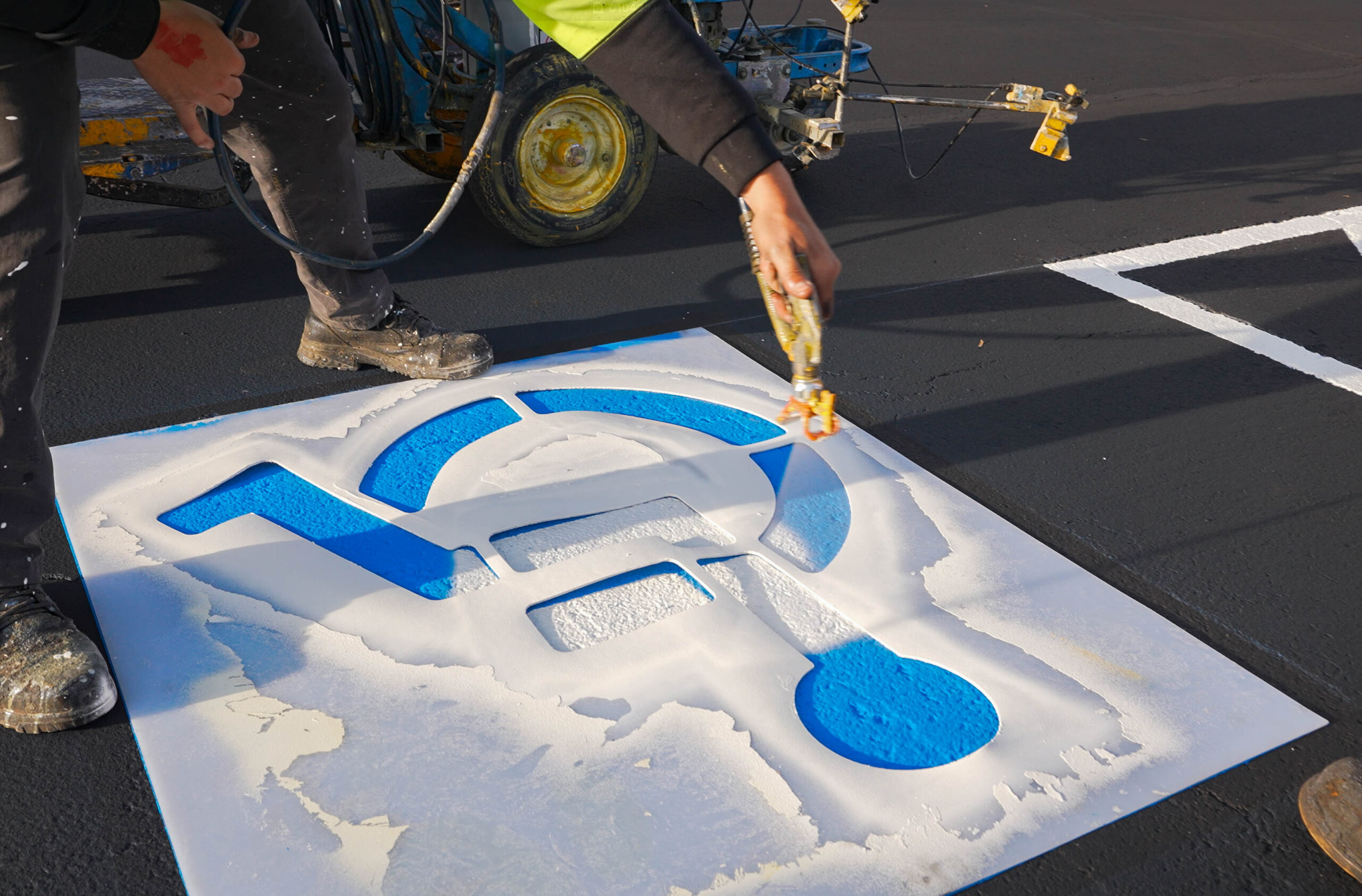
A stenciled “VISITOR” label on an otherwise standard stall is the simplest approach, and it works well enough on smaller properties with a handful of guest spaces. A distinct color or border treatment for the entire zone, a yellow-bordered section or a different base paint color entirely, reads clearly from a distance in a way an individual stencil doesn’t, which matters more on larger properties where a guest is scanning an unfamiliar lot for the first time. The tradeoff is cost and consistency: a full-color treatment costs more up front and needs to be maintained across every visitor section on the property, not just touched up stall by stall.
Clustering Visitor Spaces vs. Distributing Them Across the Property
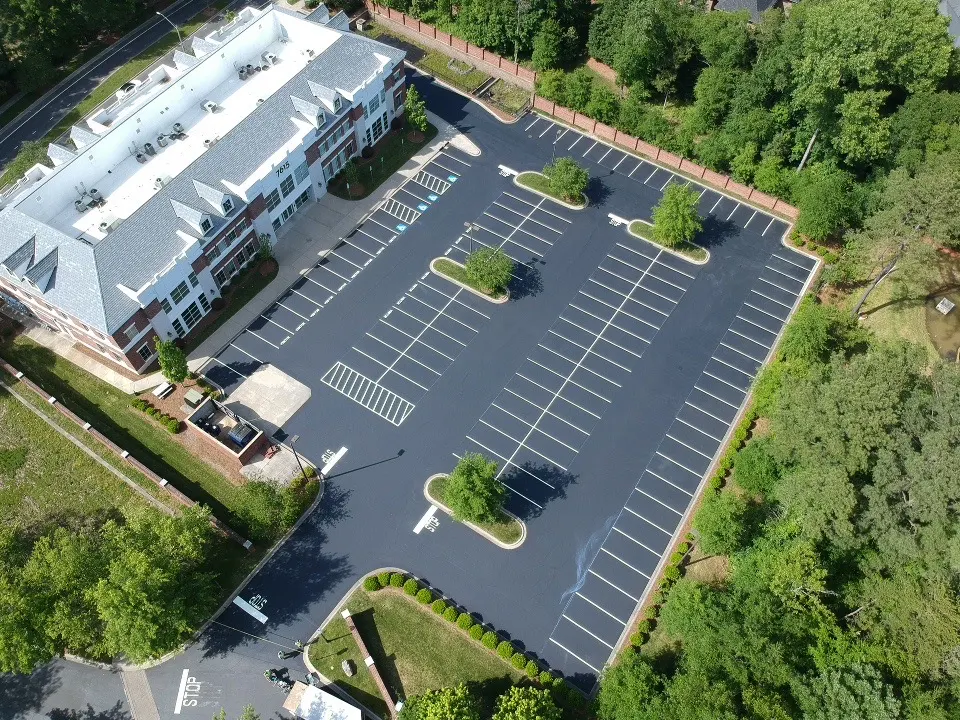
Clustering all of a property’s visitor parking near the leasing office or main entrance makes it easy for a first-time guest to find without needing directions, and it simplifies monitoring for staff. Distributing smaller visitor pockets near each building instead means a shorter walk for guests visiting residents further from the main entrance, at the cost of guests needing more specific directions to find the right pocket. Larger properties often end up doing both: a primary cluster near the office for general guests, with smaller distributed pockets near buildings furthest from that main entrance.
Time-Limited Visitor Parking: Striping Paired With Signage
Visitor spaces quietly becoming long-term parking for residents is one of the more common problems properties run into, and pairing the striping with a specific time-limit sign, “Visitor Parking, 48-Hour Limit,” for example, gives staff and enforcement something concrete to point to. The striping itself doesn’t change for this approach, but the combination of a clearly marked zone and an explicit posted limit makes enforcement far more straightforward than relying on an unwritten expectation that visitor spaces are for short-term use only.
QR Codes and Digital Registration Paired With Physical Striping
Some properties now pair a physically marked visitor zone with a QR code sign that lets guests register their visit digitally, sometimes tied into a broader parking management or visitor log system. The physical striping still does the core job of marking where guests should park, while the QR code adds a layer of tracking that helps staff know who’s actually using the space and for how long. This is a newer idea worth considering specifically for larger communities already managing visitor access digitally in other ways, like gate codes or a resident app.
Seasonal or Event-Based Temporary Visitor Zones
Properties that see occasional spikes in guest traffic, holidays, community events, and move-in weekends sometimes benefit from temporary visitor zones rather than permanent striping for overflow parking that’s only needed a few times a year. Removable striping tape or temporary paint can mark an overflow area for a specific event without committing that space to permanent visitor use the rest of the year. This approach works best for predictable, recurring high-traffic periods rather than as a long-term substitute for adequate permanent visitor parking.
Optimize Visitor Parking with Clear, Strategic Line Striping
Poorly marked visitor parking leads to guest confusion, resident frustration, and vehicles illegally parked in reserved or fire zones. Implementing dedicated visitor parking strategies—such as color-coded stall borders, bold custom stenciling, time-limit designations, and directional pavement arrows—ensures guest vehicles are routed away from resident spaces while maintaining smooth traffic flow.
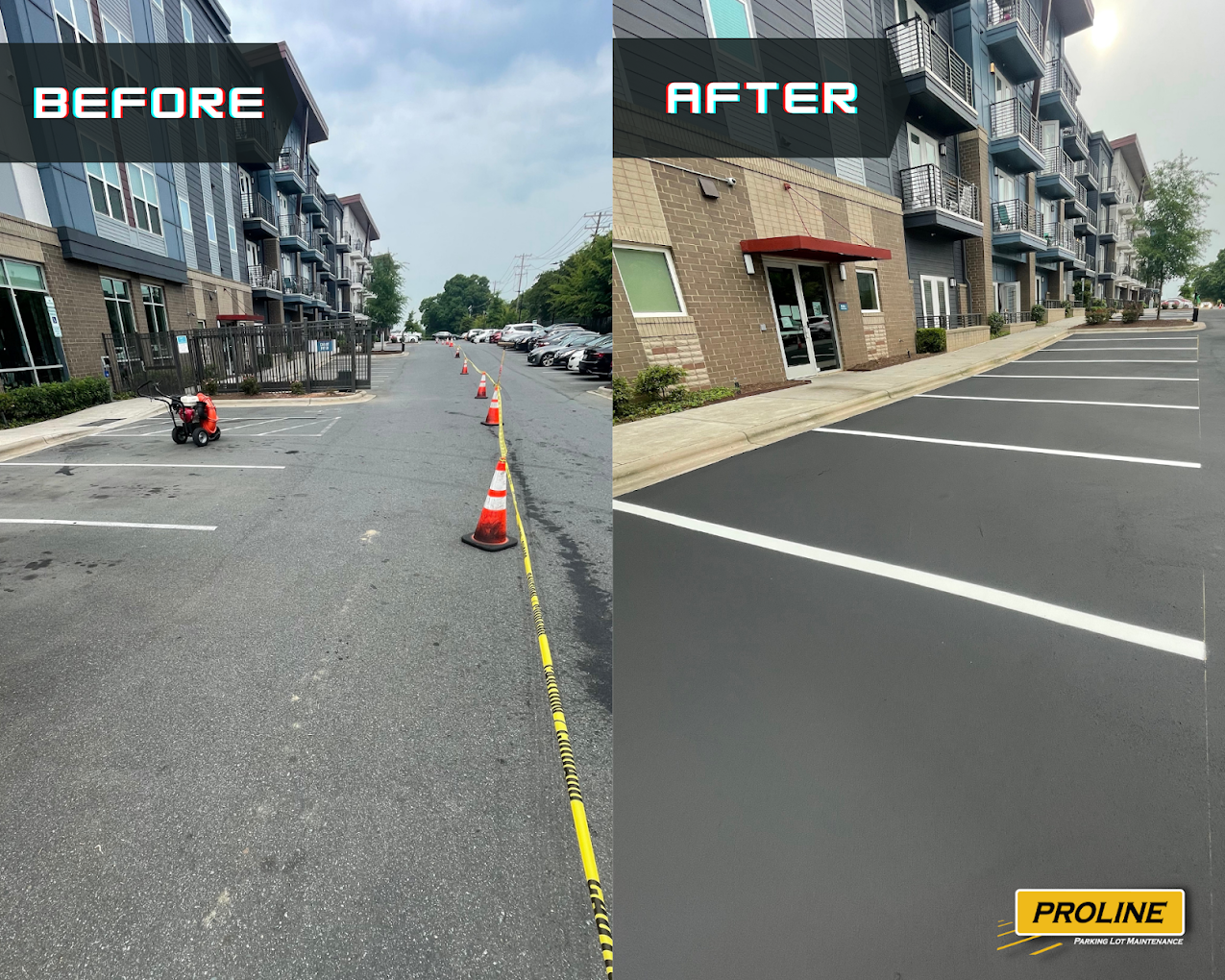
ProLine Parking Lot Maintenance designs and executes custom visitor striping layouts that eliminate parking confusion, support property enforcement, and create a welcoming first impression.
- Custom Visitor Stenciling: Highly legible “VISITOR,” “GUEST,” or “FUTURE RESIDENT” markings painted with traffic-grade acrylics.
- Streamlined Traffic Flow: Directional arrows and highlighted loading/guest zones that keep tenant bays protected and traffic moving safely.
Frequently Asked Questions
Can visitor parking be color-coded differently for different sections of a large property, or should it stay consistent everywhere?
Consistency across the whole property is generally easier for guests and staff to understand at a glance, since a color or treatment that means “visitor parking” in one section should mean the same thing everywhere on the property. Large properties with genuinely distinct sections sometimes use a consistent base color paired with a section-specific label or number, which keeps the overall meaning consistent while still helping guests navigate to the specific area near the building they’re visiting.
Does adding a time limit sign to visitor parking actually require a different striping approach, or just additional signage?
Just additional signage in most cases. The striping itself typically stays the same, marking the space as visitor parking, while the time limit is communicated through a separate posted sign rather than anything painted on the pavement. Some properties choose to reinforce this with a stenciled reference to the time limit directly on the pavement as well, though this is a supplementary touch rather than a requirement for the approach to work.
Is it worth painting a distinct border or zone color for visitor parking, or does a simple stenciled label work just as well?
It depends on your property’s size and how much guest traffic genuinely struggles to find visitor parking under the current simple-label approach. A stenciled label works perfectly well on smaller properties or those with a single, obvious visitor area, while a distinct zone treatment tends to earn its higher cost on larger properties with multiple visitor pockets or heavier first-time guest traffic who don’t already know the layout.
Can visitor parking spaces double as additional resident parking during off-peak hours?
Some properties do allow this informally, but it requires a clear, communicated policy rather than an unofficial assumption, since ambiguity here tends to create exactly the kind of dispute we’ve discussed in other articles about parking conflicts. If a property wants to formalize dual-use visitor spaces, clear signage stating the specific hours or conditions under which residents may use them helps avoid confusion for guests who show up expecting the space to be available.
Does a QR code sign for guest registration need to be paired with any specific striping requirement?
No specific striping requirement is tied to a QR code system itself, since the code and the physical marking serve two different, complementary purposes. The striping still needs to clearly mark where guests are supposed to park, while the QR code adds a registration or tracking layer on top of that physical marking. The two work well together, but neither depends on a specific paint color or pattern to function.
Should visitor parking be closer to accessible spaces for guests who may need both accommodations at once?
This is worth considering during layout planning, since a guest with a disability visiting a resident benefits from accessible parking being genuinely reachable rather than requiring a long walk from a distant visitor zone. Placing at least some visitor spaces near or adjacent to accessible parking, rather than clustering all visitor parking far from it, accommodates guests who need both without requiring a specific policy or sign to make it work.
Can temporary striping tape or paint be used for event-based overflow parking without violating any code requirements?
Generally, yes, for temporary use on private property, though it’s worth confirming that any temporary markings don’t conflict with fire lane access or accessible route requirements, which remain in effect regardless of whether an event is happening. According to the Federal Highway Administration’s general marking standards, temporary markings should still be clear and unambiguous even when they’re not permanent, which is a reasonable standard to apply to a private property’s event-based overflow parking as well.
How many visitor parking ideas from this list can realistically be combined at one property?
More than people often expect, since several of these ideas complement rather than compete with each other. A property might reasonably combine a distinct color zone near the leasing office, a time-limit sign, and a QR code registration system all at once, while a smaller property might only need a clear stenciled label and a time-limit sign to solve its specific problem. The right combination depends on your property’s actual size and pain points, not on adopting every idea simply because it’s available.
See also: Reserved Parking Line Striping Solutions for Multi-Family Properties, Signs Your Apartment Parking Lot Needs New Line Striping