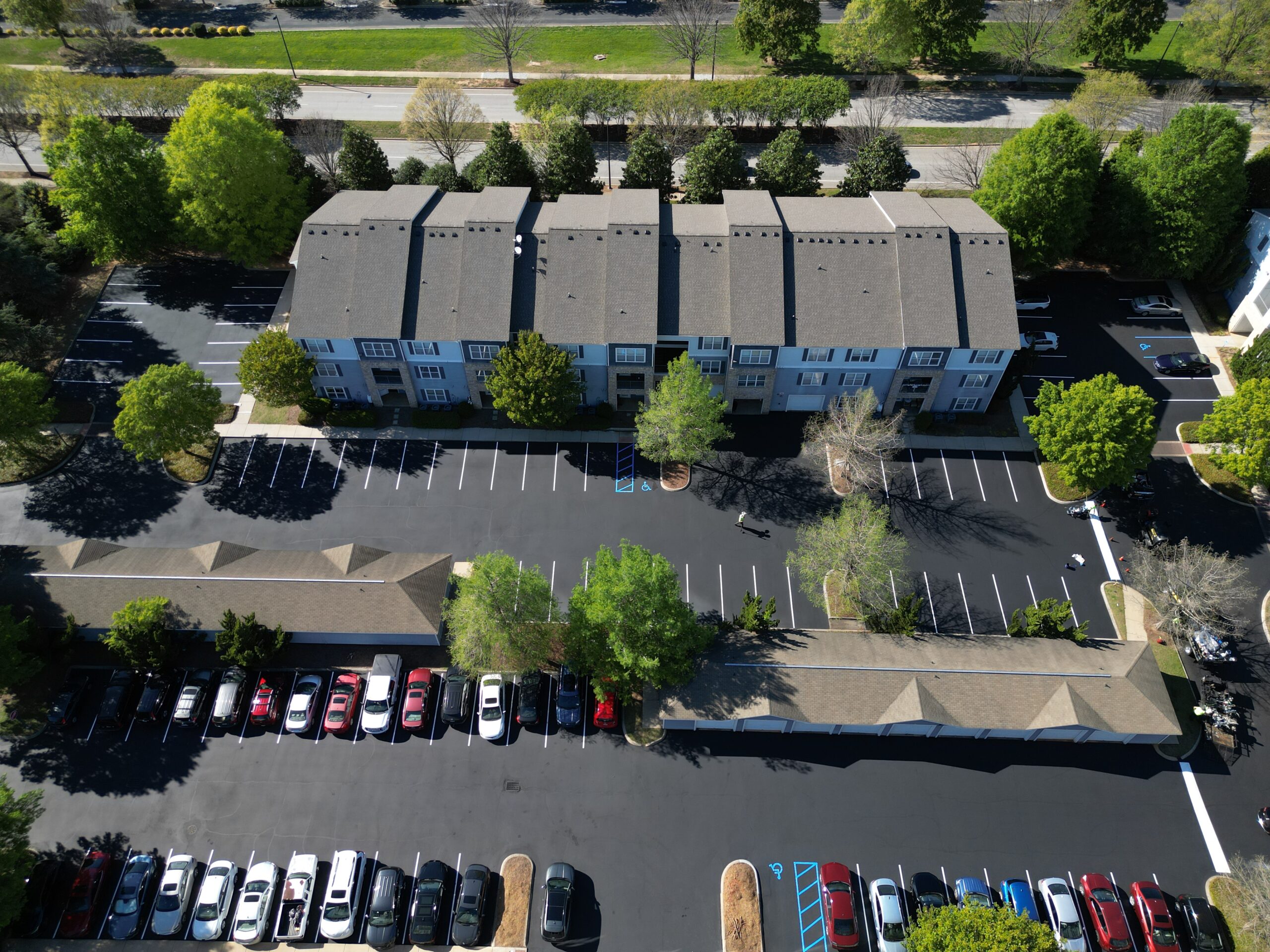
One manufacturer’s traffic paint data sheet states that new asphalt should ideally age for several months before striping. The industry standard is to wait at least 30 to 90 days after paving for the asphalt to cure before applying any markings, with 60 days typically recommended. Many of the apartment managers we work with, however, call a striping crew within a week of paving. That gap is why so many painted lines lift, smear, or flake before the first lease renewal. We at ProLine Parking Lot Maintenance do a lot of striping on multifamily properties in both North and South Carolina, and we’re far more likely to be called out to fix a failed line than to fix a bad layout. The paint itself is rarely the problem. In virtually every instance, we find something between the paint and the asphalt that has prevented the bond from forming. This article goes through the most common causes that we come across and shows how we avoid each one.
Quick Overview
- Paint grips the asphalt by bonding into tiny pores, so anything that fills those pores weakens the line.
- Dust, oil, and moisture are the usual culprits behind adhesion failure in apartment communities.
- New asphalt and fresh sealcoat release oils that bleed through and lift the paint.
- Thick coats and the like will just peel in sheets as they age.
- Carolina humidity, dew, and red clay present a whole set of risks that a generic striping plan simply won’t account for.
How Paint Actually Bonds to Asphalt
To understand adhesion issues, you need to understand how adhesion works. The TxDOT water-based paint guidance makes it clear that paint adheres through mechanical bonding within the pores of the pavement surface. The paint flows into the tiny valleys between the stones and the binder, dries, and locks in. A clean, dry, textured surface gives the paint plenty of grip; a dusty, oily, or wet surface gives it nothing but a loose film to sit on.
That same guidance specifies what must not be on the pavement: dirt, dust, moisture, poorly adhered old markings, glass beads, and curing compound. All of those things are present on apartment lots every day. Mud and pollen get tracked across the stalls, cars drip oil, irrigation overspray will wet the edges, and old stripes will crumble in patches. When a crew paints over that, the line looks perfect for a few weeks, and then it starts to fail.
Reading the Failure Pattern
The way a line fails tells you why it failed. You walk the property, you look at the pattern, and you match it to a cause before you even think about recommending a fix. The table below shows the failure signs we see most frequently at the multifamily properties.
| What You See | Likely Cause | What We Do |
| Lines peel up in sheets | Paint bonded to dust or a prior failing coat | Remove loose paint, power wash, and repaint after full drying |
| Yellow or brown halos around stripes | Asphalt oils bleeding through new or recently sealed pavement | Wait for the surface to cure, then repaint with a light coat |
| Paint chalks off and leaves a faint ghost line | Moisture or cold at application | Reapply under proper temperature and dry conditions |
| Edges flake while the center holds | Thick film shrinking as it cures | Strip the buildup and apply a thinner coat |
| Blisters or bubbles in the paint | Trapped moisture under the film | Let the pavement dry fully and repaint |
| Asphalt lifts or cracks under the line | Excessive film thickness on young pavement | Remove the heavy coat and wait before repainting |
| Stripes vanish only in oily spots | Fuel, oil, or grease contamination | Degrease the area and treat stains before painting |
This table also enables you to talk to a contractor. If you tell us the line peels in sheets, we’re already going to be thinking dust or old paint, and we can then plan the prep.
Dust, Pollen, and Red Clay
Dust is number one of the adhesion killers we see. The TxDOT pre-installation inspection guidance states that debonding most frequently results from an unclean pavement surface. In the Carolinas the dust takes a number of forms. In Charlotte, Raleigh, and Greenville, you get a thick yellow film from the springtime pine pollen, which looks quite innocuous, but it actually blocks the pores. You get red clay from the construction sites and the landscape beds tracking onto the pavement and packing into the texture. You also get loose aggregate from the aging asphalt.
We deal with dust via a three-stage clean. Power-sweep the surface first to get all the loose bits off. Then blow the lines clean with high-volume air, which pulls the dust out of the pores. In any areas that are heavily stained or clay-covered, we pressure wash and leave to dry fully. It takes a lot of time to do it properly, but it’s the difference between a line that will last two years and one that will peel in a month.
Moisture, Dew, and Humidity
Carolina mornings are damp. There’s a film of dew in Columbia, Charleston, and Wilmington, which you can’t always see on the asphalt, and paint applied over that film will trap the moisture underneath. The humidity also slows drying so a line that looks dry on the surface can be wet underneath for hours. When the temperature drops in the evening, the moisture can settle on the fresh paint and turn it chalky.
We test the pavement prior to painting, and we’ll only paint when the surface is completely dry. We schedule our work for mid-morning through early afternoon when the surface is at its warmest, and we’ll avoid painting if there’s any chance of rain within the cure window. The table below shows how the Carolina seasons influence our approach.
| Season | Main Adhesion Risk | How We Adjust |
| Spring | Heavy pollen and sudden showers | Wash pollen off first and watch the radar |
| Summer | Afternoon thunderstorms and fast skinning in direct sun | Start early and finish before storms build |
| Fall | Leaf litter, cooler mornings, and dew | Wait for the surface to dry and sweep thoroughly |
| Winter | Cold pavement that slows drying | Paint during the warmest part of the day only |
New Asphalt and Fresh Sealcoat
Fresh pavement is the ideal surface in which to apply markings, but it has a problem. The new asphalt and the recent sealcoat are both releasing oils which rise to the surface and which then bleed into the paint, creating yellow or brown halos. A Navy pavement marking study describes this bleeding on both newly paved and newly sealed surfaces and notes that the problem is exacerbated in the low spots, which hold rainwater. The same study goes on to say that agencies will often have a minimum cure period prior to allowing marking paint to be applied.
We address this by working in tandem with your paving or sealcoating crew and respecting the cure window. If a property has both work done, we will sequence it so the pavement has time to settle before we paint. We’ll apply a very thin coat initially to check for any bleed issues, which protects your investment, as any stripes that bleed early on will effectively force you to pay for that work twice.
Thick Coats, Stacked Layers, and Oil Stains
More paint doesn’t equate to better adhesion. Thick coats shrink as they cure, and that shrinkage strains the film and the pavement underneath. The very data sheet that recommends aging new asphalt also cautions that applying more than the recommended film thickness increases the risk of the asphalt lifting. It also states that multiple layers of paint will eventually peel. Many apartment communities repaint every year or two without stripping the old paint, and after a few coats the paint stack ends up behaving like a brittle skin.
Oil stains are a different issue entirely. Fuel and motor oil soak into the asphalt and soften the binder, so the paint can’t adhere. We deal with oil spots by scrubbing them out with degreaser, rinsing them clean, and then priming or sealing deep stains before painting. If you can see a dark patch inside a stall, we’ll flag it, as it’s likely to be the first spot to fail.
Preventing Failures Across Your Property
Line adhesion works best as part of a wider maintenance program. Our guide on preventing scuffing damage from wheel turns explains how, even with good adhesion, wear will shorten the line’s life. For high-use areas such as office entrance striping near management buildings, our article on leasing office entrance striping shows how we prepare and stripe those areas to withstand constant use.
Fix Failing Lines With ProLine
Failed lines cost money and drive residents mad. ProLine Parking Lot Maintenance works with apartment communities throughout North Carolina and South Carolina, and we’ll diagnose the adhesion issue before we even paint a stripe. Get in touch for a site assessment, and we’ll inspect your pavement, determine the cause of each failure, and give you a plan for your next striping job so it lasts.
Get Long-Lasting Parking Lot Lines for Your Apartment Community
Peeling, fading, or poorly adhered parking lot lines can make apartment parking areas difficult to navigate. Issues such as surface contamination, moisture, improper preparation, and unsuitable application conditions can affect how well traffic paint bonds to asphalt. At ProLine Parking Lot Maintenance, we provide professional parking lot striping services to help multifamily property managers maintain clear, durable pavement markings. Let our team help restore the visibility and organization of your apartment parking lot.
Contact UsFrequently Asked Questions
Should we stripe before or after sealcoating?
We’d recommend sealcoating first, allowing it to cure fully and then striping on top. If you paint prior to the sealer, then the crew has to cut around every line, and the sealer that overlaps the fresh paint can smear it or dull the color. Letting the sealcoat cure also reduces the oil bleed that will stain the new lines. We’ll work with your sealcoat contractor to get the order right and set a calendar so both crews finish in the correct sequence.
How can we test whether paint will stick before we commit to the full job?
We normally put a little test stripe in a fairly inconspicuous corner and then check it after a day or two. Simply press a piece of tape firmly onto the cured test line and peel it off. See how much paint comes off. A good bond will leave most of the paint on the pavement; a poor bond will peel off in flakes. It’s a cheap test and gives you real confidence before the team paints hundreds of stalls.
Who is responsible when new lines peel soon after installation?
Responsibility will depend on your contract, the cause of the failure, and the conditions during the work. If the contractor failed to prep, painted on a wet surface, or failed to observe a cure window, then the contractor should rectify it. If the pavement has an underlying issue (e.g., fresh oils, heavy contamination, unreported sealcoat), then the answer may be with several parties. We recommend documenting the failure with dated photos, reviewing your contract language, and contacting the contractor as soon as possible so the team can inspect the lines together.
How do we remove failed lines before we repaint?
The best method depends on how the old paint has failed and how much is left. Loose, flaking paint can usually be stripped away with a stiff scraper and a pressure wash. More tenacious layers may require a low-pressure grind or a manufacturer-recommended product. We’ll avoid any method that gouges the asphalt, as that creates deep scars for the next layer of paint. The surface is then cleaned and dried again to ensure the new line bonds to sound pavement rather than any debris left behind.
Is water-based or solvent-based paint better for Carolina weather?
Both types of paint work very well when you match the product to the conditions. Water-based paint dries quickly in warm weather, is easy to clean up, and works well for most apartment lots; it just needs dry pavement and mild temperatures. The solvent-based option tolerates cold better and bonds more aggressively, but it requires more handling and may be subject to local air quality regulations. We look at your pavement, your schedule, and your timeline, then recommend the product that will give your property the best result.
How long should properly applied lines last at an apartment community?
A well-applied line typically lasts two to three years in a standard parking stall and often longer in low-traffic areas. High-use zones such as entrances, turning areas, and crosswalks wear faster and may need attention every year. Sun exposure, traffic volume, and pavement condition all influence the timeline, so we recommend an inspection each spring and fall. Catch fading early, and a quick touch-up keeps your lot looking sharp and prevents a bigger project later.