A parking area may see hundreds of vehicle movements each day, but if it’s poorly organized, confusion can arise quickly. In apartment complexes, professionally striped parking areas do more than make the pavement look clean; they create a reliable system that helps residents, visitors, delivery drivers, pedestrians, and emergency personnel move safely around the premises.
The Manual on Uniform Traffic Control Devices, prepared by the Federal Highway Administration, sets standards and recommendations for pavement markings and traffic-control devices, and South Carolina, through its Department of Transportation, also uses the MUTCD as part of its traffic-control system.
When working on an apartment property in Charlotte, Columbia, Greenville, Charleston, Raleigh, or elsewhere in the Carolinas, professional striping should consider the property’s actual traffic patterns rather than simply repainting existing lines.
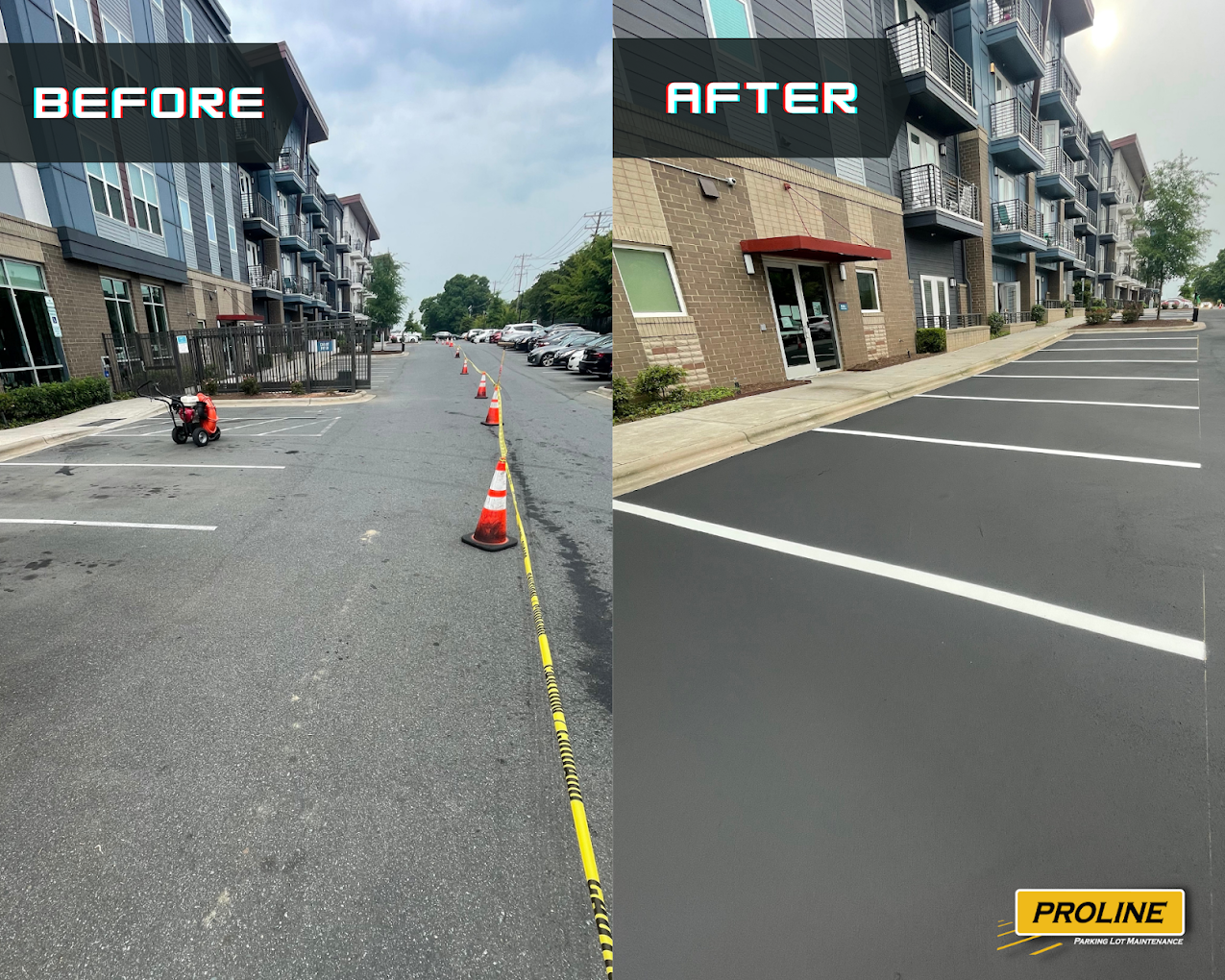
A parking lot maintenance contractor should aim to create markings that make the parking area easier to understand, safer to use, and easier for property managers to maintain.
1. Clearly Defined Parking Stalls
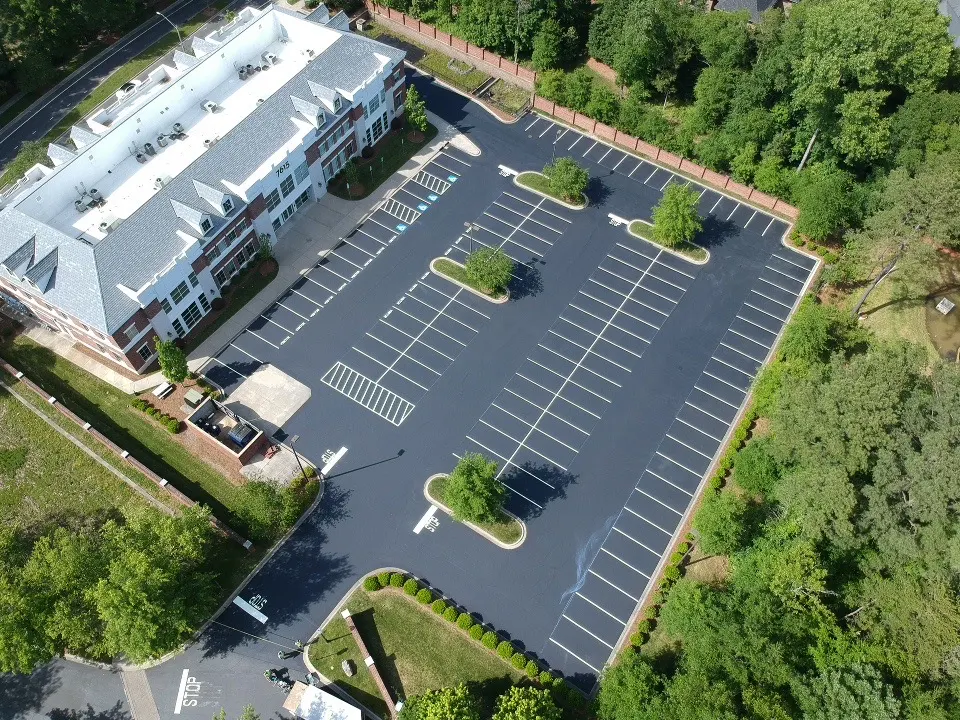
Professional apartment parking lot striping depends on having a consistent parking-stall layout.
All standard parking spaces should have clearly visible boundaries that show drivers exactly where to park. Uniform stall sizes also help property managers make the most of available parking space without causing unnecessary congestion.
A professional striping project should evaluate:
- Standard resident parking spaces
- Visitor parking spaces
- Compact spaces, where applicable
- Reserved spaces
- Employee or staff parking
- Motorcycle parking, where applicable
- Loading areas
- Accessible parking spaces
- Fire-lane restrictions
- No-parking areas
Instead of simply copying the faded lines, the contractor should first examine the present layout. Changes to apartment layouts, traffic patterns, parking requirements, dumpster locations, pedestrian paths, or property access can make the old layout inefficient.
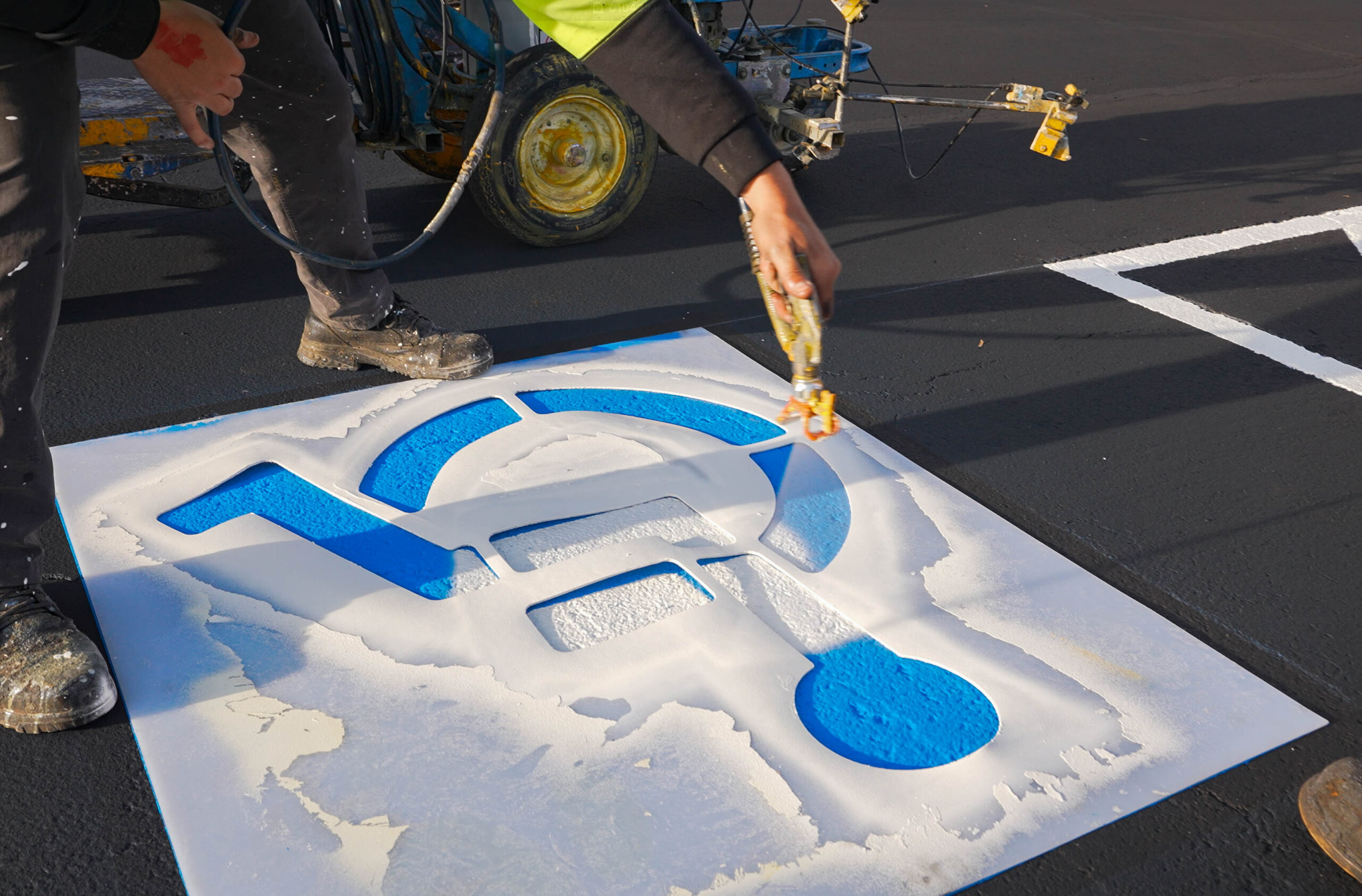
2. Accessible Parking Spaces and Access Aisles
Accessible parking takes more than putting a wheelchair symbol on the pavement.
According to the U.S. Department of Justice, accessible parking spaces must connect to an accessible route that leads to the entrance of an accessible facility, and they also require properly configured access aisles and appropriate signage.
A professional apartment striping project should therefore evaluate:
- Accessible parking space locations
- Van-accessible spaces
- Access aisles
- Pavement symbols
- Vertical signage
- Accessible routes
- Curb ramps
- Surface conditions
- Obstructions around accessible spaces
North Carolina has particular requirements concerning disability parking, and the North Carolina Department of Transportation states that striped access aisles allow space for wheelchair transfers, walkers, ramps, and lifts.
This means renewing the parking stripes alone can be inadequate if the contractor doesn’t consider the overall parking layout.
3. High-Visibility Accessible Parking Markings
Accessible parking markings should remain easy to recognize after repeated vehicle traffic and weather exposure.
Professional striping may include:
- International Symbol of Accessibility pavement markings
- Clearly defined access aisles
- Van-accessible markings
- Accessible parking signs
- High-visibility pavement markings where appropriate
The contractor must also ensure that vehicles do not easily enter the access aisles or obstruct the accessible route.
For apartment buildings, this matters because residents often park in the same spots repeatedly. An access aisle that is faded or not clearly defined can eventually be treated as a regular parking space, causing accessibility issues.
4. Fire Lane Markings
Fire lanes need special attention because they must remain clearly restricted.
When carrying out a professional apartment parking lot striping job, you must clearly mark areas where vehicles are not allowed to park or stand and ensure the pavement markings comply with relevant property and local requirements.
Depending on the property’s approved layout and local requirements, markings may include:
- Fire lane pavement markings
- No-parking areas
- Curb markings
- Regulatory signs
- Access points for emergency vehicles
The MUTCD states that pavement markings can accompany signs and emphasize regulatory, warning, and guidance messages.
For multifamily properties, contractors must not create or alter fire-lane restrictions based on personal preference. Before changing designated emergency-access areas, the property owner or manager should check the relevant fire code and local requirements.
5. Directional Arrows
Directional arrows show residents how traffic should go through the parking lot.
This becomes especially important when an apartment community has:
- One-way drive aisles
- Narrow internal roads
- Multiple entrances and exits
- Angled parking
- Split-level parking areas
- Parking garages
- Dead-end drive aisles
- High pedestrian activity
An arrow that is in the right position can stop drivers from entering a lane in the wrong direction.
The contractor should place arrows where drivers can see them early so they can make the necessary move, rather than placing the markings right next to the intersection.
6. Stop Bars and Traffic-Control Markings
Apartment complexes usually have internal intersections where drivers must yield or stop before entering another drive lane.
Depending on the property’s traffic-control plan, professional striping may include:
- Stop bars
- Yield markings
- Directional arrows
- Crosswalk markings
- Lane lines
- Other approved pavement markings
The markings should complement the existing signs rather than conflict with them.
The national guidelines for pavement markings and traffic-control devices provided by the FHWA MUTCD also apply to Carolina properties, which may need to account for relevant state and local requirements.
7. Pedestrian Crosswalks
Apartment parking areas are more than vehicle spaces; residents often walk from their cars to buildings, mail centers, pools, clubhouses, fitness centers, playgrounds, and sidewalks.
Professional striping should mark the main pedestrian crossing points.
Crosswalk lines can help drivers identify where pedestrians might cross the drive aisle. When considering pedestrian movement, the contractor should:
- Parking areas to apartment buildings
- Parking spaces to sidewalks
- Parking areas to leasing offices
- Mail centers
- Clubhouses
- Amenity areas
- Pool facilities
- Visitor parking
The most suitable place for a crosswalk is determined by pedestrians’ actual route across the property; simply painting a crosswalk where one was before may not reflect current traffic patterns.
8. No-Parking and Restricted Areas
A professional parking plan should also include areas in which residents are not allowed to park.
These areas may include:
- Driveway entrances
- Fire lanes
- Loading zones
- Dumpster access areas
- Pedestrian routes
- Turning areas
- Building access points
- Sight-distance areas
- Emergency access zones
The exact restrictions should follow the property’s approved traffic plan and applicable local requirements.
The MUTCD recognizes pavement markings as a way to supplement regulatory signs and reinforce traffic-control messages.
9. Visitor and Reserved Parking Markings
Apartment complexes often divide parking between residents, visitors, and reserved spaces.
Visible signs can reduce arguments about parking spaces and help property managers enforce their parking policies.
A professional layout may identify:
| Parking Area | Possible Marking |
| Resident parking | Standard stall lines |
| Visitor parking | Visitor designation |
| Reserved parking | Reserved designation |
| Accessible parking | Accessibility symbol and required signage |
| Van-accessible parking | Van-accessible designation |
| Staff parking | Staff designation |
| Loading area | Loading-zone markings |
| No-parking area | Restriction markings |
The contractor should use parking rules specific to the property.
10. Consistent Line Width and Layout
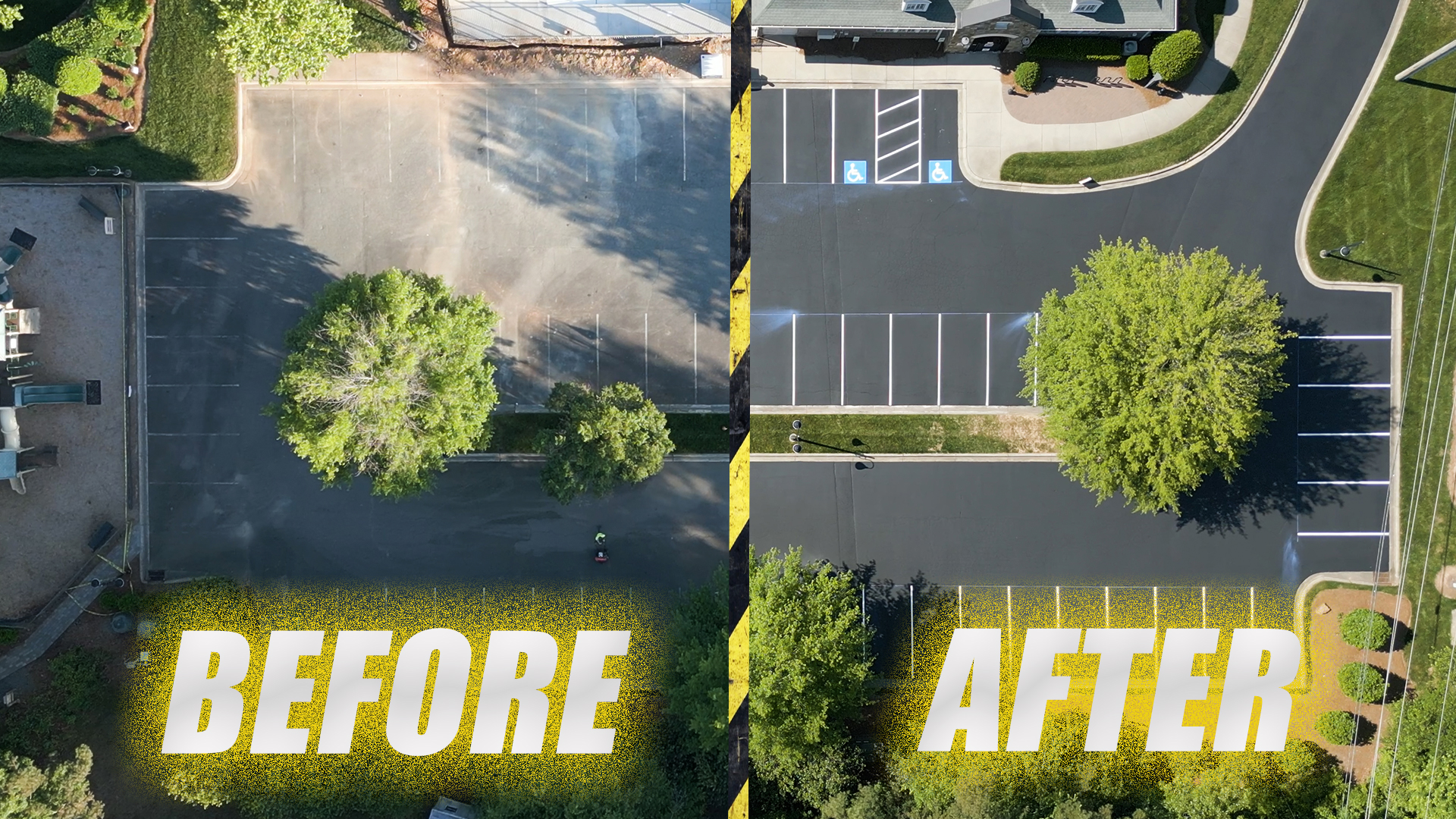
Professional striping should look consistent throughout the entire property.
A parking lot that has just been painted can still look unfinished if the lines are uneven, the stalls are crooked, spacing is inconsistent, and the markings aren’t properly aligned.
A professional contractor must set up reference points when applying paint to ensure consistent alignment in long rows and irregular parking areas.
The contractor should also account for:
- Existing curbs
- Drainage structures
- Pavement joints
- Parking islands
- Light poles
- Sidewalks
- Utility structures
- Building entrances
- Existing traffic signs
On large multifamily properties, this preparation is especially important because a single layout mistake can occur in dozens of areas.
11. Pavement Condition Before Striping
Paint cannot fix damaged pavement.
Before restriping an apartment parking lot, the contractor should inspect the pavement for:
- Cracks
- Potholes
- Failed asphalt
- Surface deterioration
- Oil contamination
- Drainage problems
- Loose aggregate
- Previous pavement repairs
The property manager should address any necessary pavement repairs whenever possible before final striping.
Striping fresh pavement repairs results in a neater final surface and prevents new markings from becoming distorted during later maintenance operations.
12. Proper Surface Preparation
The success of professional striping depends heavily on preparation.
Before applying pavement marking materials, the contractor should clear the marking areas of loose dirt, debris, vegetation, and other contaminants.
The pavement must provide a suitable surface for the selected marking material.
For apartment buildings, the contractor may also need to coordinate with property management so vehicles can leave the areas in question before the crew starts work.
13. Appropriate Paint and Marking Materials
Not every parking lot needs the same marking material.
A contractor should select materials based on factors such as:
- Pavement condition
- Expected traffic
- Weather exposure
- Required visibility
- Existing surface
- Project budget
- Local conditions
- Expected maintenance schedule
The aim should not be to use the most costly material; rather, the contractor ought to choose a marking system that meets the property’s traffic and maintenance needs.
14. Drainage and Pavement Features
Parking-stall layouts should not ignore drainage.
A contractor must avoid markings that obstruct drainage structures or lead drivers into areas where water usually collects.
During the site evaluation, the contractor should identify:
- Catch basins
- Storm drains
- Drainage channels
- Low points
- Raised islands
- Curbs
- Speed bumps
- Wheel stops
This allows the new striping to work with the property’s physical infrastructure.
15. Speed Hump and Traffic-Calming Markings
Apartment complexes can use speed humps or other traffic-calming devices to control vehicle speed.
If these features are present, the pavement markings should help drivers identify them.
A stripping operation may involve suitable markings or warning treatments if the property’s approved traffic-control plan requires them.
The contractor must also check whether worn markings make speed-control features hard to recognize, especially at night or in heavy rain.
16. A Layout That Matches How Residents Actually Drive
A major difference between basic restriping and professional apartment parking lot striping is the site evaluation.
A contractor must watch how residents use the property.
For instance, an apartment complex might have a drive aisle defined in a technical sense that residents frequently use as a shortcut. In another property, the dumpster enclosure forces delivery vehicles into a turning area.
These conditions may reveal faults not shown in a drawing or an old striping plan.
A professional evaluation should consider:
- Peak arrival times
- Visitor traffic
- Delivery vehicles
- Trash collection
- School or daycare traffic
- Pedestrian movement
- Resident parking habits
- Emergency access
- Construction or maintenance access
The layout should reflect the property’s actual operating conditions while complying with applicable requirements.
17. A Detailed Pre-Striping Walkthrough
The contractor should walk the property with the property manager or their representative before the crew starts painting.
This walkthrough provides an opportunity to confirm:
- Parking-space counts
- Reserved areas
- Visitor spaces
- Accessible spaces
- Fire lanes
- Loading zones
- Directional traffic
- Crosswalk locations
- Areas that require no parking
- Changes to the previous layout
This step can help avoid costly corrections later.
18. Final Inspection After Striping
The painting should not be the end of the project.
A final inspection should verify that:
- Lines remain straight
- Stalls remain consistent
- Accessible spaces are correctly marked
- Access aisles remain unobstructed
- Arrows face the correct direction
- Crosswalks align with pedestrian routes
- No-parking markings are complete
- Fire-lane markings remain visible
- Pavement symbols are legible
- No markings conflict with existing signs
The property manager should also have the contractor check the completed work.
Why Apartment Communities Need More Than Basic Repainting
A small commercial car park is different from a multifamily car park.
People use those areas every day, visitors arrive at different times, delivery vehicles often enter the premises, and pedestrians constantly cross the internal drive aisles.
This means professional striping should solve operational problems, not just renew faded paint.
For property managers in the Carolinas, the most effective approach incorporates accurate stall layout, accessibility, traffic organization, pedestrian flow, emergency access, pavement condition, and long-term maintenance planning.
ProLine Parking Lot Maintenance treats parking-space striping in an apartment complex as a comprehensive improvement to the parking area, not just a painting job. A proper site assessment helps establish the exact markings the property needs and where they will provide the greatest operational benefit.
Final Takeaway
Professional parking lot striping for apartments involves much more than fresh white lines.
A complete project should evaluate:
- Parking-stall layout
- Accessible parking and access aisles
- Accessible pavement symbols and signage
- Fire-lane areas
- Directional arrows
- Stop and traffic-control markings
- Pedestrian crosswalks
- No-parking zones
- Visitor and reserved parking
- Line consistency
- Pavement condition
- Surface preparation
- Appropriate marking materials
- Drainage features
- Traffic-calming areas
- Actual resident traffic patterns
- Pre-striping planning
- Final quality inspection
When you combine these factors, the apartment car park becomes easier to navigate, simpler to manage, and more predictable for residents and visitors.
A professional parking lot maintenance contractor can assess the current layout of apartment complexes in the Carolinas and prepare a striping plan based on the property’s actual needs, rather than simply copying faded markings.
Is Your Apartment Striping Missing Essential Safety Markings?
A professional apartment striping scope goes beyond freshly painted stall lines—it requires fully compliant ADA handicap stalls, stenciled fire lane curbing, high-contrast directional arrows, and clear visitor/reserved designation stencils. Skimping on proper paint formulations or skipping crosswalks and speed bump hatchings increases property liability and invites traffic chaos. ProLine Parking Lot Maintenance delivers complete, code-compliant striping packages engineered for high visibility, ADA adherence, and long-lasting paint durability. Contact our layout team today to review your property’s striping specifications.
Frequently Asked Questions
How frequently should an apartment complex restripe its parking lot?
The interval will vary based on traffic volume, weather conditions, pavement condition, paint quality, and how quickly markings become hard to see. An apartment complex with high traffic will require more frequent maintenance than a smaller property with lighter vehicle use. Property managers should plan inspections before markings fade to the point where residents can no longer easily tell where parking spaces are, what the traffic directions are, or where the restricted areas are.
Should an apartment complex have its strips repainted after the asphalt is resurfaced?
Yes, property managers should usually plan restriping after resurfacing, since paving can remove or cover existing pavement markings. It is better to apply the new markings once the final pavement surface is ready to achieve a cleaner, more accurate layout. The property manager should arrange the paving and striping schedules so that the contractor is not forced to repaint the markings unnecessarily.
Can the number of parking spaces in an apartment building be altered when the parking areas are being restriped?
The property should not assume that repainting will automatically allow it to add or remove spaces. The changes could affect accessibility requirements, fire access, traffic flow, drainage, local approvals, and the property’s current site plan. A contractor should suggest feasible layout arrangements, while the property owner or manager is responsible for checking whether the proposed changes meet the relevant requirements.
What would occur if accessible parking spaces were incorrectly marked with stripes?
Even if the pavement symbol appears correct, incorrectly arranged accessible parking can still cause accessibility issues because the space, the access aisle, the accessible route, the signage, the slope, and the surrounding conditions all play a role. Rather than simply considering the painted symbol as proof that the requirements have been met, property managers should have the layout checked against the relevant accessibility requirements.
Should different colors designate different parking areas in apartment parking lots?
While different colors can identify particular areas, they should be used deliberately rather than to look attractive. The choice should be based on standard practices for paving markings, the property’s regulations, local requirements, and visibility considerations. Property managers can consult a professional contractor to determine where color provides useful visual information and where standard markings are a better solution.
Can striping the parking lot solve the traffic problems in an apartment complex?
Although striping may help organize traffic, painting on its own can’t solve all circulation problems. When the root cause is poor driveway design, too little parking, obstructed sightlines, pedestrian conflicts, or insufficient access, the property may need further improvements. A site evaluation can help determine whether the new markings will address the real cause of the issue.
Before carrying out an apartment parking lot striping project, what ought property managers to do?
Property managers need to establish parking restrictions, inform residents, arrange vehicle removal, confirm reserved and accessible spaces, and check for changes to the current parking plan. They should also identify areas that need emergency access or special treatment. Providing the contractor with this information before work starts will reduce confusion and help the crew carry out the project efficiently.
Does weather affect parking lot striping in apartments?
Certainly, temperature, moisture, rainfall, and the state of the pavement can influence the application and curing of pavement marking materials, and a contractor should plan the striping to be carried out under appropriate conditions according to the material chosen and the conditions at the site. This is especially important in the Carolinas, since seasonal heat, humidity, storms, and rainfall can affect project scheduling.
Should the cracks and potholes in the parking lot be repaired before the painting of the stripes?
In most cases,, the answer is yes; if the stripping of damaged pavements is done before the repairs, the markings may later become distorted, be removed, or be damaged when the pavement work is carried out later. By carrying out the pavement repairs first, the contractor can apply the final parking layout to a more stable surface, which reduces the chance of having to pay for unnecessary restriping.
What can property managers do to make new parking lot stripes remain visible for longer?
To improve the visibility of the markings, property managers should address pavement deterioration, keep parking areas clean, repair pavement problems as soon as possible, and schedule regular inspections. They must also avoid delaying maintenance until nearly all markings are almost invisible. By establishing a proactive maintenance schedule, the property can address the areas that suffer most from wear before the whole parking lot needs a major restriping operation.
See also: Planning a Line Striping Project for a Busy Apartment Community, How to Coordinate Parking Lot Striping With Asphalt Repair Projects at Apartment Properties