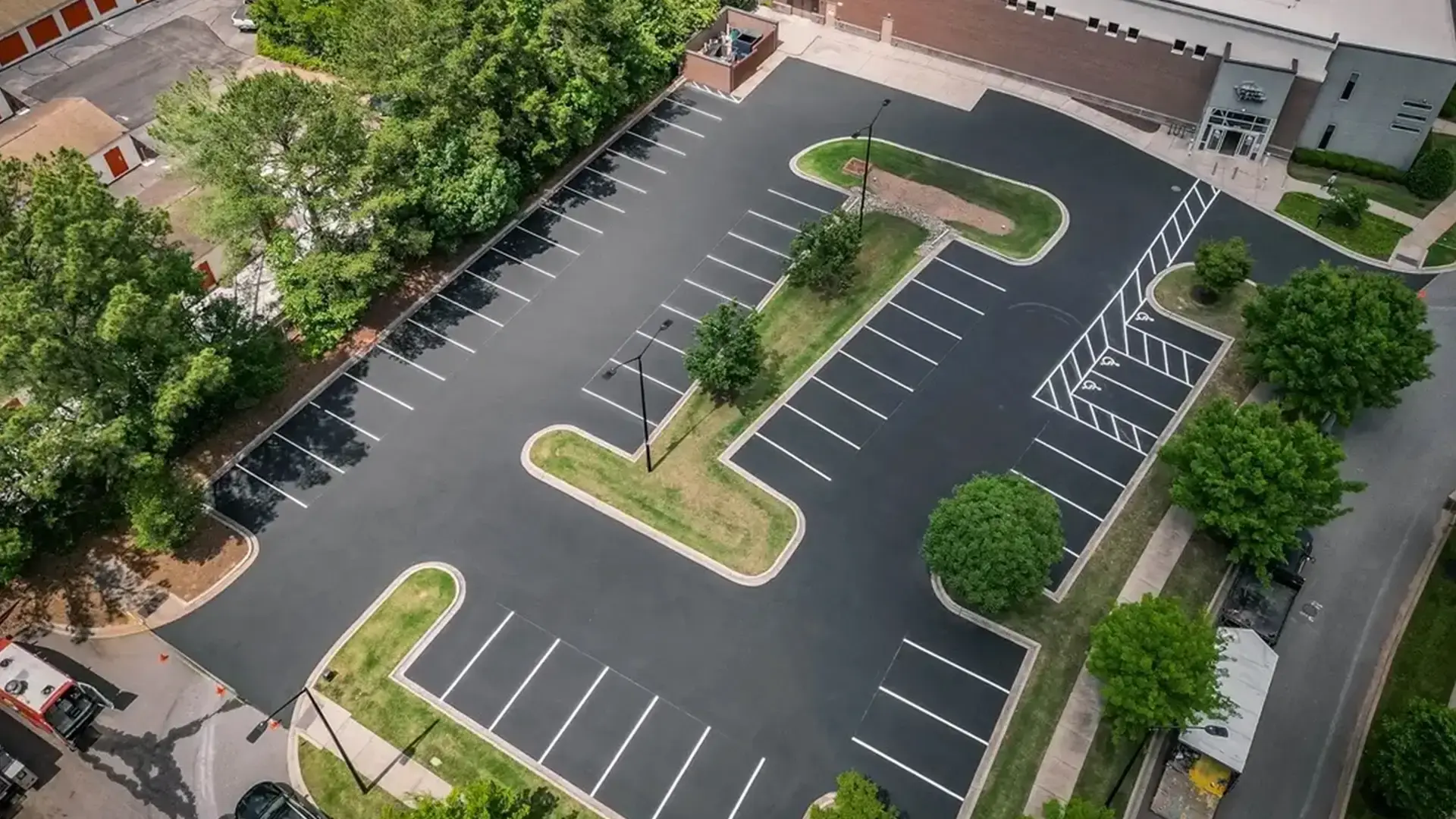
Asphalt is only able to bond and cure properly within a relatively narrow range of temperatures, specifically above 50 degrees Fahrenheit and increasing, which is the reason why most paving contractors in colder areas have a full paving season that lasts approximately from April to October and no longer. Prior to starting any milling, patching, or full-depth repairs, a contractor must call 811, the national one-call service that links to your local utility locating center, as state law mandates that underground utility lines be marked before excavation in all states. At ProLine Parking Lot Maintenance, striping is very rarely carried out first in a project that includes both asphalt repair and the installation of new pavement markings; instead, it is done last, and the most costly mistakes we observe occur when a property attempts to reverse this order or combines the various steps together in an effort to save time.
The article sets out the precise order in which asphalt repair and striping should be carried out at an apartment complex, explains why omitting a step results in higher costs than savings, and describes how we make sure that the residents are parked somewhere on the premises throughout the entire period of the work.
Why the Order of Operations Matters More Than the Individual Steps
In an asphalt and striping project, each step relies on the previous one having been completed properly, not just finished. If striping is carried out over a sealcoat that hasn’t fully cured, the paint doesn’t just appear unsatisfactory; it lifts, bubbles, or comes away within a few weeks, forcing the team to return, remove the faulty paint, and repaint the same area at the property’s cost. Applying patching after striping rather than before results in a noticeable seam where the new asphalt patch meets the existing surface, and the new patch rarely aligns with the original boundaries. We regard the sequence of operations as part of the deliverable rather than merely a scheduling issue; doing it out of order costs more than doing it correctly the first time.
The Standard Sequence for an Asphalt and Striping Project
Here is the order we follow on nearly every project that combines asphalt repair with new striping:
| Step | What Happens | Why the Order Matters |
| 1. Utility locate | The contractor calls 811 to have underground lines marked | Prevents cutting a gas, electric, or water line during milling or deep repair |
| 2. Crack sealing and patching | Crew fills and levels cracks and potholes | Sealcoat applied over unrepaired cracks traps water underneath and fails early |
| 3. Milling or overlay, if needed | Crew removes the old surface or adds a new layer | Changes the lot’s elevation, so grading and drainage need rechecking before anything else proceeds |
| 4. Sealcoating | Crew applies a protective seal coat over the repaired asphalt | Needs a full cure before paint will bond correctly |
| 5. Cure period | Typically 24 to 48 hours minimum, longer in cool or humid weather | Striping over uncured sealcoat is the single most common cause of paint failure |
| 6. Layout re-verification | Crew rechecks ADA thresholds, fire lanes, and stall counts against the current layout | Elevation changes from milling or overlay can shift slope compliance at accessible spaces |
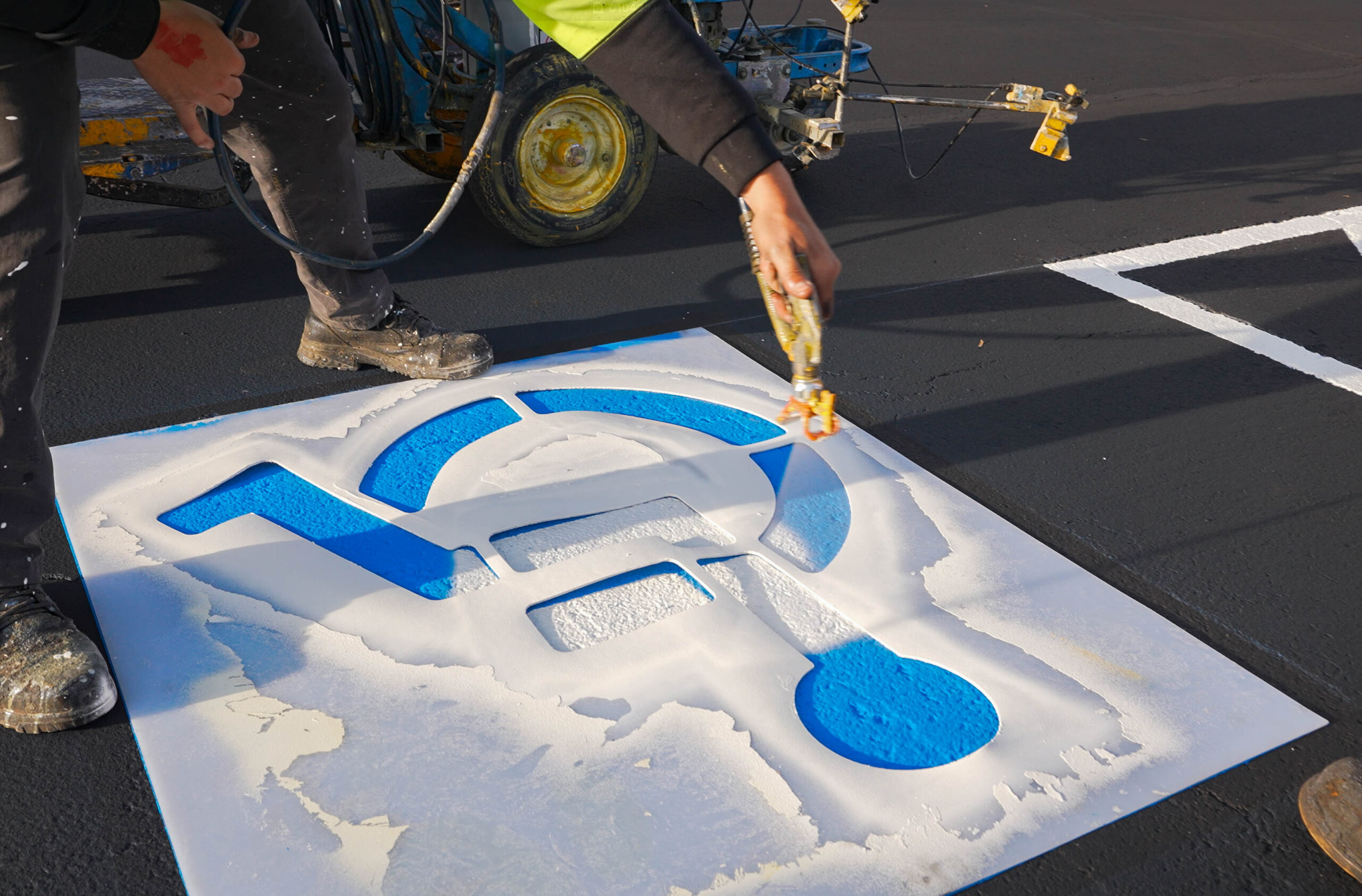
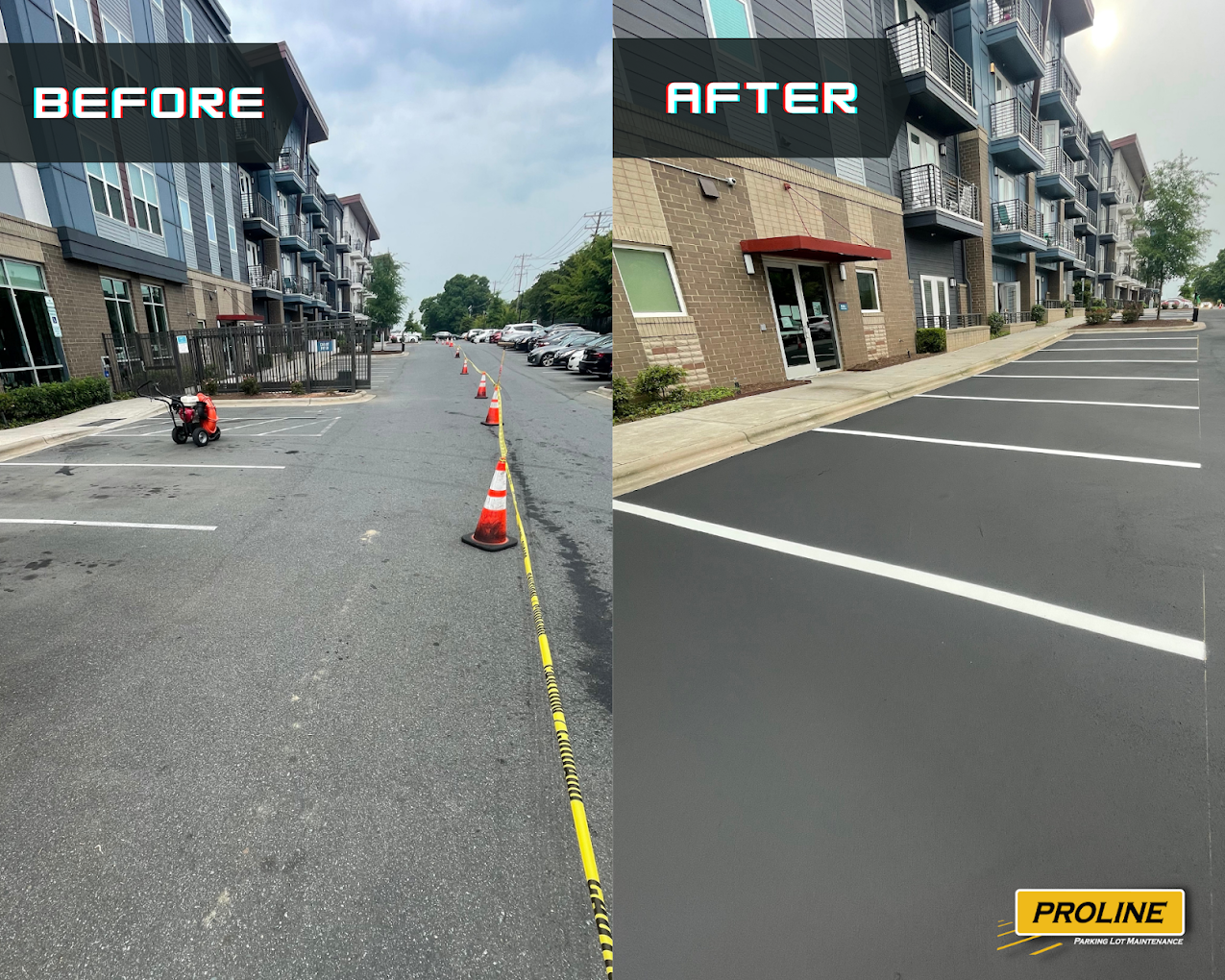
| 7. Striping | Crew paints the final layout | The last step, only once the surface has fully cured and the crew has confirmed the layout |
Utility Locates Before Any Milling or Full-Depth Repair
Omitting the 811 utility location call is by far the most dangerous shortcut on this list and the one that carries legal repercussions beyond simply having an unsightly parking lot. The 811 system was established because underground gas, electric, water, and communication lines are not visible from the surface, and you can strike one without warning if a milling machine or deep patch excavation is used. All states mandate a call to 811 several business days before any digging or milling beyond simple surface-level patching, and failing to make the call can leave the property responsible for the cost of repairing a damaged utility line, not just the cost of the asphalt work. We always make sure the utility locator has finished marking the lines and that the flags are still visible on site before the milling team begins, since flags that have faded or gone missing after a rain-related delay may indicate a new locate is needed before work can continue.
Sealcoat Cure Time and Why Rushing It Ruins the Paint Job
Sealcoat has to cure for a certain period before it can support paint as it should, and this curing time is influenced by factors other than the date. It is generally possible for foot traffic to use a newly sealed surface within a couple of hours and for light vehicles to do so within about 24 hours, but full curing for striping usually takes at least 24 to 48 hours, and contractors often leave the curing period until 72 hours in cases of cool, humid, or shaded conditions. Advice from bodies such as the Asphalt Institute identifies temperature and humidity as the main factors affecting curing time, which is why sealcoat can be ready for striping in one day during a hot, dry week and yet still feel tacky two days later in a cooler, damp period. Not waiting long enough and carrying out striping too early not only puts the paint from that visit at risk but can also cause the uncured sealcoat to become trapped beneath the paint film, keeping the entire section soft and susceptible to tire marks and tracking a long time after the normal curing period would have been complete.
Ghost Striping: Keeping the Old Layout Visible During Resurfacing
Sealcoating covers the whole surface, including all existing stall lines, arrows, and fire lane markings. As a result, a newly sealed lot becomes a blank canvas with no visual reference for where things were originally located. Instead of trying to remember the old arrangement or relying on an out-of-date site plan, we usually put in a simple set of temporary guide lines—commonly known as ghost striping—before applying the final paint, especially when the new layout must closely match the old one. Ghost striping is applied with a lighter hand and more speed than the final paint, giving the team just enough guidance to ensure stall spacing, angles, and accessible-space locations are correctly aligned before setting the permanent lines. This stage matters most on properties that aren’t altering their layout, since residents expect their assigned or usual spaces to stay in the same positions, and a striping crew working entirely from memory on a blank site is much more likely to make small mistakes that add up over dozens of stalls.
Phasing the Project So Residents Always Have Somewhere to Park
A retail car park can close one night and reopen the following morning without inconveniencing anyone. With an apartment building, however, this isn’t possible because residents need a place to park every night of the project, not just during business hours. Usually, we split the car park into sections and carry out the entire process—including the striping—on one section before moving to the next, so residents lose access to only part of their normal parking at any one time. Temporary parking areas, whether they consist of part of the car park that has been left aside for the work or an overflow area such as a grass plot or parking on an adjacent street that has been arranged in coordination with the local public works department, must have clear temporary signage and their own striping, not just cones, since cones alone do not inform residents of how many temporary spaces are available. We work directly with the property’s leasing office to schedule the phases and post notices about move-by dates well before each phase begins, so residents know exactly which nights they must use the temporary area instead of their normal spot.
Re-Verifying Layout Compliance After Elevation Changes
A mill-and-overlay project involves removing a layer of existing asphalt and replacing it with new material, while a full-depth reconstruction goes further; in both cases, it can change the finished elevation of the property. This elevation change can alter the slope of an accessible space just enough to cause it to fail the 1:48 maximum slope permitted by the 2010 ADA Standards, even if the space fully met that requirement before the project started. It can also affect how water drains toward a catch basin or a low point on the property, so it’s important to confirm the drainage matches the terms of the property’s stormwater permit before repainting the lots and restoring the layout. After any milling or overlay work, we recheck the slope of the accessible space and the general drainage pattern before striping, rather than assuming the new surface will behave exactly like the old one simply because the layout on paper has not changed.
Checklist for Coordinating Contractors
Use this list to keep an asphalt repair and striping project in the right sequence:
- Confirm the utility locate through 811 is complete and markings are visible before milling or deep patching starts
- Verify all cracks and patches are finished and cured before sealcoating begins
- Confirm sealcoat has cured fully, typically 24 to 48 hours minimum, before scheduling the striping crew
- Request ghost striping if the new layout needs to match the old one closely
- Re-check accessible space slope and drainage flow after any milling or overlay before finalizing striping
- Confirm temporary parking areas have their own clear signage and striping, not just cones
- Get the final striping layout in writing from whoever managed the asphalt work, not just a verbal handoff between contractors
How ProLine Coordinates Striping With Asphalt Repair
From the first call for a utility location through the final coat of paint, we stay involved even on projects where another contractor handles the asphalt work. This includes checking cure times on site rather than relying solely on a calendar estimate, requesting ghost striping when a layout must match closely, and rechecking that ADA and drainage requirements are met before we approve the permanent markings. We also prepare the phasing plan in conjunction with your leasing office so that residents always know where to park during the project, not just where to avoid. If you have already secured a paving contractor, get in touch with us early in order that the striping plan be ready as soon as the asphalt is ready for it, rather than beginning that discussion after the crew has already completed the last section.
Worried About Disruption During Your Next Paving Project?
Poorly sequenced asphalt repairs and line striping create extended vehicle displacement, resident frustration, and project delays. Seamlessly timing your striping immediately after sealcoating or paving cure cycles ensures maximum paint adhesion while minimizing tenant downtime and towing costs. ProLine Parking Lot Maintenance coordinates directly with paving contractors and property managers to execute phased, quick-cure restriping that keeps your property accessible and fully operational. Contact our scheduling specialists today to streamline your next maintenance project.
Frequently Asked Questions
Whether the same contractor should do both the asphalt repair and the striping or whether two separate companies should be hired?
Either method can work, but the key factor is coordination, not which company handles which part of the contract. When one contractor handles both the asphalt repair and the striping, scheduling is usually simpler because there is only one crew timetable to manage and one point of contact responsible for the entire process from start to finish. You can also hire two different companies, which may be appropriate if a property already has a trusted striping contractor or paving company, provided the two contractors communicate directly about cure times and layout details rather than the property manager passing information between them. The problem does not arise from the number of contractors involved; it is due to a handoff situation in which the striping crew turn up without knowing precisely when the sealcoat was applied or what the confirmed layout is supposed to be.
What is the usual cost when striping that was applied too soon onto uncured asphalt or sealcoat is carried out?
Carrying out a failed striping job usually costs more than the initial striping, as the team first has to remove or grind off paint that has lifted or is peeling before they can apply a fresh coat. Removing the paint takes longer than painting a clean surface. The precise cost will vary depending on the extent of the failure and how the paint failed, since paint that peeled off in large sheets is generally easier and faster to remove than paint that partially bonded and therefore requires grinding to be completely removed. In addition to the direct cost of having to do it again, a property often finds that it cannot use that part of the property for longer than originally planned, because the surface must cure once more before the new striping can be put down, thus extending the disruption to the residents beyond the original project schedule. It is almost always cheaper to get the cure time right the first time than it is to do it twice.
Can you carry out striping in cold weather, or does the project have to be put off until spring?
Normal water-based traffic paint requires the surface to be above about 50 degrees Fahrenheit to bond and cure correctly, so most cold-climate striping jobs have to be put on hold during the coldest part of the year, no matter how urgently the work is needed. Although some contractors use cold-weather paints or opt for thermoplastic, which hardens as it cools rather than air-drying and can therefore be used over a broader temperature range, both alternatives generally cost more than ordinary paint and are not offered by all suppliers. A property that needs functional striping during a cold period, for example, after an emergency asphalt repair, may make use of temporary tape-based markings as a temporary solution until the temperatures are high enough for permanent paint to be applied. However, in the case of most projects that are being planned, it is usual to schedule the striping for the warmer months together with the other asphalt work in order to completely avoid the extra cost and uncertainty associated with cold-weather materials.
What is the difference between crack sealing and crack filling, and does this affect the project timeline?
The material used in crack sealing is flexible and rubber-based so that it can expand and contract with the asphalt as the temperature changes; for this reason, it is the better option when the cracks are still active and moving, that is to say, when they widen and narrow with the seasons. On the other hand, crack filling uses a more rigid material and suits cracks that have mostly stopped moving, since a rigid filler in an active crack is likely to crack up again in the same place within a season or two. Sealing generally requires a longer curing time than filling does, since the rubberized material has to have time to set before it can cope with traffic without coming apart, and this can add a day or so to the start of the project schedule depending on the weather conditions. One of the most frequent reasons why a property ends up having to pay for crack repair twice within a few years rather than just once is because the wrong method has been chosen for the type of crack it has.
How much in advance should property owners give residents notice of an asphalt and striping project?
Most communities find it helpful to receive at least two or three weeks’ advance notice before an asphalt and striping job begins, as people need that time to make arrangements for temporary parking changes—particularly when the project involves several phases lasting over a number of weeks. A single notice given at the outset is seldom sufficient on its own, so we suggest sending a written notice at the two- to three-week stage, giving a further reminder a few days before each phase starts, and putting up clear signage at the site on the day that work actually begins in that area. People who work at night or have irregular hours should be given particular consideration in the notice schedule, since a notice posted only during business hours may easily fail to reach the residents most affected by having to park overnight. For better resident compliance, it’s generally better to coordinate the notice schedule with the leasing office rather than leaving it entirely to the contractor.
Should a full-depth asphalt reconstruction necessitate a new site survey before the road markings are reinstalled, unlike in the case of a simple mill-and-overlay?
Yes, a full-depth reconstruction removes the asphalt down to the base or subgrade and rebuilds the entire section, which changes elevation, grading, and sometimes even the exact footprint of the paved area far more than a mill-and-overlay does. That level of change generally calls for a new survey or, at minimum, a detailed as-built check from a civil engineer before striping locks the layout back in, since assuming the old site plan still matches the rebuilt surface can mean the new striping perpetuates errors the reconstruction was supposed to fix. A mill-and-overlay, by comparison, usually keeps the same base grading and footprint, so re-verifying slope and drainage at key points is often enough without commissioning a full new survey. Skipping the survey step on a full-depth project to save time is one of the more expensive shortcuts a property can take, since restriping over an unverified layout can mean redoing accessible space compliance work after the fact instead of getting it right in the same project.
See also: How to Handle Reserved, Guest, and Resident Parking With Professional Striping, Apartment Parking Lot Striping: What Should Be Included in a Professional Service?