

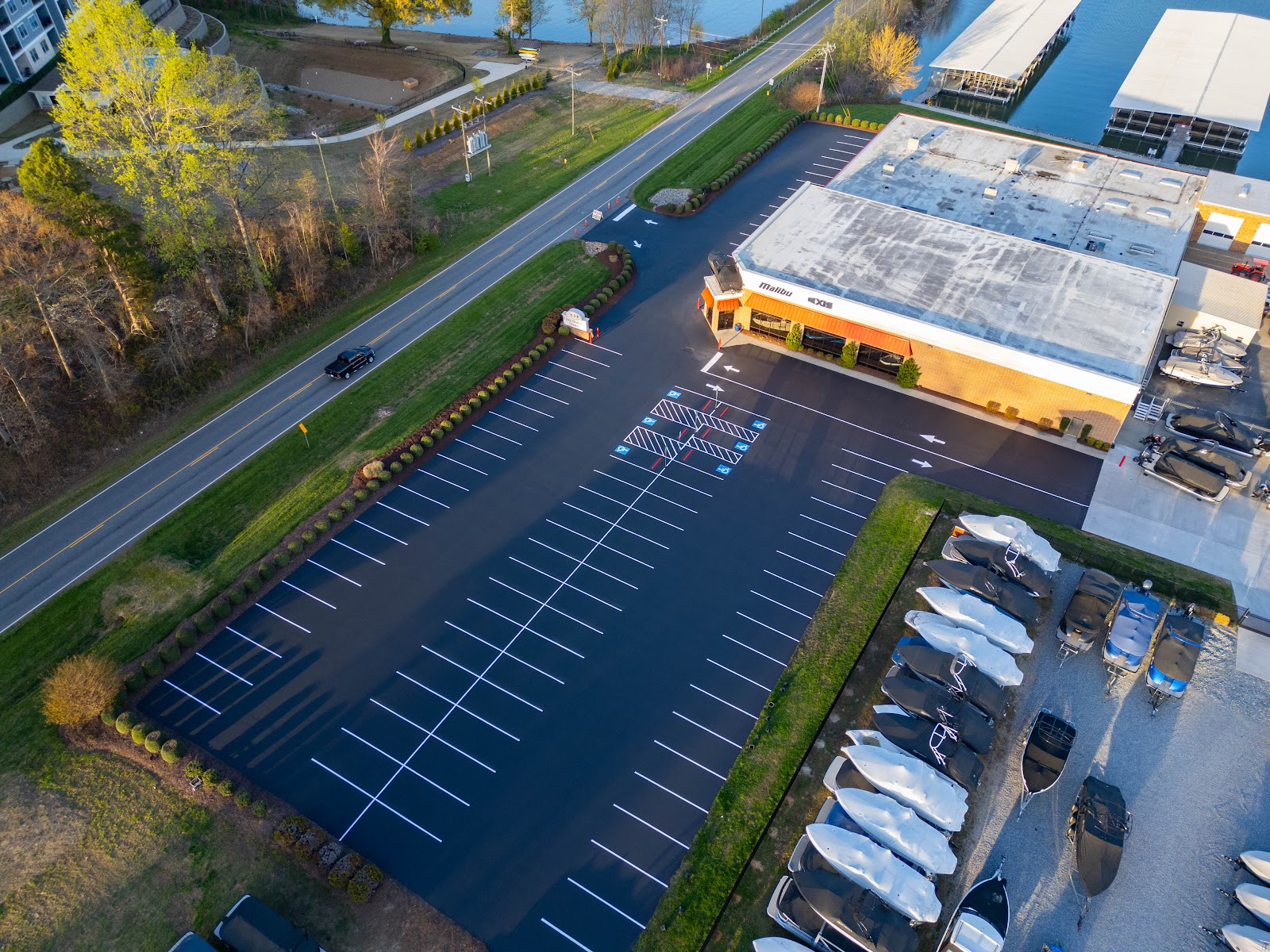
Faded parking markings can make a lot harder to navigate. Some properties need the existing layout refreshed; others need a design review before new markings are applied. Inspect the condition and function of the layout to choose the appropriate scope.
Understanding the difference between parking lot restriping and new layout striping helps commercial property owners make informed decisions about maintenance and capital improvements. While both services involve applying fresh pavement markings, they serve different purposes and require different planning.
Whether you manage a shopping center, apartment complex, office building, healthcare facility, or industrial property, choosing the right striping solution protects your investment while creating a safer experience for every visitor.
Parking Lot Restriping at a Glance
TL;DR
- Parking lot restriping restores existing pavement markings without changing the layout.
- New layout striping redesigns the parking configuration to improve efficiency and compliance.
- Restriping is ideal for routine maintenance.
- New layouts are best for renovations, expansions, or changing traffic patterns.
- A professional evaluation ensures you invest in the right solution rather than paying for unnecessary work.
What Is Parking Lot Restriping?
Parking lot restriping is the process of repainting existing pavement markings after they have faded due to weather, traffic, sunlight, and normal wear. The original parking configuration remains the same. Contractors simply replace worn paint with fresh, highly visible markings.
According to the Federal Highway Administration, visible pavement markings improve driver guidance and contribute to safer traffic movement by providing clear directional information.
For most commercial properties, restriping is considered preventive maintenance. It keeps parking spaces, pedestrian crossings, directional arrows, loading zones, and fire lanes clearly visible while extending the professional appearance of the property.
How Restriping Works
A typical restriping project begins with cleaning the pavement. Dirt, oil, debris, and loose materials are removed to ensure proper paint adhesion.
Next, technicians evaluate the existing markings. If the original layout remains effective, they follow the existing lines and repaint each marking using traffic-grade paint or durable thermoplastic materials.
Once complete, the parking lot looks refreshed without altering traffic patterns or parking capacity.
When Restriping Makes Sense
Restriping is usually the right choice when:
- Parking lines are faded but still visible.
- The current parking layout functions well.
- Traffic circulation remains efficient.
- No building expansion has occurred.
- ADA parking spaces already meet current requirements.
- The pavement is structurally sound.
Refresh markings when inspection shows that visibility or condition requires it. Traffic, material, surface condition, and exposure affect how quickly paint wears.
What Is New Layout Striping?
Unlike restriping, new layout striping starts with a blank canvas. Existing pavement markings are removed or covered before an entirely new parking configuration is measured and installed. This service often accompanies parking lot reconstruction, asphalt resurfacing, sealcoating projects, or property redevelopment.
Instead of simply restoring faded lines, contractors redesign the parking lot to improve functionality, increase efficiency, and comply with updated regulations. A new layout requires careful planning because every measurement affects safety, accessibility, and traffic movement.
What Happens During New Layout Striping?
Before painting begins, experienced contractors evaluate several factors:
- Vehicle traffic patterns
- Pedestrian movement
- Emergency vehicle access
- Fire lane requirements
- ADA accessibility
- Building entrances
- Loading zones
- Parking demand
- Local municipal regulations
After developing an efficient design, survey measurements are completed before any pavement markings are applied. This planning stage distinguishes new layout striping from standard restriping.
Parking Lot Restriping vs. New Layout Striping
| Feature | Parking Lot Restriping | New Layout Striping |
|---|---|---|
| Purpose | Restore existing markings | Create an entirely new parking design |
| Layout Changes | No | Yes |
| Parking Capacity | Remains the same | May increase |
| Traffic Flow | Unchanged | Often improved |
| Accessibility review | Verify existing conditions and required corrections | Coordinate the proposed layout with applicable requirements |
| Scope | Refresh approved existing markings | Plan and install a revised layout |
| Project Time | Short | Longer due to planning |
| Survey Required | Usually no | Yes |
| Best For | Routine maintenance | Renovations and redevelopment |
Choose the approach that matches the lot’s circulation, parking demand, pavement condition, and accessibility needs.
When Is Parking Lot Restriping the Right Choice?
A full redesign may not be necessary when the existing layout is appropriate and only the markings have worn. Verify the layout before deciding to reproduce it.
Choose restriping if your parking lot still functions efficiently and only the markings have deteriorated.
Your Parking Layout Already Works
Drivers can easily enter, park, and exit without congestion.
Parking Spaces Meet Current Demand
There is no need to create additional parking spaces or reconfigure traffic lanes.
Pavement Is in Good Condition
Cracks and potholes have been repaired, and the asphalt provides a stable surface for new markings.
Compliance Requirements Have Not Changed
Your accessible parking spaces, fire lanes, and loading zones already satisfy current regulations.
Routine restriping keeps the property attractive while avoiding unnecessary construction expenses.
When Does a Parking Lot Need a New Layout?
There are situations where simply repainting old lines is no longer enough. A new striping layout becomes the better investment when the parking lot no longer meets the property’s operational needs.
Common examples include:
Property Expansion
A new retail tenant or office building often changes traffic patterns and parking demand.
Asphalt Resurfacing
Fresh asphalt provides the perfect opportunity to redesign the parking configuration before new markings are installed.
Increased Traffic
Growing businesses often experience congestion that can be solved through better traffic circulation.
ADA Compliance Updates
Review the applicable accessibility requirements and the condition of spaces, access aisles, signs, slopes, and routes. A different painted layout cannot resolve every physical access problem.
Electric Vehicle Charging Stations
Adding EV charging areas often requires relocating existing parking spaces.
Safety Improvements
New pedestrian crossings, stop bars, directional arrows, and loading zones improve visibility and reduce conflicts between vehicles and pedestrians.
Can a New Layout Increase Parking Capacity?
Yes. One of the biggest advantages of the new layout striping is the opportunity to maximize available space.
Professional parking lot designers evaluate every square meter to determine whether the property can accommodate additional parking without compromising safety.
Common improvements include:
- Converting two-way aisles into one-way circulation.
- Introducing angled parking.
- Optimizing stall dimensions where permitted.
- Eliminating wasted pavement areas.
- Relocating loading zones.
- Repositioning landscaped islands.
- Improving vehicle turning radii.
A proposed layout should be checked for circulation, required dimensions, and applicable approvals before work starts.
Safety Benefits of Both Services
Whether you choose restriping or a new layout, clear pavement markings play a significant role in reducing accidents.
Highly visible markings help drivers identify:
- Parking stalls
- Crosswalks
- Fire lanes
- Stop bars
- Directional arrows
- No-parking areas
- Accessible parking spaces
According to the National Safety Council, clearly marked traffic routes contribute to safer vehicle and pedestrian interactions in commercial environments.
Include unclear or missing markings in the inspection plan and address the specific navigation or access concerns they create.
ADA Compliance Should Never Be Overlooked
Accessibility requirements depend on how each parking area is used. Public-facing areas, such as a leasing office, may be subject to the ADA; residential parking may also be governed by the Fair Housing Act, Section 504 where applicable, and state or local requirements. Confirm the rules for the property before approving a layout. Review spaces, access aisles, signs, slopes, and routes together.
A layout project is an opportunity to review access and coordinate any necessary design, grading, or signage work.
How ProLine Parking Lot Maintenance Helps Property Owners Choose the Right Service
Choosing between restriping and a complete layout redesign is not always straightforward. Every commercial property has unique traffic patterns, operational goals, and maintenance priorities.
Discuss pavement condition, traffic flow, parking use, accessibility, and future plans with ProLine before finalizing the marking scope.
If your existing layout still serves your business well, we offer precise restriping to restore visibility and enhance curb appeal. If your property would benefit from improved traffic circulation or additional parking spaces, we design a new layout that balances safety, efficiency, and regulatory compliance.
Our goal is simple: deliver pavement markings that improve functionality while protecting your investment for years to come.
Which Service Is Right for Your Property?
Restriping restores an appropriate existing pattern. A new layout changes how the space is organized and may require design input or approval. Define the intended outcome before choosing the work.
A new layout changes how parking and circulation are arranged. Review the proposed pattern against property operations, accessibility needs, and applicable requirements before approving it.
If you are unsure which service your property needs, ProLine Parking Lot Maintenance can evaluate your site and recommend the most effective solution. Contact our team today to schedule a professional parking lot assessment and ensure your pavement markings continue to support safety, efficiency, and a positive first impression.
Contact ProLine to discuss whether your property needs a refresh of an appropriate existing pattern or a new layout review.
Call Our Paving Team Now →Frequently Asked Questions
What is the difference between parking lot restriping and new layout striping?
Parking lot restriping refreshes existing pavement markings without changing the parking lot’s layout. New layout striping creates an entirely new parking configuration based on the property’s current needs. Restriping focuses on restoring visibility, while new layout striping improves traffic flow, parking efficiency, and compliance. A professional contractor can evaluate your property to determine which service offers the greatest long-term value.
How often should a commercial parking lot be restriped?
Most commercial parking lots should be restriped every 18 to 36 months, depending on traffic volume, weather exposure, and the quality of the striping materials. High-traffic properties such as shopping centers and hospitals may require more frequent maintenance. Regular inspections help identify fading before markings become difficult to see. Keeping pavement markings visible improves safety, enhances curb appeal, and supports regulatory compliance.
When should a parking lot receive a completely new striping layout?
Consider a layout review when property use, circulation, designated spaces, or access needs change. Resurfacing can also provide an opportunity to reassess the arrangement. A review does not automatically mean the entire layout must change.
Can a new parking lot layout create more parking spaces?
A revised layout may change the number of usable spaces, but capacity depends on required dimensions, circulation, accessible parking, fire access, and other site constraints. Have the proposed design reviewed before assuming additional stalls can be added.
Is parking lot restriping required for ADA compliance?
Required markings are part of an accessible parking arrangement, alongside signs, dimensions, slopes, and routes. Determine which rules apply to the property and the proposed work. A restripe alone cannot establish full compliance.
How long does parking lot striping typically last?
Marking life varies by material, traffic, preparation, surface condition, and exposure. Inspect visibility and adhesion to decide when work is needed. Sealcoating generally covers existing paint, so coordinate marking restoration after coating.
Can parking lot striping be completed without closing the entire parking lot?
In many cases, yes. Experienced contractors can complete striping projects in phases to minimize disruptions for customers, tenants, and employees. Work is often scheduled during evenings, weekends, or other low-traffic periods to reduce inconvenience. Careful planning allows businesses to remain operational while parking lot maintenance is underway.
Why should I hire a professional parking lot striping contractor instead of doing it myself?
Ask the contractor how measurements, surface preparation, material selection, and quality checks will be handled. Confirm which design questions, signs, or physical access corrections fall outside the marking scope.
See also: How Parking Lot Striping Improves Traffic Flow in Multi-Family Communities, Fire Lane Striping Requirements for Apartment Complexes


