
Many property managers focus on pavement repairs, landscaping, or lighting while overlooking one of the simplest ways to improve safety and efficiency: professional parking lot striping. Fresh pavement markings do far more than define parking spaces. They guide traffic, reduce confusion, improve visibility, and create a safer environment for everyone using the property.
According to the National Asphalt Pavement Association (NAPA), pavement markings are essential to preserving safe and efficient transportation systems because they provide visual guidance drivers rely on every day. Likewise, the Federal Highway Administration (FHWA) recognizes pavement markings as a critical traffic control device that helps drivers navigate safely through parking facilities and roadways.
For apartment communities, where hundreds of vehicles move in and out every day, professionally designed striping isn’t just about appearance. It’s about creating a parking lot that works.
Why Traffic Flow Matters More in Multi-Family Communities
Unlike retail centers where visitors come and go throughout business hours, apartment communities experience concentrated periods of vehicle activity. Morning commutes, evening arrivals, food delivery services, moving trucks, ride-share vehicles, maintenance staff, emergency responders, and guests often share the same parking lot simultaneously.
Without clear traffic guidance, drivers frequently encounter:
- Vehicles traveling the wrong direction
- Congested intersections
- Illegal parking
- Blocked fire lanes
- Confusion at entrances and exits
- Increased pedestrian conflicts
These issues don’t just inconvenience residents. They can increase liability for property owners and create unnecessary maintenance concerns. A thoughtfully striped parking lot helps organize every vehicle movement before problems develop.
Striping Creates Predictable Driver Behavior
One of the biggest advantages of professional striping is predictability. Drivers naturally follow visual cues. Clearly marked parking stalls, directional arrows, stop bars, and lane markings remove guesswork from navigating the property. Instead of hesitating or making last-minute decisions, drivers know exactly where to travel and where to park.
According to the Federal Highway Administration, pavement markings improve roadway guidance by communicating traffic patterns without requiring drivers to interpret complicated signage. This same principle applies within apartment parking lots, where visual guidance reduces driver hesitation and confusion.
Predictable traffic flow also benefits delivery companies, maintenance crews, and emergency responders who may be unfamiliar with the property layout.
Better Parking Organization Means Less Congestion
Poorly marked parking lots often create unnecessary bottlenecks. Residents may park outside designated spaces, partially block drive aisles, or leave insufficient room for larger vehicles to pass.
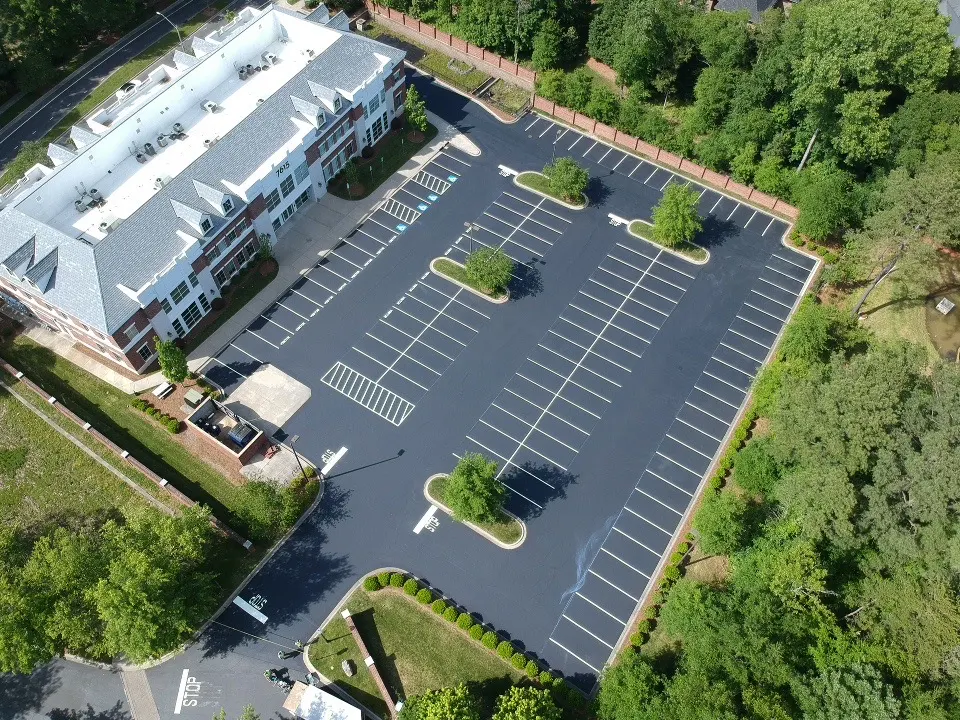
Professional striping establishes clearly defined parking dimensions that maximize available space while maintaining safe driving lanes.
This organized layout allows:
- Easier parking during peak hours
- Better vehicle circulation
- Reduced backup at entrances
- Improved access to garages and amenities
- Fewer parking disputes among residents
For property managers, better organization often translates into fewer complaints and a smoother day-to-day operation.
Directional Arrows Keep Vehicles Moving Efficiently
Directional arrows may seem like a minor detail, but they play a significant role in traffic management. Apartment parking lots often contain narrow aisles designed for one-way traffic. Without clearly visible arrows, drivers may mistakenly travel against traffic, creating dangerous situations that increase the likelihood of collisions.
Well-placed directional arrows:
- Reduce head-on conflicts
- Improve visibility at intersections
- Keep vehicles moving consistently
- Help visitors navigate unfamiliar properties
According to the Manual on Uniform Traffic Control Devices (MUTCD) published by the Federal Highway Administration, pavement markings are designed to provide consistent guidance to improve traffic operations and enhance safety.
Clearly Marked Parking Spaces Reduce Resident Frustration
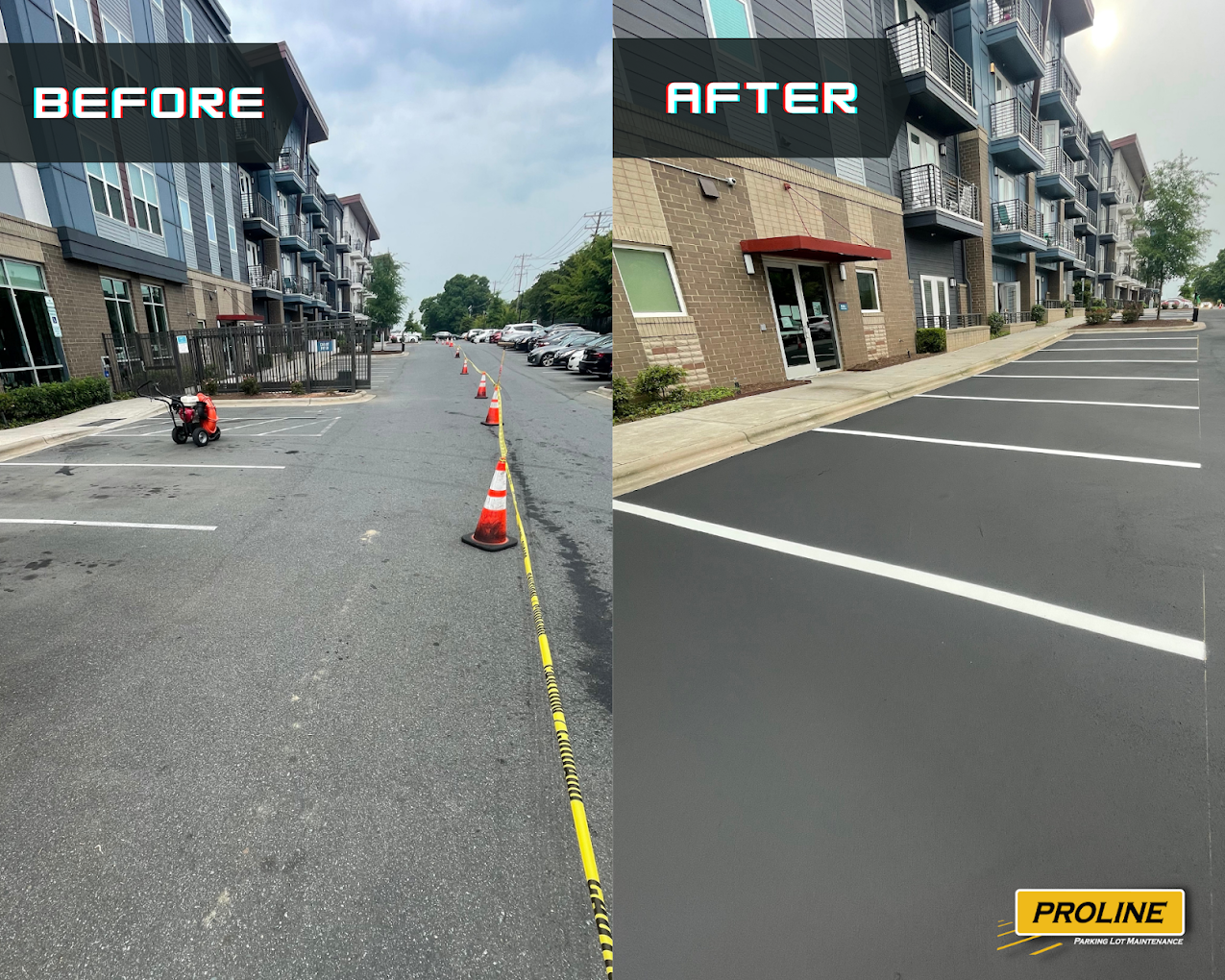
Residents notice when parking becomes chaotic. Faded striping often leads to vehicles parking too close together, occupying multiple stalls, or blocking neighboring spaces. Over time, these seemingly minor issues create ongoing frustration that reflects poorly on property management. Professional restriping restores order by clearly marking every parking stall.
This helps residents:
- Park more accurately
- Find available spaces faster
- Avoid accidental door damage
- Respect reserved parking assignments
- Maintain better traffic circulation throughout the property
Well-maintained striping sends a subtle but important message that the community is professionally managed and cared for.
Improved Pedestrian Safety Throughout the Property
Apartment communities are designed for more than vehicles. Residents walk to mailboxes, clubhouses, playgrounds, fitness centers, dog parks, and neighboring buildings every day. Children, seniors, and guests often share the parking lot with moving vehicles. Clearly marked pedestrian crossings, stop bars, and designated walkways improve visibility and encourage drivers to slow down in areas with heavy foot traffic.
According to the Occupational Safety and Health Administration (OSHA), separating pedestrian and vehicle traffic wherever possible is one of the most effective ways to reduce transportation-related accidents in shared-use environments.
ADA-Compliant Striping Protects Property Owners
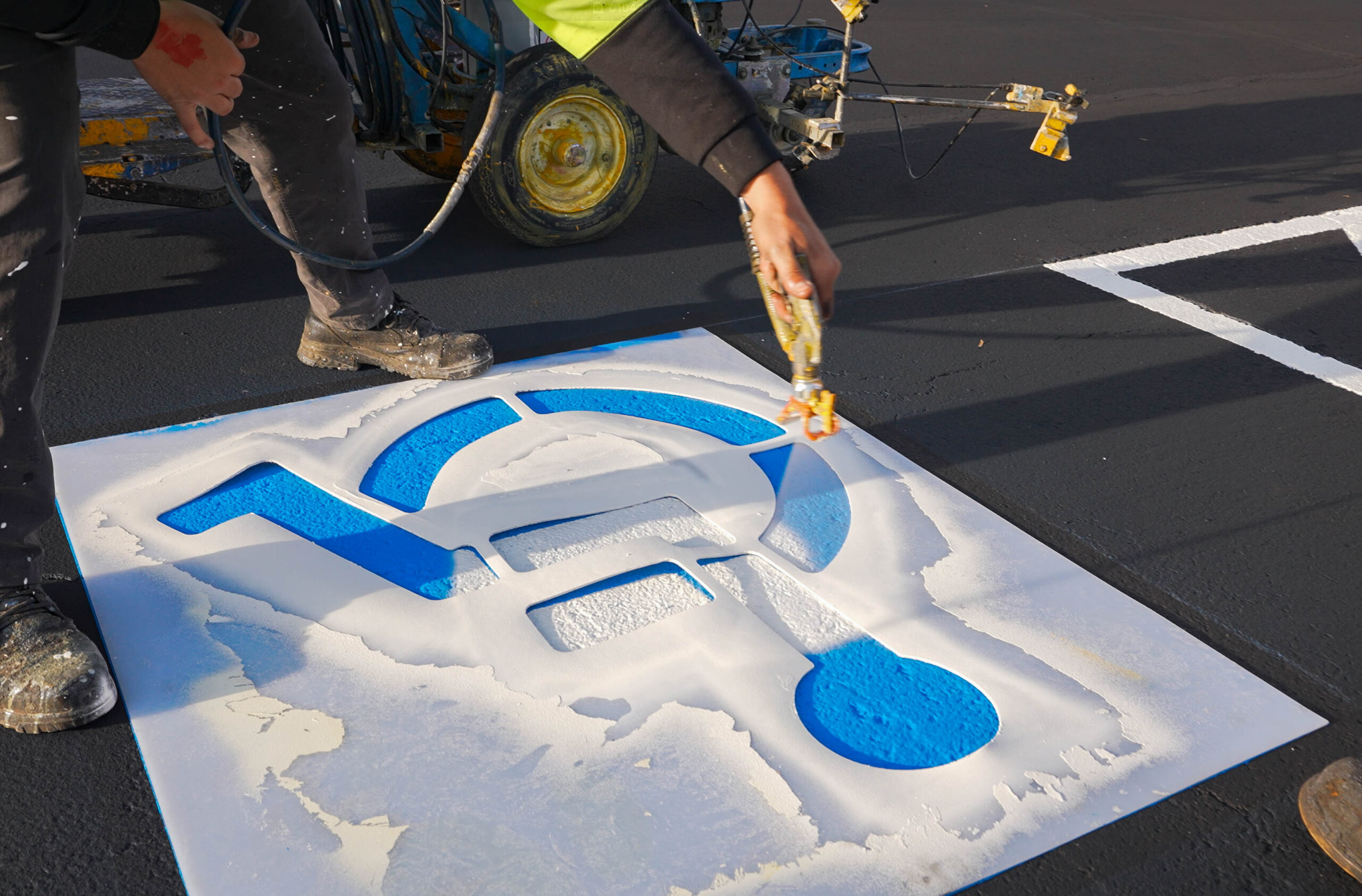
Accessibility isn’t optional for multi-family communities. Parking lots that serve leasing offices, clubhouses, fitness centers, or other public amenities are generally required to comply with the Americans with Disabilities Act (ADA). That means accessible parking spaces must be properly sized, clearly marked, and connected to accessible routes.
According to the U.S. Access Board, ADA-compliant parking includes specific requirements for space width, access aisles, signage, and pavement slopes. Simply repainting old lines without verifying current accessibility standards can leave property owners vulnerable to complaints, legal disputes, and costly restriping projects.
Professional striping contractors understand these requirements and evaluate more than just the paint on the pavement. They review the overall layout to ensure that accessible spaces are appropriately located and remain compliant with current standards.
Keeping ADA markings visible also benefits residents and visitors who rely on accessible parking every day. Faded or missing markings can make designated spaces difficult to identify, creating frustration for those who need them most.
Fire Lanes and Emergency Access Must Always Remain Visible
In an emergency, every second counts. Fire trucks, ambulances, and police vehicles need clear access throughout an apartment community. That’s why properly marked fire lanes are more than a maintenance item—they’re an essential safety feature. Bright red fire lane markings and clearly painted “No Parking” zones discourage vehicles from blocking critical access routes. When these markings fade, residents and visitors may unintentionally park where emergency vehicles need to travel.
According to the National Fire Protection Association (NFPA), unobstructed fire department access roads are essential for emergency response and occupant safety. Clearly visible pavement markings help reinforce parking restrictions while making enforcement easier for property management.
Routine restriping ensures these critical safety zones remain highly visible year-round, even in areas with heavy traffic and harsh weather.
Better Striping Improves Curb Appeal
Residents often notice the condition of a parking lot before they notice the apartment buildings themselves. Fresh striping creates crisp, organized parking areas that immediately make a property look cleaner and better maintained. Even if the asphalt itself is in good condition, faded pavement markings can make the entire parking lot appear neglected.
For prospective residents touring the community, first impressions matter. Clearly defined parking spaces, directional arrows, and pedestrian crossings communicate that the property is professionally managed and receives ongoing maintenance.
This attention to detail contributes to stronger curb appeal, helping apartment communities remain competitive in crowded rental markets.
Organized Parking Reduces Property Management Headaches
Property managers spend enough time addressing maintenance requests, resident concerns, and coordinating with vendors. Parking shouldn’t become another daily problem.
Professional striping reduces many of the issues that commonly generate complaints, including:
- Residents parking across multiple spaces
- Vehicles blocking drive aisles
- Confusion over reserved parking
- Unauthorized parking in fire lanes
- Visitors parking in resident-only areas
- Congestion during busy hours
When expectations are clearly marked on the pavement, drivers are more likely to follow them. Instead of constantly responding to parking disputes, management teams can focus on improving other aspects of the community.
Parking Lot Striping Supports Long-Term Pavement Maintenance
Striping isn’t just a finishing touch after paving. It’s part of a comprehensive pavement maintenance strategy. Many apartment communities schedule restriping after sealcoating because fresh pavement markings restore visibility and maximize the benefits of pavement preservation.
Regular striping inspections also give contractors an opportunity to identify early signs of pavement deterioration, including:
- Surface cracking
- Drainage problems
- Faded curb markings
- Worn pedestrian crossings
- Areas experiencing excessive tire wear
Identifying these issues early allows property owners to make targeted repairs before small problems become expensive reconstruction projects.
Combining routine striping with preventive maintenance helps extend pavement life while protecting the property’s appearance.
How Often Should Apartment Communities Restripe Their Parking Lots?
There’s no universal schedule because every property experiences different traffic volumes and weather conditions. High-traffic apartment communities often benefit from annual striping inspections, while lower-traffic properties may only require restriping every two to three years.
Several factors influence how quickly pavement markings wear, including:
- Vehicle traffic volume
- UV exposure
- Snow removal operations
- Heavy rainfall
- Sealcoating schedules
- Type of traffic paint used
Rather than waiting until markings disappear, proactive inspections help property managers schedule restriping before safety or visibility becomes a concern.
Choosing the Right Striping Contractor Matters
Not all pavement striping contractors deliver the same level of precision. Multi-family communities require more than straight parking lines. Contractors should understand traffic flow, ADA compliance, fire lane regulations, and resident safety while using durable, high-quality traffic paint designed for commercial properties.
An experienced contractor will also evaluate the property’s layout and recommend improvements that increase efficiency rather than simply repainting existing markings.
That level of expertise helps apartment communities maximize parking capacity while improving safety for residents and visitors alike.
Create a Safer, More Organized Community with Professional Parking Lot Striping
Parking lot striping influences far more than the appearance of an apartment community. It shapes how residents drive, where visitors park, how pedestrians move throughout the property, and how emergency vehicles access critical areas. Clear pavement markings reduce confusion, improve safety, and create a more organized environment that benefits everyone who uses the property.
At ProLine Parking Lot Maintenance, we help apartment communities improve traffic flow through professional parking lot striping designed for safety, efficiency, and long-term durability. Whether your pavement markings have faded or you’re redesigning your parking layout, our experienced team delivers precise striping solutions that keep your property looking professional while supporting the daily needs of residents and property managers alike.
Faded or poorly designed parking stalls create unnecessary gridlock, accidental fender benders, and daily resident complaints. Crisp, strategic striping maximizes available spaces and guides traffic smoothly through your property. Call our team today. We’ll help you redesign or refresh your layout for safer, stress-free driving.
Call Our Paving Team Now →Frequently Asked Questions
How does parking lot striping improve traffic flow in apartment communities?
Parking lot striping creates a clear visual system that tells drivers where to park, which direction to travel, and where to stop or yield. This reduces hesitation, prevents vehicles from driving against traffic, and minimizes congestion during busy periods when residents are arriving home or visitors are entering the property. According to the Federal Highway Administration (FHWA), pavement markings are an essential traffic control device because they provide continuous guidance that improves driver behavior and roadway safety. When traffic moves predictably through a multi-family community, residents experience fewer delays, fewer parking conflicts, and a safer environment overall.
How often should a multi-family parking lot be restriped?
Most apartment communities benefit from having their parking lot striping inspected every year, even if restriping is not immediately necessary. High-traffic properties or communities exposed to harsh weather may require new pavement markings every one to two years, while lower-traffic properties can often go longer before repainting becomes necessary. Factors such as sunlight, vehicle traffic, snow removal, and routine pavement maintenance all affect how quickly striping fades. Scheduling regular inspections allows property managers to restore visibility before faded markings begin creating safety concerns or resident complaints.
Does parking lot striping help properties remain ADA-compliant?
Yes. Proper striping plays a major role in maintaining compliance with the Americans with Disabilities Act (ADA) by clearly identifying accessible parking spaces, access aisles, and required pavement markings. According to the U.S. Access Board, accessible parking must meet specific standards for dimensions, signage, slopes, and accessible routes, making accurate striping an important part of compliance. Over time, faded markings can make designated spaces difficult to identify and may increase the risk of accessibility complaints. Working with an experienced striping contractor helps ensure that ADA parking areas remain visible, functional, and compliant with current guidelines.
Can fresh striping reduce parking disputes between residents?
Absolutely. Clearly marked parking stalls, reserved spaces, visitor parking, and fire lanes help eliminate confusion about where residents and guests are allowed to park. When pavement markings are highly visible, drivers are more likely to park within designated spaces, reducing instances of vehicles occupying multiple stalls or blocking neighboring spaces. This organization leads to fewer complaints for property management and creates a more orderly parking experience for everyone living in the community. In many cases, simply refreshing faded striping can significantly improve resident satisfaction without requiring major parking lot renovations.
Why are directional arrows important in apartment parking lots?
Directional arrows help establish consistent traffic patterns that reduce confusion and improve vehicle circulation throughout the property. They guide residents, visitors, delivery drivers, and emergency responders through one-way lanes while reducing the likelihood of head-on encounters or last-minute turns. According to the Manual on Uniform Traffic Control Devices (MUTCD), directional pavement markings improve traffic operations by providing clear visual guidance that drivers can quickly understand. Keeping these markings visible contributes to a safer and more efficient parking lot, particularly during peak traffic hours.
Is parking lot striping only about improving appearance?
While fresh striping certainly enhances curb appeal, its primary purpose is improving safety, organization, and traffic efficiency. Clearly defined pavement markings help separate vehicles from pedestrians, maintain emergency access routes, identify reserved parking areas, and support compliance with accessibility requirements. Well-maintained striping also demonstrates that a property is actively managed, which can positively influence prospective residents during property tours. Combined with routine pavement maintenance, professional striping protects both the appearance and functionality of a multi-family community’s parking lot.
See also: Fire Lane Striping Requirements for Apartment Complexes, The Cost of Delaying Parking Lot Repairs at Multi-Family Properties