

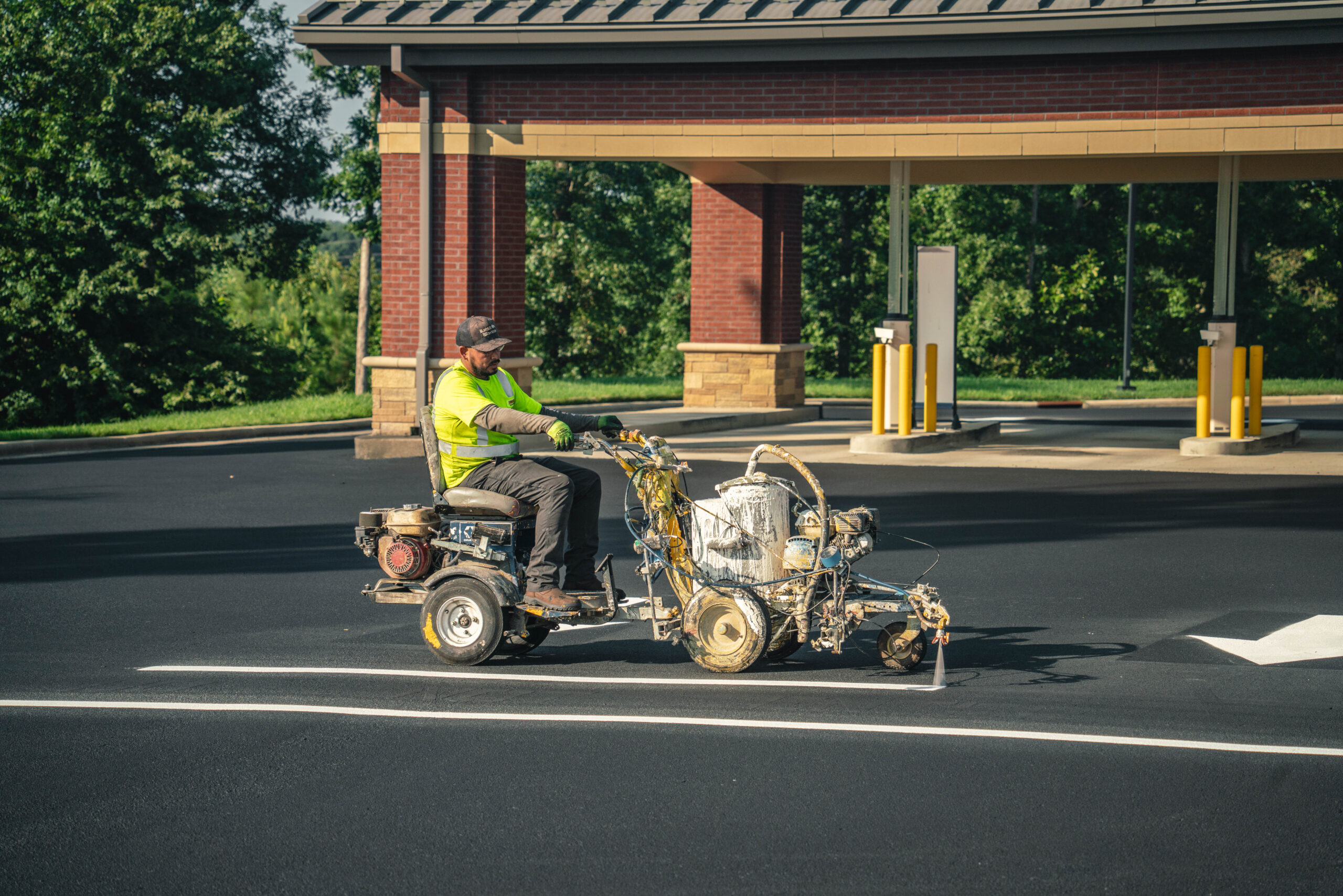
The Atlantic hurricane season runs from June 1 through November 30 each year, according to NOAA — a six-month window that overlaps almost exactly with the warm, dry weather most contractors prefer for striping across North Carolina and South Carolina. For apartment communities in the Carolinas, that overlap means the best paint-curing conditions and the highest risk of a weather-driven schedule change tend to fall in the same stretch of the calendar, which makes resident communication even more important here than it would be in a milder, drier climate.
Layer in the fact that Charlotte, Raleigh, and other Carolina metros have seen rapid apartment construction and population growth in recent years, and communities across the region tend to see more move-in and move-out vehicle activity than a slower-growth market. One more variable a striping schedule has to work around.
This guide focuses on what changes when minimizing resident disruption during multi-family line striping in Carolina communities: the hurricane season variable, the coastal-versus-inland difference, the region’s towing notice requirements, and a few local scheduling factors a generic national checklist won’t catch.
Hurricane Season Adds a Scheduling Variable Most Regions Don’t Have
A striping project scheduled for August looks fine on a calendar until a tropical system starts tracking toward the coast a week out. Building flexibility into the plan from the start, rather than treating the posted dates as fixed — keeps a weather shift from turning into a communication failure. That means giving residents a stated date range instead of a single hard date where the calendar allows, identifying a backup week before the project starts rather than scrambling to find one mid-project, and having a single, pre-agreed channel (portal post, text alert, or posted signage) for weather updates so residents aren’t left guessing whether a section is still closed.
Coastal Humidity, Piedmont Winters, and What They Mean for Scheduling
Carolina weather isn’t uniform across the state, and that affects the striping calendar more than most property teams expect.
| Season | Consideration for Carolina Communities |
| Summer (Jun–Sep) | High heat and humidity, plus frequent afternoon thunderstorms; crews often start pre-dawn to beat both the heat and the storm window |
| Hurricane season overlap (Jun–Nov) | Backup dates and a clear weather-update channel matter more here than in drier climates |
| Winter (Dec–Feb) | Occasional freezing temperatures in the Piedmont and Upstate (Charlotte, Greenville) can push conditions below the roughly 50°F threshold most traffic paint needs to cure properly |
Carolina Towing and Vehicle Notice Requirements
North Carolina and South Carolina each set their own statutory requirements for how and when a vehicle can be removed from private property, and those rules are governed at the state level — see the North Carolina General Assembly and South Carolina Legislature for the current statutory language — with some cities and counties layering on additional local ordinances. A towing policy written for a different market shouldn’t be assumed to satisfy either state’s requirements without a review, since notice periods and signage language aren’t necessarily identical between the two. Confirming current requirements with the property’s towing vendor or legal counsel before finalizing a Carolina project’s vehicle relocation plan is worth the extra step.
Regional Growth Means More Turnover to Plan Around
Fast-growing Carolina rental markets tend to run a busier move-in and move-out calendar than the national average, which means more moving trucks, more unfamiliar vehicles, and less predictability about which spaces will actually sit empty on a given day. Coordinating the striping schedule directly with the leasing office’s turnover calendar — rather than treating the two as unrelated — helps avoid the specific frustration of a new resident arriving to a freshly closed section on move-in day.
The Bottom Line
Minimizing resident disruption during multi-family line striping in the Carolinas takes the same communication discipline that works anywhere else, plus a few regional variables layered on top: hurricane season flexibility, coastal-versus-Piedmont weather differences, and state-specific towing requirements. Building those into the plan from the start avoids the surprises a generic, one-size-fits-all schedule tends to run into here.
ProLine Parking Lot Maintenance works with apartment owners and management companies across North Carolina and South Carolina — from Charlotte and Raleigh to Columbia and Charleston — to plan striping projects around regional weather patterns and local requirements. Contact us to build a project timeline before your next restriping.
Minimize Resident Friction During Your Next Line Striping Project
Restriping a fully occupied multi-family parking lot doesn’t have to lead to resident complaints, parking chaos, or towing disputes. Success relies on clear advance notices, fast-curing traffic paints, and a strategically phased execution plan that keeps high-traffic drive aisles and accessible stalls open when your tenants need them most.
ProLine Parking Lot Maintenance specializes in low-disruption multi-family striping, leveraging rapid-dry formulations and flexible off-peak scheduling to protect resident routines and property operations.
- Phased Sectioning & Rapid Drying: Sector-by-sector workflows utilizing fast-cure paints to return parking spaces to residents in hours, not days.
- Turnkey Tenant Coordination Support: Custom notification templates and clear property signage plans to ensure smooth resident cooperation from start to finish.
Frequently Asked Questions
Do North Carolina and South Carolina have different requirements for towing notice, or are the rules the same across both states?
Yes, while both states require some form of posted notice before a vehicle can be towed from private property, the specific requirements, including notice periods and required signage language, are set independently by each state’s statutes and can also be affected by local municipal ordinances. A property that operates communities in both states shouldn’t assume a single towing policy template covers both without a state-by-state review, since a notice period or signage requirement that satisfies North Carolina law doesn’t automatically satisfy South Carolina’s. Because state legislatures can update these requirements over time, it’s worth confirming current requirements with local counsel or the property’s towing vendor rather than relying on an internal policy that hasn’t been reviewed recently.
Are there specific months when Carolina apartment communities should avoid scheduling striping altogether?
Late spring (April–May) and early fall (September–October) tend to be considered the more reliable windows for Carolina striping projects, since they generally offer warm-enough temperatures for proper paint curing without falling squarely inside the highest-risk stretch of hurricane season or the occasional winter freeze events that hit the Piedmont and Upstate. That doesn’t mean summer projects aren’t possible — plenty get done successfully — but they carry a higher chance of a weather-driven reschedule, which makes the contingency communication plan even more important during those months. Properties with flexibility in their capital project calendar often use these shoulder seasons specifically to reduce the odds of a mid-project storm disruption.
Do Coastal Carolina communities need a different approach than inland Piedmont communities?
Coastal communities — Charleston, Myrtle Beach, Wilmington — deal with salt air and higher, more consistent humidity that can affect paint adhesion and cure time differently than inland Piedmont communities like Charlotte, Raleigh, or Columbia, so it’s worth asking whether a contractor has specific coastal experience. Coastal properties also tend to see stronger, more consistent wind, which matters more for temporary signage and cone placement than it typically does further inland. Inland Piedmont and Upstate communities, on the other hand, are the ones more likely to deal with an occasional winter ice event that narrows the cold-weather cure window, which coastal communities rarely have to plan around.
How does hurricane evacuation or storm prep affect an in-progress striping project?
If a named storm is approaching while a striping project is underway, the priority shifts immediately from finishing the paint work to securing loose equipment, cones, and temporary signage that could become hazards in high winds. A responsible contractor should have a storm contingency built into the project plan from the start, including how quickly they can demobilize equipment from the site and how they’ll communicate a revised timeline once the storm passes. Property managers should also be ready to communicate any evacuation-route or emergency-access parking needs to residents immediately, since a partially closed lot during an active storm threat is a different priority than a partially closed lot on an ordinary day.
Do HOA-governed Carolina communities have different striping approval requirements than owner-managed apartment communities?
HOA-governed communities, common throughout the Carolinas in townhome and condo developments, typically require board approval before a striping contract is signed and sometimes a resident notice period set by the HOA’s own governing documents rather than just the contractor’s standard timeline. Owner-managed apartment communities generally move faster, since the decision sits with the property owner or management company directly rather than requiring a board vote. Either way, it’s worth building extra lead time into the schedule for HOA-governed projects, since board meeting cadence—monthly in many communities—can add weeks to the approval process before work can even be scheduled.
Is there a peak moving season in Carolina rental markets that striping projects should avoid?
Yes — like most of the country, the Carolinas see a clear leasing and move-in surge from late spring through late summer, generally peaking around June through August, since that window aligns with school calendars and the broader national leasing cycle. Scheduling a striping project during this stretch means dealing with more moving trucks, more turnover-related vehicle movement, and less predictability about which spaces will be empty on a given day. Where the schedule allows, shifting non-urgent striping projects outside this peak window tends to reduce the number of scheduling conflicts a property has to manage.
Should property managers factor in local university academic calendars when scheduling striping near student-heavy rental communities?
Communities near major Carolina universities — UNC Charlotte, UNC Chapel Hill, the University of South Carolina in Columbia, Clemson, and similar campuses — see a concentrated move-out and move-in surge tied directly to the academic calendar, typically in May and again in August, that’s sharper and more predictable than the general leasing turnover most communities experience. Scheduling a striping project during finals week or move-out week at a nearby university all but guarantees a spike in vehicle activity that works against a phased closure plan. Checking the relevant academic calendar before locking in project dates is a small step that can meaningfully reduce scheduling conflicts for any Carolina community with a significant student resident population.
See also: How to Minimize Resident Disruptions During Multi-Family Line Striping, How to Plan a Line Striping Project for a Busy Apartment Community


