Overview
- Before you draw a single line, measure your property’s actual traffic patterns.
- Set each zone to the ADA minimums, then add the space your residents actually need.
- Select paints, colors, and signs that can withstand Carolina heat, humidity, and storms.
- Before striping, check with the local authorities to confirm the fire lane and accessibility rules.
- Arrange the work in such a way that residents will still have access to their homes.
- Create a re-striping schedule so the zone can function for many years.
Many people in the United States now live in rented housing. All of these households need a safe place to get out of their cars, and apartment complexes from Charlotte to Charleston feel this demand every morning and evening at their front doors. As a parking lot contractor working in the Carolinas, we keep running into the same issue: a clubhouse entrance without a designated lane, cars parking wherever they like, and a fire lane blocked by vehicles double-parked behind others.
Well-marked multifamily pick-up and drop-off areas solve that problem. They keep traffic flowing, protect pedestrians, and give your leasing team one fewer complaint to handle. Here is how we plan, mark, and maintain them.
Study How Residents Actually Use Your Entrance
We never begin with paint; instead, we spend a full weekday and a full weekend observing your property. For a mid-rise in Raleigh, the busiest time at the window is 7:45 a.m., when parents hand their children off to school. In a garden community in Greenville, the busy period is on Saturday afternoons, when guests come for the pool.
While making that observation, we record where cars stop, how long they stay, and the directions they enter and exit. We also note where residents using strollers, walkers, or luggage cross the drive. This information tells us whether we need one zone or several, and it lets us see where a zone will fail before we spend a dollar on painting the stripes. A zone 40 feet from the door will be empty while cars block the door.
Size Each Zone to the Right Dimensions
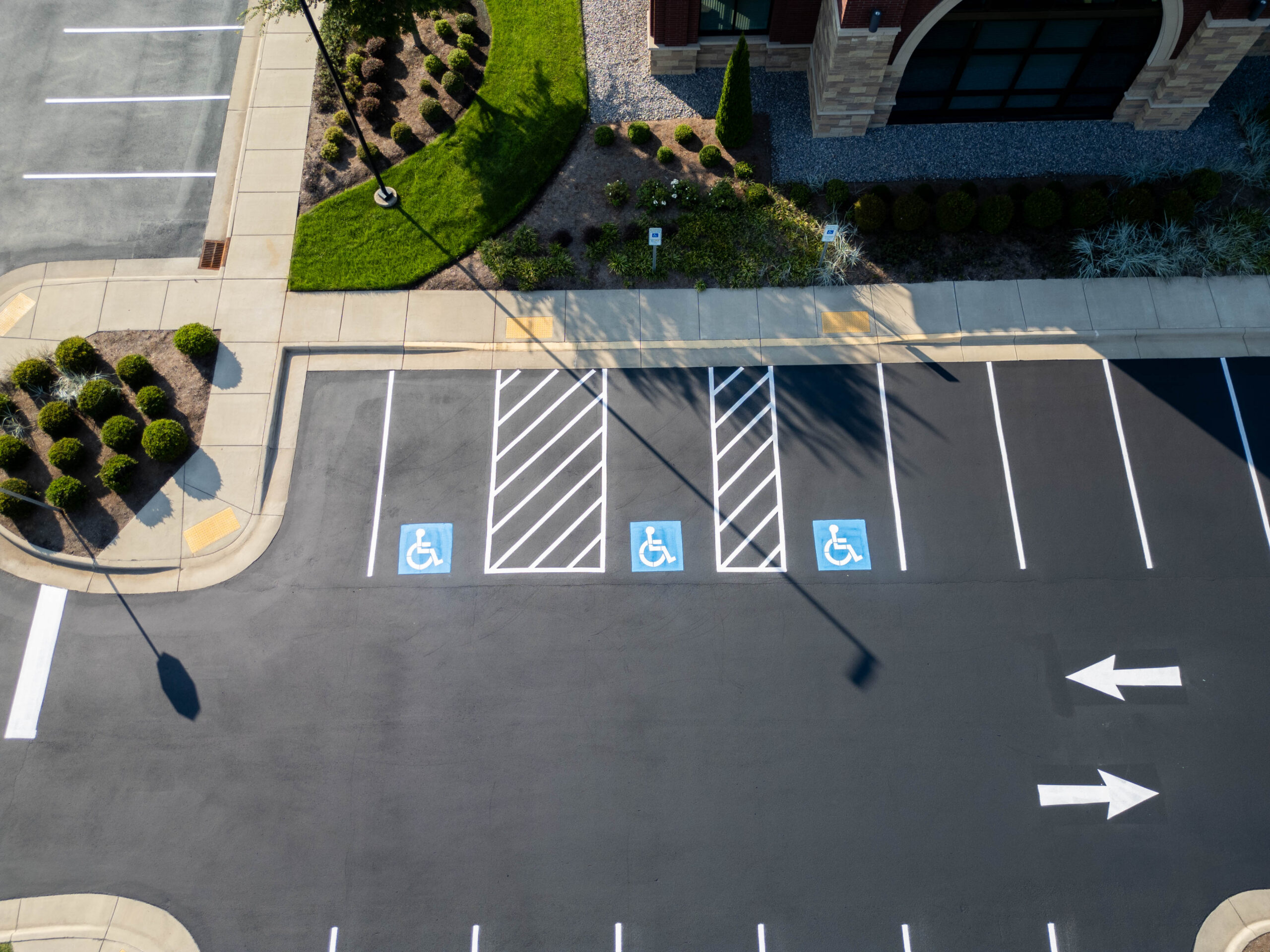
Federal accessibility rules set a minimum standard. According to the ADA’s passenger loading zone standard, a vehicle pull-up space must be at least 96 inches wide and 20 feet long, with an adjacent access aisle at least 60 inches wide that extends the full length of the pull-up space. The Access Board’s guidance states that a community must have at least one accessible loading zone for every 100 linear feet of loading space and that the aisle must be at the same level as the pull-up space. Additionally, if your drop-off is under a covered entrance, the standard mandates 114 inches of vertical clearance along the route.
We treat those figures as a starting point, not the final one; the table below shows the dimensions we have outlined for most Carolina communities.
| Zone element | Minimum standard or our recommendation | Marking we apply | Purpose |
| Accessible pull-up space | 96 in wide by 20 ft long (ADA minimum) | Outlined stall with accessibility symbol | Gives residents with mobility devices room to exit |
| Access aisle | 60 in wide, full length of pull-up space, same grade | Border line with diagonal hatching | Keeps the exit path clear of parked cars |
| Standard drop-off lane | 24 to 25 ft per vehicle (our recommendation) | Solid edge line and “LOADING ONLY” lettering | Fits SUVs and minivans without blocking the drive |
| Covered entry clearance | 114 in minimum (ADA) | Clearance sign at the canopy | Prevents strikes on tall vans |
| Fire apparatus lane | 20 ft unobstructed in most codes, wider if the fire official requires | Red paint or curb with white lettering, plus signs | Preserves emergency access |
For standard lanes, we extend the required length by four to five feet because modern SUVs and crew-cab trucks extend beyond a 20-foot section. A narrow area can cause drivers to stop in the travel lane.
Choose Paint, Color, and Signs That Survive the Carolinas
Carolina weather damages pavement markings: in summer, high surface temperatures bake the paint; afternoon thunderstorms wash away inadequately cured lines; and high humidity delays drying. For lane lines and edge stripes, we use fast-drying traffic paint, and in the areas that see the most wear, we apply preformed thermoplastic for the accessibility symbols and lettering. We apply the paint only on dry pavement when the temperature is within the manufacturer’s specified range, usually at least 50 degrees Fahrenheit, and rain is not expected.
Because color and message matter, we assign them based on the zone type. ADA access aisles are striped in the color specified by your local code, and each accessible zone includes a post-mounted sign so drivers can see it from the road. With regard to fire lanes, the review of the North Carolina fire code in Wake County requires approved signs or markings that read ‘NO PARKING—FIRE LANE’ where the fire code official demands them. We follow the specifications your fire marshal provides, since jurisdictions differ in color, letter height, and sign spacing. For example, Charlotte often requires yellow striping for fire lanes and specific reflective sign materials, while smaller counties may permit white striping and have fewer requirements for sign visibility. These differences mean you should confirm current requirements with your local officials before starting any marking work.
The MUTCD serves as the national standard for stop bars, crosswalks, and directional arrows; although your apartment entrance is private property, residents are already familiar with these markings, so similar layouts help reduce confusion.
Confirm Fire Lane and Accessibility Rules Before You Stripe
Never mark a fire lane without authorization; a fire code official must designate it, and using the wrong color or placing the line incorrectly could cause the inspection to fail and require you to repaint. For instance, Wake County fire reviewers have noted that aerial access widths of 26 feet around buildings over 30 feet can affect where your drop-off lane can be located relative to the building.
Before making any markings, we request the site plan, the approved fire access plan, and any city conditions of approval from your property manager. In Charlotte, Raleigh, Greenville, or Columbia, we compare the documents with local requirements so your zone meets the specifications of the fire marshal, the building inspector, and accessibility standards at the same time. Additionally, if the drop-off serves a leasing office or a clubhouse used by the public, we suggest asking your architect to confirm how the ADA applies to that entrance.
Phase the Work So Residents Keep Moving
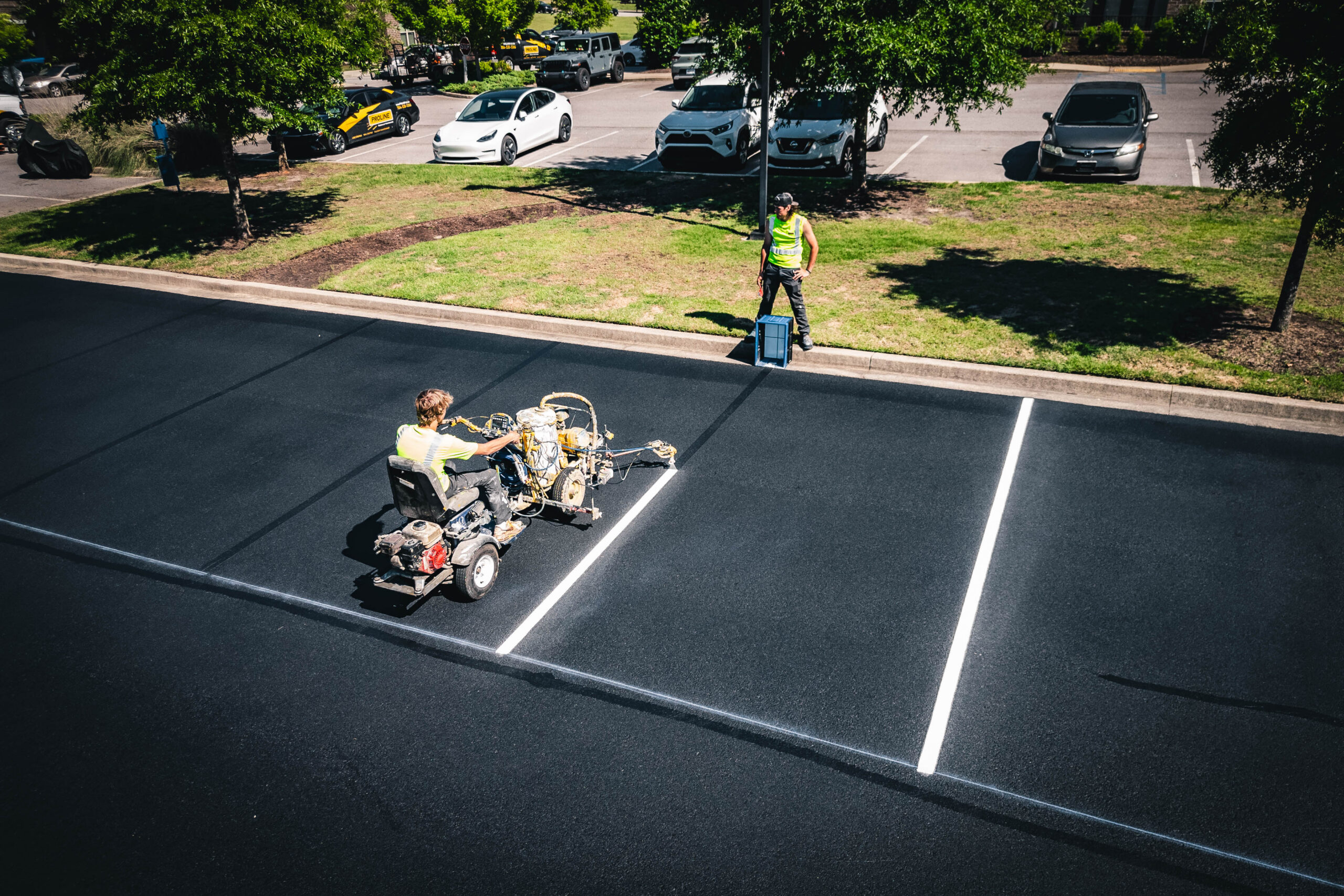
To mark an occupied community, you have to plan. First, we mark the new zone with paint or chalk, then walk through it with your manager before making any changes permanent. After that, we sweep and pressure-wash the surface since paint won’t stick to dust, oil, or loose sealcoat. If you have recently sealcoated, we wait until the surface has cured before we put on the stripes.
We stripe in sections, typically one half of a drive at a time, and place cones and temporary signs to give cars a clear alternative route. Residents will receive notice at least 48 hours before the event, either through the resident portal or via door hangers, specifying the exact hours and the alternate drop-off point.
To ensure all residents are informed and the process runs smoothly, use multiple communication channels. In addition to portal notifications and door hangers, send an email blast using a simple template that outlines the purpose, dates, affected areas, and key points of contact for questions. Posting announcements in common areas and on your community’s bulletin board or website can also help reach more residents. If your community has regular meetings or gatherings, mention the upcoming work to explain the timeline and answer resident questions directly. Ensuring staff has a standard message to share with inquiring residents helps keep communication consistent and reduces the chance of complaints.
Most single-zone projects are completed within one day, and each section reopens as soon as the paint has cured enough to be safe for tires.
Maintain Markings So the Zone Keeps Working
A faded zone teaches drivers to ignore it. High-traffic lanes wear down faster than parking spaces because vehicles brake, turn, and idle in the same places each day. We suggest inspecting your zones every six months and restriping heavily used drop-off areas every 12 to 18 months, while restriping standard stalls on a longer schedule. We also check signs for fading and bent posts, look for blocked lines of sight caused by landscaping, and repaint the accessibility symbols as soon as they lose contrast.
During short visits in the spring, after the pollen season, and in the fall, after the leaves have fallen, we detect most issues before either a resident or an inspector does.
Work With a Contractor Who Documents Every Line
When you hire ProLine Parking Lot Maintenance, we provide a clearly marked layout drawing, a list of the paint and sign specifications used, and the dimensions of each zone. This record will help you answer inspector questions, explain the setup to a new property manager, and reproduce the layout precisely during the next restriping. If you’d like, call us for a free visit to your Carolina community, and we’ll show you how a clearly marked zone can help calm traffic at the entrance this season.
Keep Apartment Pick-Up and Drop-Off Zones Organized
Clear pavement markings help residents, visitors, delivery drivers, and rideshare vehicles identify designated pick-up and drop-off areas. ProLine Parking Lot Maintenance provides professional parking lot line striping to help multifamily communities improve traffic flow, reduce confusion, and keep loading areas clearly defined.
Contact Us TodayFrequently Asked Questions
How do we stop rideshare drivers from picking up residents in the fire lane or the travel lane?
Rideshare apps place the pickup pin where the GPS detects it, often on the front curb of the building. In order to counter this, you should include a clearly named pickup point—for example, ‘Main Entrance Pickup’—in your community’s listing on both the map and the rideshare platforms and also put up a sign at that location with the same name. It is also advisable to ask the residents who receive your move-in packet and newsletters to set their pickup pin at this designated area. Combining this kind of communication with visible striping and ‘No Stopping’ signs along the fire lane provides drivers with a clear alternative and gives your staff a simple message to convey.
Can we tow vehicles that park or idle in a marked drop-off zone?
In many cases, you can, but North Carolina and South Carolina each have their own regulations on towing from private premises, and individual cities impose additional rules. Generally, jurisdictions require clear signs at each entrance identifying the towing company and the ban, and in some cases they specify the exact wording, size, and location of the signs. We install the signs and striping, but your property lawyer or towing contractor must confirm the precise notice requirements for your city or county before you act. Also, starting with a warning period and a written resident policy helps reduce disputes and ensures consistent enforcement.
What drives the price of marking drop-off zones, and how do we budget for it?
Cost varies based on the number of zones, total linear feet of striping, and the level of surface preparation your pavement requires. If the asphalt is faded or has oil stains, it must be cleaned before painting, and thermoplastic symbols are more expensive than painted ones but last longer in high-wear areas. Separate charges apply for signs, posts, and concrete footings, and if traffic control is needed on an occupied site,, this will increase labor hours. We issue a written estimate after a site visit, and we generally quote each zone individually so you can carry out the work in phases across different budget periods.
Do we need a temporary zone for move-in days at the start of a lease cycle?
Certainly, it often safeguards your permanent zone from abuse. Move-ins tend to take place in late spring and August, around the college areas in Carolina, and moving trucks need longer stops than a standard drop-off allows. We can therefore place removable cones, temporary signs, and a taped or painted staging area near the building you specify, allowing the trucks to load without obstructing the fire lane. Once move-in season ends, we remove the temporary arrangements and return the area to its normal state, keeping the permanent markings clean and free from confusion.
How do we keep drop-off zones visible at night?
Because many people arrive at night, visibility is just as important as the area’s design. You can mix the paint with reflective glass beads, or use thermoplastic with built-in reflectivity so markings will get in headlights and on wet roads. Also, make sure the lighting at your site extends over the whole pull-up space and access aisle, since lines in shaded areas will vanish regardless of how bright the paint is. We suggest doing a night drive-through after striping so you can identify darker areas and correct them by adding more lighting or signs before residents do.
See also: How to Plan Parking Lot Striping for Newly Renovated Apartment Communities, Parking Lot Striping for Apartment Buildings With High Resident Turnover