
Overview: key points
- Striping should come at the end of the renovation schedule, after all the heavy trades have finished.
- Do not apply paint until the new asphalt and fresh sealcoat have cured, or the lines will bleed and peel.
- Since a renovation usually results in a different number of stalls, different facilities, and altered traffic patterns, the previous layout is seldom suitable.
- Before anyone paints a line, confirm accessible spaces and fire lanes.
- A well-timed striping day gives your lease-up its best first impression.
In 2021, the median age of rental housing in the United States was 44 years, up from 34 years in 2001, according to Harvard’s Joint Center for Housing Studies. This increasing age of the housing stock is why property owners in Charlotte, Raleigh, Greenville, and Charleston continually invest capital in renovations, whether in unit interiors or in repaving lots. However, in many cases, parking lots get short shrift, and the painting is done on the wrong day or in the wrong order. We frequently see this problem, and it costs owners twice: once during painting and again when they have to repair it. A clear plan for striping parking lots in newly renovated apartment complexes protects your investment and gives prospective residents their first impression of the renovation standard.
Treat Striping as the Final Phase of the Renovation Schedule
Paint is the thinnest and most fragile layer on your property, so apply it last; all subsequent trades can scratch, stain, or cover it. We ask general contractors to provide a firm date after the final heavy delivery, after the last dumpster swap, and after the last lift truck has operated. The table below shows the sequence we recommend and the timing for each step.
| Phase | What happens | Effect on striping | Our timing note |
| Demolition and utility work | Crews cut trenches and replace service lines | Old lines break apart or disappear | Hold all paint until the cuts are patched |
| Asphalt repair or new paving | Crews place patches, overlays, or a new surface | Fresh asphalt releases light oils that attack paint | Wait about four weeks before permanent paint |
| Sealcoating, if planned | Sealer covers old lines and tightens the surface | Uncured sealer bleeds through white paint | Wait at least 24 hours, longer in humid weather |
| Concrete and ADA work | Crews pour curb ramps, sidewalks, and wheel stops | These elements fix the accessible aisle locations | Finish before layout begins |
| Heavy trades and deliveries | Material trucks, dumpsters, and lifts move around the lot | Tires scrape and stain fresh paint | Stripe after the last heavy delivery |
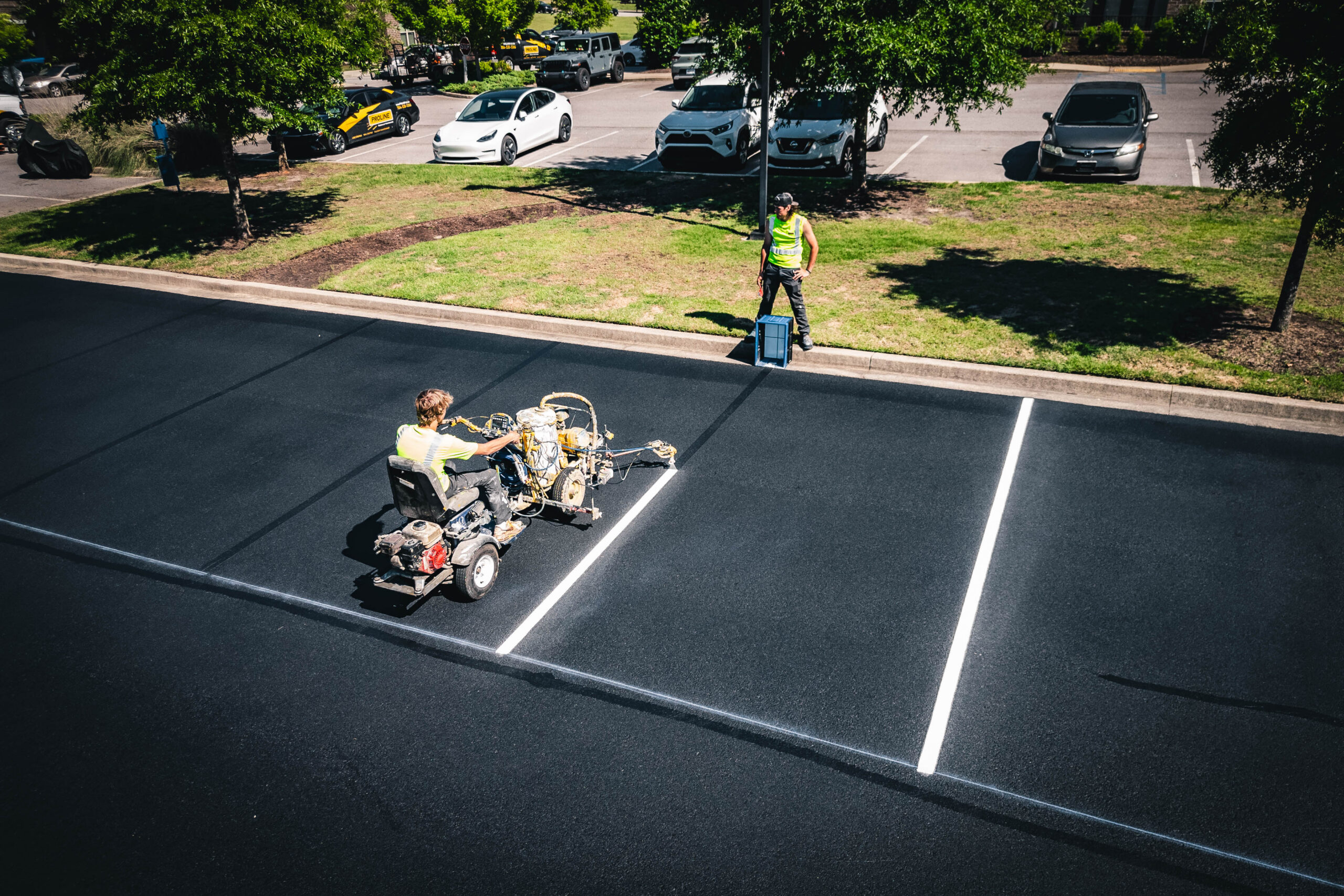
| Striping and curb painting | We lay out and paint stalls, stencils, arrows, and fire lanes | This phase completes the lot | Schedule it before the grand reopening |
| Signs and bollards | Crews install posts and signs | Signs must match the painted layout | Install immediately after striping |
Confirm the Approved Site Plan Before Anyone Paints a Line
A renovation usually involves more than the final finish; for example, owners might install a pet park, relocate the trash enclosure, convert some stalls into package pickup areas, or leave space for electric vehicle charging. Every such alteration affects stall count and traffic flow, so the previous layout may no longer comply with your approved site plan or the local parking ratio. Before giving you a quote, we check your current drawings against your approved plan and the actual on-site conditions, and we identify any discrepancies as early as possible. We also strongly recommend that property managers conduct early compliance checks by proactively reviewing updated site plans with local authorities or inspectors. This reduces the risk of costly rework and helps ensure approvals proceed smoothly. This step prevents the most unpleasant surprise on schedule: a city inspector rejecting the site after the paint has dried.
Lock the Layout Decisions Before Painting
Every layout choice has an owner and a standard, so settle all decisions before the striper arrives. The table below shows the decisions that we are asking you to confirm.
| Decision | Why it matters | Who confirms it |
| Stall count and stall size | Must match the approved site plan and local ratio | Owner and city planner |
| Accessible spaces and aisles | Must meet the 2010 ADA Standards | Owner and accessibility reviewer |
| Fire lane limits and lettering | Local fire code sets paint and spacing | Local fire marshal |
| Amenity zones such as EV, packages, and pet park | Changes stall locations and walking routes | Owner and operations team |
| Traffic flow, arrows, and stop bars | Controls how new residents move through the lot | Owner and our layout team |
Rebuild the Layout Around New Amenities and Traffic Patterns
New facilities increase traffic. A package locker near the leasing office causes several short stops, and the new dog park attracts foot traffic across a drive aisle. As we tour the refurbished property, we note where residents will actually drive, park, and walk, then install arrows, crosswalks, and short-term stalls to match. We also make sure that all accessible routes link to the renovated entrances, since a new door position can disrupt an existing route.
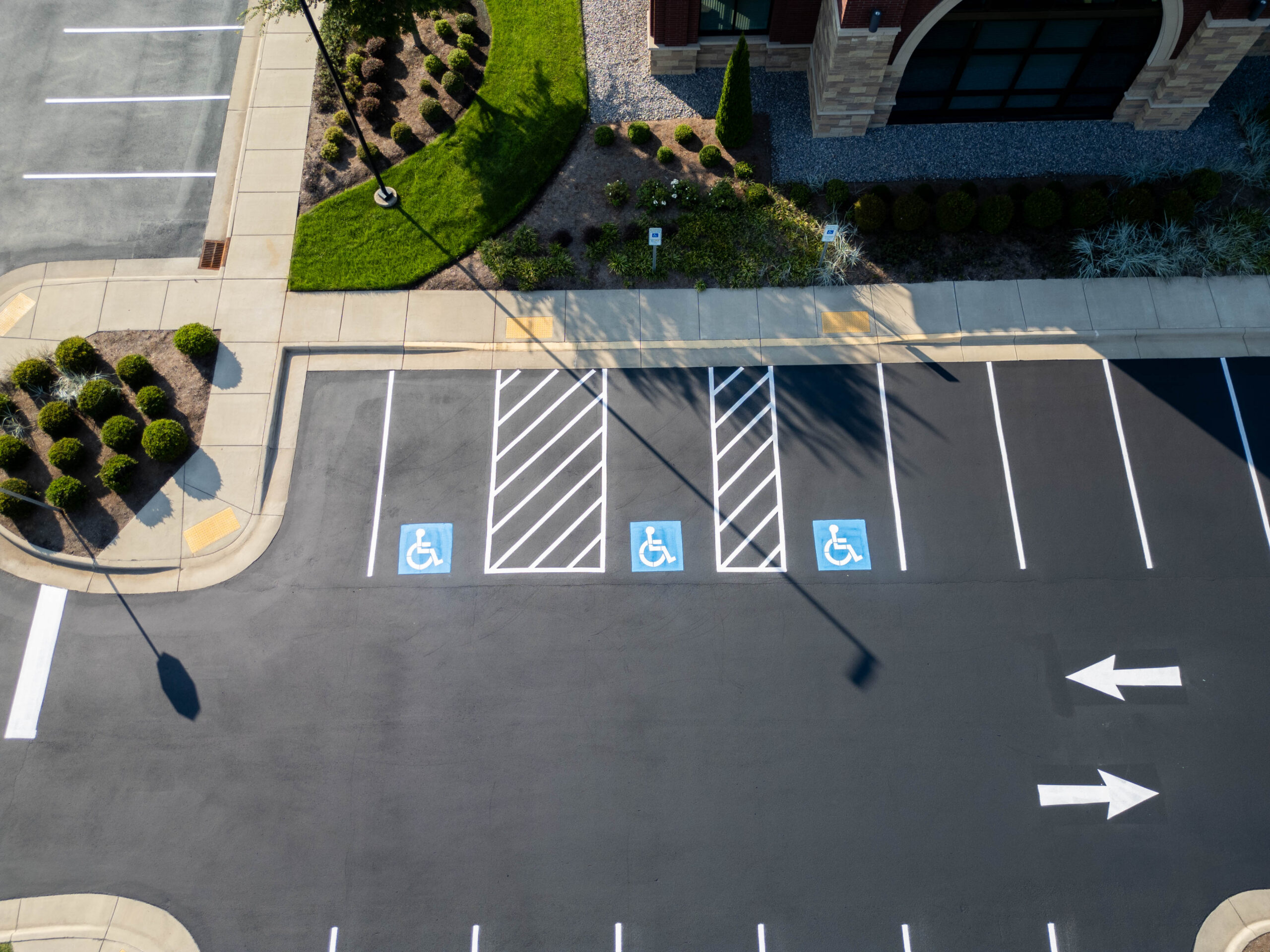
The rules regarding accessible spaces deserve extra consideration. As stated in its ADA restriping brief, the U.S. The Department of Justice says a business that does a lot of restriping must provide accessible spaces in accordance with the 2010 Standards. The agency’s ADA parking requirements determine the number of accessible spaces based on lot size and require at least one in every six accessible spaces to be van accessible. We check these figures against your final stall total because a renovation that adds or removes stalls can change the required number.
Match Paint and Timing to the New Surface
Fresh asphalt differs from older asphalt because it contains light oils that can discolor paint and reduce bond strength. Industry recommendations suggest curing new asphalt for about four weeks before applying paint so the surface has time to lose these oils. Since new asphalt also absorbs more paint, the Ohio Department of Transportation has set its paint rates for new asphalt so that the amount of alkyd paint is increased by 25 percent for the first coat. We plan material volumes based on this behavior so your lines retain their color and definition.
Sealcoat requires a waiting period. According to an aftercare guide from one equipment supplier, the specifications state that the sealer must dry for 24 hours before applying paint, and in cool or humid conditions this drying period can be extended. Since humidity is a factor in the Carolinas, particularly near Charleston and Wilmington, we check the forecast and surface conditions before starting. If you apply paint too quickly over a damp sealer, the white lines will turn brown, and repairing them will cost much more than delaying the work by one day.
Stage the Striping for Your Grand Reopening
A redeveloped community’s success or failure often comes down to how many people sign leases, and the parking lot is the first thing a potential resident notices. Clean white parking spaces, clear arrows, an obviously accessible layout, and a well-kept area for tour parking show that the property is well maintained. We arrange for the parking stripes to be painted a few days before the lease marketing campaign, the photography session, or the open house, so the paint has dried and the lot can be photographed properly. Additionally, we work with your leasing team to plan phased closures, ensuring current residents have somewhere to park. To minimize disruption, we recommend clear communication with residents about scheduled closure times, temporary signage to direct vehicles, and alternative parking options when possible. Coordinating the work in sections during off-peak hours also helps reduce inconvenience and keeps the community moving smoothly.
This method offers three clear advantages. It means you won’t have to repaint much of the work damaged by a subsequent trade. Your paint is also protected against early failure, and the doors can be opened with a portion of the work that supports your renovation narrative. ProLine Parking Lot Maintenance provides services to apartment complexes across the country, and we base each striping plan on your renovation schedule. If you want to call us before your paving contractor completes the job, we will adjust the layout, cure window, and paint date in your schedule.
Plan the Right Striping for Your Renovated Apartment Community
A parking lot renovation is the right time to create a clear, efficient layout for residents, visitors, and property staff. We can help plan and apply parking spaces, accessible markings, fire lanes, traffic markings, and other pavement markings that fit your community’s updated layout.
Contact UsFrequently Asked Questions
What drawings and information should we send you to get an accurate striping quote?
Please send your approved site plan, along with any CAD or PDF drawings showing the parking layout and your most recent stall count. We would also like to know about any planned changes, for example, the introduction of new amenity zones, the relocation of dumpsters, or the addition of EV stalls. If you don’t have any drawings, we can measure the lot and prepare a layout drawing from scratch. When you provide a complete package, we can give you a single quote, identify conflicts early, and prevent the need for change orders after work has started.
Can we stripe in phases while residents stay in place during the renovation?
Certainly, since many of our clients take this approach for the reason that they are unable to complete all the work at once. In finished areas, we apply temporary markings so drivers can still see the clear stalls and aisles while the rest of the project is underway. Although temporary paint is cheap, permanent paint applied over it requires an extra removal stage, which is why we plan the work order carefully. Moreover, we avoid grinding or other heavy removal methods on new pavement, since those techniques can leave scars on the surface you just paid for.
What drives the cost of striping a renovated lot?
Four factors influence the price. The first is the number of stalls and the total length of the line, since more stalls require more paint and take more time. The second factor is the number of stencils and any special markings, such as accessibility indicators, arrows, loading zones, and curb paint for fire lanes. The third is the need to remove existing lines, since any previous layout that conflicts with the new one must be taken down before painting can take place. The fourth is access and phasing, as a site that remains open to residents is more expensive to stripe than one that is closed. With each proposal, we provide a written scope in which each of these items is clearly listed so that you can compare the bids on a level playing field.
What happens if the fire marshal or an inspector asks for changes after we stripe?
We recommend a preliminary walkover using chalk or temporary markings so the inspector can review the layout before it is made permanent. If a change request comes in after the striping is complete, we remove or cover the relevant lines and repaint them in accordance with the amended plan. The amount charged depends on the number of stalls, stencils, or curb sections that need to be altered, with each corrected line priced separately. We also record the approved layout with photographs and measurements, so you have a clear record if a dispute arises in the future.
How do we care for fresh stripes during the first year after renovation?
Keep sweeping the lot on a regular schedule, because dirt and debris grind the paint under tires. Avoid pressure washing directly on the lines, and clean oil or fuel spills quickly, since those chemicals soften and lift paint. Check the highest-traffic areas, such as the entrance, the leasing office stalls, and the loading zones, because those spots wear first. If you see early fading or tire damage, call us for a touch-up before the problem spreads across the lot.