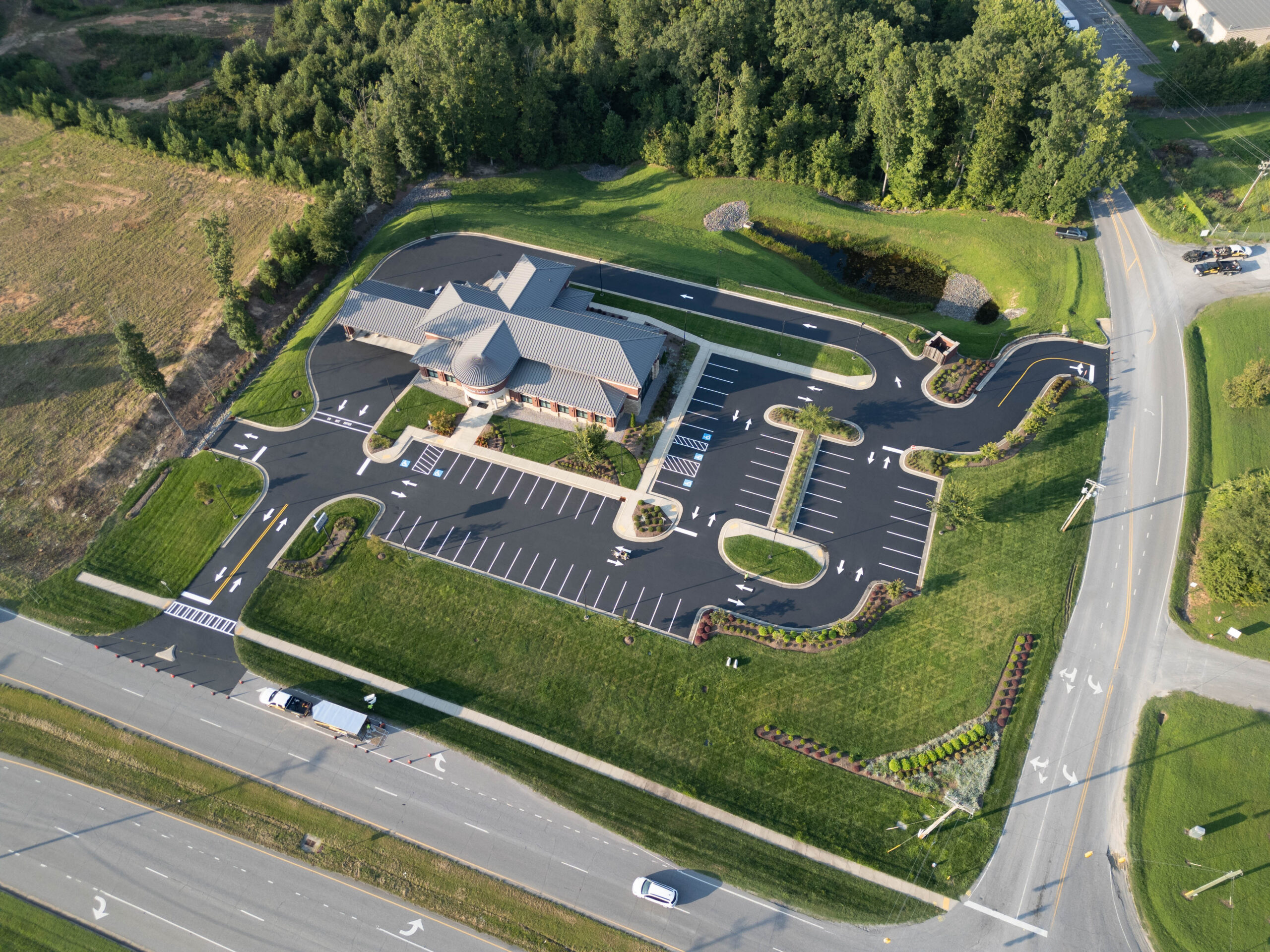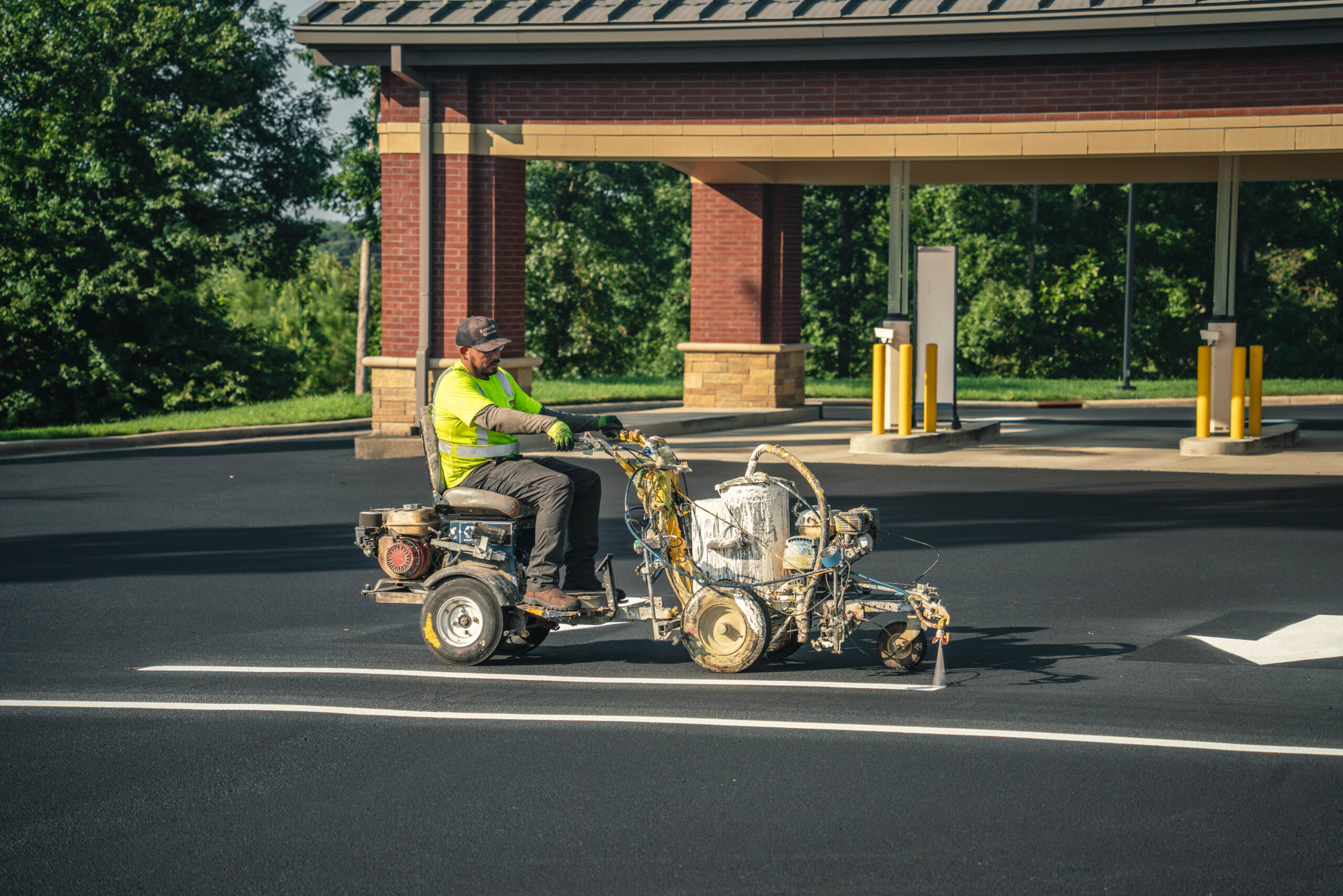
Accessible parking is useful only when people can travel from the space to the destination it serves. Review the complete route, including the surface, slopes, curb ramps, obstructions, signs, and markings. A painted line alone does not create an accessible route.
This guide explains how to include pavement markings in a broader accessible-route maintenance plan for a multifamily property.
Review the Route as Well as the Parking Space
Accessibility requirements depend on the facility, its use, and the applicable laws. At multifamily properties, resident parking, visitor parking, and public-facing facilities can have different requirements under the Fair Housing Act, the ADA, and state or local codes. Confirm the approved layout and applicable requirements with a qualified accessibility professional; repainting alone does not establish compliance.
| ADA Title III | Fair Housing Act (FHA) | |
| Applicability | Confirm which public-facing facilities and parking areas are covered | Confirm whether the residential buildings are covered |
| What it requires | Accessible route and parking at public-facing areas | Accessible route connecting parking, building entrances, and public/common-use areas for residents |
| Project review | Check the applicable ADA requirements | Check the applicable housing-accessibility requirements |
| Where to check current standards | ADA.gov 2010 Standards | HUD FHA Design Manual |
Review the actual condition of each route, not only the original plan. Record worn markings, damaged surfaces, missing signs, and obstructions for appropriate corrective action.
What “Accessible Route” Actually Means in Striping Terms
Pavement markings can identify spaces, access aisles, and designated crossings. The route itself also depends on dimensions, slopes, surface condition, and a clear connection to the destination.
- Check accessible parking spaces against the approved layout and applicable requirements.
- Next to the stall there is an access aisle, which remains clear for the use of wheelchair lifts and transfers.
- Confirm the complete van-accessible space and access-aisle configuration; the permitted layout is not limited to a single aisle-width arrangement.
- Provide the required identification signs and any pavement symbols required by state or local rules.
- Check the connection from the access aisle to the accessible route and building entrance.
- Have curb ramps and any required warning surfaces reviewed under the standards applicable to the location.
- Coordinate crossing markings, signs, and sightlines with the approved design.
Inspect the complete route for obstructions and damage. Repainting can address worn markings, while surface, slope, or layout problems may require other work.
Inspect Accessible Markings for Wear
Wear varies with traffic, turning movements, surface condition, material, and exposure. Inspect accessible markings alongside the connecting route instead of assuming that all areas will wear at the same rate.
- Check for fading and loss of contrast in exposed areas.
- Inspect markings and drainage after severe weather.
- Consider moisture and the selected material’s application requirements when scheduling work.
- Check high-use areas for tire wear and damaged coatings.
| Marking system | Planning factor | Review |
|---|---|---|
| Water-based traffic paint | Product and site conditions | Surface preparation and application instructions |
| Solvent-based traffic paint | Product and site conditions | Suitability and handling requirements |
| Thermoplastic | Product and site conditions | Substrate compatibility and installation method |
| Preformed marking products | Product and site conditions | Surface preparation and bonding requirements |
Choose marking materials for the pavement type, traffic, weather exposure, and required visibility. Ask the contractor to identify the proposed product and follow its surface-preparation, application, and reopening instructions. Inspect completed markings regularly and refresh them based on their condition.
Local Compliance Across the Carolinas
Local requirements can add to the standards applicable to a property. Confirm the project scope, approved layout, and any necessary review with the relevant professionals before work begins.
- Contact the local planning or building department about proposed layout changes.
- Confirm accessible-route and parking requirements for the property’s actual use.
- Inspect markings based on observed condition and site exposure.
Plan Accessible Marking Work
- Document the markings, signs, and connecting routes that need review.
- Have a qualified professional confirm the applicable accessibility requirements.
- Select a marking system suited to the pavement and expected use.
- Keep dated photographs and records of completed work; photographs alone do not establish compliance.
- Set inspection intervals according to observed wear and property use.
Signs Your Accessible Route Striping Needs Attention
- The ISA symbol has faded so much that it is difficult to identify from a moving vehicle.
- In some areas, the access aisle hatching is either worn thin or missing.
- Tire marks run straight through the designated accessible path.
- The route passes through a drive lane that has no crossing markings.
- Inspect curb ramps, warning surfaces where required, and van-accessible identification for damage or missing elements.
Maintain Usable Parking and Routes
- Clear markings help communicate where vehicles may park and where access aisles must remain open.
- True usability for residents, guests, and staff who actually depend on the route functioning as intended.
Let’s Walk Your Route
Inspect accessible spaces, access aisles, signs, and routes together. Contact ProLine to discuss the marking work identified by your property’s review.
Plan Marking Maintenance for Accessible Parking
Worn markings and obstructed access aisles deserve prompt attention. Confirm the full layout and route requirements before changing accessible parking.
Contact ProLine Parking Lot Maintenance to discuss accessible-space markings, access-aisle hatching, and crossing markings for your approved layout.
- Measured layout: Apply markings to the agreed design and verify them during the final walkthrough.
- Material selection: Use products suited to the surface, traffic, and required visibility.
Frequently Asked Questions
What number of accessible parking spaces, including those accessible to vans, does a multi-family property really need?
Accessibility requirements depend on the facility, its use, and the applicable laws. At multifamily properties, resident parking, visitor parking, and public-facing facilities can have different requirements under the Fair Housing Act, the ADA, and state or local codes. Confirm the approved layout and applicable requirements with a qualified accessibility professional; repainting alone does not establish compliance.
Who should coordinate accessible-route maintenance?
Assign responsibility for inspections, reporting, corrective work, and approvals in the property’s maintenance process. Specific legal responsibility should be reviewed with qualified counsel.
Do older multi-family buildings have to update their striping to meet the current accessible-route requirements, or are they exempt because of their age?
Requirements depend on the facility, applicable laws, construction history, and scope of proposed work. Have a qualified accessibility professional review the property before assuming that its age creates an exemption or a particular upgrade requirement.
How should the route be checked after severe weather?
Inspect for debris, ponding, erosion, damaged surfaces, and unclear markings. Keep routes open and arrange appropriate corrective work for the observed conditions.
How should a concern about an accessible route be handled?
Record the reported location and concern, review the condition promptly, and arrange the appropriate professional assessment or maintenance. Keep a record of the response and completed work.
Does the color of striping paint matter for accessibility compliance — does the accessible symbol have to be blue?
The federal ADA Standards do not prescribe a universal pavement-marking color. Confirm applicable state and local color, symbol, and sign requirements; a pavement symbol does not replace a required identification sign.
Does ProLine coordinate striping schedules around city inspections or certificate-of-occupancy renewals?
Tell ProLine about any inspection or occupancy deadline when discussing the project. Confirm an achievable schedule, required approvals, and documentation before work begins.
See also: How to Plan a Line Striping Project for a Busy Apartment Community, The Operational Benefits of Professional Multi-Family Line Striping Services