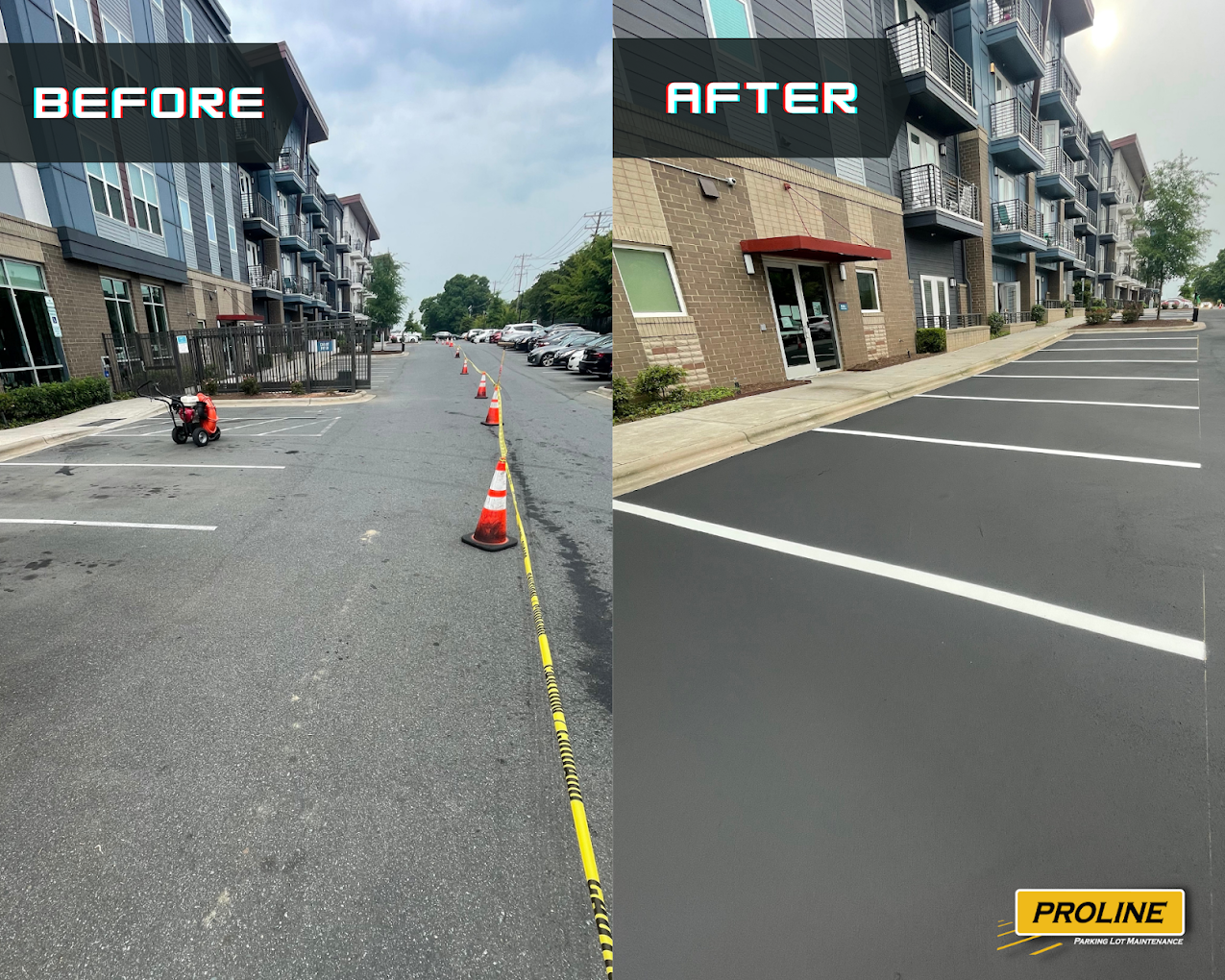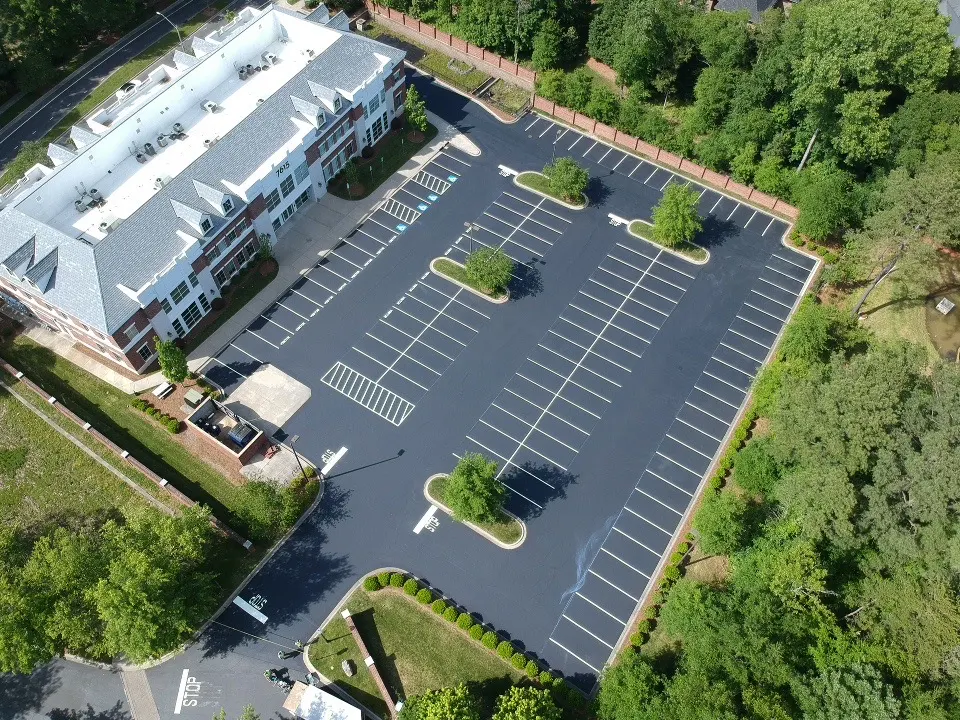
Parking lot markings are easy to overlook until they begin causing problems. The Federal Highway Administration’s Manual on Uniform Traffic Control Devices recognizes parking-space markings as a way to encourage more orderly and efficient parking and help prevent vehicles from encroaching into restricted areas.
For apartment and multifamily property managers, that makes line striping more than a cosmetic maintenance task. Faded parking stalls, poorly positioned arrows, unclear fire-lane markings, improperly marked accessible spaces, and inconsistent layouts can all affect how residents and visitors use a parking lot.
Yet property managers can make mistakes even when they understand the importance of restriping. Some schedule the work too late, others repaint without evaluating the existing layout, and some overlook accessibility markings or fail to coordinate striping with other pavement work.
Avoiding these mistakes starts with treating pavement markings as part of the property’s overall maintenance strategy.
Mistake #1: Waiting Until Parking Lines Are Almost Gone
One of the most common mistakes is waiting until markings have deteriorated significantly before scheduling maintenance.
By that point, residents may already be parking inconsistently, visitors may be confused about designated areas, and important pavement markings may be difficult to identify.
ProLine Parking Lot Maintenance recommends routine parking lot inspections rather than waiting for tenant complaints to reveal maintenance problems. Its apartment parking lot checklist specifically recommends recurring inspections of pavement, markings, drainage, lighting, and other parking-area components.
Example
A 180-unit apartment community has parking lines that are still faintly visible. The property manager decides to postpone restriping for another year because residents have not complained.
Over the following months, several vehicles begin parking over stall boundaries. Residents complain that some spaces appear smaller than others, and management eventually has to address multiple parking disputes.
A scheduled inspection could have identified the deteriorating markings before the problem became a resident-management issue.
Mistake #2: Assuming Every Parking Lot Needs the Same Striping Schedule
There is no universal schedule that works for every apartment community. Parking lots experience different levels of traffic, weather exposure, pavement wear, and maintenance activity. A busy 400-unit community may experience substantially different pavement wear than a smaller property with limited vehicle movement.
Instead of automatically treating striping as a fixed calendar event, property managers should evaluate the actual condition of the markings.
Example
A 75-unit community has relatively low traffic and recently received new pavement markings. Meanwhile, a 350-unit community has heavy daily traffic and frequent delivery vehicles.
Both properties may have been striped at the same time, but their markings may not remain equally visible. The better approach is to schedule regular inspections and use actual pavement conditions to determine when maintenance is necessary.
Mistake #3: Repainting Without Reviewing the Existing Layout
Simply repainting old lines can preserve problems that already exist. A property’s parking needs can change after renovations, new buildings, changes in tenant occupancy, or modifications to common areas.
Before restriping, property managers should consider whether the existing layout still reflects how residents and visitors actually use the property.
Example
An apartment community originally had a lightly used visitor-parking area near its leasing office. After the property added a package room and expanded its clubhouse, visitor activity increased substantially.
If the manager repaints the original markings, the parking lot may continue to reflect an outdated circulation pattern. A pre-striping evaluation could identify whether the layout should be modified before the new markings are installed.
Mistake #4: Overlooking Accessible Parking Markings
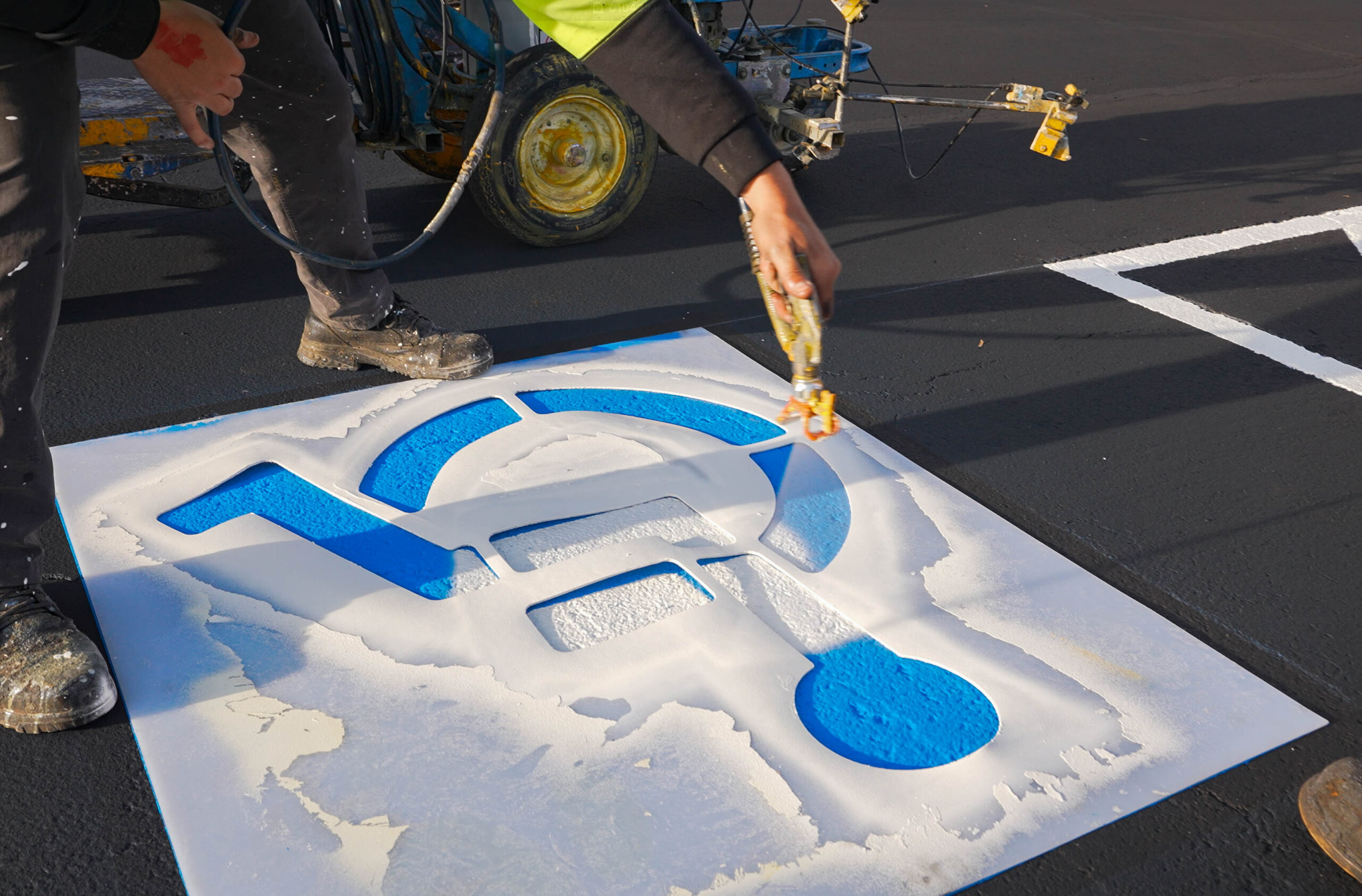
Accessible parking deserves particular attention during every restriping project. The U.S. Department of Justice explains that when parking spaces are restriped, accessible parking spaces must be provided as required by the 2010 ADA Standards for Accessible Design.
That means property managers should not treat accessible spaces as ordinary parking stalls that happen to have a wheelchair symbol painted on them.
Accessible parking involves requirements concerning the number and location of spaces, access aisles, dimensions, signage, and accessible routes. ADA.gov explains that accessible spaces must connect to an accessible route and that access aisles must be marked to discourage other vehicles from parking in them.
Example
A 120-space apartment parking facility has several accessible spaces. During restriping, the contractor restores the stall lines but does not properly address the condition or visibility of the access aisles.
The spaces may look freshly painted, but the project has not necessarily addressed every accessibility requirement.
Property managers should review applicable federal, state, and local requirements before restriping rather than assuming fresh paint automatically means compliance.
Mistake #5: Ignoring Access Aisles
Access aisles are sometimes treated as extra pavement rather than an essential part of accessible parking. ADA.gov states that accessible parking spaces must have access aisles, and those aisles must be marked. If an access aisle is faded or poorly defined, drivers may mistakenly use it as a parking area.
Example
A resident sees a wide, unmarked area beside an accessible parking space and assumes it is an additional parking area.
Another vehicle then blocks the access aisle, making it more difficult for a person using a mobility device to enter or exit a vehicle.
Clear striping helps communicate that the area is not an ordinary parking space.
Mistake #6: Failing to Coordinate Striping With Sealcoating
Another avoidable mistake is scheduling line striping before other pavement treatments that may cover or disturb the markings.
If a property plans sealcoating, crack sealing, or certain pavement repairs, management should coordinate the project sequence with the contractor.
Example
An apartment manager schedules fresh parking lines in May. In June, the property undergoes sealcoating.
The sealcoating process covers the new markings, forcing management to pay for another striping project. Coordinating the work beforehand can prevent this unnecessary duplication.
ProLine’s published project portfolio includes multifamily and HOA projects involving both sealcoating and restriping, demonstrating how these services can be coordinated as part of a larger pavement-maintenance project.
Mistake #7: Choosing a Contractor Based Only on Price
The lowest bid is not necessarily the lowest-cost solution. Line striping requires more than applying paint to pavement. The contractor must understand layout, surface conditions, accessibility considerations, preparation, materials, equipment, traffic control, and the property’s specific requirements.
A low bid can become expensive if the markings need premature correction or if the contractor overlooks problems that should have been addressed before painting. Property managers should compare contractors based on experience, scope of work, communication, preparation, materials, scheduling, and references rather than price alone.
ProLine has publicly displayed customer feedback emphasizing communication and workmanship. One Google reviewer, Tommi Watson, described the company as “Great communication, prompt and professional.” Another reviewer, Trent S., specifically mentioned a parking lot restriping and crack-sealing project and said the work was completed ahead of schedule.
These reviews reflect individual customer experiences rather than guarantees of future results, but they illustrate why service quality and project communication can matter when evaluating a contractor.
Mistake #8: Forgetting About Directional Arrows and Pavement Symbols
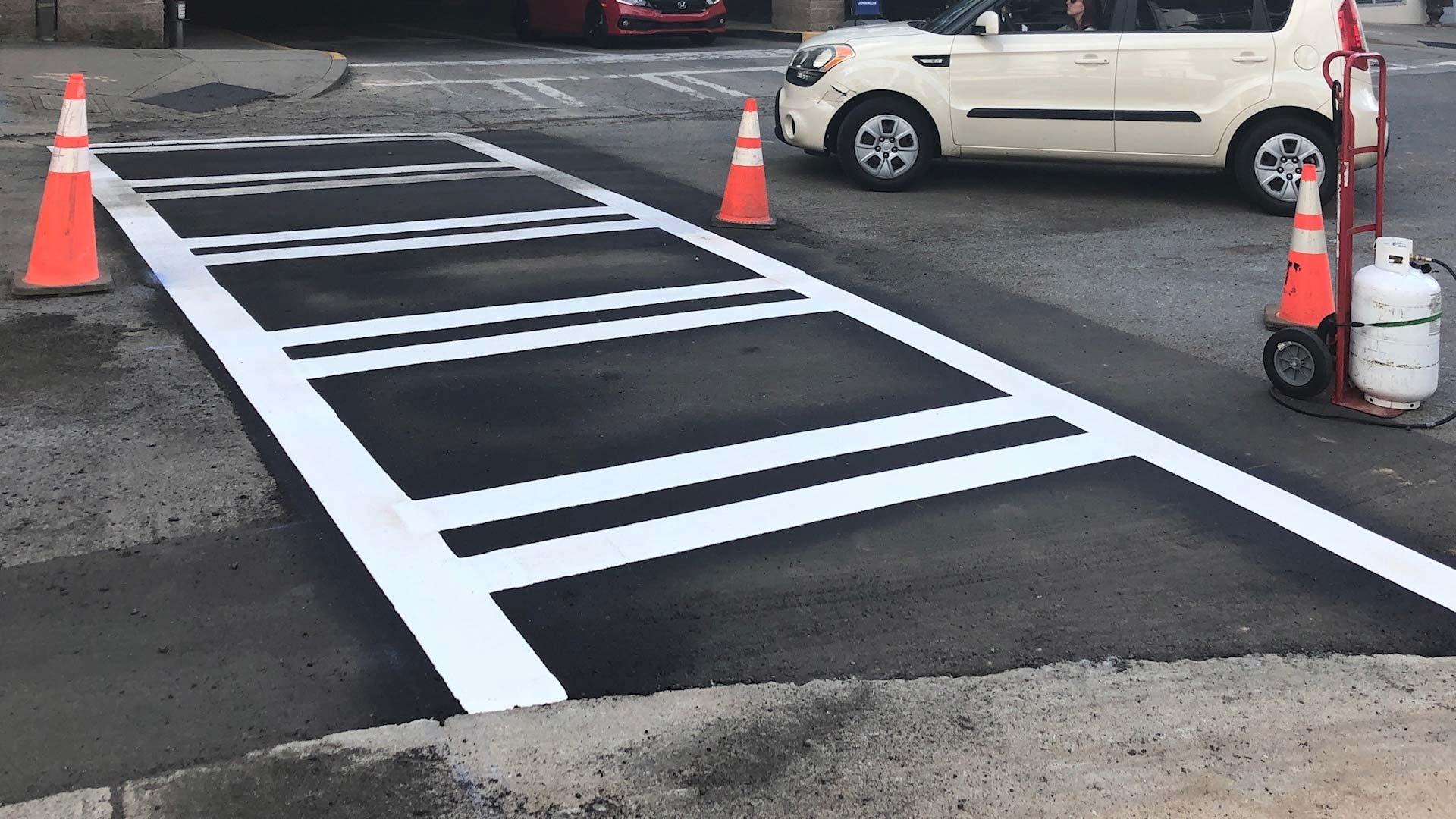
Parking stalls are not the only markings that require maintenance. Directional arrows, stop markings, crosswalks, fire-lane markings, loading areas, curb markings, and pavement symbols can also fade over time.
The MUTCD addresses pavement word, symbol, arrow, crosswalk, parking-space, and curb markings as distinct pavement-marking applications.
Example
A multifamily community has clearly visible parking stalls, but the directional arrows near the entrance are almost completely faded. Residents who are familiar with the property continue following the intended circulation pattern.
New residents and visitors, however, may not know that the aisle is intended to operate in one direction. Restriping only the parking stalls would leave an important part of the property’s traffic-control system deteriorated.
Mistake #9: Ignoring Fire Lanes and Restricted Areas
Property managers should also review fire lanes and other restricted parking areas during striping projects. Parking-space markings can help prevent vehicles from encroaching into areas where parking is restricted, including fire-hydrant zones, loading zones, intersections, curb ramps, and clearance areas.
Example
A property has a designated fire lane near one of its residential buildings. The red curb and pavement markings have faded enough that residents occasionally stop there while unloading groceries.
Management may interpret the problem as resident noncompliance, but unclear markings can also contribute to confusion. Refreshing the markings can make the restriction more visible and reinforce the property’s parking rules.
Mistake #10: Failing to Consider Resident Communication
Restriping an occupied apartment community requires coordination. Residents may need to move vehicles, use temporary parking, or avoid certain sections of the lot while work is underway. Without adequate notice, even a well-executed project can create unnecessary frustration.
Example
A property manager schedules striping for a Wednesday morning but does not notify residents until the night before. Several residents leave vehicles in the work area.
The contractor has to delay portions of the project, while residents become frustrated about unexpected parking restrictions. A simple communication plan can reduce these problems.
Property managers should communicate the following:
- The date and approximate time of work
- Which parking areas will be closed
- Where residents should temporarily park
- Whether vehicles must be moved
- When parking areas are expected to reopen
- Who residents should contact with questions
Mistake #11: Ignoring Weather and Pavement Conditions
Line striping should not be treated as a project that can be completed under any conditions. Surface moisture, rain, temperature, and pavement conditions can affect the application and performance of pavement markings.
Property managers should rely on the contractor to determine whether conditions are appropriate for the selected marking material. Trying to force a project forward simply because it is on the calendar can produce inferior results.
Mistake #12: Restriping Damaged Pavement Without Addressing the Underlying Problem
Fresh lines cannot repair damaged asphalt. If the pavement contains significant cracks, potholes, surface deterioration, or drainage problems, those conditions should be evaluated before the property invests heavily in new markings.
ProLine’s apartment parking maintenance checklist recommends inspecting pavement conditions alongside markings rather than treating striping as an isolated task.
Example
An apartment community has severely cracked pavement throughout its parking lot. Management focuses only on repainting the lines because the markings are difficult to see.
The parking spaces look better temporarily, but the underlying pavement continues to deteriorate. A better maintenance plan would evaluate whether pavement repairs should occur before or alongside restriping.
Mistake #13: Using Inconsistent Layouts Across the Property
Large apartment communities may have multiple parking sections. If each section uses different stall arrangements, arrows, markings, or signage without a clear reason, residents may find the property more difficult to navigate.
A consistent visual system makes it easier for drivers to understand the parking environment. Property managers should therefore review the entire property rather than evaluating each isolated parking section without considering how the sections connect.
Mistake #14: Treating Striping as Purely Cosmetic
Fresh lines certainly improve appearance, but their purpose goes beyond aesthetics. The FHWA recognizes pavement markings as traffic-control devices, and parking-space markings can encourage more orderly and efficient parking.
That means a property manager should evaluate markings based on function as well as appearance.
The important questions include:
- Can drivers clearly identify parking spaces?
- Are restricted areas recognizable?
- Are directional markings visible?
- Are accessible spaces and access aisles clearly identified?
- Do markings correspond with the property’s current layout?
- Are pedestrian crossing areas distinguishable?
- Do pavement markings support the property’s intended traffic pattern?
Mistake #15: Failing to Document Completed Work
Property managers should maintain records of significant parking lot maintenance. Documentation can include photographs, contractor proposals, invoices, project dates, areas completed, materials used, and notes about pavement conditions.
This creates a useful maintenance history.
Example
A new property manager takes over a 250-unit apartment community. The previous manager did not keep detailed records of parking lot maintenance.
The new manager cannot determine when the property was last striped, what areas were completed, or whether accessibility markings were previously reviewed. A basic maintenance record could have made that transition much easier.
A Better Approach to Apartment Line Striping
Avoiding common striping mistakes begins with treating the parking lot as an operating asset rather than simply a paved surface.
Property managers should inspect markings regularly, evaluate accessibility requirements, review the current layout, coordinate striping with pavement maintenance, communicate with residents, and select contractors based on experience and project quality.
For multifamily communities, these steps can make parking-lot maintenance more predictable and help prevent small marking problems from becoming larger operational issues.
ProLine Parking Lot Maintenance provides parking lot maintenance and line-striping services for multifamily properties and other commercial properties. Its published resources emphasize preventive inspections and coordinated parking-lot maintenance rather than waiting until deterioration becomes severe.
Avoid Costly Striping Errors and Keep Your Community Compliant
From using low-grade paint formulations that peel within months to failing to measure exact ADA access aisle dimensions, minor line striping mistakes can lead to major headaches for apartment property managers. Improperly executed pavement markings not only compromise resident safety and traffic flow, but they also expose your property to expensive municipal fines and legal liability.
ProLine Parking Lot Maintenance eliminates execution errors with precision layouts, commercial-grade traffic paint, and strict adherence to local code and ADA regulations.
- Precision Layout Execution: Exact line dimensions, crisp stenciling, and proper surface preparation to prevent premature paint failure.
- Guaranteed Regulatory Compliance: Flawless execution of ADA stall ratios, fire lane clearance requirements, and local property codes.
Frequently Asked Questions
How can property managers tell whether a contractor’s striping plan is accurate?
Property managers should review the proposed layout against the property’s current site plan, parking policies, accessible spaces, fire lanes, pedestrian routes, and actual traffic patterns. It is also useful to conduct a site walkthrough with the contractor before work begins so discrepancies can be identified while changes are still easy to make. A professional striping plan should account for the complete parking environment rather than simply reproducing faded lines that may no longer represent the property’s needs.
Should property managers keep the old parking layout when restriping?
Not necessarily, because an existing layout may contain problems that have developed over time; changes to buildings, entrances, amenities, traffic patterns, parking demand, or accessibility needs may make the original arrangement less effective. Before changing a layout, however, property managers should have proposed changes evaluated against applicable accessibility, fire-safety, zoning, and local requirements.
What happens if an apartment community accidentally removes an accessible parking space during restriping?
Removing or relocating an accessible space without properly evaluating the applicable requirements can create an accessibility problem. The U.S. Department of Justice explains that restriping parking facilities triggers requirements concerning accessible parking spaces under the ADA Standards. However, residential facilities can have different accessibility considerations depending on their specific circumstances. Property managers should therefore review the applicable requirements before approving a revised parking layout rather than treating accessible spaces like ordinary stalls.
Should parking lot striping be inspected after the contractor finishes?
Yes, a post-project walkthrough is a practical quality-control step. Management can verify that the agreed-upon areas were completed, parking spaces are positioned as expected, accessible markings and access aisles are visible, and no important pavement symbols were accidentally omitted. Photographs taken after completion can also provide useful documentation for the property’s maintenance records.
Can property managers request a test area before approving a large striping project?
A test area can sometimes be useful when a property manager needs to evaluate how a particular marking material or application will appear on the existing pavement. This can be especially helpful when the pavement has unusual surface conditions or when management is comparing different maintenance approaches. Whether a test area is practical depends on the project size, materials, contractor, and site conditions.
What should property managers do if residents repeatedly park over the lines?
The first step is to determine whether the markings are actually visible and whether the parking configuration is clear. If the lines are faded or poorly positioned, restriping may help, but repeated violations may also require clearer parking policies, resident communication, enforcement, or signage. Property managers should avoid assuming that every parking problem is caused solely by residents when the physical layout may contribute to the confusion.
Does restriping automatically make an apartment parking lot ADA compliant?
No. Restriping can be an important part of addressing accessible parking, but ADA compliance involves more than paint. Accessible parking requirements can involve the number and location of spaces, access aisles, dimensions, slopes, accessible routes, signage, and other features, so property managers should evaluate the entire accessible parking arrangement against the requirements applicable to the property.
How should managers compare two parking lot striping bids?
Instead of comparing only the final price, managers should compare the scope of work, number and type of markings, pavement preparation, materials, accessibility considerations, traffic-control measures, scheduling, warranty terms, and exclusions. Two bids that appear similar in price may cover substantially different work. A detailed written scope makes it easier to determine what the property is actually purchasing.
What if the contractor discovers pavement damage before striping?
The contractor should document the issue and explain whether it could affect the striping project. Some minor defects may be compatible with the planned work, while significant pavement deterioration may warrant repair before new markings are applied. Addressing the underlying surface problem first can prevent a property from investing in new markings over pavement that requires more substantial maintenance.
Can poor line striping contribute to resident complaints?
Yes, particularly when faded or confusing markings make parking spaces, visitor areas, restricted zones, or circulation patterns difficult to understand. ProLine’s published multifamily maintenance guidance identifies parking conditions and faded markings as issues that can contribute to tenant concerns. The key is to view resident complaints as potentially useful maintenance signals and investigate whether the physical parking environment is contributing to the problem.
See also: How Line Striping Improves Traffic Flow in Apartment Parking Lots, Visitor Parking Line Striping Ideas for Apartment Communities