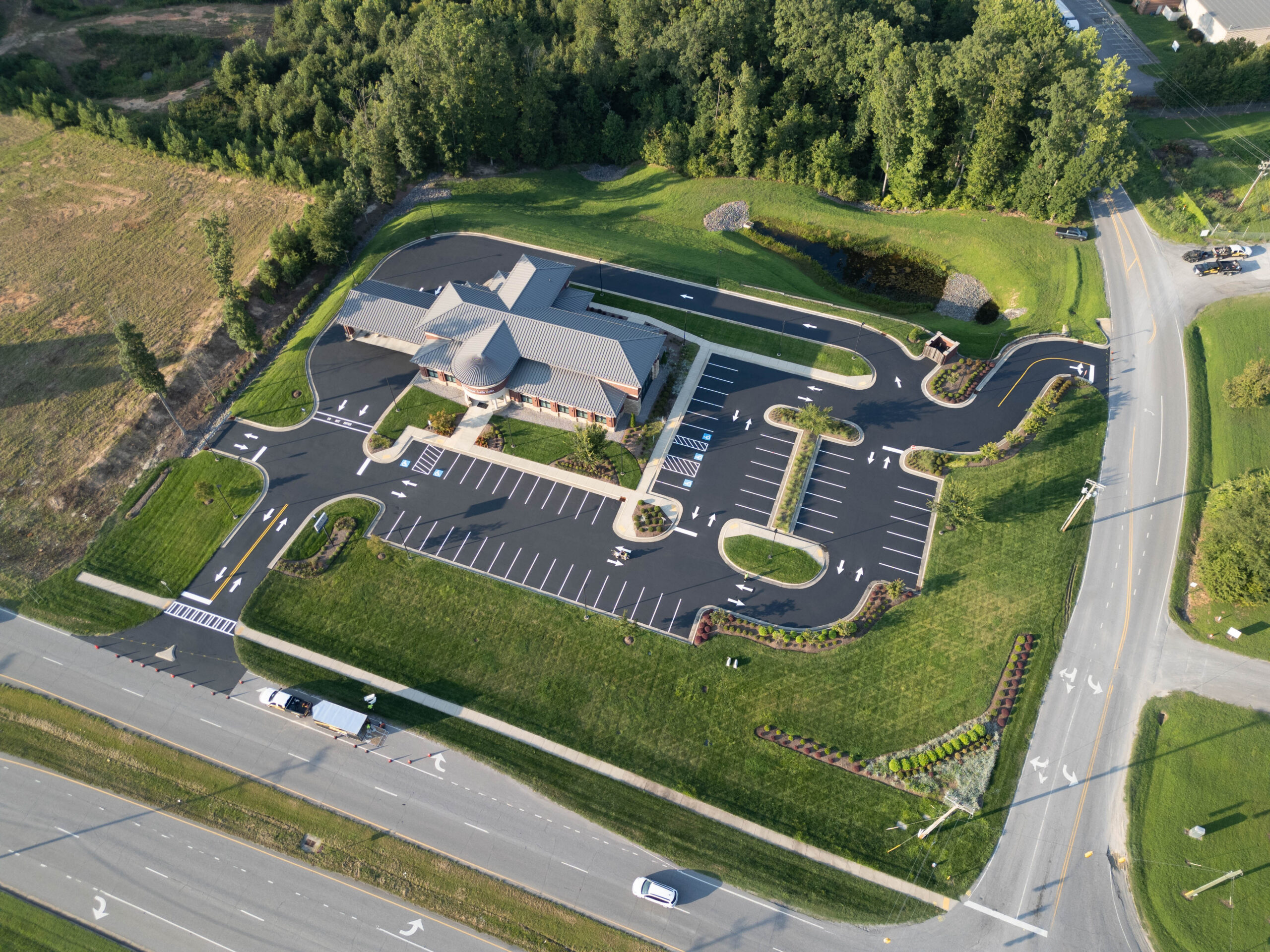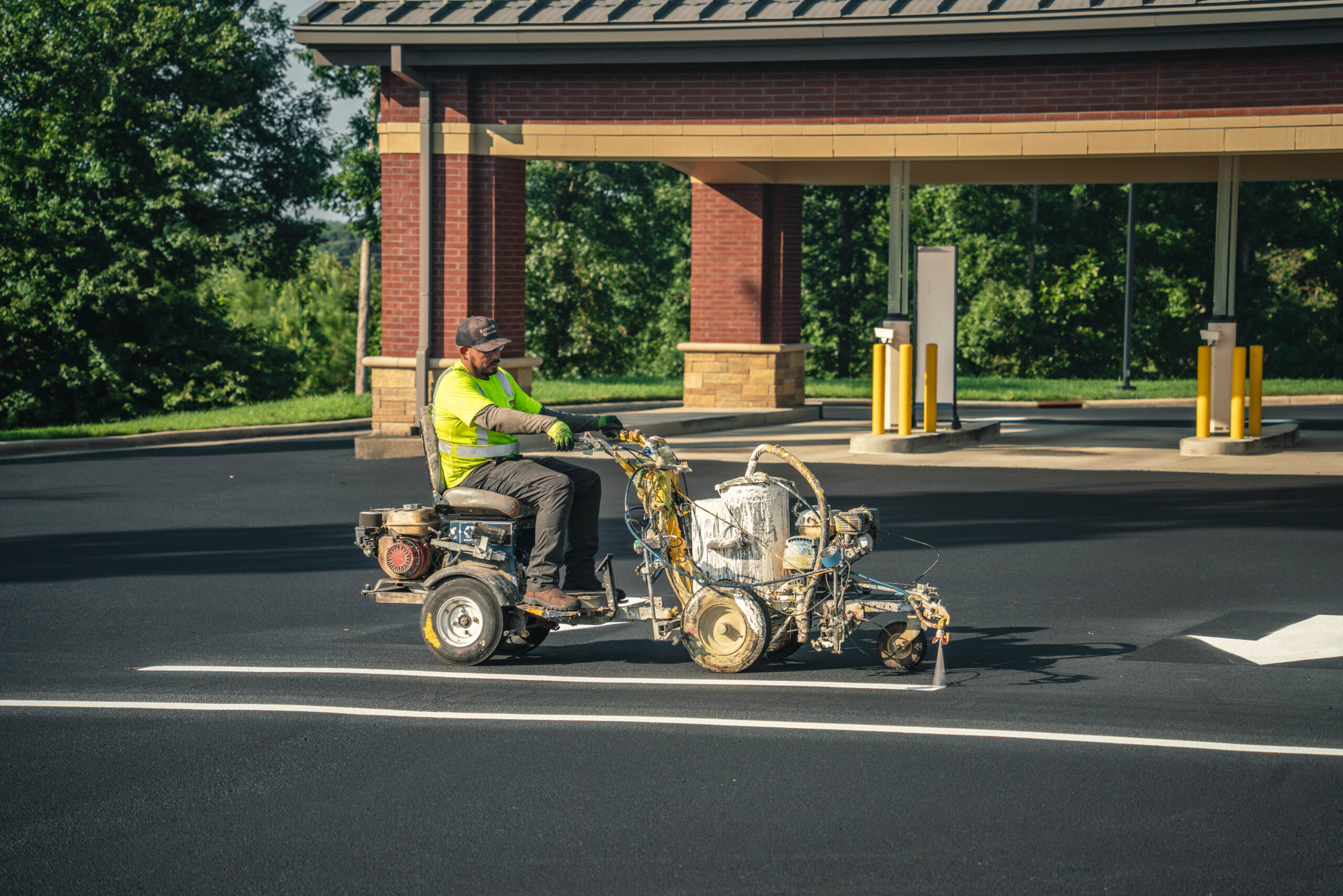
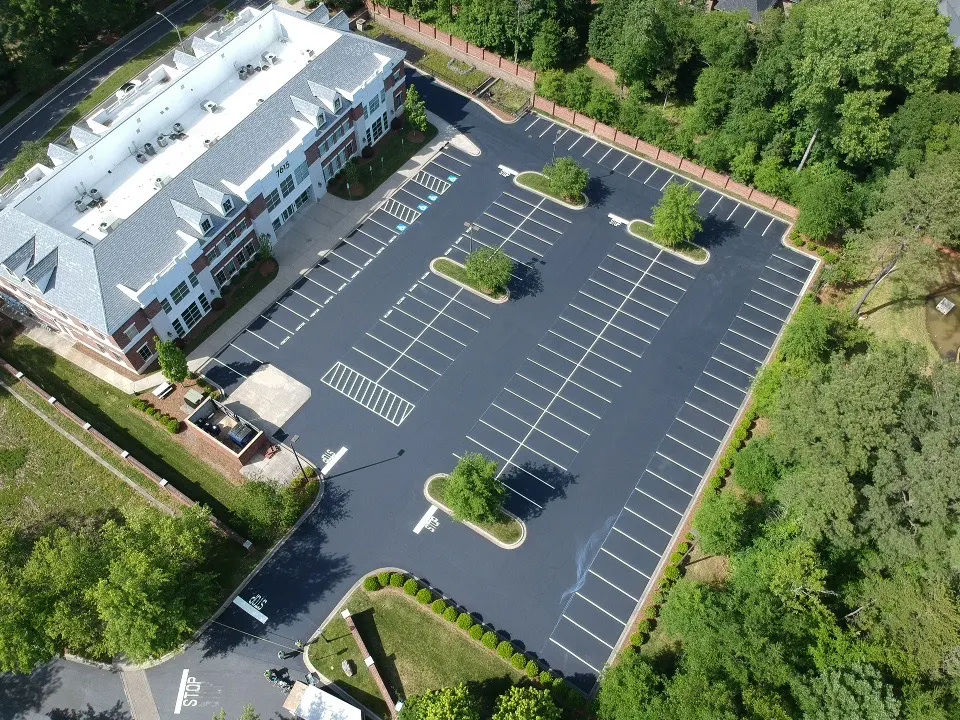
Under the 2010 ADA Standards, a 150-space apartment lot requires 5 accessible spaces, and at least one must be a van-accessible space. Multiply that by 10 communities averaging 200 spaces each, and you’re looking at 60 accessible stalls that must have the correct dimensions, signage, and paint. Add fire lanes, crosswalks, stop bars, and thousands of standard stall lines, and a single mistake on one property can create a compliance gap you don’t see until you get a complaint. We at ProLine Parking Lot Maintenance support multifamily properties across North and South Carolina, and we help regional managers turn that massive sprawl into one predictable plan. We also provide ongoing compliance reviews, update striping layouts as regulations or property needs change, and notify managers of anything that could impact future compliance so your properties stay ahead of emerging requirements. This article outlines how we build that plan step by step.
Quick Overview
- Audit every property first so the portfolio plan is based on real counts rather than assumptions.
- Standardize the colors, line widths, and symbols so every community looks and works the same.
- Score each property on risk and wear and stripe the highest scores first.
- Group by region, as Carolina weather will completely change your best schedule from Charlotte to Charleston.
- Notify residents and site teams in one consistent format to reduce complaints and rework.
Why a Portfolio Needs One Striping Plan
Most managers stripe one property at a time. The leasing office sees the lines fade, gets a quote, and a crew comes along weeks later. That works perfectly for a single community; it just doesn’t work when you have a portfolio. You end up with one community using one paint color for their fire lanes, another using a different paint color, and a third using a completely different one. You end up with one community using one stencil style for their accessible stalls, another using a different stencil style, and a third using a completely different one. You end up with one community repainted in 2014, another in 2015, and another in 2016. Residents who move between your communities will notice the difference, and inspectors will too.
A unified plan is the game changer. If you’re striping a number of apartment properties, then you collect one set of data, apply one set of standards, and build one calendar. You end up with predictable budgets, far fewer surprises, and a documented record for each community. You also reduce mobilization costs, as a crew striping three properties in the same Charlotte submarket will drive less and work more.
Auditing Each Property Before You Schedule Anything
The audit forms the basis of everything else. We go into each community and record the total number of stalls, the number of accessible and van-accessible stalls, all the fire lanes and hydrant zones, all the crosswalks, all the stop bars, and all the directional arrows. We take photos of each area and record the condition of the existing paint, the condition of the existing pavement, and any layout issues (e.g., stalls too close to a dumpster or a drain). Where your team has a copy of the approved site plan, we will compare the current layout to that.
This step picks up problems early. Many issues that would have cost two accessible stalls during a previous repave or a fire lane a previous contractor shortened will show up in the audit rather than the inspection. The Access Board parking guide sets out the accessible space and access aisle requirements that we check, and we match each property’s counts against the scoping rules before we write a single work order.
Standardizing Specifications Across Communities
Once the audits are complete, we write one specification that every property then follows. That’s a shared standard that removes the element of guesswork for the crews and gives your regional team a clear benchmark to work to. We typically standardize key elements such as line width, paint color, accessible symbols, fire lane markings, numbering style, and the type of stencils used for directional arrows and text. This ensures that every community in your portfolio has consistent, compliant, and professional-looking markings, making oversight and maintenance much more straightforward. The table below shows the elements we typically standardise.
| Marking Element | Standard We Set | Benefit Across the Portfolio |
| Standard stall lines | White, 4 inches wide | Residents recognize stall edges at every community |
| Accessible stalls | Blue field with the white international symbol | Consistent look that supports ADA compliance |
| Fire lanes | Red paint with stenciled lettering, matched to each fire marshal’s rules | Clear no-parking zones with local approval |
| Stop bars | White, 12 to 24 inches wide | Uniform intersection control |
| Crosswalks | White parallel or ladder bars, one style portfolio-wide | Predictable pedestrian crossings |
| Directional arrows | White, one arrow style | Consistent traffic flow |
We still tailor the standard to local conditions. The International Fire Code forms the basis of the fire apparatus access standard, but each fire marshal in Charlotte, Raleigh, Greenville, or Charleston has local amendments. We confirm those rules property by property and record any exceptions in the master plan. When a property must deviate from the standard because of local code or unique site conditions, we document the specific exception and its justification in the master plan, along with the required alternative approach. We clearly highlight these exceptions in summary reports and communicate them directly to the site teams involved, so everyone understands what to follow and why certain markings may differ from the portfolio standard. This maintains compliance and transparency across all communities.
Prioritizing Properties With a Scoring System
Not every community will need work in every year. We score each property so you can prioritize where to start. The score combines paint condition, safety risk, resident complaints, and any forthcoming events (e.g., lease-up, ownership inspection, planned repave). Properties with fading accessible stalls or missing fire lane markings will be at the top of the list as they have the highest compliance risk.
| Scoring Factor | What We Measure | Typical Weight |
| Compliance risk | Faded accessible stalls, fire lanes, or missing signs | Highest |
| Visibility | Percentage of stall lines and arrows still readable | High |
| Resident impact | Complaints about parking disputes or confusion | Medium |
| Pavement timing | Planned sealcoating or repaving that affects striping dates | Medium |
| Property events | Lease-up, refinancing, or ownership walkthroughs | Medium |
This gives you a perfectly defensible reason for any scheduling decision. If an owner comes to you and asks why one community gets striping this spring and another doesn’t until fall, you can simply hand them the score sheet and say, “That’s why.”
Scheduling by Region and Season
Carolina geography dictates the calendar. A crew that’s working well in the Triangle in April may be completely out of their depth on the coast in August. We group the properties by region and then match each group to the best working window. Most water-based traffic paint requires a surface temp of about 50 and up, a dry pavement surface, and no rain in the forecast during cure, so we plan around those constraints.
| Region | Example Cities | Scheduling Notes We Follow |
| Charlotte metro | Charlotte, Concord, Huntersville | Wash off spring pollen first, and avoid afternoon storm windows in summer |
| Triangle | Raleigh, Durham, Cary | Wait for morning dew to burn off before we paint |
| Triad | Greensboro, Winston-Salem | Watch cool winter mornings and start later in the day |
| Upstate South Carolina | Greenville, Spartanburg | Use the dry stretches of spring and fall for full restriping |
| Midlands | Columbia | Start early in summer so heat does not flash-dry the paint |
| Coast | Charleston, Wilmington, Myrtle Beach | Track hurricane season and humidity, and favor spring and early fall |
We then build the route. A crew will do every property in one area before moving on to the next, reducing travel time and ensuring consistent results. You get a calendar showing each community, each date, and each backup date in the event of weather.
Communicating With Residents and Site Teams
A portfolio plan is a total failure if people are parking on fresh paint. We use a single notice template across every community, with the same wording, lead time, and instructions on where you can park. The notice includes the work date, time window, and lot sections that will be closed. We also provide leasing offices with a one-pager so they can answer the inevitable questions without having to call you.
To help minimize disruption to residents and on-site teams during striping, we recommend a few practical steps. Where possible, schedule work in sections so that alternative parking areas remain available. Include clear maps or diagrams with each notice so residents can quickly see which areas are impacted on which days. Offer residents as much notice as possible, ideally several days ahead, and send reminders the day before work starts. For properties with limited overflow parking, coordinate with nearby businesses or provide temporary permits for street parking if allowed. Posting signs and using cones or barricades the night before can also help ensure lots are cleared in time and reduce confusion. These measures minimize inconvenience and show residents you value their daily experience.
Consistent communication is also key to coordination. If you’ve got a shared parking arrangement with a neighbor, our guide to shared parking striping shows you how we turn those arrangements into actual striping on the ground. If your lots have concrete wheel stops, our article on striping around wheel stops shows you how we handle the striping to ensure the wheel stops and stall lines line up.
Build Your Portfolio Plan With ProLine
A multi-property striping plan is cost-effective, minimizes risk, and ensures that every community looks professional. That’s the basis of our portfolio approach at ProLine Parking Lot Maintenance, where we serve apartment communities throughout North Carolina and South Carolina. We create portfolio plans that are tailored to your budget, your properties, and your calendar. Get in touch for a site assessment, and we’ll audit your communities, score them, and provide a clear plan you can pass on to your owners.
Coordinate Parking Lot Striping Across Multiple Apartment Properties
Managing parking lot striping across multiple apartment communities requires consistent markings, organized scheduling, and reliable maintenance. At ProLine Parking Lot Maintenance, we provide professional parking lot striping and pavement marking services to help property managers maintain clearly marked, organized parking areas across their properties. Let our team help simplify your multifamily pavement maintenance needs.
Contact UsFrequently Asked Questions
What contract terms should we include in a multi-property striping agreement?
A robust agreement will list each property by address, the scope of work for that property, the paint and materials to be used, and the unit pricing for stalls, arrows, and stencils. We recommend including a schedule of work dates, a weather delay clause, and a requirement for photo documentation after each job. You should also specify who has the authority to approve layout changes and how the contractor will bill each property (particularly where different ownerships are involved and all are under one management company). Clear terms for both sides are essential, as everyone needs to know what the contractor is delivering and when they will be paid.
How soon can we stripe after we repave or sealcoat a lot?
New asphalt and fresh sealcoat need time to cure before we apply paint, and the correct wait time varies by product, temperature, and humidity. We’ll always follow the sealcoat or asphalt supplier’s guidance, and we’ll confirm the surface is dry and firm before we start. If we paint too early, the stripes can smear, fade unevenly, and can even peel off in as little as a few weeks. If you have a portfolio of repave work, we’ll coordinate our striping schedule with your paving contractor, so we’re there at the right time, not too early.
What should we check to confirm the striping meets our standard after the work finishes?
We suggest a short walkthrough at each property with a checklist that covers line width, color, straightness, and stall count. Start with the accessible stalls, confirm the symbols and access aisles, then verify the fire lanes, crosswalks, and arrows. A common specification for traffic paint calls for roughly 15 mils of wet film thickness, and you can ask us for application records showing what we used. We also leave a photo log for each property, so your regional team can compare the finished work against the original audit and flag any item that needs a correction.
How do we handle a property that needs urgent touch-ups between scheduled cycles?
We recommend setting aside a small portion of your annual striping budget as a reserve for off-cycle repairs, since there are all sorts of things that can’t wait (faded accessible stalls, a missing stop bar, a new fire hydrant zone, etc.). Your site manager can send us a photo and a brief description, and we can price it in as a small add-on to the next route in that area. If it’s a safety or compliance issue, we’ll move it to the top of the schedule and send a crew out as soon as the weather permits. That way, you’re still on the master plan, and you can still respond as things arise.
How do we budget when our properties vary in size, age, and condition?
Start with the audit counts, as they give you the exact figures for stalls, arrows, stencils, and fire lane footage at each site. We then price each community individually and roll the totals up into a single portfolio budget so you can see the full picture of where the money is going. The older the property, the more wear and tear there is, the more complex the layout, and the more accessible the stalls, the more it will cost per space than a newer, simpler lot. We also provide a multi-year view so you can spread larger projects across multiple budget cycles rather than taking them all at once.
Can one contractor handle every property in the portfolio?
Yes, and in many cases a single qualified contractor will deliver better results than multiple contractors. One company applies the same specification, uses the same materials, and keeps one set of records for each community. That consistency makes audits, renewals, and warranty claims much easier for your team. We also have a dedicated project contact for your portfolio, so you don’t have to explain your standards every time a new property comes on board.