

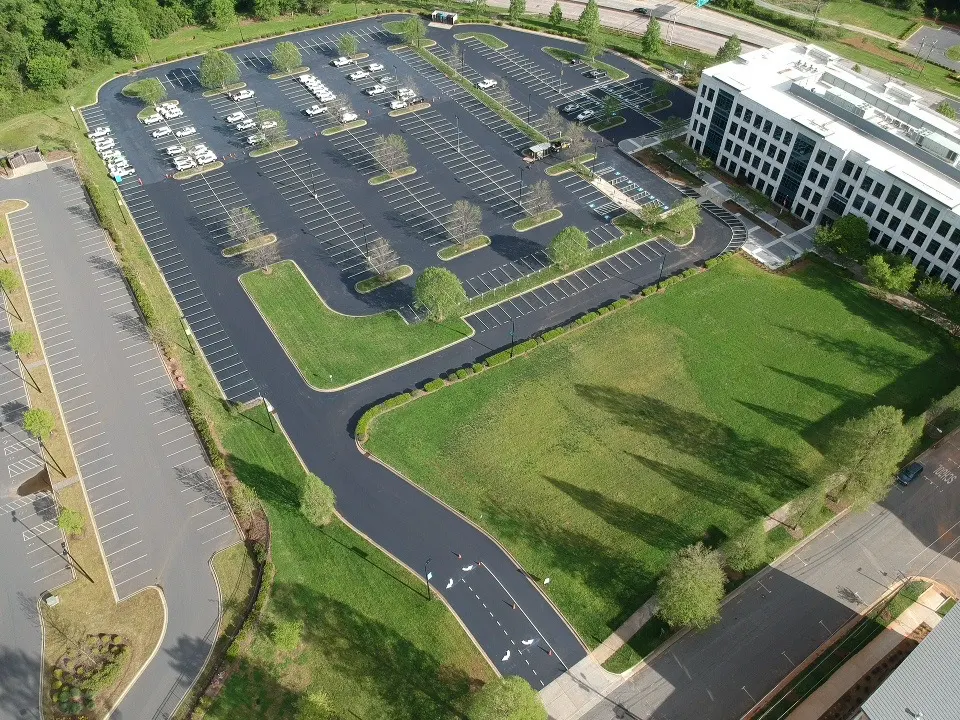
A successful apartment striping project starts with a clear scope and a workable access plan. The finished lines need to match the intended layout, suit the pavement, and communicate parking and traffic directions consistently.
Review the existing lot before defining the work
Inspect line visibility, peeling paint, surface defects, and areas where residents report confusion. Review the approved layout rather than assuming every existing line is correctly placed. Identify changes to designated parking, circulation, or loading that may require design input or approval.
Check accessibility requirements for the property’s residential and public-facing areas. Required spaces, signs, aisles, slopes, and routes need a coordinated review; freshly painted lines alone do not establish compliance.
Ask for a specific marking scope
- Identify stall lines, arrows, crossings, stencils, and other markings included.
- Confirm which existing markings will be removed or changed.
- Specify preparation and materials suited to the pavement and prior coatings.
- Identify required signs or physical corrections outside the paint work.
- Confirm fire-access markings with the approved plan and local authority.
Not every property needs every type of marking. The scope should reflect the approved design and actual use of the lot.
Evaluate the contractor’s process
Ask how measurements will be checked, how surface conditions will be assessed, and who will resolve layout questions before paint is applied. Request relevant project examples and clarify which services the contractor performs directly.
Confirm required licensing and insurance for the work and jurisdiction. Obtain any offered warranty in writing, including exclusions and the process for reporting a concern.
Coordinate with residents and other contractors
Plan temporary parking, accessible routes, emergency access, and delivery arrangements. Sequence striping after repairs, sealcoating, or resurfacing when the surface meets the marking product’s requirements. Set reopening from actual conditions and contractor instructions.
Inspect the completed work
Review the markings against the agreed scope and record any unresolved items. Include visibility and condition checks in routine maintenance, with refresh work based on observed wear.
Learn about ProLine’s line striping services for apartment and commercial properties.


