According to the Community Associations Institute, disputes over shared amenities and parking are among the most common sources of conflict reported within homeowners and condo associations across the country. We see the same pattern at the apartment communities we maintain across the Carolinas: parking disputes come up more often and escalate faster than almost any other resident complaint property managers deal with. The paint itself is rarely the reason residents are upset with a neighbor. It’s almost always the actual reason underneath it.
Quick answers:
- Parking disputes escalate faster than most resident complaints because they’re personal, repetitive, and visible to neighbors in a way a maintenance request usually isn’t.
- Faded boundary lines let two reasonable residents each genuinely believe they’re in the right, which is exactly the kind of disagreement that doesn’t resolve itself.
- Property managers often end up as an unwanted referee in these disputes, and clear markings are one of the few tools that actually reduce how often that role gets forced on them.
- According to the National Apartment Association, resident-to-resident conflict over shared spaces is a recurring theme in property management, and parking sits near the top of that list.
- Unresolved parking disputes occasionally escalate beyond the property itself into towing disputes, association complaints, or even small claims court over damage to a vehicle.
Why Parking Disputes Escalate Faster Than Almost Any Other Resident Complaint
A leaky faucet is a maintenance issue between a resident and the property. A parking dispute is between two neighbors who see each other constantly, which changes the entire dynamic. It’s personal, since a car is a visible extension of a person’s space and routine. It’s repetitive, since the same friction can recur every single day rather than resolving with a single fix. And it’s visible, since a note left on a windshield or a tense exchange in the lot happens in view of anyone walking by, which adds a layer of embarrassment and defensiveness that a private complaint to management doesn’t carry.
How Ambiguous Boundaries Turn a Minor Inconvenience Into a Neighbor Dispute
When a boundary line is faded enough to require a judgment call, two people can look at the exact same spot and each genuinely believe they’re parked correctly. That’s a fundamentally different situation than one person being clearly in the wrong. Neither resident backs down, because neither one believes they’re the problem, and a dispute where both sides feel wronged tends to escalate rather than resolve on its own. Clear, unambiguous lines remove that specific dynamic entirely, since there’s no longer room for two good-faith interpretations of the same boundary.
What We Hear From Property Managers Caught in the Middle
Property managers rarely want to referee a dispute between two residents, but faded striping often forces the issue anyway, since there’s no clear standard for anyone to point to. We hear this constantly: a manager gets pulled into the same argument repeatedly, tries to stay neutral, and ends up with one or both residents frustrated at management itself for not “fixing” a problem that was never really about the paint until someone finally traced it back. Clear markings hand the property a neutral, objective standard that doesn’t require a staff member to personally referee the disagreement each time it comes up.
Where Conflicts Cluster: The Specific Spots We See Repeat Complaints
Certain areas generate a disproportionate share of these disputes. End spaces near a building corner, where the boundary sometimes involves an angle or a curve rather than a straight line, are a common source of disagreement. Spaces near a shared walkway or a trash enclosure, where foot traffic and parking boundaries interact, tend to generate friction as well. We pay close attention to these specific spots during a walk-through, since a general repaint that treats every space as equally likely to cause conflict often misses exactly where the real friction is concentrated.
When a Parking Dispute Escalates Beyond the Property
Most parking disputes stay contained to a conversation, a complaint to management, or an unpleasant note left on a windshield. Some don’t. A car parked too close in an ambiguous spot can result in real damage, a scratch, a dinged door that turns a parking disagreement into a property damage claim, occasionally ending up in small claims court between the two residents directly. Disputes at HOA or condo communities can also escalate into a formal association complaint, which, according to the Community Associations Institute, is a common enough occurrence that many associations have specific parking-related grievance procedures already built into their governing documents.
Eliminate Resident Disputes with Crisp, Clearly Defined Parking Markings
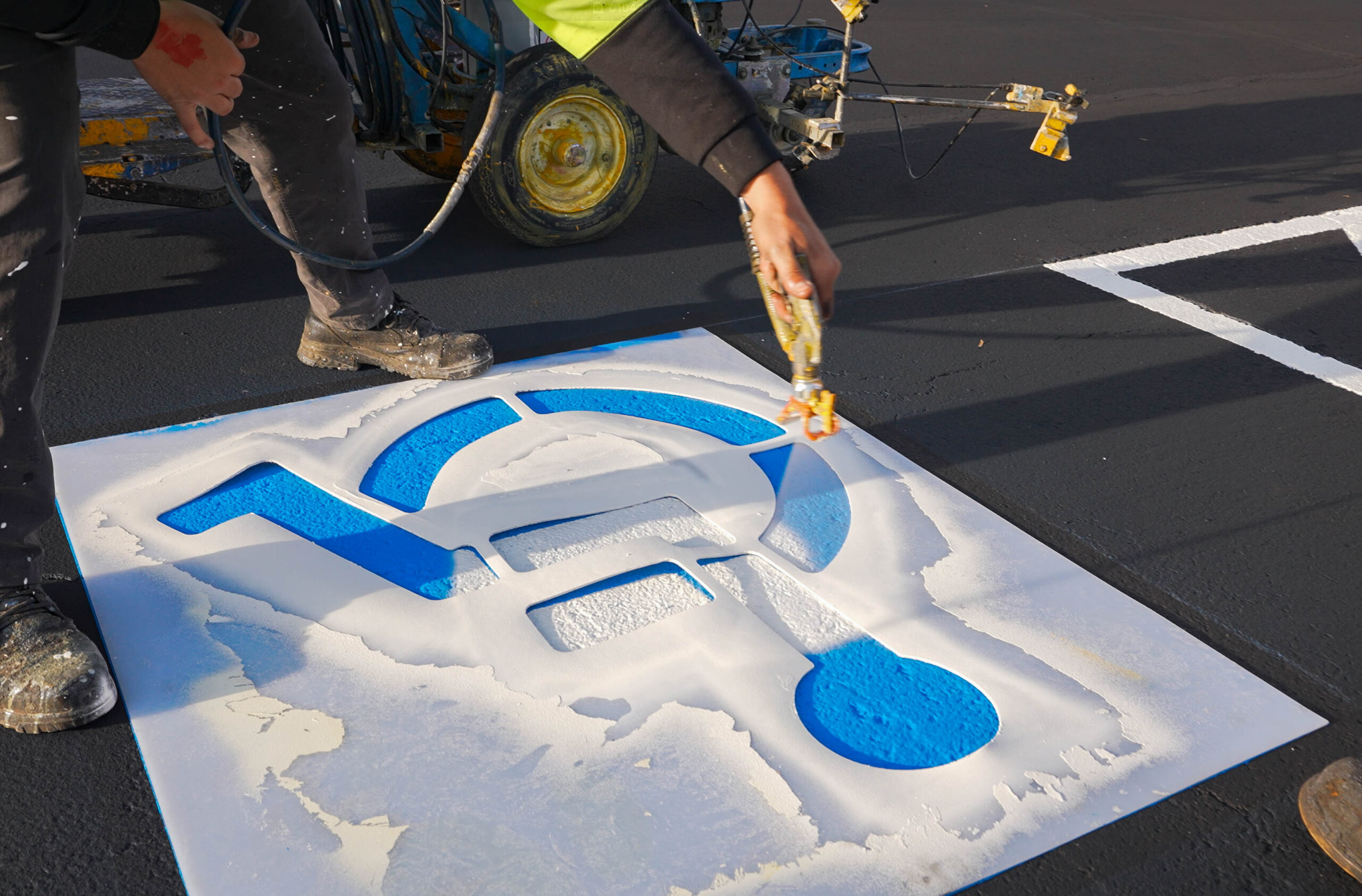
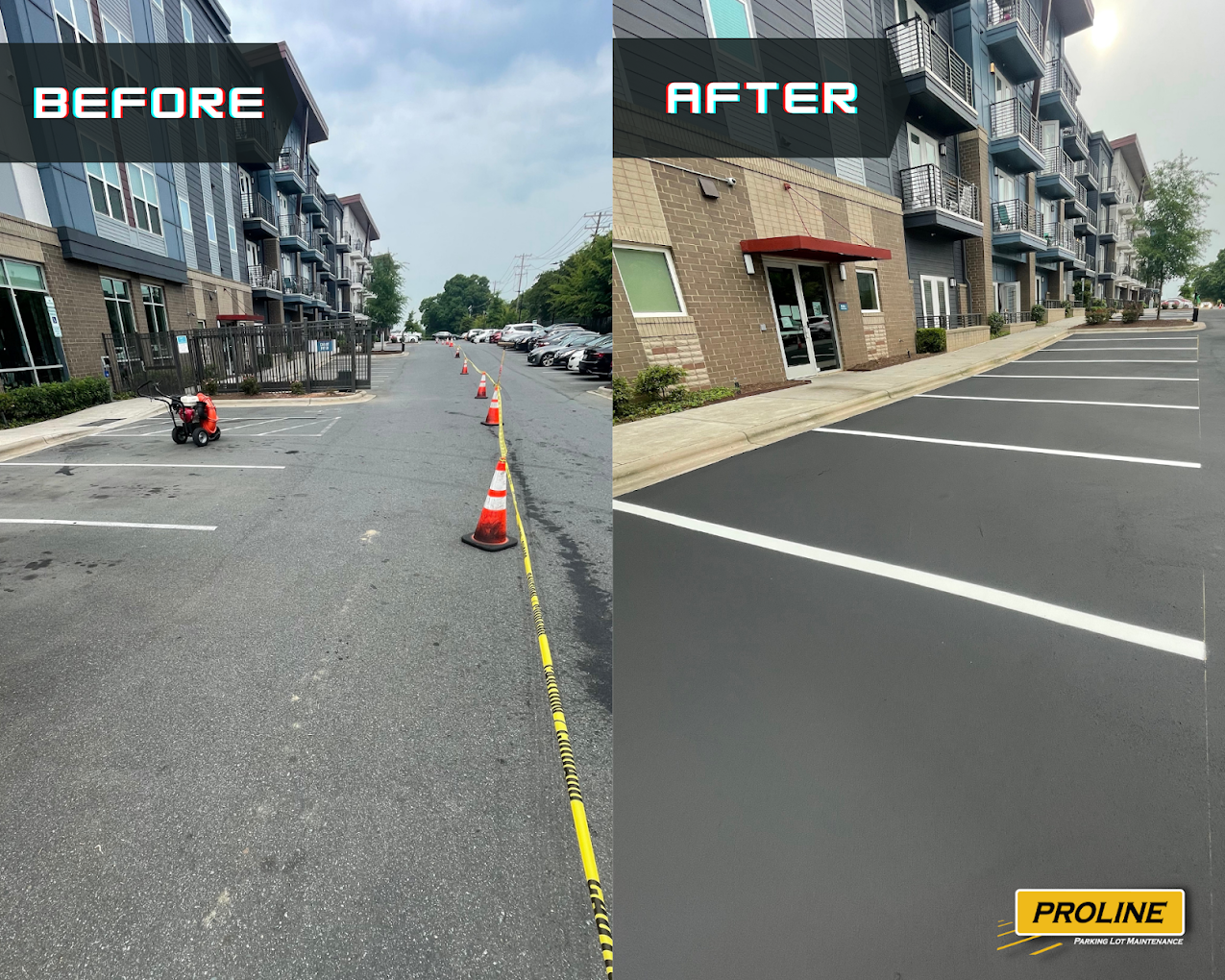
Faded, misaligned, or poorly visible parking lines are one of the leading causes of parking friction, double-parking, and resident frustration in multi-family communities. When stall boundaries lack clarity, drivers park carelessly—straddling lines, blocking adjacent vehicles, and reducing total usable parking capacity across your property.
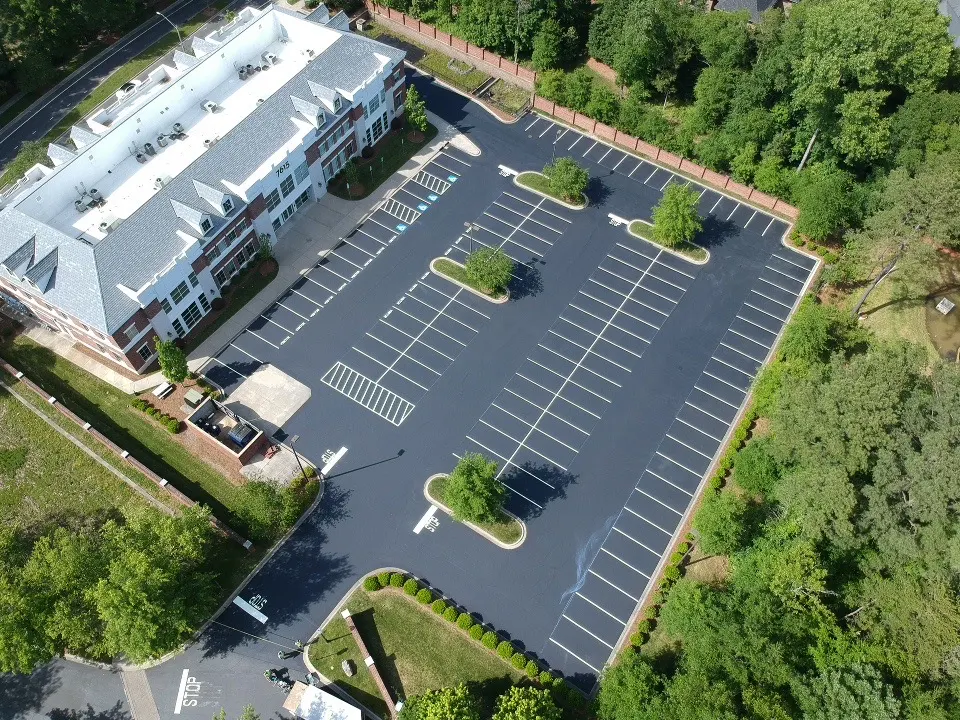
ProLine Parking Lot Maintenance delivers high-contrast, traffic-rated line striping that restores order, maximizes space efficiency, and keeps your apartment community running smoothly.
- Maximized Capacity: Precise layout spacing ensures every stall is fully functional, preventing wasted space and overcrowding.
- High-Visibility Markings: Crisp, durable paints designed for clear navigation during day, night, and inclement weather.
Frequently Asked Questions
Should property management get directly involved in a dispute between two residents over a parking space or stay out of it?
Most property managers find a middle path works best: providing the objective facts, what the lease or assignment records actually say, and what the markings actually show without trying to personally mediate the interpersonal tension between the two residents. Staying entirely out of it can leave residents feeling unheard, while getting too involved in the personal dynamics can put management in an uncomfortable, no-win position. Pointing to clear, documented markings and assignment records as the neutral standard tends to be more effective than trying to talk two frustrated neighbors into agreeing with each other directly.
Can a resident be held responsible for damage caused during a parking dispute, like a scratched car from being parked too close?
Potentially, yes, though this typically becomes a matter between the two residents directly, sometimes through their auto insurance, rather than a property management issue. Clear photographic evidence and, where available, footage from any security cameras covering the area become important here, similar to how evidence matters in any property damage claim. This is generally outside what a property management team is expected to resolve directly, and residents in this situation are usually better served contacting their insurance provider or, for more serious disputes, an attorney.
Does adding painted wheel stops or curb markers help reduce parking conflicts beyond just repainting lines?
Yes, in certain spots, particularly the ambiguous corner and angled spaces we mentioned where a painted line alone still leaves room for interpretation about exactly how far forward or back a vehicle should sit. A physical or clearly painted reference point removes some of the guesswork that a flat line alone doesn’t fully resolve, especially in spaces where the boundary itself is more complex than a simple rectangle. We don’t recommend this everywhere, since it adds cost, but it’s worth considering specifically in the highest-friction spots on a property.
If two residents both believe a space is theirs, how should the property actually resolve the disagreement?
The most reliable path is checking the documented record, the lease, the assignment log, or whatever system the property uses to track reserved or assigned spaces, rather than relying on either resident’s account of the situation. If the documented record itself is unclear or outdated, that’s worth fixing directly, since an ongoing dispute often reveals a gap in the property’s own record-keeping rather than purely a disagreement between residents. Once the documented answer is clear, communicating it directly and consistently to both parties tends to resolve the situation faster than an extended back-and-forth conversation.
Can unclear parking lead to a formal complaint with a homeowners or condo association?
Yes, and according to the Community Associations Institute, this is common enough that many associations have specific grievance or complaint procedures already built into their governing documents specifically for these situations. A formal complaint typically triggers a more structured review process than an informal neighbor dispute, which can actually work in a property’s favor if the underlying markings and records are clear and well documented, since that process usually surfaces objective facts rather than competing personal accounts.
Do parking disputes ever end up in small claims court?
Occasionally, particularly when a dispute involves actual property damage, like a scratched vehicle, rather than just a disagreement over who’s allowed to park where. Small claims court is generally designed for exactly this kind of lower-value dispute between individuals, and it’s a separate process from anything a property management team handles directly. This is a relatively rare outcome for a typical parking disagreement, but it’s worth knowing it exists as a real possibility once a dispute escalates into actual damages.
Does adding more visible numbering reduce disputes more than just repainting the boundary lines themselves?
Both address different parts of the same problem, and combining them tends to work better than either alone. Clear boundary lines resolve the “where does my space actually end” question, while clear, visible numbering or labeling resolves the “which space is actually assigned to me” question, and a dispute can stem from either kind of ambiguity depending on the situation. We generally recommend addressing both together when refreshing a property’s striping, rather than assuming one fully solves what the other one causes.
Can a property be held liable if a parking dispute between residents turns physical or dangerous?
This raises real legal questions that go beyond parking lot maintenance and are worth discussing directly with an attorney, since liability in that kind of situation depends heavily on what the property knew about the ongoing conflict and whether reasonable steps were taken in response. From a purely practical standpoint, addressing ambiguous markings and unclear assignment records early reduces the number of disputes that have the chance to escalate that far in the first place, which is the piece of this we can directly help with.
See also: Reserved Parking Line Striping Solutions for Multi-Family Properties, Best Practices for Striping Large Apartment Parking Lots