Cold Patch vs. Hot Mix Asphalt: Which Pothole Repair Method Is Right for Your Mooresville Property?
Pothole repair is one of the most visible signs of parking lot maintenance, and choosing the right repair method directly impacts durability, cost, and curb appeal. Two primary techniques dominate the asphalt repair industry: cold patching and hot mix asphalt (HMA) patching. For property managers and business owners in Mooresville and the Charlotte metro area, understanding the differences between these methods is essential for making informed decisions that protect your investment.
What Is Cold Patch Asphalt Repair?
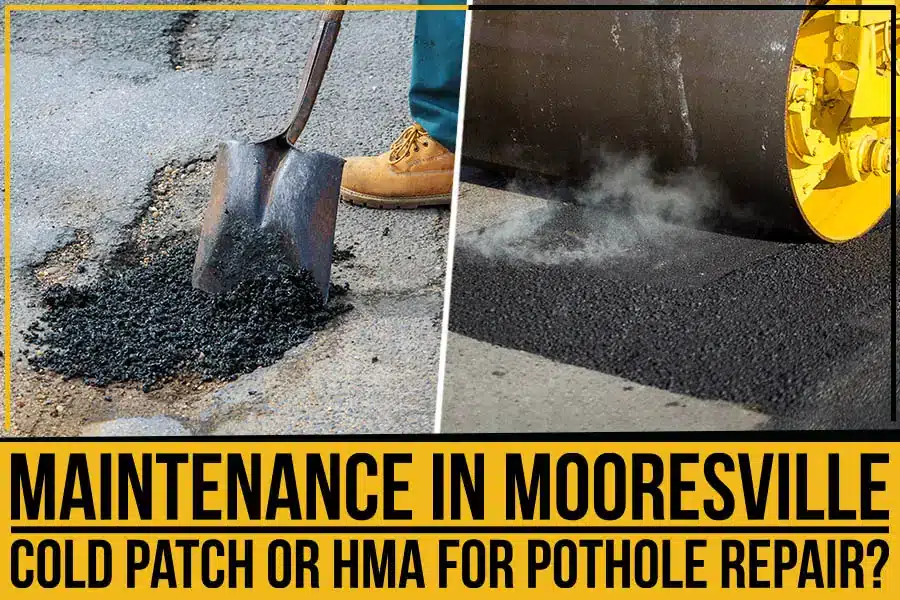
Cold patch asphalt, also called cold mix or temporary asphalt patching, is a pre-mixed asphalt material that requires no heating and can be applied immediately from the bag. Cold patch is designed for quick fixes and emergency repairs, particularly in weather conditions where heating equipment is impractical or unsafe. The material bonds through pressure and time rather than thermal fusion, making it accessible for property owners and small contractors.
What Is Hot Mix Asphalt (HMA) Patching?
Hot mix asphalt patching, also called hot patch or hot asphalt repair, uses asphalt that is heated to 300-350 degrees Fahrenheit before application. HMA is delivered in trucks or applied with mobile heating equipment and compacted into the pothole while still hot. This method creates a molecular bond between the new asphalt and existing pavement, resulting in repairs that integrate seamlessly with surrounding surfaces.
Cold Patch Asphalt: Advantages and Limitations
Cold patch offers significant convenience and speed. You can deploy it without specialized equipment or advanced scheduling, making it ideal for emergency situations or when weather prevents hot work. For many property managers, cold patch provides an affordable stopgap that addresses immediate safety and appearance concerns.
When Cold Patch Works Best
Cold patch excels in specific scenarios: temporary repairs during winter months, emergency safety fixes before a major repair campaign, repairs in areas with low traffic, or situations where the budget is severely constrained. Cold patch costs $1-3 per square foot in material, making it the most economical entry option. Installation is fast—a crew can patch dozens of potholes in a single day, minimizing disruption to your parking lot operations.
Durability Concerns with Cold Patch
The primary drawback of cold patch is longevity. Cold patch repairs typically last 6-12 months under normal traffic conditions, and as little as 3-4 months in high-traffic areas. The material doesn’t achieve a true molecular bond with existing pavement, instead relying on mechanical adhesion. Temperature fluctuations cause the patch to crack and separate, and water infiltration accelerates deterioration. Cold patch also tends to ravel—the surface breaks apart, leaving loose aggregate visible in the pothole.
Hot Mix Asphalt Patching: Advantages and Performance
HMA patching is the industry standard for permanent and semi-permanent pothole repairs. When installed correctly by a qualified contractor, hot mix repairs bond chemically with surrounding pavement, creating a durable surface that withstands traffic, weather, and time. Most commercial property managers view HMA as the professional choice for maintaining parking lot integrity.
Longevity and Performance Benefits
A properly executed HMA patch lasts 3-5 years or longer, depending on traffic volume, climate, and underlying pavement condition. The hot installation process allows the asphalt to compact and fuse properly, creating a seal that resists water infiltration—the primary cause of pothole expansion. Unlike cold patch, HMA repairs don’t ravel or separate; the surface remains stable and integrated with the surrounding pavement.
Cost Considerations for HMA Repairs
HMA patching typically costs $3-7 per square foot, depending on pothole depth, accessibility, and whether the job is part of a larger repair campaign. While more expensive than cold patch upfront, the extended lifespan reduces long-term cost per year. A $500 HMA repair lasting 4 years costs approximately $125 annually, compared to cold patches replaced quarterly at $200 annually total. For property managers operating on a multi-year maintenance budget, HMA becomes the more economical choice.
Comparison: Cold Patch vs. HMA for Pothole Repair
| Criteria | Cold Patch | Hot Mix Asphalt (HMA) |
|---|---|---|
| Installation Time | Same day or faster | 1-2 days (includes setup, curing) |
| Equipment Required | None (hand tools) | Heating truck or mobile equipment |
| Material Cost | $1-3 per sq. ft. | $3-7 per sq. ft. |
| Expected Lifespan | 6-12 months | 3-5+ years |
| Weather Limitations | None (works in rain/cold) | Best in dry, moderate temps (60-85°F) |
| Bond Quality | Mechanical adhesion | Chemical fusion (permanent) |
| Appearance | Visible repair; may ravel | Seamless integration |
| Suitability for High Traffic | Poor (quick deterioration) | Excellent (designed for traffic) |
| Best Use Case | Emergency/temporary fixes | Permanent repairs, maintenance program |
How to Choose the Right Pothole Repair Method
Assess Traffic Volume and Location
High-traffic areas—parking lot entrances, drive-aisles, directional lanes—demand HMA repairs. These potholes are safety hazards and visible to customers daily. Cold patch in these zones will fail quickly and repeatedly, creating a frustrating cycle of short-term fixes. Reserve cold patch for low-traffic fringe areas or overflow parking where pothole visibility and impact are minimal.
Consider Your Maintenance Budget and Timeline
If you have an established preventative maintenance program with quarterly or semi-annual pothole inspections, budget for HMA repairs as part of routine upkeep. Consolidate repairs into one or two annual projects to maximize contractor efficiency and reduce per-unit costs. If your budget is uncertain or maintenance is reactive, cold patch serves as a temporary bridge until a planned repair campaign—but set a clear timeline for follow-up HMA work to avoid indefinite temporary fixes.
Evaluate Weather and Seasonal Factors
In the Charlotte metro area, winter months (December-February) present challenges for HMA installation. Cold temperatures extend curing time, and precipitation can compromise bonding. In these periods, cold patch serves a legitimate role—deploy it during winter and schedule HMA work for spring (March-May) or fall (September-November) when conditions are optimal. Conversely, if pothole severity poses immediate safety risks regardless of season, HMA with weather protections (temporary curing blankets, infrared heaters) justifies the additional cost.
Professional Installation Standards for Both Methods
Proper Surface Preparation
Whether cold or hot patch, professional installation begins with rigorous cleaning. The pothole must be cleared of debris, loose asphalt, and standing water. A power broom or compressed air removes dust and particles that interfere with bonding. Failure to prepare the surface is the leading cause of premature patch failure, regardless of repair method. Quality contractors spend 15-20 minutes per pothole on preparation alone.
Appropriate Compaction
Cold patch requires manual tamping or light vibration to compress the material and maximize density. HMA requires mechanical compaction using vibrating plates or rollers to achieve proper compaction levels (typically 92-95% of maximum theoretical density). Under-compacted patches—especially HMA—settle over time and develop low spots that collect water.
Proper Pothole Sizing
Professional contractors cut the pothole to well-defined vertical or slightly beveled edges, removing undercut asphalt that would trap the repair material. Irregularly shaped potholes with ragged edges trap air and moisture, leading to edge failure. Properly sized potholes have straight sidewalls and clean corners, allowing full contact between patch material and substrate.
How Much Does Pothole Repair Cost in Mooresville and Charlotte?
Pothole repair pricing depends on size, depth, repair method, and project scope. Small surface-level potholes (2-4 inches deep, 1-2 square feet) cost $50-150 for cold patch or $150-300 for HMA. Medium potholes (4-6 inches deep, 3-5 square feet) run $200-400 (cold) or $400-800 (HMA). Large, deep potholes requiring structural base repair can exceed $1,000 each.
Volume pricing applies when scheduling multiple repairs in a single project. A 20-pothole repair campaign might be priced at $75-100 per pothole for cold patch or $250-400 per pothole for HMA. Emergency or after-hours calls carry premium rates (typically 25-50% surcharges). Budget-conscious property managers typically allocate $500-2,000 annually for pothole repairs on a 20,000-40,000 square foot parking lot, depending on pavement condition.
Preventing Potholes: A Smarter Alternative to Repeated Repairs
The most cost-effective strategy is preventing potholes from forming. Regular crack sealing prevents water infiltration that weakens the asphalt base. Preventative sealcoating every 2-3 years protects the asphalt surface from oxidation and water damage. A comprehensive pothole repair and preventative maintenance plan typically costs less over 5 years than repeatedly patching the same potholes.
Frequently Asked Questions About Pothole Repair
Can I Use Cold Patch Permanently If I Apply It Multiple Times?
No. Repeatedly layering cold patch on the same pothole creates a temporary fix that delays the real solution without improving durability. Each cold patch layer still lacks chemical bonding, and successive applications trap moisture, accelerating further deterioration. After 2-3 cold patch applications to the same spot, the cost approaches that of a single HMA repair, making professional repair the more sensible choice.
How Long Does an HMA Patch Take to Cure Before the Lot Is Usable?
HMA patches set sufficiently for light traffic within 2-4 hours in warm weather, though full cure takes 24-48 hours. Professional contractors often rope off repaired areas for 24 hours to prevent premature heavy use. In cooler temperatures (below 50°F), curing extends to 48-72 hours. Plan HMA repairs during off-peak business hours or after-hours to minimize operational disruption.
Is Cold Patch Acceptable Under Warranty or Insurance Requirements?
Most insurance and property management standards expect reasonable maintenance practices. In commercial contexts, cold patch is acceptable only as a temporary emergency measure, not as a permanent repair strategy. If your property lease, warranty, or insurance policy specifies maintenance standards, confirm whether cold patch meets those requirements. For properties with tenant obligations or lender requirements, HMA is the safer choice that demonstrates due diligence.
Can Cold Patch Be Applied in Rainy or Freezing Weather?
Cold patch can be applied in damp conditions (though a dry surface is ideal), and it functions below freezing. However, applications in heavy rain or standing water reduce bond quality. Freezing temperatures don’t prevent cold patch installation, but they do slow material setting. HMA should never be applied in rain or when pavement temperature is below 40°F. For weather-constrained repairs, cold patch is the practical choice, but plan HMA follow-up when conditions improve.
What if a Pothole Returns After Repair?
Premature pothole recurrence indicates either inadequate surface preparation, insufficient base repair, or progressive base deterioration beneath the patch. If an HMA repair fails within 1 year, the contractor should provide warranty service. If cold patch fails within weeks, it signals the need for HMA. If the same pothole reoccurs repeatedly even after HMA, the base layer likely requires reconstruction or full-depth asphalt overlay to address the underlying problem.
Conclusion: Making the Right Pothole Repair Choice
Cold patch and HMA serve different purposes in professional parking lot maintenance. Cold patch is the emergency response tool—quick, temporary, and sufficient for low-priority areas. HMA is the permanent solution that property managers invest in when durability and appearance matter. For most commercial properties in Mooresville and the Charlotte metro area, a hybrid strategy works best: use cold patch for urgent issues while planning HMA repairs as part of your seasonal maintenance calendar.
The choice between these methods isn’t simply about cost; it’s about total cost of ownership, property image, and risk management. A single customer injury from a pothole can exceed the cost of all HMA repairs on your lot. A property with visible potholes and temporary patch marks reflects poorly on your business, affecting tenant retention and perceived professionalism.
Ready to address your pothole challenges with a professional repair strategy? Proline Parking Lot Maintenance serves the Mooresville and Charlotte metro area with expert pothole repair, preventative crack sealing, and comprehensive asphalt maintenance. Whether you need emergency cold patch or permanent HMA solutions, our experienced crews deliver results that last. Call us at 704-530-5366 or visit prolineplm.com to schedule your parking lot evaluation and receive a customized maintenance plan designed for your property’s specific needs.