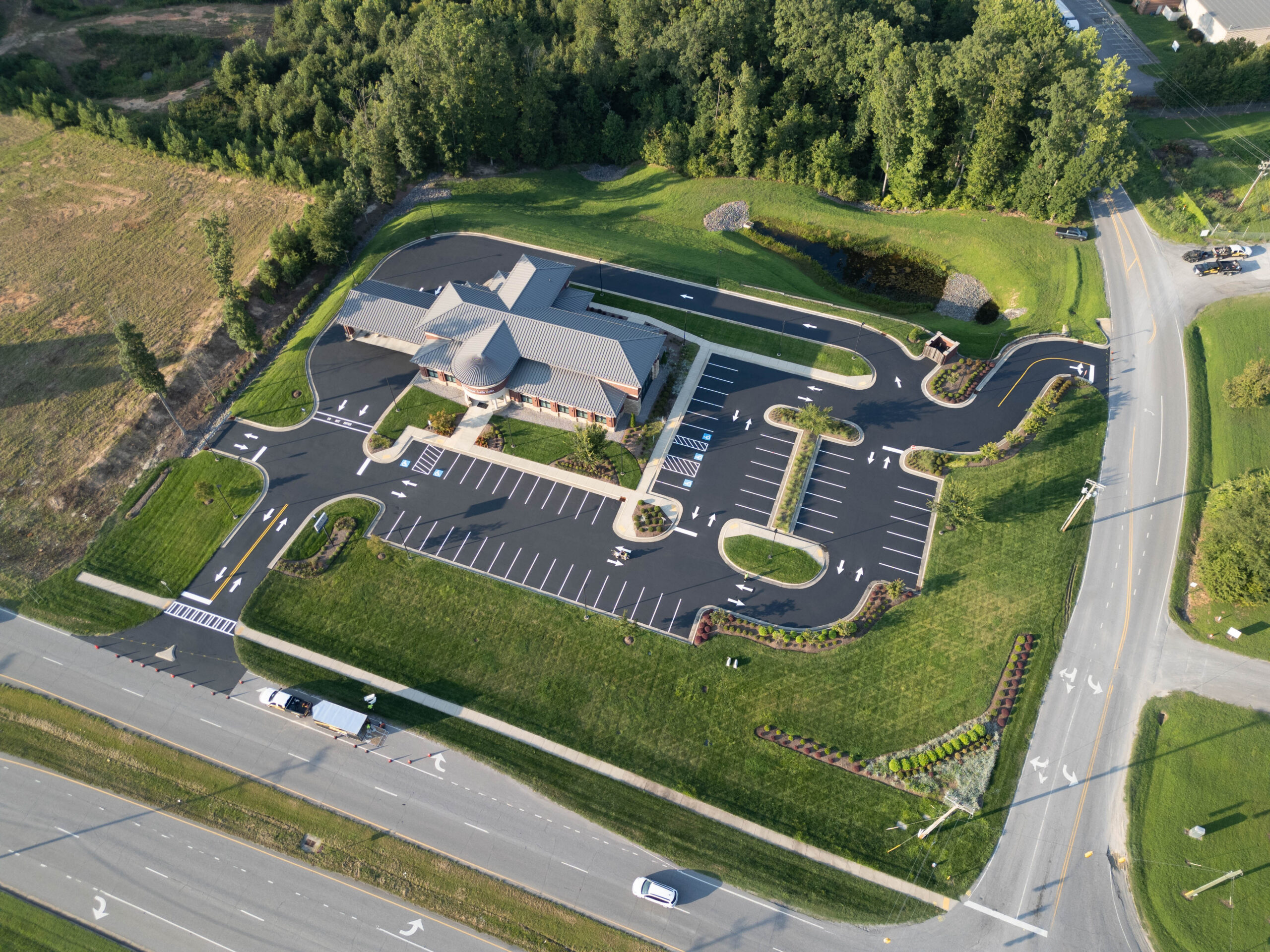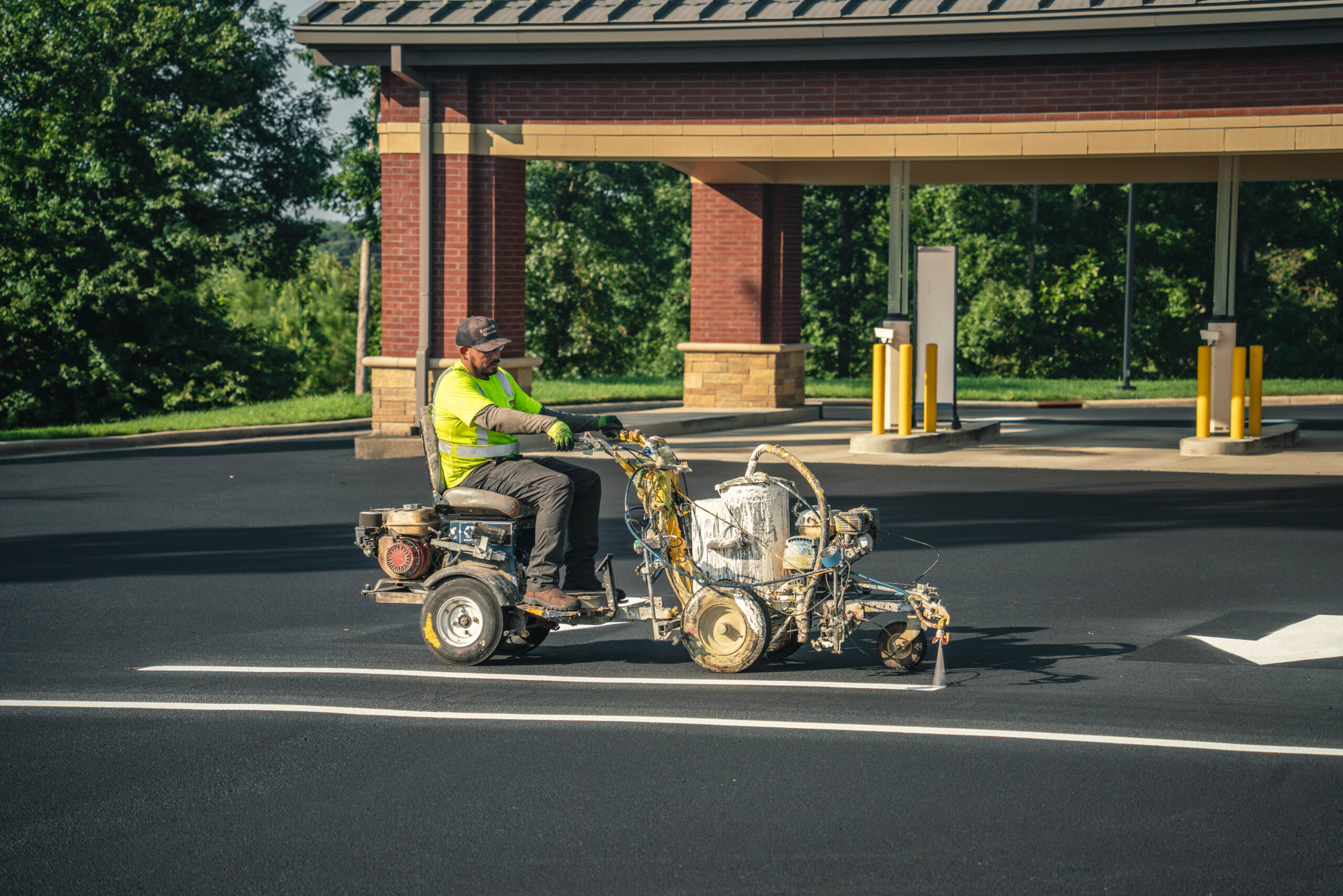

AAA reports that U.S. drivers paid $26.5 billion in 2021 to repair pothole damage, at close to $600 per repair. Now picture where that damage concentrates at an apartment community: the gate lane. Every resident, delivery driver, and trash truck brakes, turns, and waits on the same few square yards of asphalt, and every one of them rolls over the detector loop that opens your gate. Research summarized by Roads & Bridges shows that water entering cracks leads to moisture damage, base failure, and potholes, so a small crack at the gate rarely stays small.
I am the contractor who walks these entrances. At ProLine Parking Lot Maintenance, we work from Denver, NC, on Lake Norman, and we serve property managers across the greater Charlotte area. This guide shows you what to look for, what to fix first, and how to protect your gate equipment while we repair the pavement around it.
Why Gate Lanes Break Down Faster Than the Rest of Your Lot
A gate lane takes a different kind of punishment than a drive aisle. Here is what we see most often:
- Stop-and-go loading. Cars brake hard at the gate arm and accelerate away, which pushes soft asphalt into ruts at the stop point.
- Tight turns by heavy trucks. Trash trucks and moving vans clip the gate island and crack the pavement edge.
- Loop saw cuts. Detector wires sit in narrow slots cut into the asphalt, and each slot gives water an entry point once the sealant fails. FHWA’s loop detector guidance says loop failures often trace back to the wire or its splice, and it lists crumbling pavement and sealant failure among the causes.
- Mixed materials. Concrete aprons, gate pads, and curbs move differently than asphalt, so gaps open where they meet.
- Piedmont clay. Soils in Mecklenburg County’s Charlotte Belt run high in clay, and USDA soil data for Carolina Piedmont soils lists about 44 inches of mean annual precipitation. Clay drains slowly, so water lingers in low spots near the gate island and soaks into the base.
Step 1: Sort the Damage Before You Call for Bids
Walk the gate lane in daylight and match what you see to this table.
| What you see | Likely cause | Repair we recommend | Priority |
|---|---|---|---|
| Narrow cracks near the gate arm | Oxidation and traffic movement | Crack sealing to keep water out | Routine, schedule soon |
| Linear cracks tracing the loop outline | Failed loop sealant or pavement movement | Clean and reseal the slot, coordinated with your gate vendor | High |
| Interlocking block cracks (alligator cracking) | Weak or wet base | Remove and replace the failed section | High |
| Ruts or shoving at the stop point | Repeated braking loads | Mill and patch to restore a flat surface | High |
| Potholes | Water in a weakened base | Cut out and patch | Immediate |
| Standing water near the gate island | Low spots or blocked inlets | Level the low spot, clear the inlet, then seal | High |
| Gaps where asphalt meets a concrete apron or curb | Differential movement | Clean and seal the joint | Medium |
Alligator cracking deserves a specific warning. TxDOT’s maintenance manual says a cracked surface nearing failure normally needs removal and replacement, and it adds that an unstable or wet base needs replacement or stabilization too. Sealing over that damage wastes your money.
Step 2: Triage in This Order
- Fix hazards first. Potholes, raised edges, and deep ruts damage vehicles and create liability, so we repair them before anything cosmetic.
- Close the water entry points. Preventive maintenance works only on pavement without structural failure, so we patch failed sections first and seal the cracks second.
- Protect the surface. We apply sealcoat to intact pavement after repairs, which slows oxidation and keeps the gate lane from turning brittle.
- Finish with markings and hardware. We restripe stop bars and arrows, then add signs and wheel stops. Our guide on how to mark parking lot curbs for better traffic guidance at apartment communities covers the curb side of this step.
Step 3: Protect Your Gate Loops and Sensors
The loop is the most expensive thing our crew can damage at your gate, so we treat it carefully.
- We call your gate vendor before we cut, mill, or heat anything near a loop. Your vendor knows where the wire runs and what product sits in the slot.
- We agree on the sealant type in advance. Traffic Control Corporation’s loop guide notes that FHWA favors cold-applied sealant over hot asphalt because heat can damage wire insulation.
- We mark the loop outline with paint before work starts. Every crew member then sees where the wire runs.
- We schedule loop replacement for the same day as any patch that crosses a loop. Your vendor can reinstall the wire as soon as the patch is ready, so your gate does not sit dead for days.
- We tell you when a loop sits over a wide crack. Gate installation guidance from Automatic Fence warns that large cracks and pavement movement can shift the pavement, damage the wire, or cause false detection. We fix the crack first, then your vendor sets a new loop in stable pavement.
Step 4: Fix the Water Problem, Not Just the Crack
Water causes most of the damage we repair at gates. Protecting pavement from water penetration and surface oxidation can add years to its life, so we look at where the water goes before we choose a repair. We clear debris from the nearest inlet, check whether the gate island blocks runoff, and level any low spot that holds a puddle. If your gate sits close to a catch basin, read our guide on how to stripe apartment parking lots around storm drains and drainage inlets before you approve any new markings.
Step 5: Keep the Gate Zone Accessible
A patch that changes the grade can create an accessibility problem. The ADA’s parking rules limit accessible parking spaces and access aisles to a slope of 1:48 (2.08%) in all directions. When we patch near a pedestrian gate or an accessible space, we check the finished grade with a digital level before we leave.
Hardware That Protects Your Investment
Pavement repairs last longer when you also protect the pavement from the next hit. ProLine installs the following, according to our GuildQuality company profile:
- Sealcoating
- Crack filling
- Pavement markings and line striping
- Signage installation
- Wheel stop installation
We use wheel stops and signs near gate islands to keep vehicles from stopping on the loop and to keep bumpers off the operator housing and curb.
Keep Your Apartment Parking Lot Gates Safe and Accessible
Asphalt damage around parking lot gates can create safety risks and interfere with daily vehicle access. ProLine Parking Lot Maintenance provides professional asphalt repair and pavement maintenance services to help apartment communities maintain safe, smooth, and functional entrances and exits. Let us help protect your property’s pavement before minor damage becomes a bigger problem.
Contact Us TodayFrequently Asked Questions
How long should I keep residents off the gate lane after you finish repairs?
Keep vehicles off freshly applied pavement sealer for at least 24 hours after the final coat. Crack sealant, patch material, and paint each set on their own clock, so we read the manufacturer data sheet for every product we use at your gate. Brand-new hot mix patches need much longer before anyone seals over them, because the Pavement Coatings Technology Council says hot mix asphalt usually cures for 30 to 90 days. We also wait at least 24 hours after sealing before we paint stop bars and arrows, since sealer application specifications call for that gap, so your gate lane often needs a second short closure. We write the exact reopening time on the barricades and on the notice we give your office, so no resident drives through wet material.
What weather should I schedule around in the Charlotte area?
We schedule around temperature first, because SealMaster’s specification requires at least 50 degrees Fahrenheit and rising, with no drop below 50 for 24 hours. A forecast with rain inside that 24-hour window also moves the job, since sealer and paint need dry conditions to set. Humidity matters too, and ForConstructionPros explains that sealcoat cures slowly in highly humid conditions, which describes many Charlotte summer days. Late spring and early fall usually give us the steadiest overnight temperatures, so we book gate work in those windows whenever your budget allows. We check the forecast the day before and again that morning, and we call your office right away if we need to shift the date.
How do I keep residents, trash trucks, and deliveries moving while the gate lane is closed?
We close one lane at a time whenever your gate has separate entry and exit lanes, so residents always have a way in or out. Ask your gate vendor whether the operator can run in an open or free-exit mode during the closure, and agree on that setting before our crew arrives. Post written notice at the clubhouse, the mailboxes, and your resident portal at least three days ahead, and include the dates, the open lane, and the alternate route. Tell your trash hauler, move-in vendors, and delivery services the same dates, and we keep our barricades in place until the sealer and striping are hard enough for traffic, as PCTC guidelines direct. If the closure blocks the only route for emergency vehicles, call your local fire marshal and your insurance carrier before work starts.
What should I put in a bid request so the quotes compare fairly?
Ask every contractor to quote the same measured quantities, such as linear feet of crack sealing, square feet of patching, and the number of detector loops in the work area. Require each bid to name its products, including the crack sealant and the paint, so you compare materials as well as price. State in writing who coordinates with your gate vendor and who pays if a loop needs replacement after patching. List every marking and hardware item you want, such as stop bars, arrows, ADA stencils, signs, and wheel stops, so no one adds them later as change orders. Request a certificate of insurance, a start and finish window, and a written traffic plan, then compare the bids line by line.
What records should I keep, and how often should I re-inspect the gate area?
Photograph the gate lane from the same three or four spots before work, after work, and at every inspection, so you can see crack growth and ponding over time. Keep each invoice, product data sheet, and your gate vendor’s loop test result in one folder, because those papers show what we used and when. Walk the lane every quarter and after any large storm, since Stormwater magazine reports that the 2-year, 24-hour storm in the North Carolina Piedmont runs 3 to 3.5 inches, enough to overwhelm a clogged inlet. Mark any new crack with dated chalk and ask us to seal it before the next rain. If a resident files a vehicle damage claim, those dated records show that you responded promptly, and your attorney or insurance carrier can tell you how they affect liability, because I am a contractor and not a lawyer.