Walk your parking lot this week. Not a drive-through glance from the leasing office window, an actual walk. You’ll probably find a hairline crack near the dumpster pad, a faded line or two by the main entrance, maybe a low spot that still holds water from last week’s rain. None of that looks urgent. That’s exactly the problem.
Asphalt doesn’t fail all at once. It fails in slow motion, and by the time it’s obvious, you’re usually looking at a bill five to ten times bigger than if someone had caught it a year earlier. A parking lot maintenance schedule isn’t paperwork for its own sake. It’s the difference between a $400 crack-sealing visit this fall and a $40,000 reconstruction three years from now.
Why Your Parking Lot Is Failing Faster Than It Looks
Asphalt is a mix of aggregate and a petroleum-based binder, and that binder starts breaking down the moment it’s exposed to sun and air. According to the Asphalt Institute, UV exposure and oxidation gradually strip the binder of its flexibility. That’s why a five-year-old lot with no sealcoating already looks grayer and feels more brittle underfoot than one that’s been maintained.
Water does the rest of the damage, and it does it underground where you can’t see it. A hairline crack lets rain seep into the base layer. Freeze that water in January, and it expands. Thaw it in March, and it leaves a void. Do that enough winters in a row and a crack you could have sealed for the cost of a nice dinner turns into a pothole that swallows a shopping cart wheel.
This is why the National Asphalt Pavement Association pushes what the industry calls “perpetual pavement.” The idea is that a well-built, well-maintained lot can last indefinitely, because you’re only ever renewing the top layer and never rebuilding from the base up. Skip the maintenance, and you lose that option. You end up rebuilding from the base up whether you planned for it or not.
The Math Property Owners Skip, Then Regret
Here’s the number that should be on every property manager’s budget spreadsheet. Pavement preservation research, often cited by state DOTs and the Federal Highway Administration, generally puts the return on preventive maintenance at between four and ten dollars saved for every dollar spent, compared to waiting until full reconstruction is the only option. The range varies by study and by climate, but the direction never changes. Early, cheap fixes beat late, expensive ones, every time.
Reactive maintenance also costs you in ways that never show up on the invoice. A pothole near your main entrance is a liability claim waiting to happen. A cracked, patchy lot tells prospective tenants and customers that nobody’s paying attention, which is a strange thing to advertise about a property you’re trying to lease or fill.
Your Parking Lot’s Maintenance Calendar
Maintenance isn’t a once-a-year event. It follows the seasons because asphalt responds differently to temperature and moisture depending on the time of year.
Spring is inspection season. Walk the lot after the last freeze and catalog what winter did: new cracks, heaved sections, potholes that opened up under snowplow traffic. This is also when crack sealing does the most good, since you’re closing entry points before summer storms show up.
Summer is sealcoating and striping season, because asphalt sealer needs warm, dry weather to cure properly. This is also the ideal window for larger patching or a mill-and-overlay if your inspection turned up trouble, since hot-mix asphalt needs consistently warm temperatures to compact correctly.
Fall is your last real chance to seal cracks before winter locks moisture in for months. Clear drains and catch basins now too. A clogged drain in October means standing water freezing on your lot by December.
Winter is about damage control. That means responsible snow and ice removal that doesn’t gouge the surface with plow blades set too low, and prompt attention to any pothole that opens up, since a small one left through a whole winter often becomes a big one by spring.
Reading the Warning Signs Before They Become Emergencies
A few specific things to look for on that walk-through, because vague concern doesn’t get budget approved and specific problems do.
Alligator cracking, a web of interconnected cracks that looks like reptile skin, means the base underneath is already compromised. This isn’t a sealcoating problem anymore. It usually means patching or a deeper repair.
Ponding water that’s still sitting an hour after rain stops points to a drainage or grading issue, not just a surface flaw. Repaving over standing water without fixing the slope just delays the same complaint next season.
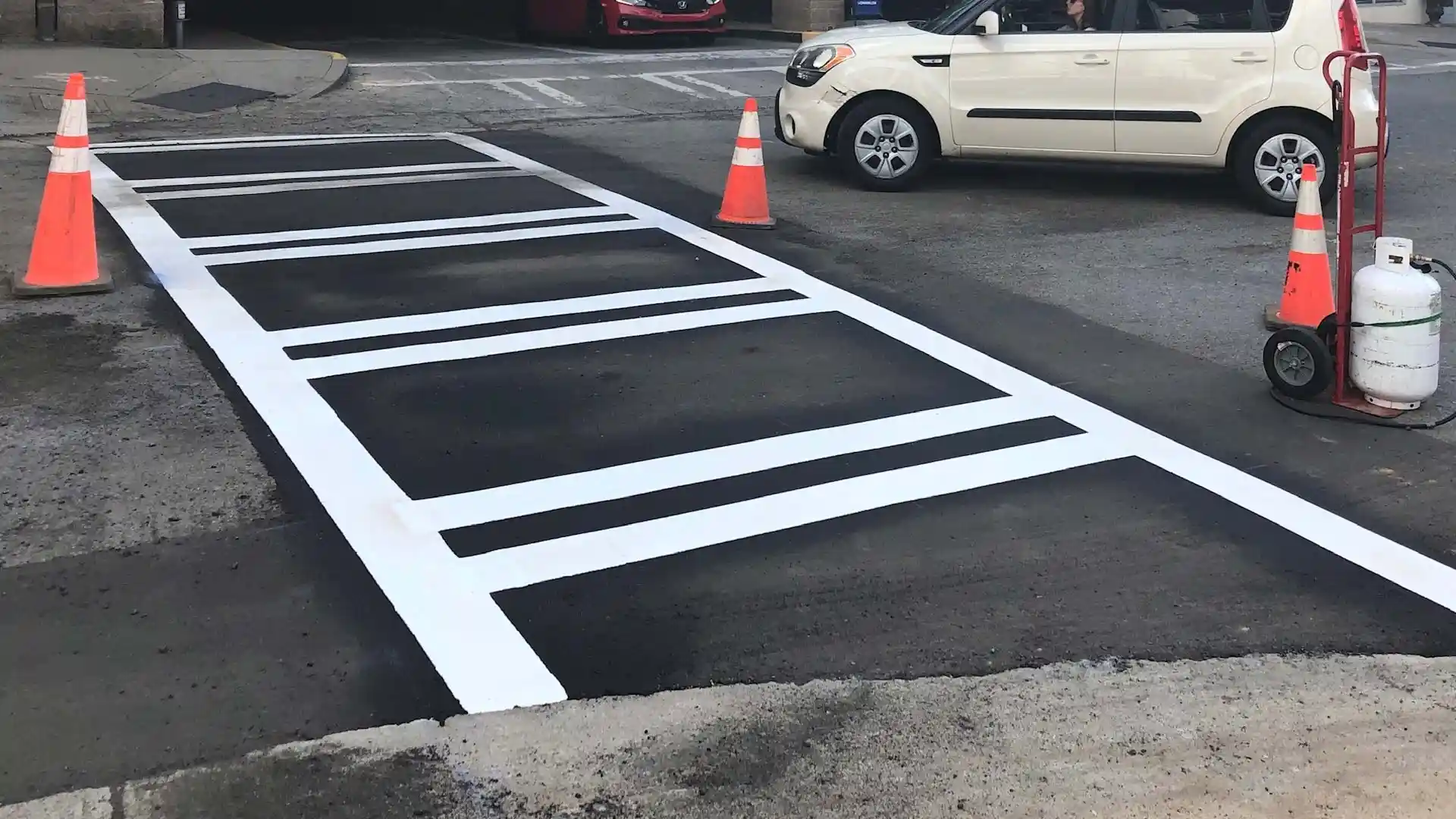
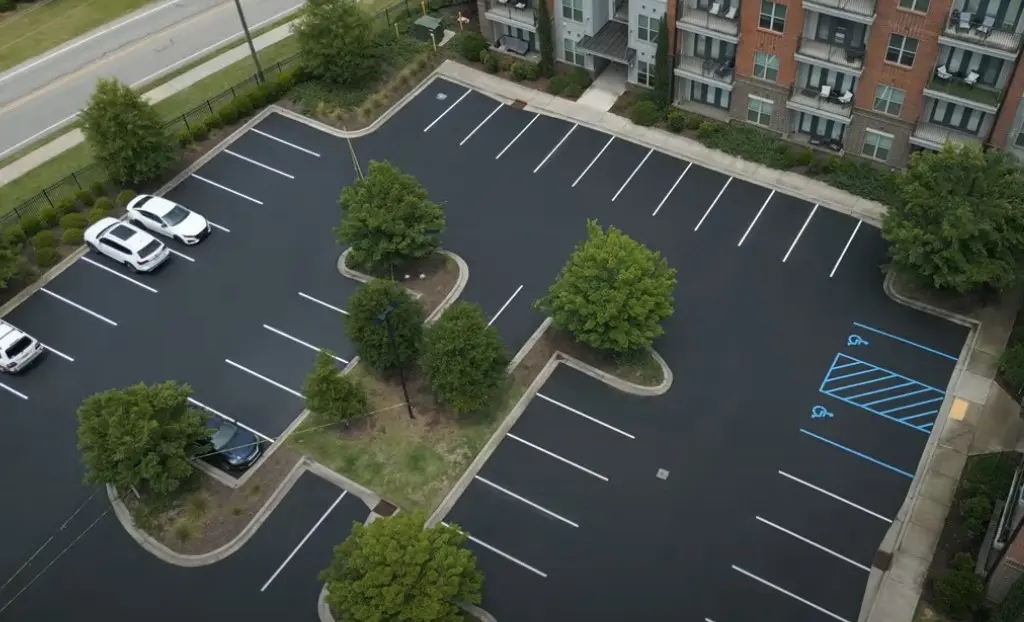
Faded, hard-to-see striping isn’t cosmetic once it affects ADA-compliant spaces or fire lane markings. According to the U.S. Access Board’s ADA Standards for Accessible Design, accessible spaces need clear markings, correct signage height, and slopes no steeper than 2 percent in any direction. Faded paint on those specific spaces isn’t just an appearance issue; it’s a compliance gap.
Sealcoating, Crack Sealing, and Patching: Knowing Which One You Need
These three are constantly lumped together, but they solve different problems.
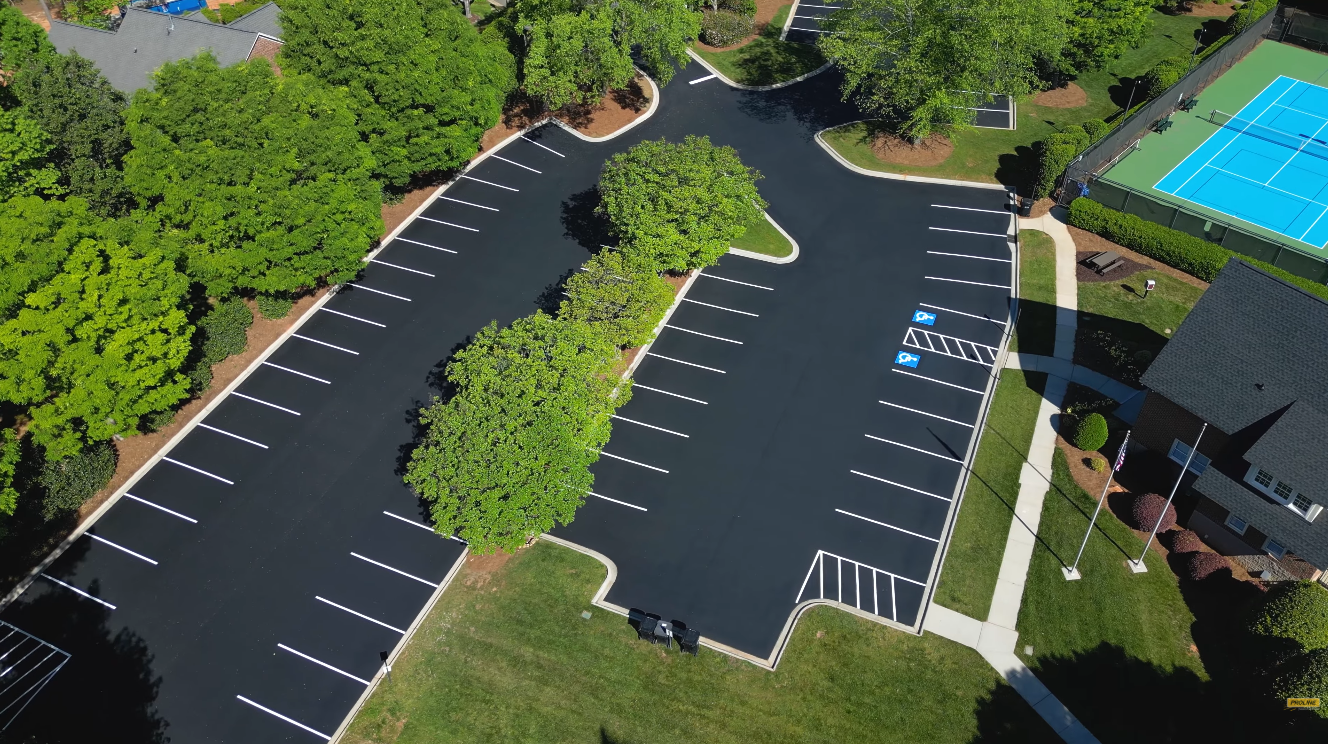
Sealcoating protects the surface from UV and water penetration. It’s preventive, not corrective; most commercial lots benefit from it every two to three years, and it does almost nothing for a lot with structural cracking or potholes already present.
Crack sealing targets moisture intrusion at individual cracks before they spread. It’s cheap, fast, and most effective when it’s done early, on cracks under half an inch wide, before water has had years to work underneath them.
Patching and resurfacing address damage that’s already reached the base: potholes, alligator cracking, or sections that have visibly sunk or heaved. This is where a real inspection matters, because patching over a base problem without addressing the base itself is a short-term fix at a long-term price.
Building a Budget You Won’t Have to Explain Later
The property managers who avoid surprise capital expenses aren’t the ones with the biggest maintenance budgets. They’re the ones who spread the same total spend across a schedule instead of waiting for a crisis to force a single, large expense.
A simple way to think about it: sealcoating and crack sealing are operating expenses you plan for annually. Patching is a smaller, occasional line item if you’re staying ahead of problems. Full resurfacing or reconstruction should be a rare, planned capital expense, not the default outcome of years of deferred maintenance.
Why a Maintenance Partner Beats a One-Call Contractor
A contractor you call once, after something breaks, has no context on your lot’s history. They’re solving today’s problem, not preventing next year’s. A maintenance partner who’s walked your property every season knows which section drains poorly, which corner takes the most delivery-truck traffic, and which crack from two autumns ago is still holding.
That’s the model ProLine works from: a standing maintenance relationship, not a single transaction. Fewer emergency calls, fewer surprise invoices, and a lot that ages on your terms instead of the weather’s.
If your last walk-through turned up more than you expected, that’s not a reason to panic. It’s a reason to get ahead of it before the next freeze-thaw cycle makes the decision for you.
Waiting until your lot is full of potholes always costs more than keeping up with routine upkeep. A simple, scheduled plan catches small issues like surface cracks before they turn into major repaving headaches. Give us a call today. We’ll help you map out a clear schedule that protects your lot and fits your budget.
Call Our Paving Team Now →Frequently Asked Questions
How often should a commercial parking lot be sealcoated?
Most commercial lots do well on a two- to three-year sealcoating cycle, though high-traffic lots or those in harsher climates may need it every two years. The right interval depends on traffic volume, sun exposure, and how the surface looks and feels during a spring inspection. Waiting past three or four years usually means the binder has already started to oxidize and crack, which sealcoating alone can’t fix at that point. A maintenance partner tracking your lot’s history can tell you exactly where you stand, rather than guessing from a generic calendar.
What’s the real difference between crack sealing and crack filling?
Crack sealing uses a flexible, rubberized material that expands and contracts with temperature changes, making it the right choice for active cracks that move with the seasons. Crack filling uses a stiffer, less flexible material better suited to cracks that have mostly stabilized and aren’t moving much anymore. Using filler on an active crack often means it pops back out within a season, wasting the labor and the material. A quick inspection usually tells a maintenance crew which type of crack they’re dealing with before they choose either method.
Can a pothole be patched permanently, or does it always come back?
A properly done patch, one that removes the damaged asphalt down to solid base material before repacking it, can last for years. A quick throw-and-roll patch done in freezing weather or without addressing the base underneath is a temporary fix at best. The difference comes down to whether the crew treated the visible hole or the underlying cause, usually water damage to the base layer. That’s why a pothole that repeatedly reopens in the same spot is a signal to look deeper, not just patch it again.
Does winter weather really change the maintenance schedule that much?
Yes, and it’s one of the most common things property owners underestimate. Freeze-thaw cycles are responsible for a large share of new cracks and potholes each year, since water trapped in the base expands when it freezes and leaves gaps when it thaws. That’s why fall crack sealing matters so much: closing entry points before winter starts is far cheaper than repairing what winter creates. Snow removal technique matters too, since plow blades set too low can gouge and accelerate surface wear on an otherwise healthy lot.
Is preventive maintenance actually cheaper, or is that just a sales pitch?
It’s a well-documented pattern in pavement management, not just marketing language: catching problems early costs a fraction of what full reconstruction costs later. The exact savings ratio varies by study and by climate, but the direction is consistent across the research state DOTs and pavement engineers rely on. A lot maintained on schedule also avoids the indirect costs of deferred maintenance, like liability exposure from potholes or the impression a cracked lot leaves on tenants and customers. The upfront maintenance spend is smaller and far more predictable than an emergency capital expense.
Do I need a professional maintenance plan, or can my facilities team handle it?
Basic tasks like sweeping, drain clearing, and visual inspections can reasonably be handled by an in-house team. Sealcoating, crack sealing, and any patching that goes below the surface generally call for equipment, materials, and application timing that a professional crew handles far more consistently. The bigger value in a professional plan isn’t just the labor; it’s the seasonal tracking: knowing what a specific section of your lot looked like last spring versus this spring. That history is what turns maintenance from guesswork into an actual schedule.
See also: Preventing Liability Claims with Proper Parking Lot Maintenance for Apartment Communities, The Complete Apartment Parking Lot Maintenance Checklist