A parking lot rarely fails all at once. It fails one skipped inspection at a time. Property managers who only call a paving contractor after a tenant complains are usually paying for repairs that routine maintenance would have prevented. This checklist lays out exactly what to inspect, how often, and which tasks need a professional, so nothing slips through until it’s a five-figure problem.
In this guide:
- Weekly visual walk-throughs catch small problems, cracks, debris, and drainage before they turn into big ones.
- Seal coating and crack sealing on a set schedule can add years to a parking lot’s service life.
- Striping and signage need their own maintenance schedule to stay ADA-compliant, separate from the pavement itself.
- Winter maintenance protects the pavement and limits the property’s liability exposure.
- An annual professional inspection catches base and drainage issues that a visual walk-through will miss.
Why Apartment Parking Lots Need a Maintenance Schedule, Not Just Repairs
Most parking lot damage starts underneath the surface, long before it’s visible. By the time a crack or pothole appears, water has usually already seeped into the base layer.
A maintenance schedule catches that damage early, when the fix is a small crack seal instead of a full resurfacing job. According to the National Asphalt Pavement Association (NAPA), routine maintenance is consistently the lowest-cost way to extend pavement life.
Reactive maintenance, fixing only what a tenant reports, misses this window every time. A checklist closes the gap between what’s visible and what’s actually happening under the pavement.
Daily and Weekly Parking Lot Checks
These take a maintenance team member 10-15 minutes and don’t require a contractor.
- Walk the lot for new cracks, potholes, or heaving pavement
- Clear litter, leaves, and debris from drive lanes and drains
- Check that parking lot lighting is working, especially near entrances and accessible spaces
- Look for standing water after any rain
- Confirm striping and signage are visible and undamaged
Log anything unusual with a date and photo. That log becomes the record you hand a contractor when it’s time for a real repair.
Monthly Parking Lot Maintenance Tasks
Monthly tasks go a level deeper than the daily walk-through.
- Clear catch basins and storm drains of debris
- Check for new alligator cracking or expansion of existing cracks
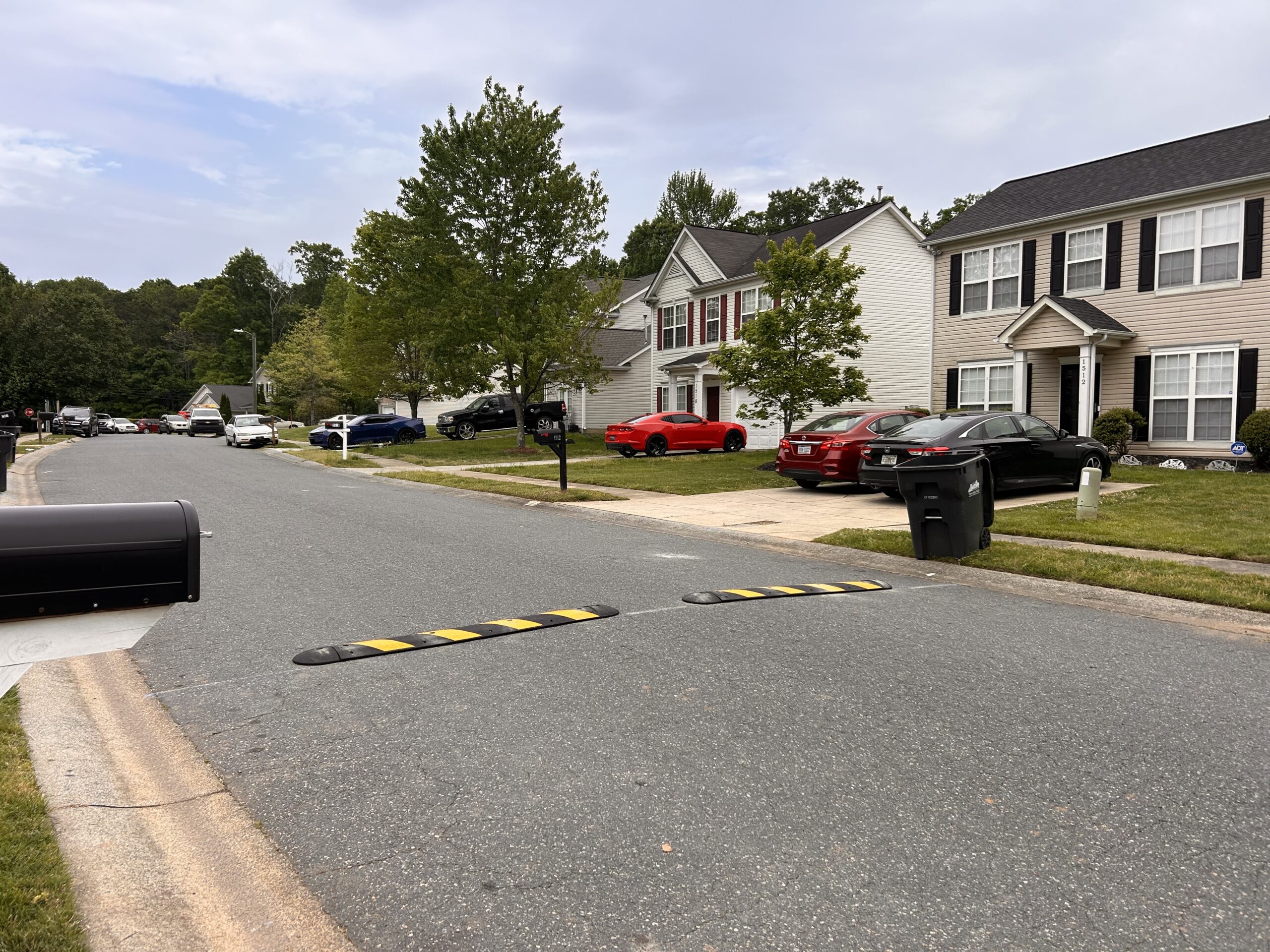
- Inspect wheel stops, bollards, and speed bumps for damage
- Test lighting fixtures and replace bulbs before they fully fail
- Review the daily/weekly log for recurring problem spots
Recurring problems in the same spot, even small ones, are the clearest sign that a monthly walk-through should be escalated to a professional inspection.
Seasonal Parking Lot Maintenance Checklist
Pavement responds differently to heat, cold, and moisture, so the checklist changes with the season.
Spring
- Inspect for winter damage: new cracks, potholes, and heaving from freeze-thaw cycles
- Schedule crack sealing before summer heat expands existing cracks further
- Clear winter debris (sand, salt residue) from drains and low spots
- Evaluate whether seal coating is due this season
Summer
- Complete seal coating while temperatures support proper curing
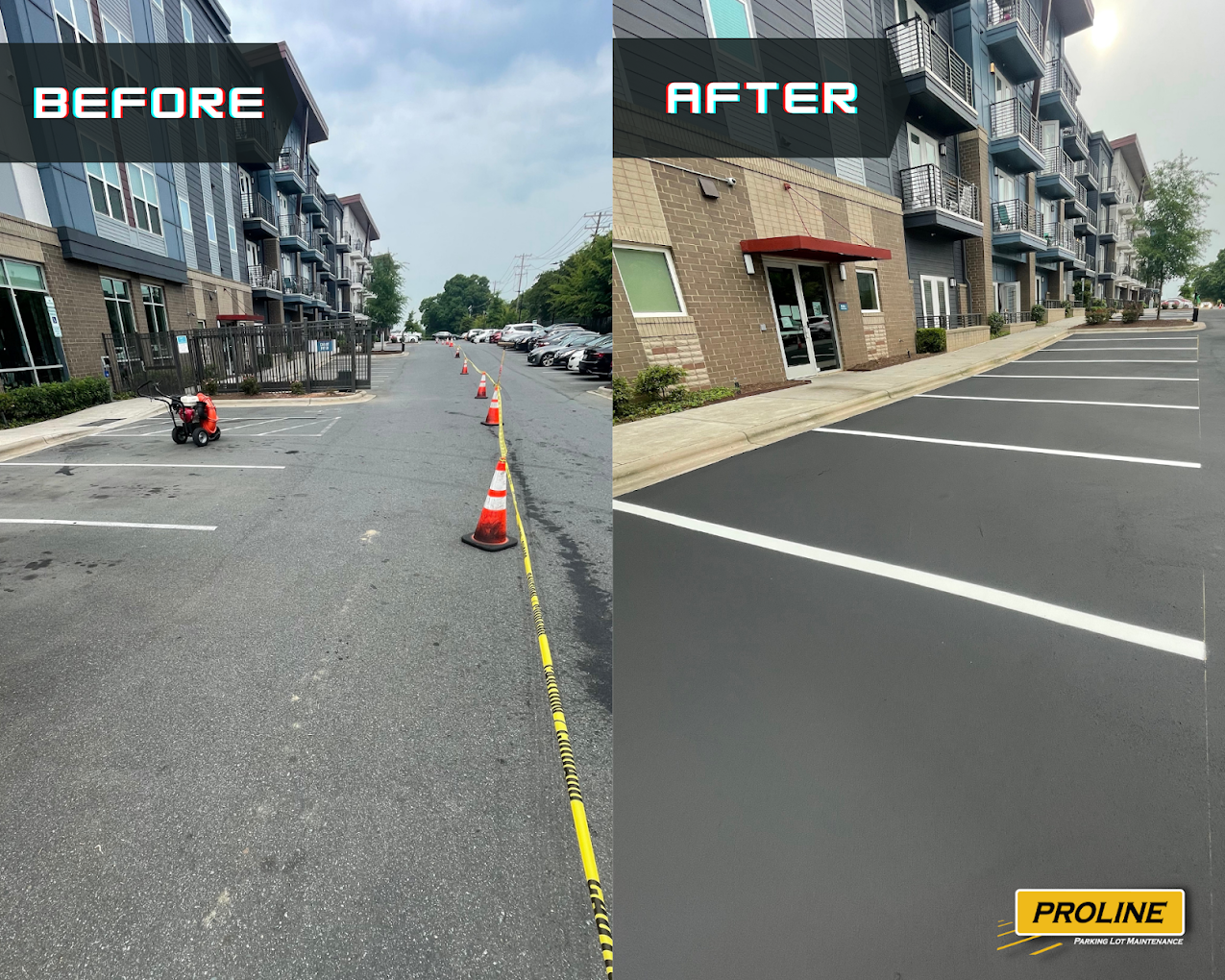
- Restripe faded lines and ADA markings while the surface is dry and warm
- Trim vegetation encroaching on pavement edges
- Address any potholes before fall rains make them worse
Fall
- Schedule the annual professional inspection before winter weather arrives
- Clear leaves and debris from drains ahead of fall rain
- Seal any cracks that opened over the summer
- Confirm snow removal contracts and equipment are ready
Winter
- Monitor for ice buildup near entrances, ramps, and accessible spaces
- Apply de-icing products that won’t damage the pavement surface
- Keep drains clear during thaw cycles to prevent standing water from refreezing
- Document any snowplow damage to curbs, wheel stops, or striping for spring repair
Annual Parking Lot Maintenance Tasks
Once a year, routine maintenance should include a professional-level review, not just a visual check.
- Full pavement condition inspection. A contractor assesses cracking, rutting, and drainage against a Pavement Condition Index (PCI) score.
- ADA compliance audit. Confirm that accessible space, striping, and signage still meet current requirements.
- Drainage evaluation. Confirm that grading and catch basins are still moving water as they were designed to.
- Budget review. Compare this year’s maintenance spend against next year’s projected repair needs.
Parking Lot Maintenance Task Frequency Table
| Task | Frequency | Best Timing | DIY or Pro |
|---|---|---|---|
| Visual walk-through | Weekly | Year-round | DIY |
| Debris and litter removal | Weekly | Year-round | DIY |
| Catch basin clearing | Monthly | Year-round, more in fall | DIY or Pro |
| Crack sealing | Annually | Spring or fall | Pro |
| Seal coating | Every 2–4 years | Late spring/summer | Pro |
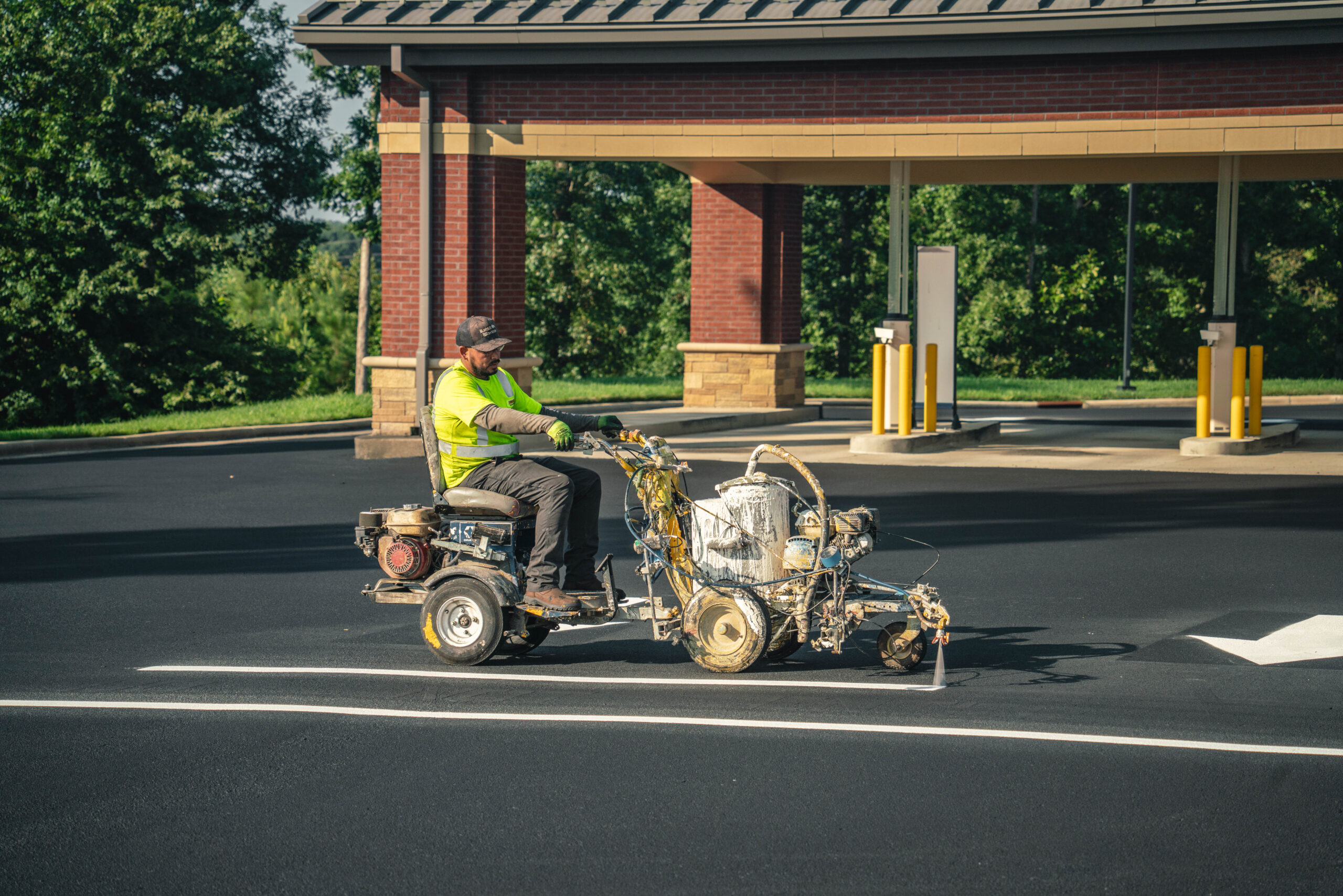
| Restriping | Every 1–2 years, or as needed | Spring/summer | Pro |
| Pothole patching | As needed | Avoid freezing temps | Pro |
| Snow and ice management | Seasonal | Winter | Pro or in-house |
| Full PCI inspection | Annually | Fall, before winter | Pro |
Use this table as a baseline. Traffic volume, climate, and pavement age all shift these intervals, sometimes significantly.
Signs Routine Maintenance Isn’t Enough Anymore
Maintenance extends a parking lot’s life, but it doesn’t reverse structural failure. Watch for these signs that a lot has moved past routine upkeep:
- Alligator cracking across a large section of the lot, not isolated spots
- Potholes that return within weeks of patching
- Standing water that doesn’t drain within a day
- A lot that’s overdue for resurfacing based on its age and last PCI score
If your checklist keeps flagging the same problem area every month, that’s a repair-or-replacement conversation, not another maintenance cycle.
ADA and Striping Compliance Checklist Items
Faded striping isn’t only a maintenance issue. It’s a compliance issue the moment it affects accessible space visibility.
Add these to the annual audit:
- Accessible space count matches current requirements for total lot size
- Van-accessible spaces have the correct width and signage
- Curb ramps near accessible spaces are intact and unobstructed
- Fire lane and no-parking striping is legible
A property that passes a fire marshal or ADA inspection with a documented maintenance log has a much stronger position than one that doesn’t.
Budgeting for Routine Parking Lot Maintenance
Routine maintenance costs are predictable. Reactive repairs aren’t.
Build an annual line item for the recurring tasks in this checklist: crack sealing, seal coating on its multi-year cycle, restriping, and the annual professional inspection.
Set aside a separate contingency for the repairs a maintenance schedule will still catch: patching, drainage fixes, and localized resurfacing. That way, a maintenance year doesn’t quietly turn into a deferred-repair year.
From sweeping and crack sealing to routine line striping, keeping up with a regular maintenance checklist prevents minor surface issues from turning into major capital expenditures. Speak directly with our paving team today to put a proactive, worry-free maintenance plan in place for your community.
Call Our Paving Team Now →Frequently Asked Questions
How often should an apartment parking lot be inspected?
A quick visual walk-through should happen weekly, checking for new cracks, debris, and standing water. A full professional inspection, including a Pavement Condition Index review, should happen at least once a year, ideally in the fall before winter weather arrives.
What should be on a monthly parking lot maintenance checklist?
Monthly checks should include clearing catch basins and storm drains, inspecting wheel stops and bollards for damage, testing lighting fixtures, and reviewing the weekly log for recurring problem spots. Recurring issues in the same location usually need more than routine maintenance.
How often should a parking lot be sealcoated?
Most contractors recommend seal coating every 2–4 years, depending on traffic volume and climate. [SOURCE NEEDED] Lots with heavy vehicle traffic or extreme weather exposure may need it closer to the shorter end of that range.
When should parking lot striping be repainted?
Striping typically needs repainting every 1–2 years, or sooner if lines are hard to see from a vehicle. ADA-required markings, including accessible space striping and signage, should be checked every time the lot is restriped and corrected immediately if faded.
What parking lot maintenance is needed in winter?
Winter maintenance focuses on managing snow and ice safely: using de-icing products that won’t damage the pavement, keeping drains clear during thaw cycles, and monitoring for ice near entrances and accessible spaces. Document any snowplow damage for spring repair.
Who is responsible for parking lot maintenance in an apartment complex?
Responsibility usually falls to the property manager or ownership group, sometimes split between an in-house team for daily and weekly checks and a paving contractor for seal coating, restriping, and structural repairs. Lease and HOA agreements should clearly specify who covers what.
How much does routine parking lot maintenance cost per year?
Routine maintenance costs vary by lot size, climate, and traffic volume, but they’re consistently less expensive than deferred repairs or replacement. Get a maintenance plan quote based on your property’s specific size and condition.
What ADA checks should be part of a parking lot maintenance checklist?
Confirm the accessible space count matches your lot size, van-accessible spaces have correct width and signage, curb ramps are unobstructed, and striping is visible. Check these every time the lot is restriped, not just during the annual audit.
Can regular maintenance prevent the need for parking lot replacement?
Regular maintenance can significantly delay the need for replacement by catching problems while they’re still repairable. It can’t reverse structural failure that’s already reached the base layer, which is why an annual professional inspection matters even on a well-maintained lot.
What’s the difference between parking lot maintenance and parking lot repair?
Maintenance is scheduled, preventive work, like crack sealing, seal coating, and restriping, done on a set cycle regardless of visible damage. Repair addresses specific damage that’s already happened, like a pothole or a section of alligator cracking, and usually isn’t on a fixed schedule.
See also: How Well-Marked Parking Lots Increase Property Value for Multi-Family Communities, The Best Time of Year to Schedule Line Striping for Apartment Communities