Faded lines and unmarked stalls do more damage to a multi-family property than most owners realize. Residents fight over spaces, guests block fire lanes, and prospective renters notice the mess before they notice the renovated clubhouse. Striping is one of the cheapest capital items on a property, and it’s also one of the fastest ways to raise a community’s value, both for the people who live there and for the people who might buy it.
In this article:
- Faded or missing striping creates daily friction for residents and appears to prospective renters and buyers as neglect.
- Clear, well-planned striping improves traffic flow, safety, and ADA compliance across the property.
- Breaking down the quality factors appraisers and buyers use to judge overall property condition.
- A restriping project is inexpensive relative to almost any other capital improvement and offers a fast payback.
- Getting the layout right, not just repainting the old lines, is where most of the value comes from.
Why Parking Lot Markings Matter More Than Owners Think
Multi-family owners tend to budget for the improvements residents talk about: unit finishes, amenity spaces, and landscaping. Striping rarely makes that list, even though it’s one of the few property features every resident interacts with every single day. A driver circling a lot looking for an open, legal space forms an opinion about management long before they open the front door.
Faded lines also create real disputes. Residents argue over ambiguous spaces, guests park in reserved or accessible stalls by mistake, and delivery vehicles block lanes that were never clearly marked as no-parking zones in the first place. None of this shows up as a single dramatic problem. It shows up as a steady stream of complaints and minor conflicts that erode residents’ sense of the property, and unhappy residents renew their leases less often.
Traffic Flow, Safety, and the Cost of Getting It Wrong
A parking lot’s layout does more than assign spaces. It controls how vehicles and pedestrians move around the property, and a poorly marked lot creates safety problems that go beyond inconvenience.
- Blind corners and unmarked drive lanes increase the risk of vehicle-to-vehicle and vehicle-to-pedestrian accidents, especially in lots shared with children walking to a pool or playground.
- Unmarked or faded fire lanes can delay emergency vehicle access, which is both a safety issue and a code compliance issue that gets flagged during inspections.
- Unclear, inaccessible stalls can render a property out of ADA compliance, creating legal exposure independent of any leasing or valuation impact.
- Ambiguous visitor parking pushes guests into resident spaces, which generates complaints that end up in the property manager’s inbox instead of staying out on the lot where they belong.
A well-planned striping layout, not just a repaint of whatever was there before, solves these problems at the source instead of managing them one complaint at a time.
How Striping Quality Affects Property Value and Appraisals
Property value for a multi-family community comes from a mix of income performance and physical condition, and striping touches both.
On the income side, clearly marked, well-organized parking supports higher resident satisfaction and renewal rates, which stabilize occupancy. Stable occupancy is one of the biggest levers in any income-approach valuation, since even a small drop in vacancy can move the number more than most capital improvements would.
On the condition side, appraisers and buyers doing due diligence walk the property, and the exterior condition, including the parking lot, factors into their overall assessment of deferred maintenance. A lot with fresh, ADA-compliant striping signals an owner who keeps up with capital items across the board. A lot with faded, inconsistent markings raises the question of what else has been deferred, which can translate into a harder negotiation on price during a sale.
The ROI of Restriping: Low Cost, Fast Payback
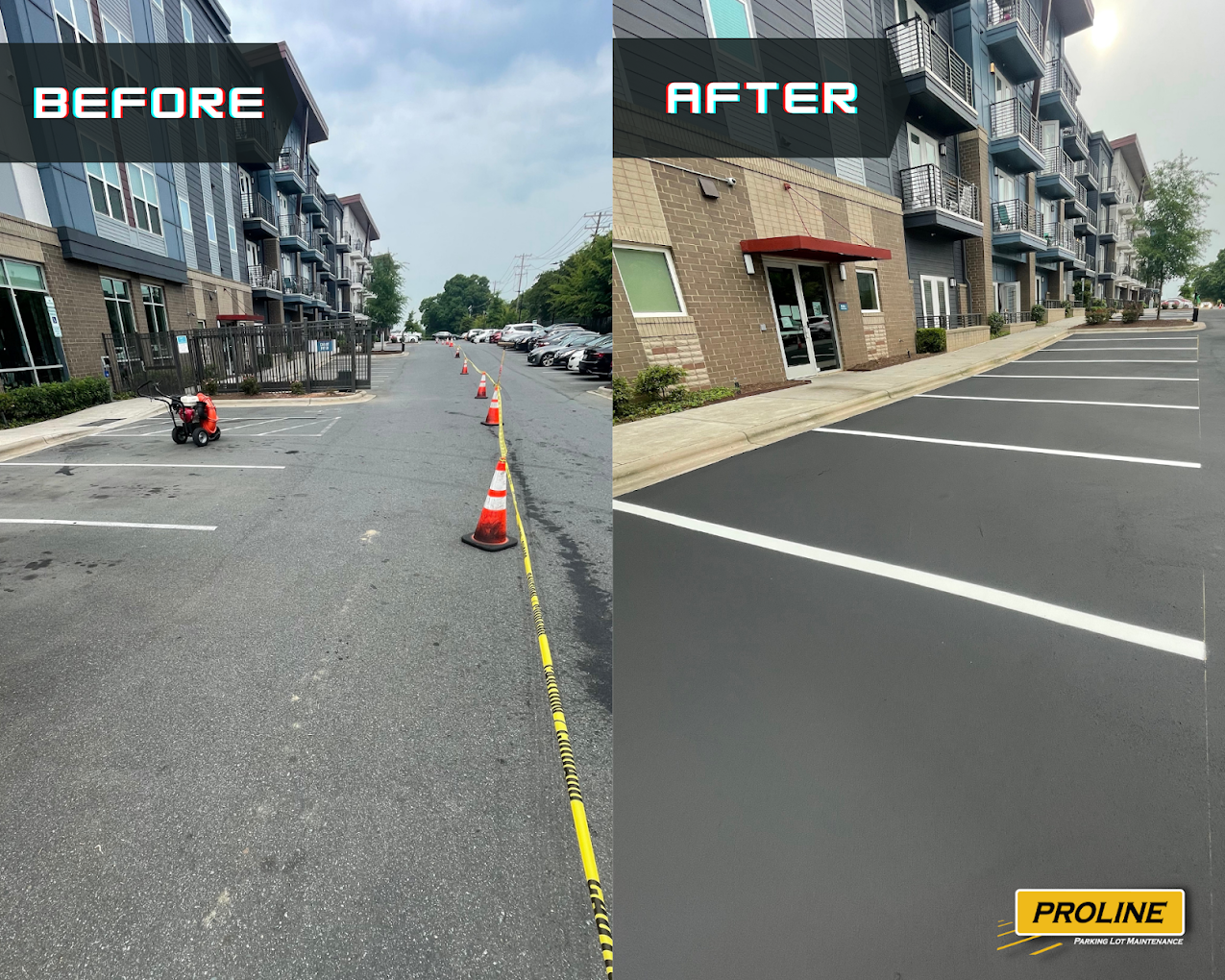
Restriping is one of the least expensive capital projects available to a multi-family owner, and it’s one of the few where the payback shows up almost immediately in reduced complaints and improved curb appeal, well before it shows up in a valuation.
| Factor | Faded/Unmarked Lot | Freshly Striped Lot |
|---|---|---|
| Relative project cost | N/A (deferred cost) | Low, versus other capital improvements |
| Resident complaints about parking | Frequent | Reduced |
| ADA compliance | Often out of compliance | Compliant when done to spec |
| Prospective tenant/buyer first impression | Signals neglect | Signals active management |
| Typical relative cost vs. repaving | N/A | A fraction of a full asphalt repave |
| Frequency needed | Overdue if lines are faded or gone | Every 1-3 years depending on traffic and climate |
Because striping wears faster than the asphalt beneath it, most properties need restriping well before a full repave. Treating it as routine maintenance rather than a deferred capital project keeps the cost low and the resident experience consistent.
What a Well-Planned Striping Layout Actually Includes
Repainting the exact same lines that were there before misses most of the value. A proper restriping project starts with a layout review, not just a paint crew.
- Accessible stalls and van-accessible spaces are placed and sized to current ADA requirements, not whatever was compliant when the property was built.
- Clear fire lanes and no-parking zones, marked in accordance with the current fire code and visible enough that residents and guests actually see them.
- Define visitor parking, separated from resident-assigned or reserved spaces, so guests aren’t guessing.
- Directional arrows and stop bars at blind corners and lot exits, especially near pedestrian paths.
- Numbered or lettered stalls, if the property assigns parking, should clearly match the resident list to reduce disputes.
A property manager or paving contractor who reviews the layout against current resident count, guest volume, and code requirements, rather than just tracing old lines, turns a routine repaint into a real improvement.
Signs Your Community’s Striping Is Overdue
- Lines are faded enough that they’re hard to see in low light or rain.
- Residents regularly park outside marked lines or in ambiguous areas.
- Staff field recurring complaints about visitor parking or blocked spaces.
- Accessible stalls are faded, missing signage, or do not meet current dimension requirements.
- Fire lanes are unmarked or barely visible.
- The property hasn’t been restriped in more than three years.
If two or more of these apply, restriping is very likely already overdue, and the cost of waiting shows up in resident friction long before it shows up as a line item.
The Bottom Line
Striping is a small line item with an outsized effect on how a multi-family community feels to live in and how it looks to anyone evaluating its condition, whether that’s a prospective resident, a lender, or a buyer. For the cost involved, it’s one of the highest-leverage improvements a multi-family owner can make.
Crisp, professionally designed, and well-marked parking lots do more than look great—they instantly elevate curb appeal, maximize parking capacity, and boost your overall asset valuation. Speak directly with our paving team to plan a high-impact striping upgrade for your multi-family community.
Call Our Paving Team Now →Frequently Asked Questions
How often should a multi-family parking lot be restriped?
Most properties need restriping every 1-3 years depending on traffic volume, climate, and sun exposure. Lines usually fade well before the underlying asphalt needs a full repave, so restriping is routine maintenance rather than a major capital project.
Does restriping a parking lot really affect property value?
Yes, indirectly and directly. Clear striping supports resident satisfaction and renewal rates, which stabilize occupancy and income. It also affects how appraisers and buyers assess overall property condition during due diligence, since faded markings can be read as deferred maintenance.
What’s included in a proper parking lot restriping project?
A full restriping project reviews the layout, not just the paint. That includes ADA-compliant accessible stalls, clearly marked fire lanes, defined visitor parking, directional arrows at blind corners, and stall numbering if the property assigns parking. A layout review catches problems a simple repaint would miss.
Is restriping more expensive compared to other property improvements?
No. Restriping is one of the least expensive capital items available to a multi-family owner, especially compared to a full asphalt repave, landscaping overhaul, or amenity renovation, and it typically shows a fast return in reduced complaints and better curb appeal.
Can faded parking lot markings create legal or compliance issues?
Yes. Faded or missing accessible stall markings, unclear fire lanes, and non-compliant signage can put a property out of ADA and fire code compliance, creating liability exposure independent of any effect on leasing or property value.
How do I know if my community’s parking lot needs restriping?
Common signs include lines that are hard to see in low light or rain, residents parking outside marked spaces, recurring complaints about visitor parking, faded or missing accessible stall markings, and lots that haven’t been restriped in more than three years.
See also: The Best Time of Year to Schedule Line Striping for Apartment Communities, Signs Your Apartment Parking Lot Needs New Line Striping