Ever driven over a parking lot that felt like it was fighting back? Here’s the thing most people don’t realize: extensively cracked pavement isn’t just ugly. It’s a warning sign. A loud one. Ignore it too long, and what started as a surface issue can turn into a full-blown structural problem that costs way more than you planned.
So let’s break this down in a real, practical way—what’s causing it, what’s changed in recent years, and what you should actually do about it today.
What Are “Gators” in Pavement (And Why They’re Worse Than Before)?
Alligator cracking happens when asphalt breaks into a pattern of interconnected cracks. It usually means the surface has lost its strength and flexibility. Think of it like bending a dry cracker—it doesn’t flex, it just breaks.
Now here’s what’s changed recently:
With hotter summers, heavier vehicles (especially delivery traffic), and inconsistent maintenance schedules, these cracks are appearing faster and spreading more quickly than before. In Cornelius, local paving companies have reported a noticeable uptick in requests for crack repairs and resurfacing just in the past two years. Many property owners have noticed that the frequency and severity of new cracks seem higher than just a few seasons ago.
So if it feels like pavement is deteriorating overnight… you’re not imagining it.
What Actually Causes Alligator Cracking?
Let’s keep this simple. Pavement doesn’t just fail randomly—it’s reacting to stress.
1. Water Is Still the #1 Enemy
Water seeps into tiny cracks, collects beneath the base layer, and weakens it. Once that foundation softens, the surface above begins to collapse in sections. And with more unpredictable rain patterns lately? This problem has only gotten worse.
2. Poor Drainage Design
Even a well-built parking lot can fail if water has nowhere to go. Standing water is basically a slow, silent destroyer.
3. Increased Traffic Load
Delivery vans, service trucks, rideshare vehicles—modern traffic patterns are tougher on pavement than they were even five years ago.
4. Aging Asphalt Materials
Asphalt naturally becomes brittle over time. Without sealcoating or maintenance, it loses flexibility and cracks under pressure.
5. Weak Sub-Base
If the base layer wasn’t compacted properly during installation, the surface will eventually cave in—no matter how good it looked at first.
Early Signs You Shouldn’t Ignore
Here’s where most property owners get caught off guard. Gators don’t just appear fully formed. There are warning signs:
- Small cracks forming in clusters
- Areas that feel slightly uneven when driving
- Fading asphalt that looks dry or gray
- Water pooling after rain
Catch it here, and you’re in good shape. Wait too long, and you’re dealing with reconstruction instead of repair. To put it in perspective, early crack repairs can cost just a fraction of what a full reconstruction might set you back. For example, sealing cracks when they’re small might run a few hundred dollars, but letting the damage spread often leads to reconstruction bills that jump into the thousands. Investing a little early can save you a lot down the road.
How To Prevent Alligator Cracking (Realistically)
You’re not going to prevent every crack. But you can slow things way down.
Sealcoating (Every 2–3 Years)
This adds a protective layer that keeps water out and preserves flexibility. Think of it as sunscreen for your pavement.
Crack Filling Early
Don’t wait until cracks spread. Sealing them early stops water from getting underneath.
Fix Drainage Issues
If water sits on your pavement, you’re already behind. Adjust grading to ensure water flows away from the surface, or consider installing specific drainage solutions such as French drains or catch basins. In some cases, adding trench drains at low spots or regrading the area to eliminate pooling can make a big difference. These changes help channel water away before it can damage your asphalt.
Limit Heavy Loads (If Possible)
Not always realistic, but if certain areas get constant heavy traffic, reinforce them or redirect usage.
What To Do When Pavement Is Already Extensively Cracked
Alright—so the damage is already there. Now what?
Step 1: Restrict Access
If the area is severely damaged, limit traffic. Continued use will only accelerate failure and increase repair costs.
Step 2: Mark the Area Clearly
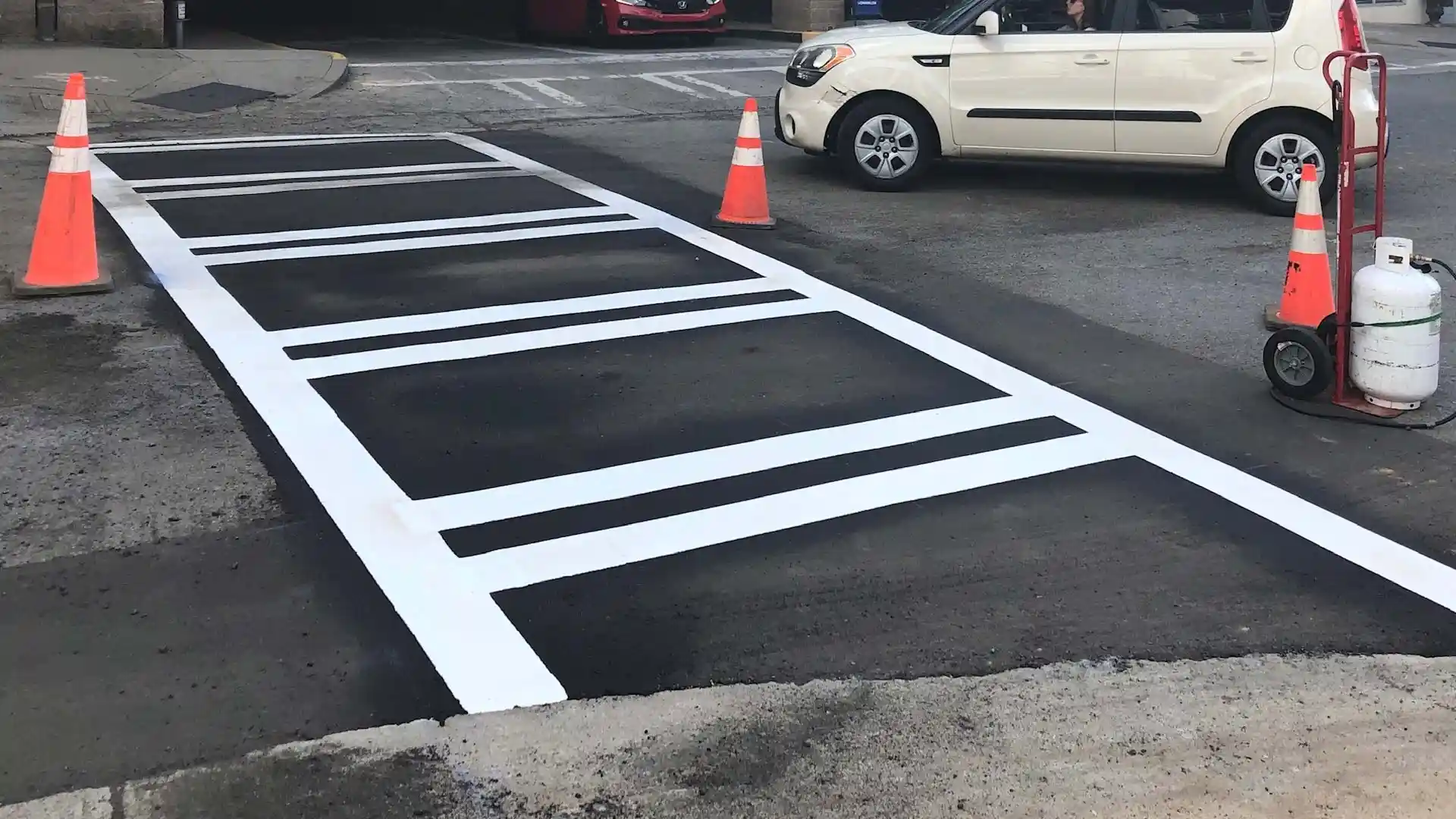
Use cones, striping, or signage. It’s not just about protecting the pavement—it’s about safety and liability.
Step 3: Assess the Severity
Here’s the key distinction: If you see surface-level cracking, you might get away with patching. If it’s deep, interconnected cracks? You’re likely looking to remove and replace that section.
Step 4: Choose the Right Repair Method
Surface patching works for minor areas. It’s quick and cost-effective, but not a long-term fix for deep issues. Full-depth repair involves removing the damaged section and rebuilding the base and surface. It costs more upfront but lasts significantly longer. You can also pick a new asphalt layer over existing pavement—but only if the base is still stable.
Why Timing Matters More Than You Think
A small repair today might cost a fraction of what full reconstruction will cost six months from now. And with material and labor costs rising, delays hit even harder. There’s also the reputation factor. If you manage a commercial property, cracked pavement sends a message—whether you mean it to or not.
What Makes a Professional Repair Actually Last?
Not all repairs are equal. A long-lasting fix depends on:
- Proper diagnosis (surface vs structural damage)
- Quality materials suited for local climate
- Correct compaction of the base
- Attention to drainage
- Skilled workmanship
Cut corners on any of these, and the cracks will come back. Guaranteed.
Why Property Owners in Cornelius Trust Proline Parking Lot Maintenance, Inc.
At the end of the day, dealing with “gators” isn’t just about filling cracks—it’s about fixing the root problem. That’s where Proline Parking Lot Maintenance, Inc. comes in.
We don’t just patch things up and call it a day. They actually evaluate what’s happening beneath the surface, then recommend solutions that make sense for your property and your budget. For example, last yearthey helped a local Cornelius shopping center ownerdealing with dangerous alligator cracking in the busiest part of the parking lot. Proline quickly assessed the root causes, repaired the worst areas, and kept the lot accessible throughout the process. Within days, the center was back to smooth, safe pavement—and the owner said, “It looked brand new, and our customers noticed immediately.”
Whether it’s a small repair or a full parking lot overhaul, our team focuses on doing the job right the first time—without dragging things out or leaving a mess behind.
Ready to Fix That Cracked Pavement for Good?
If your lot or driveway is already showing signs of wear, now’s the time to act—not after another season of damage.
Call Proline Parking Lot Maintenance, Inc. today for a straightforward, no-pressure quote. You’ll get real answers, clear pricing, and a plan that actually makes sense for your property.
Frequently Asked Questions
1. Can you repair my parking lot without shutting down my business completely?
Yes, in most cases, repairs can be phased to keep parts of your lot open. Crews often work in sections to minimize disruption. Timing can also be adjusted around your busiest hours. A good contractor will plan the project around your operations.
2. How do I know if I need repair or full replacement?
It depends on what’s happening beneath the surface. If the base is still solid, repairs might be enough. But if the cracks are deep and widespread, replacement is usually the smarter option. An on-site inspection gives a clear answer.
3. How quickly can pavement repairs be scheduled?
It usually depends on the project’s size and the current workload. Smaller jobs can often be scheduled within days. Larger repairs may take longer due to planning and materials. It’s always best to call early before the damage spreads.
4. Will new asphalt match my existing pavement?
It can be blended closely, but it may not look identical at first. Fresh asphalt is darker and smoother, while older pavement has faded. Over time, the color difference becomes less noticeable. Sealcoating later can help unify the appearance.
5. Is there a best time of year to fix cracked pavement?
Yes, warmer months are generally ideal for asphalt work. The materials bond better in moderate to hot temperatures. Cold weather can affect how well repairs hold. Spring through early fall is usually the sweet spot.
6. How long do asphalt repairs typically last?
It depends on the repair type and traffic levels. Surface fixes may last a few years, while full-depth repairs last much longer. Regular maintenance can significantly extend the lifespan. Skipping maintenance shortens it fast.
7. Can drainage issues really damage pavement that quickly?
Yes, faster than most people expect. Standing water weakens the base layer over time. Once that foundation softens, cracks spread rapidly. Fixing drainage early prevents much bigger problems later.
8. Do small cracks really need immediate attention?
They do, even if they seem minor. Small cracks allow water to seep underneath the surface. That’s how bigger issues begin. Sealing them early is one of the easiest ways to avoid major repairs.
9. How much does it cost to fix alligator cracking?
Costs vary based on severity and the size of the area. For minor repairs, such as sealing small cracks, you might expect to spend between $300 and $1,200 for an average parking lot. More extensive repairs, such as full-depth reconstruction, can range from $5,000 to $20,000 or even more, depending on how much pavement needs to be replaced. The key factor is how deep the damage goes. A proper inspection gives an accurate estimate.
10. Will fixing extensively cracked pavement improve how my property looks right away?
It definitely makes a noticeable difference almost immediately. Extensively cracked pavement tends to make a property look neglected, even if everything else is clean. Once repaired, the surface looks smoother and more professional. That first impression shift is hard to ignore.