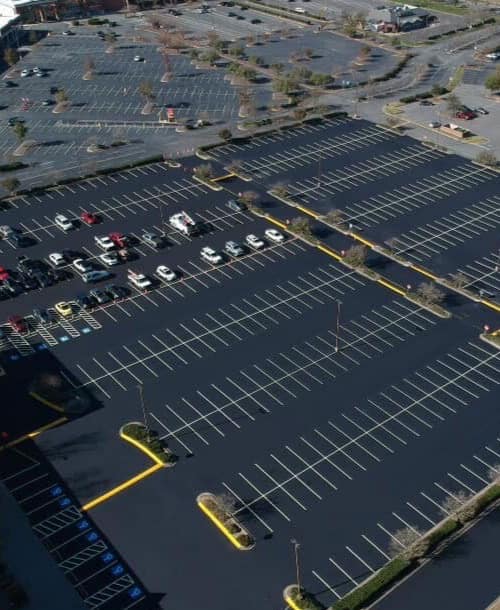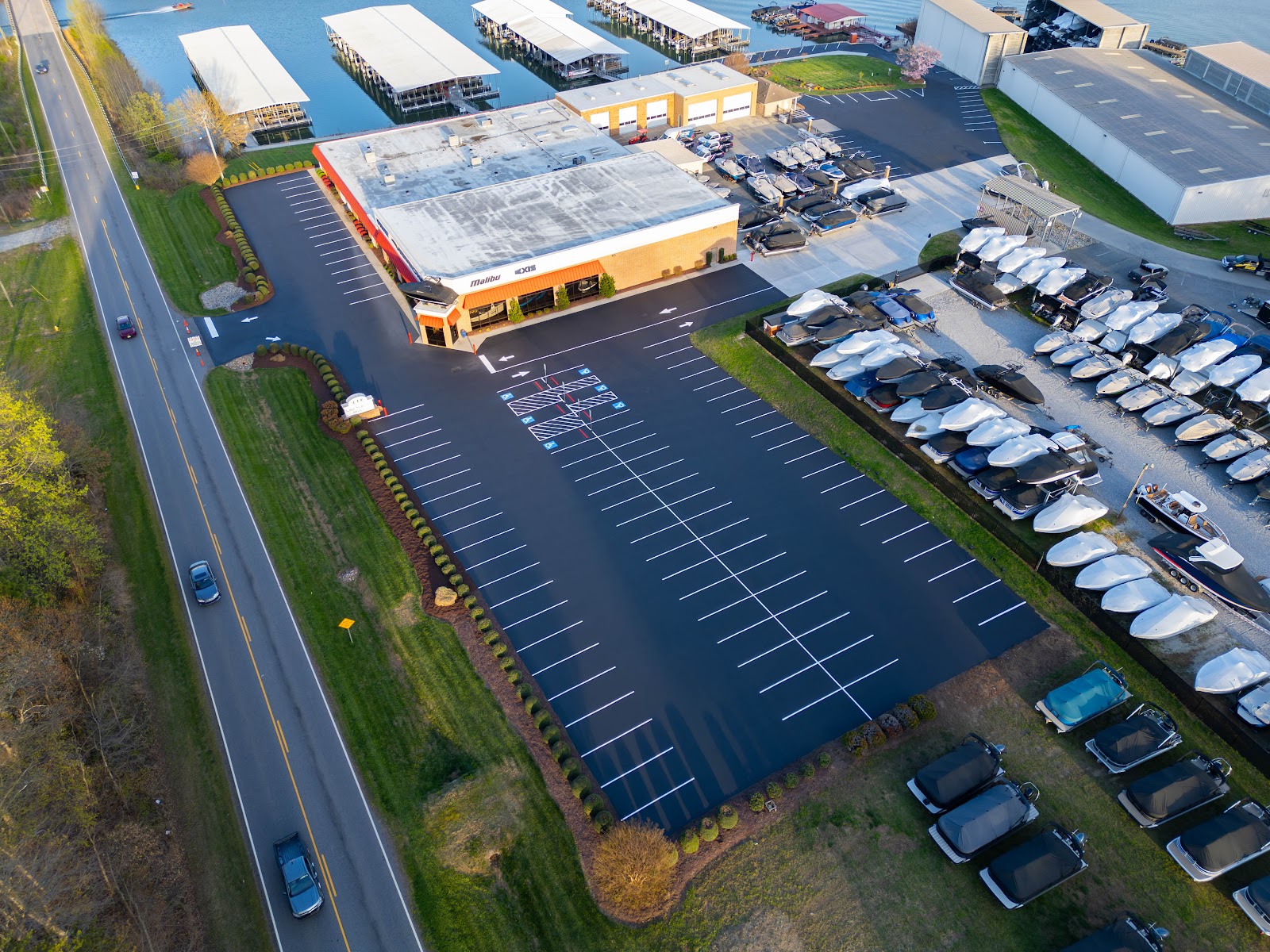

Parking lots take a beating every single day. Ultraviolet radiation, freeze-thaw cycles, motor oil drips, and the relentless weight of vehicles conspire to age asphalt far faster than most property owners realize. Left untreated, a parking lot that cost tens of thousands of dollars to install can deteriorate to the point of requiring full replacement within a decade — an expense that dwarfs routine maintenance many times over.
Sealcoating is the single most cost-effective line of defense against that premature deterioration. It is a specially formulated asphalt emulsion or coal-tar sealant applied in one or two uniform coats across the pavement surface. Once cured, it forms a flexible, water-resistant membrane that shields the underlying asphalt binder from oxidation, moisture intrusion, and chemical degradation.
With commercial construction and material costs continuing to rise, protecting your existing pavement investment is more important than ever. This guide walks you through everything a property owner or facility manager needs to know — from how sealcoating works and what it costs, to how often it should be applied and how to choose a contractor who will do the job right.
“A properly sealed parking lot can last 20 years or more. An unsealed one may need resurfacing in fewer than 10 — costing two to four times as much as a decade of routine sealcoating would have.”
How Sealcoating Actually Works
Asphalt pavement is essentially a mixture of aggregate (gravel and sand) bound together by a petroleum-based binder called bitumen. Over time, UV rays oxidize the bitumen, causing it to become brittle and lose its adhesive properties. Water finds its way into micro-cracks, expands as it freezes, and widens those cracks into potholes. Motor oil and other hydrocarbon spills further dissolve the bitumen, accelerating surface breakdown.
Sealcoating counteracts all of these mechanisms simultaneously. The sealant layer blocks UV penetration, seals hairline cracks before water can enter, and resists attack from petroleum-based chemicals. It also restores the surface’s dark color, which matters more than aesthetics alone, because a darker surface retains heat and helps accelerate the natural evaporation of surface moisture after rainfall.
Modern sealcoating formulations used by professional contractors in 2026 often include polymer additives that enhance flexibility and durability, allowing the sealant to expand and contract with the pavement during temperature swings without cracking or peeling prematurely.
The Real Benefits of a Sealed Parking Lot
Beyond simply “protecting asphalt,” sealcoating delivers a range of tangible benefits for commercial property owners and managers.
Weather Protection
Blocks UV oxidation, repels rainwater, and reduces freeze-thaw damage during winter months.
Dramatically Lower Costs
Sealcoating costs a fraction of resurfacing or full replacement, offering an outstanding return on investment.
Improved Appearance
A fresh sealcoat restores the deep, uniform black finish that signals to customers and tenants that a property is well managed.
Liability Reduction
Extended Pavement Life
Regular sealcoating can more than double the functional lifespan of an asphalt parking lot.
Oil & Chemical Resistance
The sealant layer resists gasoline, motor oil, and hydraulic fluid — common culprits in asphalt breakdown.
How Often Should You Sealcoat in 2026?
Climate is the other major factor. Properties in the Charlotte, NC, region and across the Southeast benefit from sealcoating more frequently than those in milder climates, due to intense summer UV exposure and freeze-thaw cycles in winter. A qualified local contractor can assess your surface condition and recommend the right schedule for your specific situation.
One important guideline that has not changed: never sealcoat a brand-new parking lot. Fresh asphalt needs 90 days to a full year to cure and off-gas properly before sealant is applied. Sealing too early can trap volatile compounds and compromise adhesion.
What Does Sealcoating Cost in 2026?
Pricing varies based on lot size, surface condition, number of coats, and local labor rates. In the greater Charlotte area, commercial parking lot sealcoating typically ranges from $0.15 to $0.35 per square foot for a standard two-coat application, with additional charges for crack filling, line striping, and surface cleaning preparation. A mid-size retail parking lot of 20,000 square feet might range from $3,000 to $7,000, depending on condition and scope.
Compare that figure to the cost of milling and resurfacing the same lot — which, at 2026 material and equipment costs, routinely exceeds $40,000 to $80,000 — and the value proposition of consistent preventive maintenance becomes immediately clear. Sealcoating is not a luxury; it is a significant capital asset.
How to Choose a Qualified Sealcoating Contractor
Not all sealcoating work is equal. The quality of the final result depends on proper surface preparation, the right material formulation, appropriate weather conditions during application, and adequate cure time before the lot reopens to traffic. Here is what to look for when vetting a contractor.
-
1Verify local experience and licensing. A contractor familiar with your region’s specific climate conditions and pavement types will use the appropriate formulation and schedule work during the appropriate temperature windows (typically 50°F and rising, with no rain forecast for 24 hours).
-
2Ask for references and a project portfolio. Reputable contractors can point you to recent commercial jobs you can inspect firsthand. Look for clean edges, uniform coverage, and well-preserved line striping.
-
3Confirm they perform crack filling first. Sealcoating over unfilled cracks is a shortcut that dramatically shortens the application’s lifespan. Proper prep includes cleaning the surface, filling all cracks, and allowing repairs to cure before applying sealant.
-
4Check their BBB rating and online reviews. The Better Business Bureau and Google Reviews remain reliable starting points for assessing a contractor’s reputation for quality and customer service.
-
5Get the scope of work in writing. A detailed written proposal should specify the number of coats, the sealant brand and formulation, cure time requirements, and whether line striping is included.
Maintaining Your Sealed Parking Lot Between Applications
Sealcoating is not a set-it-and-forget-it solution. Routine care between sealcoating cycles will maximize the sealant’s protection and help you identify problems before they escalate.
-
1Sweep the lot regularly to remove grit, leaves, and debris that can accelerate surface wear and mask developing cracks.
-
2Clean up oil and fuel spills promptly using an absorbent and a degreasing cleaner. Hydrocarbon spills left to soak will penetrate even a sealed surface over time.
-
3Have cracks repaired as soon as they appear — even hairline cracks. Water infiltration through an untreated crack can undermine a large surrounding area of pavement within a single winter season.
-
4Inspect the lot after major weather events, particularly hard freezes, heavy rains, or severe storms, to catch any new damage early.
-
5Mark your sealcoating date and schedule your next assessment in advance so you are not caught reacting to visible deterioration rather than preventing it.
Frequently Asked Questions
1. How long does sealcoating take to cure before the lot can reopen?
Under typical conditions—temperatures above 50°F and low humidity—sealcoating is dry to the touch within two to four hours and safe for foot traffic within four to six hours. However, vehicles should be kept off the lot for a full 24 to 48 hours to allow complete curing. Cooler temperatures or high humidity significantly extend cure times, which is why experienced contractors monitor weather forecasts carefully before scheduling applications.
2. Can sealcoating fix potholes or major cracks?
No. Sealcoating is not a structural repair product. Potholes and large cracks must be patched or filled with appropriate asphalt repair materials before sealcoating begins. Applying sealant over unrepaired structural damage simply hides the problem temporarily and will result in the sealant failing prematurely in those areas. A reputable contractor will always address surface repairs as part of the preparation process before any sealant is applied.
3. Is sealcoating safe for the environment?
The environmental profile of sealcoating materials has been an ongoing area of discussion in the industry. Coal-tar-based sealants have faced scrutiny due to their polycyclic aromatic hydrocarbon (PAH) content, and some municipalities have restricted or banned them. Asphalt-based (petroleum emulsion) sealants are generally considered a lower-impact alternative and are more widely used today. In 2026, many professional contractors have shifted predominantly to asphalt emulsion and polymer-modified formulations. Ask your contractor specifically which product they use and whether it complies with your local environmental regulations.
4. How many coats of sealcoating does a parking lot need?
Most commercial parking lots receive two coats for optimal protection and appearance. The first coat penetrates and bonds to the existing asphalt surface; the second coat builds thickness and ensures complete, uniform coverage. Single-coat applications are sometimes used for maintenance cycles on recently sealed lots in good condition, but two coats are the professional standard for most commercial applications and the approach recommended by leading sealant manufacturers.
4. Does sealcoating include line striping?
Not automatically — line striping is typically quoted as a separate line item. Because sealcoating covers the old painted lines, re-striping is almost always required after a sealcoating project. It is strongly recommended to include re-striping in the same project scope while the contractor and equipment are already on-site, as it ensures clean, professional-looking results and maintains ADA-compliant accessible space markings. Always confirm what is included in your contractor’s proposal before signing.
5. Can sealcoating be applied in cold weather?
Sealcoating requires a minimum ambient and surface temperature of 50°F (10°C) during application and for several hours afterward. Most manufacturers specify that temperatures must remain above 50°F for at least 24 hours post-application. In the Charlotte region, this means sealcoating season generally runs from spring through early fall. Attempting to apply sealant in cooler conditions results in poor adhesion, uneven curing, and a dramatically shortened lifespan of the application — so any contractor willing to work in cold temperatures should be viewed with skepticism.
6. How do I know if my parking lot needs sealcoating or full replacement?
Surface color, crack patterns, and structural integrity are the key indicators. If your lot is faded gray but still has intact edges and no significant cracking or rutting, it is likely a good sealcoating candidate. If you are seeing widespread alligator cracking (a pattern of interconnected cracks resembling alligator scales), severe rutting, or large areas of base failure where the surface feels spongy or unstable underfoot, sealcoating will not solve the underlying structural problem and full or partial resurfacing may be necessary. A professional on-site assessment from a qualified contractor is the most reliable way to determine the right course of action.
7. How should I prepare my property for a sealcoating project?
The contractor will handle the technical preparation — cleaning, blowing, edging, and crack filling — but as the property owner, you’ll need to arrange for the lot to be completely clear of vehicles during the project and for the required cure period afterward (typically 24 to 48 hours). This means coordinating with tenants, employees, or customers well in advance. For large lots, some contractors can phase the work by sections to minimize disruption. Posting clear signage at entrances is essential to prevent vehicles from entering during and immediately after application.
8. Why does sealcoating look better but then fade? Is that normal?
Completely normal. A freshly sealed lot has a rich, almost jet-black appearance that gradually lightens to a medium charcoal gray over months and years of UV exposure and traffic wear. This color change does not mean the sealant has failed — the protective layer remains intact and continues to function. When the surface begins to show significant fading back toward the original asphalt gray color, or when the texture starts to feel rough and worn again, that is a reliable visual cue that the next sealcoating cycle is approaching.
Ready to Protect Your Parking Lot?
Proline Parking Lot Maintenance is the Greater Charlotte Area’s trusted pavement maintenance partner — from assessment and crack repair to sealcoating, line striping, and beyond.
Get a Free Estimate