Concrete vs Asphalt Parking Lot: Which Material Is Right for Your Repairs?
When it comes to maintaining your parking lot, one of the most critical decisions you’ll face is choosing between concrete and asphalt for repairs and resurfacing. Both materials offer distinct advantages and drawbacks, and the right choice depends on your specific needs, budget, and long-term maintenance goals.
At Proline Parking Lot Maintenance, we’ve helped countless Charlotte-area businesses make this important decision. In this comprehensive guide, we’ll break down everything you need to know about concrete vs asphalt parking lots so you can choose the best material for your facility.
Understanding the Basics: Concrete vs Asphalt
Both concrete and asphalt serve the same primary purpose: creating a durable, functional surface for vehicles. However, they’re fundamentally different materials with different compositions, performance characteristics, and maintenance requirements.
Asphalt is a flexible material composed of aggregate stones bound together with bitumen. It’s the more commonly used parking lot surface, especially in North Carolina, where weather conditions favor its flexibility.
Concrete is a rigid material made from cement, aggregate, and water. It hardens into a solid surface that resists deformation and typically lasts longer than asphalt under ideal conditions.
Asphalt Parking Lots: Advantages and Disadvantages
Why Asphalt Is Popular in Charlotte
Asphalt dominates the parking lot industry for good reason. It’s cost-effective, quick to install, and can be repaired relatively easily. The material is also recyclable, making it an environmentally responsible choice for many businesses.
In Charlotte’s climate, asphalt performs well due to its flexibility in handling temperature fluctuations. The material expands and contracts with seasonal changes without cracking as easily as concrete.
The Drawbacks of Asphalt
Asphalt requires more frequent maintenance than concrete. UV rays, heat, and exposure to chemicals gradually deteriorate the binding agents, causing the surface to crack and break down.
You’ll need regular maintenance including seal coating, crack sealing, and pothole repair to extend asphalt’s lifespan. Without proper care, asphalt typically lasts 15-20 years before requiring complete resurfacing.
Our seal coating service and crack sealing solutions are designed specifically to address asphalt’s vulnerability to oxidation and weather damage.
Concrete Parking Lots: Advantages and Disadvantages
The Durability Factor
Concrete’s primary advantage is longevity. A well-maintained concrete parking lot can last 30-40 years or more, significantly outlasting asphalt. This extended lifespan makes concrete attractive for businesses planning long-term investments in their facilities.
Concrete resists UV damage and chemical exposure better than asphalt. It doesn’t soften in heat or become brittle in cold, making it an excellent choice for high-traffic areas that experience extreme weather variations.
Concrete’s Challenges
The initial cost of concrete installation is substantially higher than asphalt. For many businesses operating on tight budgets, this upfront expense makes concrete impractical, even if long-term savings justify the investment.
Concrete is also more rigid, making it susceptible to cracking under heavy loads or when the underlying base shifts. Once cracked, concrete is difficult and expensive to repair without replacing entire sections.
In Charlotte’s climate, concrete can crack due to freeze-thaw cycles in winter. Salt used for de-icing can also cause surface spalling and deterioration over time.
Concrete vs Asphalt Parking Lot: Side-by-Side Comparison
| Factor | Concrete | Asphalt |
| Initial Installation Cost | $4-6 per sq ft | $2-3 per sq ft |
| Lifespan | 30-40 years | 15-20 years |
| Maintenance Frequency | Minimal (every 2-3 years) | Regular (annually) |
| Repair Difficulty | Complex and expensive | Relatively simple and affordable |
| Climate Suitability (Charlotte) | Susceptible to freeze-thaw | Handles temperature swings well |
| Appearance | Professional, clean look | Needs periodic seal coating for appearance |
| Weight Capacity | High (handles heavy vehicles) | Good (requires proper base) |
| Environmental Impact | Lower (longer lifespan) | Recyclable material |
Making Your Decision: Which Material Is Right for You?
Choose Asphalt If:
- You need an immediate, budget-friendly solution
- Your parking lot will be completely replaced within 15-20 years
- You’re willing to commit to regular maintenance programs
- You operate a seasonal business and want to minimize upfront capital
If you choose asphalt, stay proactive about maintenance. Regular seal coating and prompt pothole repair will extend your pavement’s life and prevent costly deterioration.
Choose Concrete If:
- You’re planning a 30+ year facility lifespan
- You want minimal ongoing maintenance
- You need to handle extremely heavy vehicle traffic
- Your budget can accommodate higher initial costs
Concrete makes sense for businesses seeking the lowest total cost of ownership over decades. While expensive initially, the reduced maintenance needs quickly offset the higher installation cost.
The Charlotte Climate Consideration
Charlotte’s weather patterns significantly influence your material choice. Our region experiences mild winters with occasional freeze-thaw cycles and hot, humid summers with UV exposure.
Asphalt’s flexibility makes it well-suited for these conditions. It expands in summer heat and contracts in winter cold without cracking. However, the UV rays and heat do degrade the binding agents over time.
Concrete can suffer from our occasional freeze-thaw cycles, particularly when salt is applied for ice melt. However, proper installation with adequate drainage typically prevents major issues.
Hybrid Approaches and Modern Solutions
Some property owners in Charlotte are exploring hybrid solutions, using asphalt for main driving areas and concrete for high-stress zones like loading docks. This approach balances cost and performance.
Modern surface treatments have also improved both materials. Permeable asphalt and concrete reduce runoff and improve drainage, which is increasingly important for Charlotte properties.
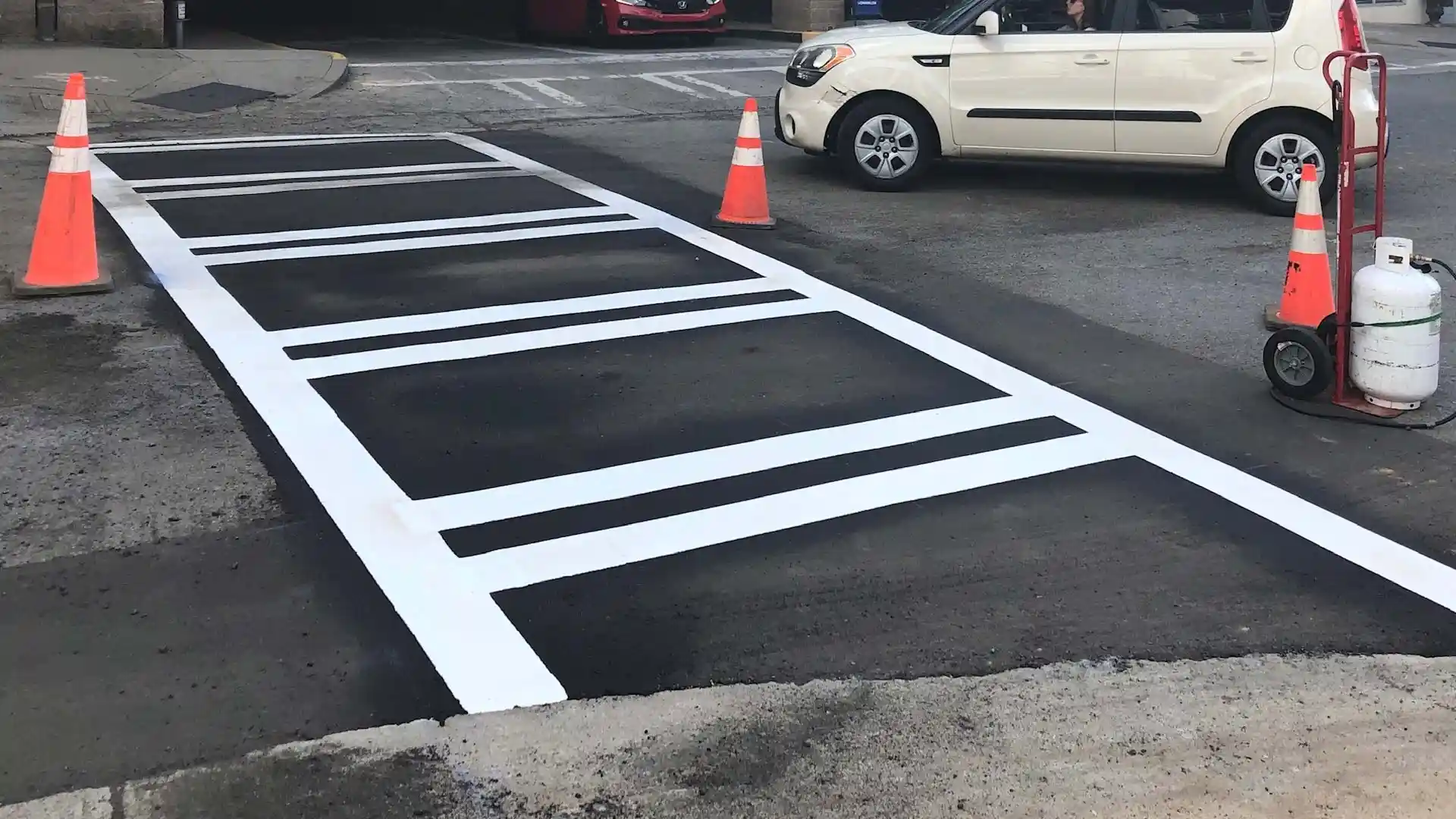
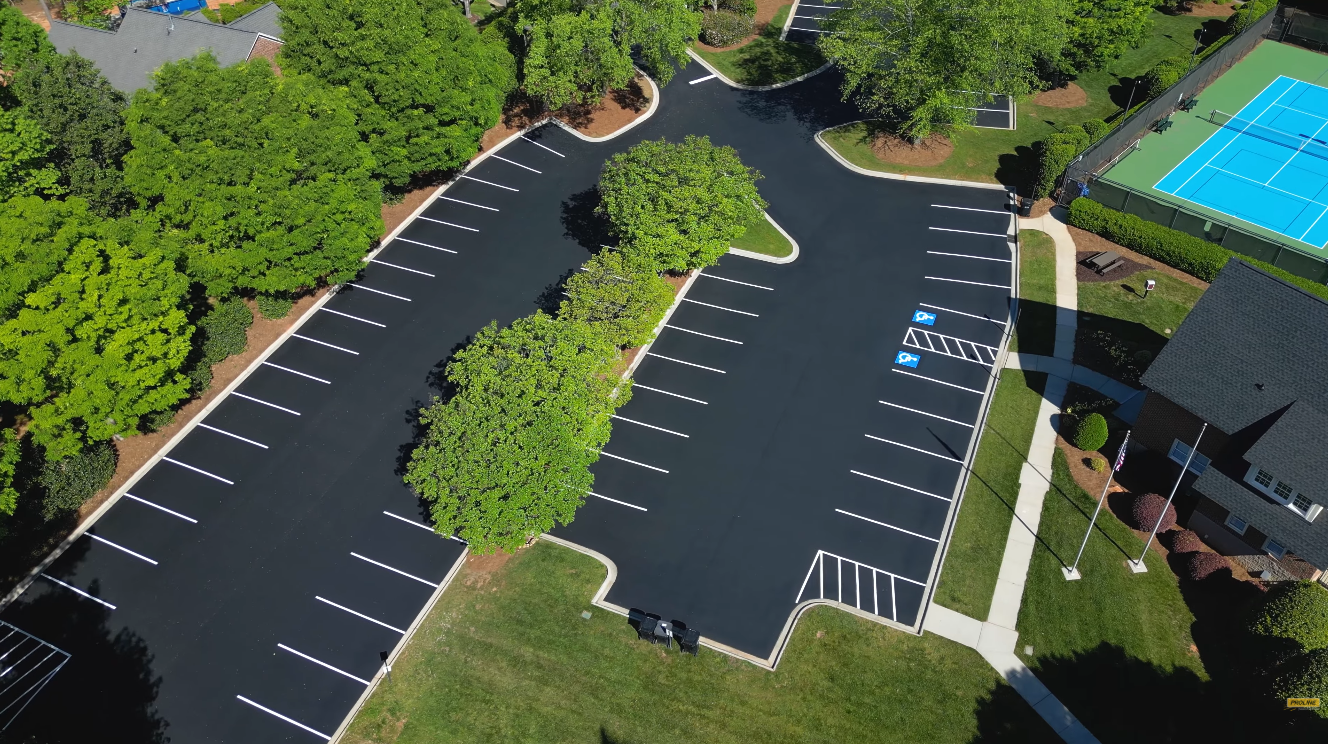
Professional line striping and markings work equally well on both surfaces. We provide comprehensive line striping services to enhance safety and aesthetics regardless of your chosen material.
Frequently Asked Questions About Concrete vs Asphalt Parking Lots
How Much Does It Cost to Repair a Concrete vs Asphalt Parking Lot?
Asphalt repairs typically cost $200-$500 per pothole for a professional patch. Seal coating runs $0.15-0.30 per square foot. Concrete repairs are significantly more expensive, often $500-$2,000 per damaged section, since matching the original concrete is difficult.
Can You Repair Asphalt Parking Lots in Winter?
Yes, but conditions matter. Asphalt cannot be properly installed when temperatures drop below 50°F because it won’t cure correctly. However, temporary repairs and sealant applications can be performed in winter if done carefully. Spring and fall are ideal for major asphalt work in Charlotte.
Is Concrete Always Better Than Asphalt?
Not necessarily. While concrete lasts longer, asphalt is often the better choice for businesses prioritizing budget and flexibility. The “better” material depends entirely on your timeline, maintenance commitment, and financial situation.
What Maintenance Do Asphalt Parking Lots Really Need?
Asphalt requires seal coating every 2-3 years, prompt pothole and crack repair, and regular cleaning. This ongoing care is essential to prevent water penetration and oxidation. Most Charlotte businesses find this maintenance schedule reasonable for the cost savings asphalt provides.
How Do I Know If My Parking Lot Should Be Replaced or Repaired?
If repairs exceed 30% of the cost of resurfacing, or if your lot is more than 15 years old (for asphalt) or 35+ years old (for concrete), replacement may be more economical. A professional inspection can help determine the best path forward.
Partner With Proline for Your Parking Lot Needs
Whether you choose concrete or asphalt, Proline Parking Lot Maintenance has the expertise to keep your Charlotte property in pristine condition. Our comprehensive services include seal coating, crack sealing, pothole repair, and line striping for both materials.
We understand the unique challenges Charlotte’s climate presents and can recommend the best maintenance approach for your specific situation.
Get Your Free Parking Lot Assessment Today
Ready to make the right decision for your parking lot? Contact Proline Parking Lot Maintenance today for a free evaluation and personalized recommendations.
Proline Parking Lot Maintenance
Charlotte, NC
Phone: 704-530-5366
Website: prolineplm.com
Let our experienced team help you choose and maintain the right parking lot surface for your business. Whether you need immediate repairs or long-term planning advice, we’re here to deliver superior service and results you can count on.