ADA Parking Lot Requirements: A Complete Compliance Guide for Property Owners
American Disabilities Act (ADA) compliance isn’t optional—it’s a legal requirement for any commercial parking lot open to the public. Federal law mandates specific parking spaces, access aisles, surface conditions, and signage for disabled visitors. Non-compliance exposes property owners to costly lawsuits, fines, and reputational damage. Yet many business owners and facility managers don’t fully understand what the ADA requires. This guide covers the essential requirements every parking lot owner should know to maintain compliance and provide safe, accessible parking for all customers.
What Is ADA Compliance for Parking Lots?
ADA parking lot compliance refers to adherence to accessibility standards established by the Americans with Disabilities Act of 1990. These standards ensure individuals with disabilities have equal access to parking facilities. The ADA requires specific numbers of accessible spaces, defined dimensions, surface quality, signage, and connecting pathways. Failure to comply can result in discrimination lawsuits, Department of Justice enforcement actions, and penalties exceeding $10,000 per violation.
How Many Accessible Parking Spaces Do You Need?
The number of required accessible spaces depends on total parking capacity. Here’s the ADA mandate:
| Total Parking Spaces | Minimum Accessible Spaces Required |
|---|---|
| 1-25 | 1 |
| 26-50 | 2 |
| 51-75 | 3 |
| 76-100 | 4 |
| 101-150 | 5 |
| 151-200 | 6 |
| 201-300 | 7 |
| 301-400 | 8 |
| 401-500 | 9 |
| 501-1000 | 2% of total |
| 1001+ | 20 + 1 for each 100 over 1000 |
Additionally, for lots with 7 or more accessible spaces, at least one must be a van-accessible space with an 8-foot access aisle (compared to 5-foot minimum for standard accessible spaces). Some jurisdictions require higher percentages, so check local regulations for your Charlotte-area property.
Accessible Space Dimensions and Surface Requirements
Space Dimensions
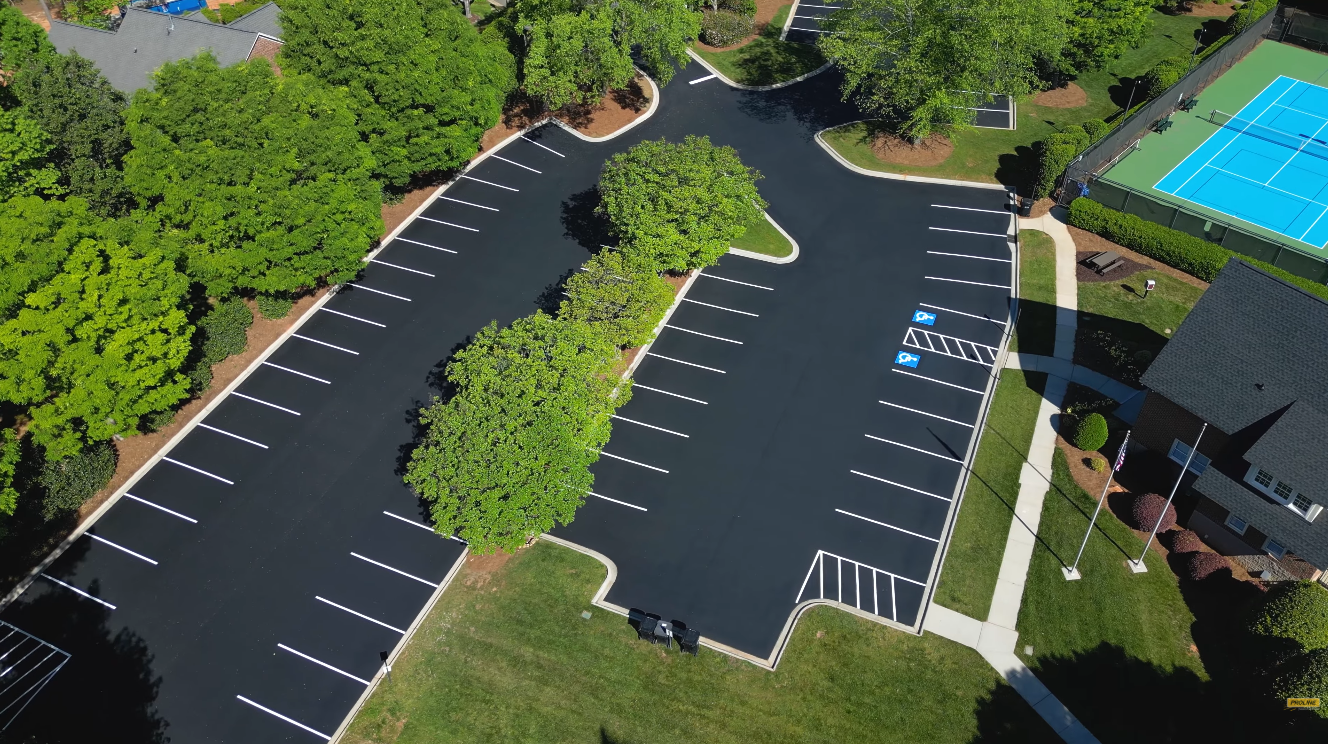
An accessible parking space must be a minimum of 96 inches (8 feet) wide. The space includes an adjacent access aisle of at least 60 inches (5 feet) wide. Van-accessible spaces require 96-inch spaces with 96-inch (8-foot) aisles, or 132-inch (11-foot) spaces with 60-inch aisles. The access aisle cannot be counted toward the parking space width—it’s entirely separate.
Surface Condition
This is where many parking lot owners fall short of ADA compliance. The ADA requires accessible spaces and aisles to have firm, stable, and slip-resistant surfaces. This means:
- No Potholes: Any surface deterioration that impedes wheelchair movement violates ADA standards.
- Minimal Slope: Maximum 1:48 slope (2% grade) in any direction. Steeper slopes require curb ramps.
- No Standing Water: Accessible areas must have good drainage to prevent puddles and water accumulation.
- Smooth Transition: No lips, gaps, or uneven transitions between parking surface and access aisles.
Properties with aging asphalt, visible cracking, or pothole issues in accessible spaces are in violation. Regular maintenance, including pothole repair, crack sealing, and sealcoating, helps maintain ADA compliance and prevents violations.
Signage and Marking Requirements
Accessible parking spaces must be clearly marked and signed. ADA requirements include:
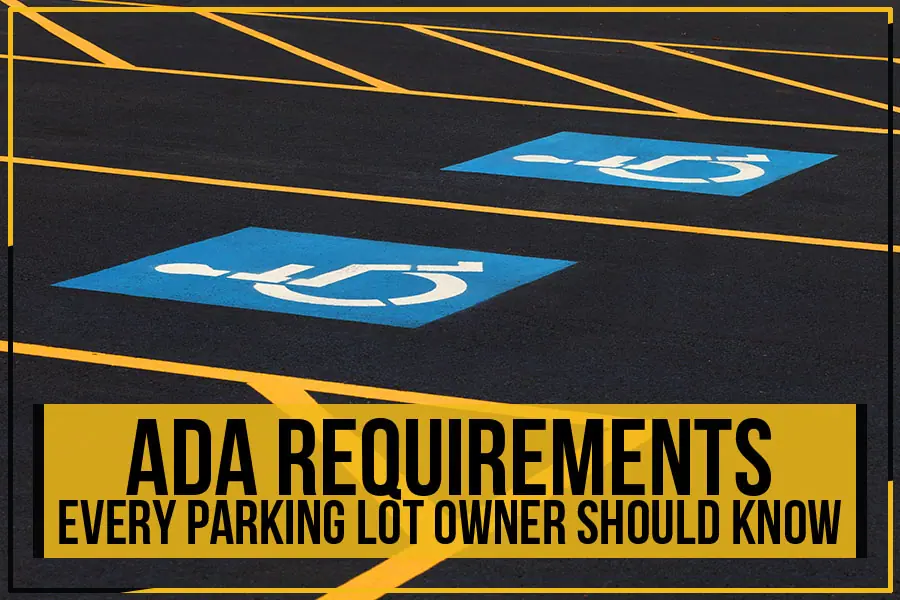
- International Symbol of Accessibility: A white wheelchair symbol on a blue background must be painted on the pavement within each accessible space.
- Vertical Sign: A blue sign with the wheelchair symbol must be mounted 60-96 inches above the ground at the head of the space (visible from approaching vehicles).
- Van-Accessible Designation: Van spaces require the standard sign plus text reading “VAN ACCESSIBLE.”
- No Parking in Aisles: Access aisles require yellow or white markings and “NO PARKING” text to prevent unauthorized parking.
Faded or missing symbols and signs are frequent violation points. Professional stenciling and pavement markings ensure your accessible spaces remain clearly designated and compliant.
Accessible Route Requirements
The path from accessible parking to the main entrance or facility must be accessible. Requirements include:
- A continuous, firm, stable route at least 36 inches wide.
- Maximum 1:20 slope (5% grade) for the main path; steeper slopes require handrails.
- Curb ramps at changes in elevation (maximum 1:12 slope, or 8.33% grade).
- No obstacles, barriers, or protruding objects.
- Adequate width for wheelchair passage (minimum 36 inches, preferably 48 inches for two-way traffic).
ADA Compliance for Different Parking Lot Types
Surface Parking Lots
Standard surface lots are most common for retail and office parks. Requirements apply as outlined above: correct number of spaces, dimensions, surface quality, and signage. Regular maintenance preserves compliance.
Multi-Level Garage Parking
Parking structures require the same proportion of accessible spaces but with added complexity: ramps between levels must meet ADA slope requirements, signage must be visible in enclosed structures, and lighting must be adequate. Surface condition standards apply equally to garage floors.
Valet Parking
Even when valet service is provided, facilities must have accessible spaces and accessible parking for vehicles being dropped off. Valet services cannot replace ADA compliance requirements.
Surface Deterioration and ADA Violations
One of the most common ADA violations is poor pavement condition in accessible spaces. Cracks, potholes, rutting, and uneven surfaces make it difficult or impossible for wheelchair users and people with mobility aids to access parking. A single pothole in an accessible space can trigger an ADA violation, and settlements in accessibility lawsuits average $10,000-$50,000.
Properties with aging asphalt are particularly vulnerable. Deterioration accelerates in high-traffic areas, and accessible spaces are typically near building entrances (high-traffic zones). Regular inspection and maintenance prevent violations:
- Monthly Inspections: Look for new potholes, cracks, or uneven areas in accessible spaces.
- Immediate Repairs: Any deterioration in accessible spaces should be prioritized and repaired immediately.
- Annual Sealcoating: Protective coatings prevent water infiltration that causes potholes.
- Crack Sealing: Prevents small cracks from becoming large holes.
Common ADA Violations and How to Fix Them
- Insufficient Spaces: If your lot grew and you now exceed the minimum ratio, add accessible spaces. Calculate the correct number and install signage and markings.
- Inadequate Aisle Width: If aisles are narrower than required, you cannot solve this by simply restriping. It may require removing standard spaces to create adequate aisles.
- Poor Surface Condition: Repair or replace deteriorated surfaces. Pothole repair, crack sealing, and sealcoating address most surface issues.
- Faded or Missing Markings: Repaint all accessible space symbols and refresh signage. Professional stenciling ensures compliance and longevity.
- Inaccessible Routes: If the path to your building isn’t accessible, you must install ramps or modify slopes to meet ADA requirements.
- Parking in Access Aisles: Ensure “NO PARKING” markings are visible. Consider physical barriers if necessary.
Consequences of Non-Compliance
ADA violations carry serious consequences:
- Private Right of Action: Individuals with disabilities can sue property owners directly. Average settlement: $15,000-$35,000.
- Department of Justice Enforcement: The DOJ can investigate and mandate corrections plus civil penalties.
- Title III Violations: Fines up to $10,000 for first violation, $25,000+ for subsequent violations.
- Remediation Costs: Correcting violations often costs thousands in repairs, signage, and professional assessment.
- Reputational Damage: ADA lawsuits are public records. Repeated violations damage community reputation.
ADA Parking Lot Compliance Checklist
- Correct number of accessible spaces for your lot size (per ADA table)
- At least one van-accessible space if seven or more accessible spaces exist
- Each space is 96 inches wide with 60-inch access aisle (or 132-inch space with 60-inch aisle)
- Van spaces have 96-inch aisles
- Pavement is smooth, firm, and stable with no potholes or gaps
- Maximum 2% slope in accessible spaces and aisles
- No standing water; adequate drainage throughout
- White wheelchair symbol stenciled in each space
- Blue vertical signs with wheelchair symbol at each space
- Van spaces marked “VAN ACCESSIBLE”
- Access aisles marked “NO PARKING” with yellow or white lines
- Accessible route to building entrance is minimum 36 inches wide
- Route slope not exceeding 5% maximum (steeper requires handrails)
- Curb ramps at elevation changes; maximum 1:12 slope
- No protruding objects or barriers in accessible areas
- Adequate lighting for accessible parking and routes
- All markings and signs are visible and maintained
Professional ADA Assessment and Remediation
If you’re uncertain about your lot’s ADA compliance, hire a professional assessment. Consultants experienced in ADA standards can identify violations and recommend remediation. Once violations are identified, address them systematically:
- Prioritize safety issues (trip hazards, surface deterioration)
- Address surface problems through professional maintenance and repair
- Refresh all markings and signage
- Document all work for liability protection
- Schedule regular compliance audits (annual minimum)
Frequently Asked Questions
Can existing parking lots be exempt from ADA requirements?
No. All parking facilities open to the public must comply with ADA requirements, even older facilities. Renovation or expansion may trigger alteration requirements, but existing facilities cannot be grandfathered in. However, compliance retrofit requirements must be “readily achievable” (feasible and not overly burdensome).
How often should accessible spaces be inspected?
Monthly inspections are recommended. High-traffic lots may need quarterly or even weekly spot-checks. Look specifically at accessible space surfaces, aisles, markings, and signage. Document all inspections and any repairs needed.
What’s the cost to remediate ADA violations?
Costs vary widely. Restriping and signage may cost $200-$500. Surface repairs (pothole fixes, sealcoating) can range from $1,000-$10,000+ depending on lot size and damage. Structural remediation (adding spaces, installing ramps) may cost significantly more. Prevention through regular maintenance is far cheaper than correcting violations.
What should I do if my lot currently isn’t ADA compliant?
Start immediately. Conduct a comprehensive assessment, prioritize violations, and develop a remediation timeline. Address surface deterioration first through professional repair. Update all markings and signage. Consult with an ADA compliance expert if needed. Document all efforts—this demonstrates good faith compliance efforts if a violation is later discovered.
Is regular maintenance enough to maintain ADA compliance?
Regular maintenance helps prevent surface violations but isn’t sufficient alone. You must also maintain proper markings, signage, and accessible routes. A comprehensive compliance program includes both preventive maintenance and ongoing monitoring.
Maintaining ADA Compliance Long-Term
ADA compliance is ongoing, not one-time. Establish a maintenance and monitoring program:
- Regular Inspections: Monthly walk-throughs of accessible spaces and routes.
- Preventive Maintenance: Crack sealing, sealcoating, and pothole repair prevent surface deterioration.
- Refreshed Markings: Professional stenciling ensures accessible space symbols and “NO PARKING” aisles remain visible.
- Documentation: Keep records of all inspections, maintenance, and repairs.
- Staff Training: Ensure parking staff understand accessible space rules and don’t allow encroachments.
- Annual Review: Have an expert review your lot annually to identify emerging issues.
Conclusion
ADA parking lot compliance is a legal obligation and a moral imperative. It ensures individuals with disabilities have equal access to your business. Non-compliance exposes you to lawsuits, fines, and reputational damage. Yet compliance is achievable through proper planning, regular maintenance, and attention to detail.
Start with a professional assessment if you’re uncertain about your current status. Address any violations systematically. Invest in regular maintenance to prevent surface deterioration in accessible spaces. Keep all markings and signage fresh and visible. Document your efforts. Make ADA compliance a core part of your parking lot management strategy.
For Charlotte-area property owners and facility managers, Proline Parking Lot Maintenance specializes in ADA compliance work. We conduct assessments, repair surface defects, and maintain visible markings and signage. Whether you need pothole repair, surface restoration, or professional stenciling to bring accessible spaces back to ADA standards, we have the expertise and equipment. Call Proline at 704-530-5366 or visit prolineplm.com to schedule your ADA compliance assessment today.