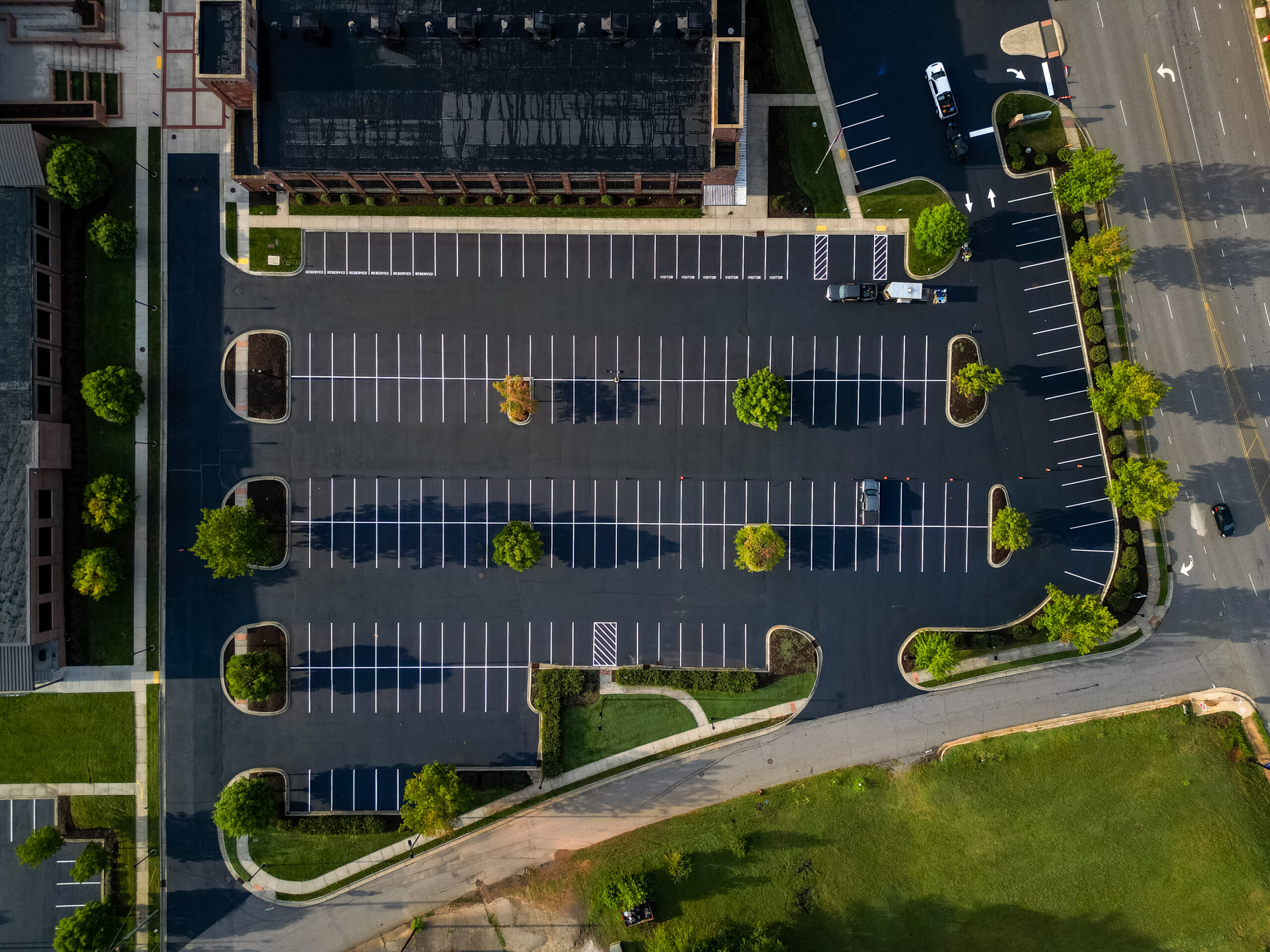

A parking lot should be considered for resurfacing when its condition and supporting structure make that treatment appropriate. Age alone does not determine the right interval. Construction, traffic, drainage, weather, and previous repairs all affect how the pavement performs.
Resurfacing, sealcoating, and reconstruction are different
Resurfacing generally adds a new asphalt wearing surface, sometimes after milling the existing surface. Sealcoating is a thinner protective surface treatment for suitable asphalt. Reconstruction removes and rebuilds failed pavement layers where more extensive work is needed.
These methods are not interchangeable. Sealcoating cannot repair a failed base, and an overlay cannot reliably resolve every structural or drainage problem without additional work.
Signs that call for a pavement assessment
- Widespread cracking or repeated potholes.
- Depressions, rutting, settlement, or areas that hold water.
- Surface wear that is progressing across large areas.
- Repairs that repeatedly fail in the same location.
- Changes in vehicle loading or how the lot is used.
Record these conditions and their locations. A professional assessment can determine whether localized repairs, resurfacing, or a broader rehabilitation plan is appropriate.
Check what an overlay would affect
Adding pavement changes elevations. Review drainage, curb exposure, entrances, utility covers, accessible parking, and pedestrian routes. Milling or other preparation may be needed to maintain the intended grades and transitions.
Where the supporting layers are uncertain, further investigation may be required before selecting an overlay. Treat visible condition as evidence to assess, not a guarantee of what lies beneath it.
Plan the work around property access
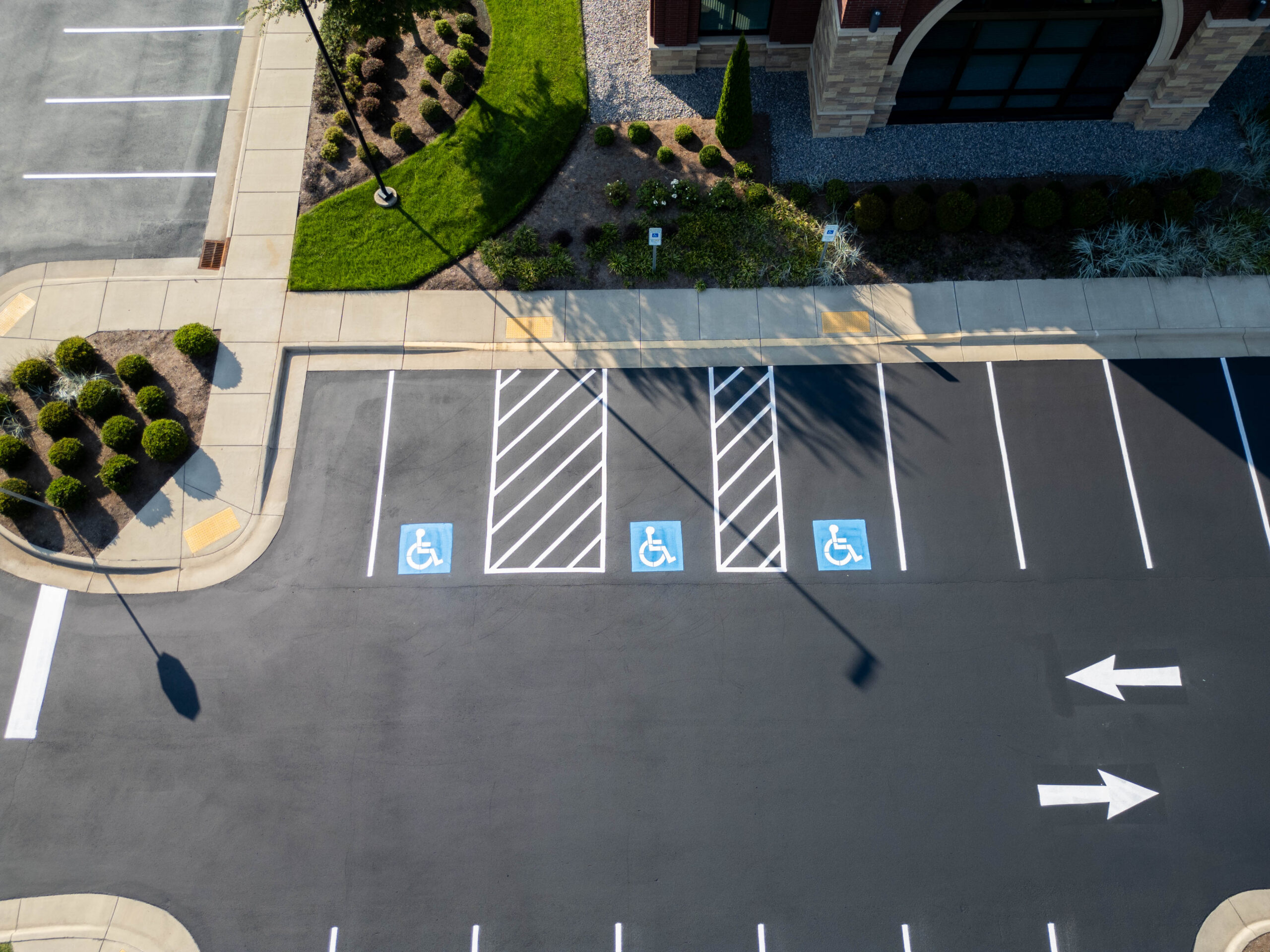
Identify temporary parking, pedestrian routes, emergency access, deliveries, and any phased closures. Coordinate the work sequence and reopening conditions with the contractor. Include restoration of affected markings and review any required layout changes before painting.
Keep future decisions condition-based
Routine inspections, drainage care, suitable crack treatment, and timely repairs help management track the lot’s needs. They do not establish a guaranteed resurfacing date. Update the plan when inspections reveal a material change in condition.
Contact ProLine to discuss an assessment and the pavement work your property may need.