
Wheel stops help position parked vehicles and limit overhang into nearby areas. Whether a particular space needs one depends on its approved layout, adjacent walkways, landscaping, and applicable local requirements. A wheel stop is one part of the design; it does not make a parking space accessible by itself.
Start with the property’s approved plan
Before adding or removing wheel stops, review the site plan and ask the local permitting authority which requirements apply to the property. Existing approvals, proposed layout changes, and the relationship between parking spaces and pedestrian routes all matter. A general article cannot establish the requirement for every Charlotte parking lot.
Map the space boundaries, curbs, building entrances, drainage paths, and vehicle overhang. A stop that is too close to a walkway may still allow a bumper to obstruct it. A stop placed too far into a space can push the parked vehicle into a drive aisle.
Protect accessible routes
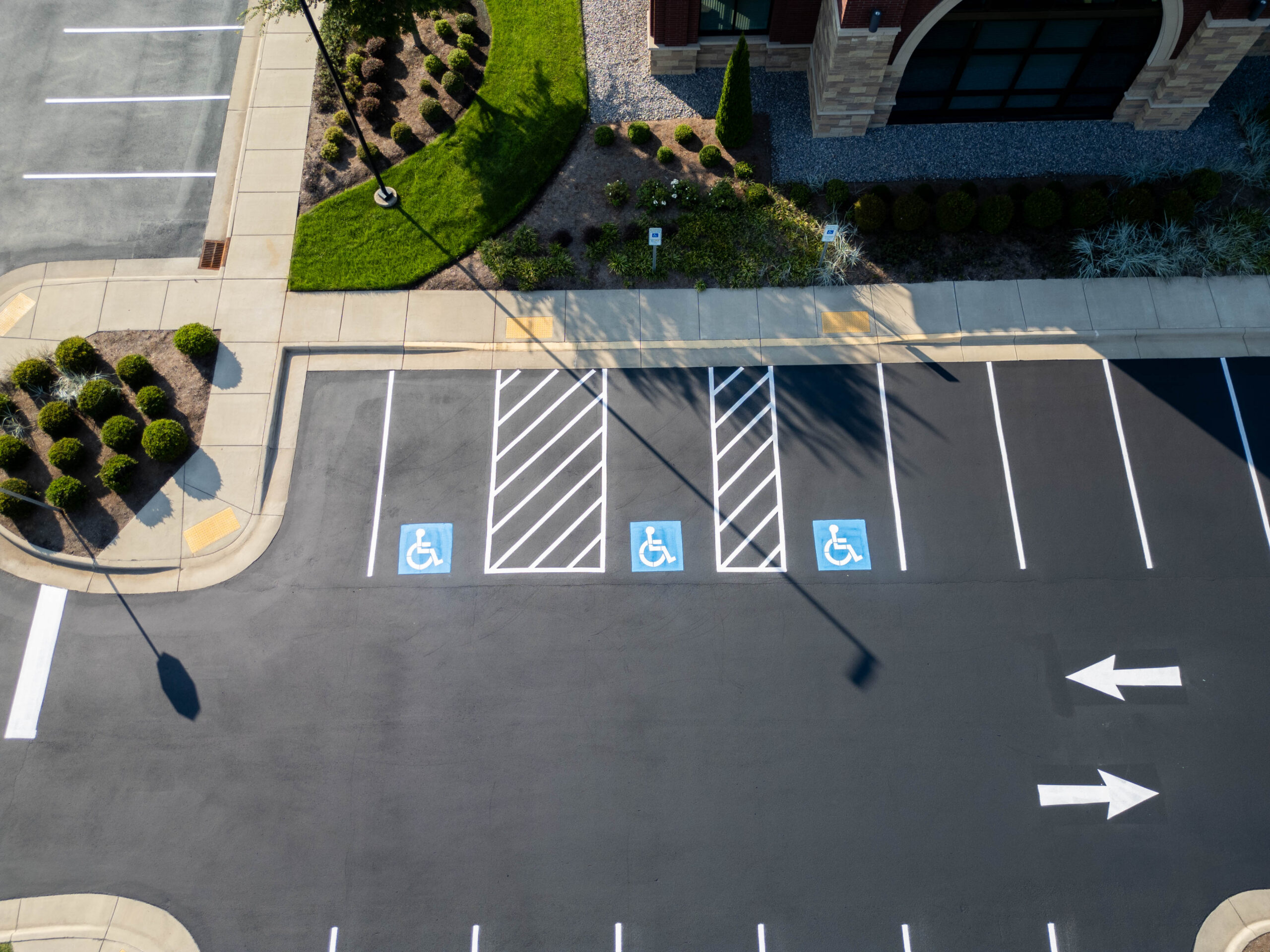
The U.S. Access Board explains that wheel stops can help keep vehicle overhang from reducing the clear width of an accessible route. Their location must also avoid creating an obstruction for people walking or using mobility devices. Keep access aisles clear and coordinate stops with the complete accessible parking layout. See the Access Board’s parking guidance for the underlying accessibility provisions.
Choose a material suited to the site
Concrete stops are heavy and need suitable handling and anchoring. Rubber and plastic products are available in different profiles and anchoring systems. Compare the manufacturer’s load rating, dimensions, visibility features, fastener requirements, and compatibility with the pavement. Material alone does not establish service life.
Follow the product’s installation instructions. Anchor type and depth depend on the stop and supporting surface, and placement should account for the vehicles that actually use the lot. Do not use one universal setback or fastener specification for every installation.
Inspect after installation
Look for movement, damaged anchors, cracking, worn visibility markings, and water collecting around the stop. Recheck alignment after a vehicle impact or nearby pavement work. Repair or replace damaged units and keep walking routes clear during maintenance.
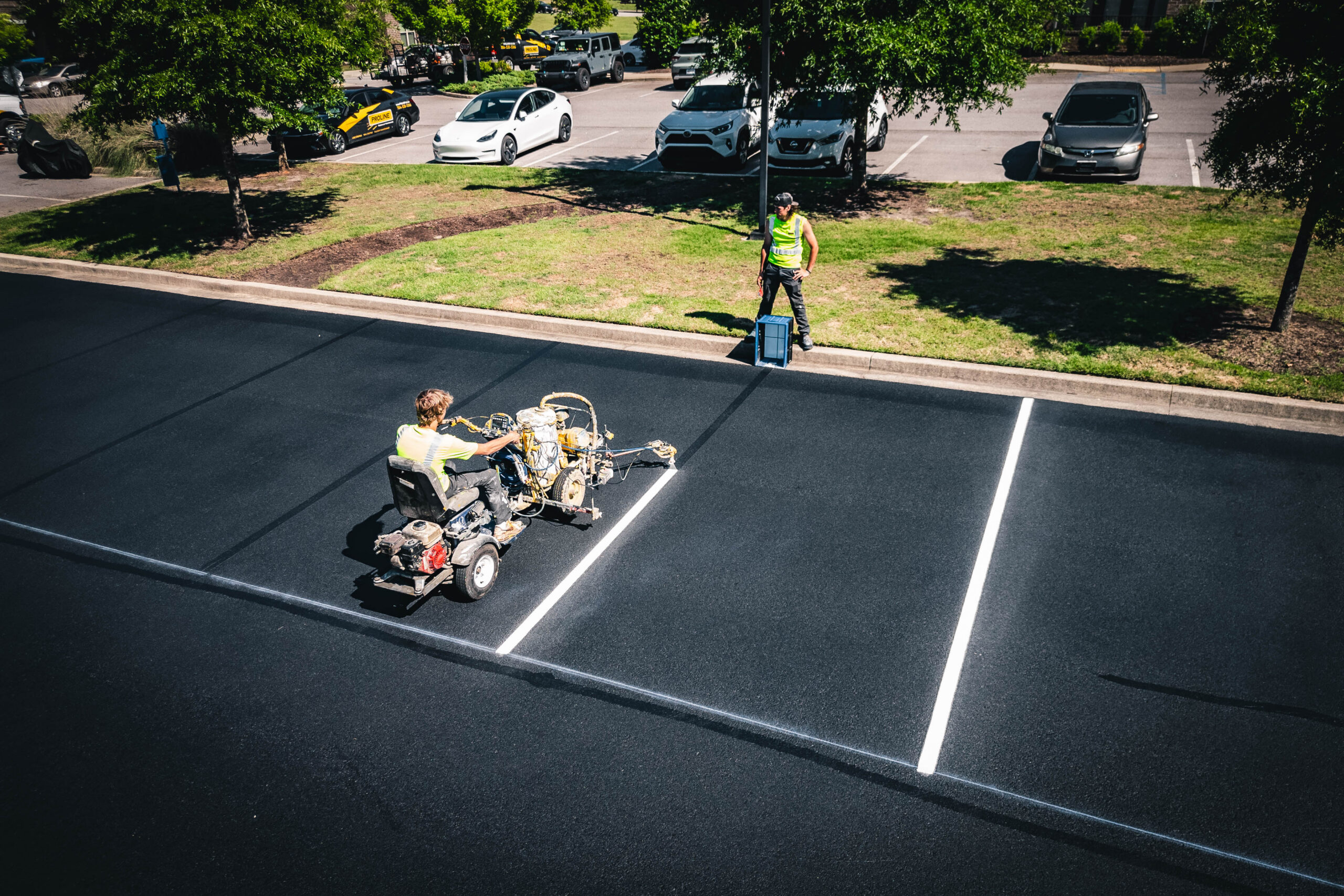
When restriping or repairing pavement, review wheel stop locations before the new layout is installed. Coordinating these tasks helps avoid conflicting markings and misplaced barriers.
Related parking lot services
For help planning maintenance for your property, contact Proline Parking Lot Maintenance at 704-530-5366.