Proline Parking Lot Maintenance

When Are Wheel Stops Required? Parking Lot Rules in Charlotte, NC

Meet the Author

Daniel Wright, CEO of Proline since 2016, embodies the company’s core value of “Do the Right Thing Always.” From single-handedly sealcoating a massive lot in 2019 to leading with integrity and grit, he’s driven by hard work, fall days, and the motivation of “Higher” by Eminem.

Table of Contents

Empty parking lot with utility vehicles.

When Are Wheel Stops Required? Parking Lot Rules in Charlotte, NC

Wheel stops are those concrete or rubber barriers you find at the front of parking spaces. Many property owners wonder if they’re legally required or just a design choice. In Charlotte, NC, the answer involves federal ADA guidelines, state regulations, and local codes that work together to establish parking lot standards.

Federal ADA Requirements for Wheel Stops

The Americans with Disabilities Act (ADA) is the primary federal law governing parking lot accessibility. However, the ADA doesn’t specifically require wheel stops—instead, it requires safely designed parking spaces and access aisles.

ADA Parking Space Standards

The ADA mandates specific dimensions for accessible parking spaces: 8 feet wide minimum (11 feet with adjacent access aisle). Accessible spaces must be level with slopes not exceeding 1:48 (about 2% grade).

These requirements ensure wheelchair users can safely access vehicles and navigate parking areas. Wheel stops themselves aren’t mandatory under ADA—but clear, accessible space dimensions are non-negotiable.

When Wheel Stops Support ADA Compliance

While not required, wheel stops help maintain ADA-compliant space dimensions by preventing vehicles from extending into access aisles. A wheel stop protects the accessibility zone from encroachment by vehicles parked in adjacent spaces.

For parking lots with tight spacing, wheel stops become a practical tool for maintaining accessible space integrity over time.

North Carolina State Parking Lot Regulations

North Carolina doesn’t have a statewide mandate requiring wheel stops in all parking areas. Instead, the state defers to local jurisdictions and industry standards for specific requirements.

N.C. General Statutes and Parking Standards

North Carolina parking codes focus on safe design and maintenance rather than specific barrier requirements. The state requires parking lots to be properly maintained, marked, and safe for vehicle and pedestrian use.

Wheel stops fall into the broader category of safety features that enhance lot usability, but aren’t universally mandated at the state level.

Deference to Local Codes

North Carolina allows municipalities to establish parking standards tailored to local needs. Charlotte has its own code requirements that may differ from other NC cities, making local ordinances the critical document for property owners.

Charlotte’s Local Parking Lot Code Requirements

Charlotte’s Development Standards include specific parking lot design requirements outlined in the Charlotte Land Development Code (CLaDCO). These standards determine when wheel stops are required in your lot.

CLaDCO Parking Space Design Standards

Charlotte requires parking spaces in commercial areas to be minimum 9 feet wide by 18 feet long (residential: 8 feet by 16 feet). Properly sized spaces make wheel stops optional in many cases.

However, CLaDCO recommends wheel stops in high-density parking areas where space is limited or where protecting landscaping and pedestrian areas is necessary.

When Charlotte Requires Wheel Stops

Wheel stops become required in Charlotte when parking spaces directly face buildings, landscaped areas, or pedestrian pathways. They also become mandatory in accessible parking zones where ADA space integrity must be protected.

Parking directly adjacent to storefronts requires wheel stops to prevent vehicles from damaging building facades. Lots with landscaping, hardscape features, or decorative elements usually require stops to protect these investments.

Charlotte Zoning and Lot Design Review

Property owners planning new parking lots or major renovations must submit designs to Charlotte’s Development Services for approval. The review process evaluates whether wheel stops are appropriate for your specific lot configuration.

Existing lots may not face requirements if they were approved under previous standards, but adding new parking areas or significantly redesigning the lot triggers current code review.

Types of Wheel Stops: Materials and Options

When wheel stops are required, property owners have several material options with different durability, cost, and maintenance characteristics.

Concrete Wheel Stops

Concrete is the most durable and cost-effective wheel stop material. These barriers last 15-25 years with minimal maintenance and can be painted and marked for visibility and safety.

Drawbacks include potential cracking in Charlotte’s freeze-thaw cycles and the difficulty of removing damaged stops. Concrete is heavy and requires professional installation.

Cost: $75-150 per stop installed.

Rubber Wheel Stops

Recycled rubber wheel stops are more forgiving than concrete and provide better shock absorption for vehicles. They’re lighter, easier to install, and don’t damage bumpers as severely.

Rubber stops last 8-12 years and can be removed and replaced relatively easily. They perform well in Charlotte’s climate with less freeze-thaw cracking risk.

Disadvantage: Requires more frequent replacement than concrete and provides less visual durability aesthetic.

Cost: $40-100 per stop installed.

Plastic Wheel Stops

Plastic wheel stops are the most affordable option and easy to install, making them popular for properties with tight budgets. These barriers are lightweight and can be relocated if lot layout changes.

Durability is the tradeoff—plastic stops typically last 3-5 years before degrading from UV exposure and vehicle impact. Charlotte’s intense summer sun accelerates plastic degradation.

Cost: $20-50 per stop.

Angle-Iron or Metal Stops

Steel or angle-iron wheel stops provide durability comparable to concrete but with easier installation and removal. These stops are heavy-duty and excellent for high-traffic lots.

Maintenance includes occasional painting to prevent rust. In Charlotte’s humid climate, rust prevention is essential for long-term performance.

Cost: $60-120 per stop.

Installation Best Practices for Wheel Stops

Proper installation ensures wheel stops function safely and last their design lifespan. Professional installation matters more than material choice.

Foundation and Anchoring

Concrete wheel stops require proper anchoring to prevent sliding or tipping under vehicle impact. Professional installers embed stops 3-4 inches into asphalt or concrete with appropriate fasteners.

Improper anchoring causes stops to shift, creating safety hazards and uneven surfaces that accelerate vehicle damage.

Positioning and Alignment

Stops should be positioned 6 inches from the end of the parking space, leaving room for wheel contact without excessive overhang. Improper positioning causes vehicles to either overhang dangerously or park too far back, wasting lot capacity.

Stops must be parallel to parking space lines for proper functionality and appearance.

Visibility and Safety Markings

Wheel stops should be painted in contrasting colors (typically white or yellow) to enhance visibility. Night visibility is critical for preventing accidents and injuries.

Many municipalities recommend retro-reflective paint or stenciled warnings (“STOP” or similar) to ensure drivers notice stops in low-light conditions.

Drainage Considerations

Wheel stops shouldn’t obstruct parking lot drainage. Proper site grading directs water around stops, preventing pooling that leads to vehicle damage and pothole formation.

ADA Compliance and Accessible Parking

Wheel stops play an important role in protecting accessible parking space integrity, which is critical for ADA compliance.

Protecting Accessible Space Dimensions

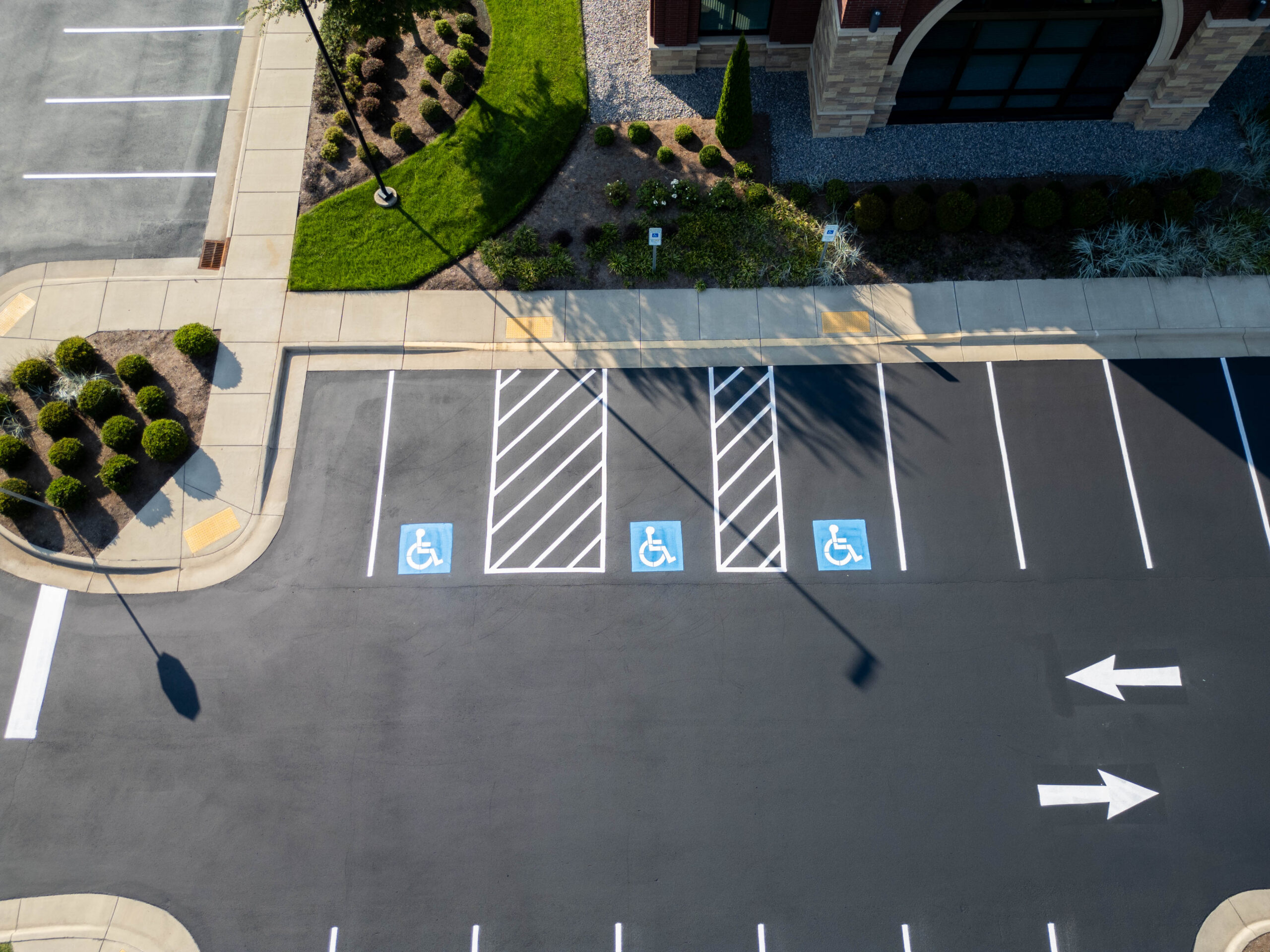
Accessible parking spaces require adjacent 5-foot access aisles where wheelchair lifts and ramps deploy. Wheel stops on adjacent spaces prevent vehicles from encroaching into these critical safety zones.

Violations of accessible space dimensions can result in ADA lawsuits and substantial penalties. Wheel stops are a practical protection against accidental encroachment.

Accessible Space Signage and Markings

Accessible spaces must be clearly marked with blue pavement stencils and poles displaying the International Symbol of Accessibility. Wheel stops in accessible spaces should be painted for visibility and marked “ACCESSIBLE ONLY” to discourage non-disabled parking.

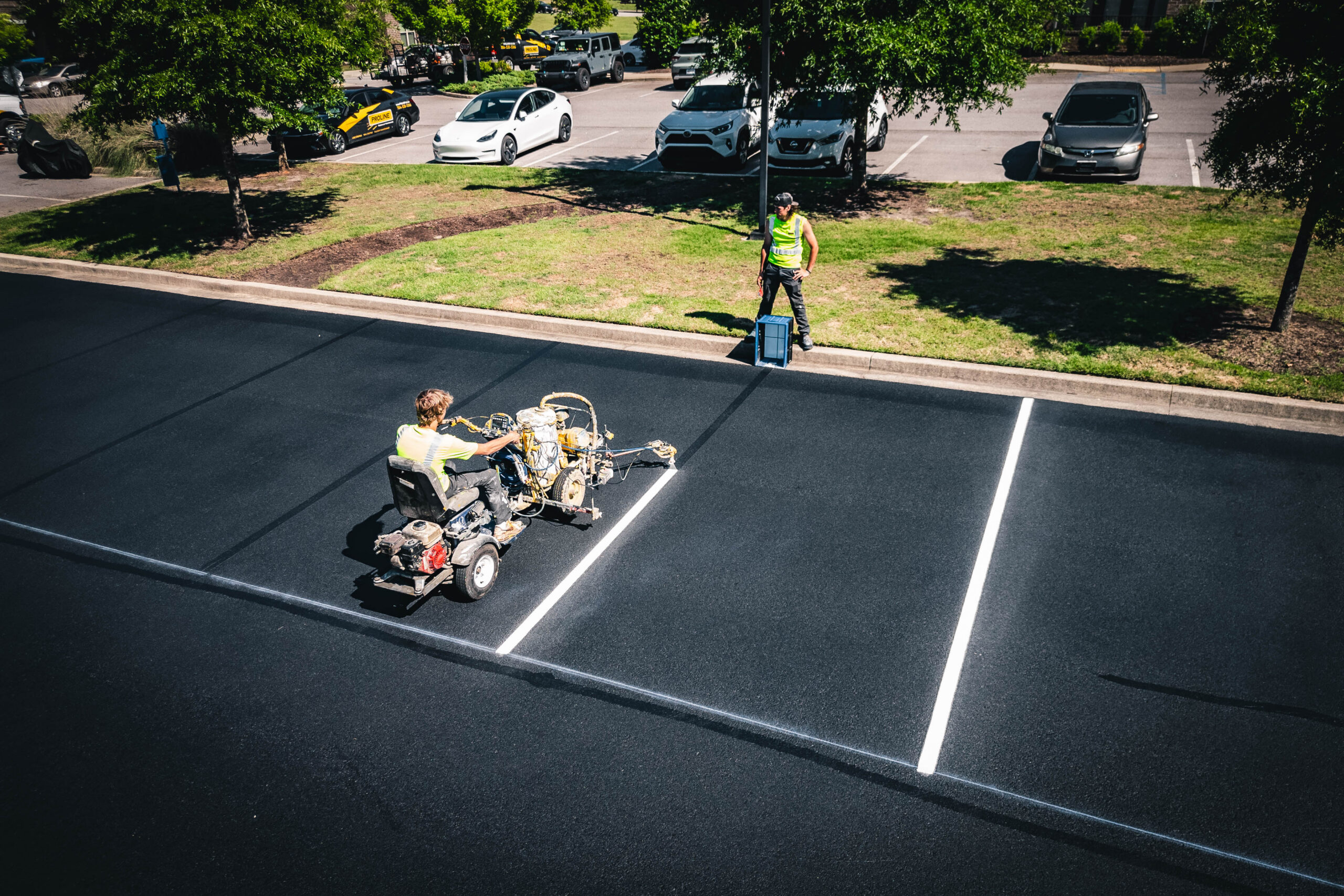
Professional stenciling and marking services ensure accessibility markings meet ADA requirements.

Surface Compliance in Accessible Areas

Accessible parking and access aisles must have stable, firm surfaces without tripping hazards. Wheel stops must be installed without creating uneven surfaces or trip points for wheelchair users.

Liability Considerations and Risk Management

Wheel stops affect liability in subtle but important ways that property owners should understand.

Duty to Warn and Protect

Property owners have a duty to maintain safe parking areas and warn of hazards. Absent wheel stops where they’re expected (like in front of storefronts), property owners may be liable if vehicles damage buildings or injure pedestrians.

Including wheel stops where appropriate demonstrates reasonable care and protective intent, reducing liability exposure.

ADA Violation Risks

Failing to protect accessible parking spaces with appropriate barriers creates ADA violations. The DOJ and private parties can sue for damages, attorney fees, and penalties.

Proper wheel stop installation shows good-faith compliance with accessibility requirements.

Vehicle Damage Claims

Improperly installed or missing wheel stops can lead to vehicle damage claims from drivers who hit hidden barriers or strike vehicles parked beyond stops. Documentation of proper installation and maintenance protects against these disputes.

Maintenance and Replacement Schedule

Once installed, wheel stops require periodic inspection and maintenance to ensure continued safety and durability.

Quarterly Inspection Protocol

Inspect wheel stops four times yearly for cracking, shifting, rust, or deterioration. Early detection of problems prevents safety hazards and allows planned replacement rather than emergency repairs.

Check paint condition and visibility—faded or damaged markings should be refreshed annually.

Concrete Stop Maintenance

Concrete stops may crack in freeze-thaw cycles or from vehicle impact. Small cracks can be sealed to prevent water infiltration. Stops with structural damage should be replaced rather than repaired.

Rubber and Plastic Stop Care

UV degradation is the primary concern for rubber and plastic stops. Inspect for soft spots, brittle sections, or loss of structural integrity. Replace stops showing significant wear before they fail.

Coordinating with Sealcoating

When scheduling parking lot sealcoating, plan to refresh wheel stop markings and replace any deteriorated stops. Timing sealcoating with stop maintenance creates a comprehensive lot refresh that enhances both safety and appearance.

Comparing Requirements Across Charlotte Parking Types

Parking Type Charlotte Code Wheel Stops Required Primary Purpose Recommended Frequency
Commercial (Front Storefronts) CLaDCO Section 6.506 Usually Required Protect building facades Every 10-15 years (concrete)
Retail Centers CLaDCO Section 6.506 Recommended Organize spaces & protect landscaping Every 8-12 years (rubber)
Residential Complexes CLaDCO Section 6.506 Optional Space management (if used) Every 5-8 years
Accessible Parking ADA Guidelines Highly Recommended Protect access aisles Every 10-15 years
Surface Lots (No Building) CLaDCO Section 6.506 Optional Lot organization (if used) Every 8-12 years

Frequently Asked Questions

Are wheel stops required in Charlotte residential parking?

Residential parking lot codes in Charlotte don’t mandate wheel stops, making them optional. However, if you use them for space organization or protection, they must be properly installed and maintained.

Can I remove wheel stops to increase lot capacity?

If your parking lot design required stops for code compliance (accessible spaces, building protection, etc.), removal may violate Charlotte code and create liability. Consult your lot’s original approval and Charlotte Development Services before making changes.

Do I need wheel stops if I have proper parking space lines?

Parking lines alone don’t provide physical protection for buildings, landscaping, or accessible space integrity. While sometimes sufficient, wheel stops add another layer of safety and enforcement that Charlotte codes often recommend.

What’s the cost to install new wheel stops on a typical lot?

Installation cost depends on material choice (concrete $75-150/stop, rubber $40-100/stop, plastic $20-50/stop) and lot size. A 50-space lot with concrete stops costs $3,750-7,500 installed. This investment protects your property for 10-15 years.

How do wheel stops relate to parking lot striping requirements?

Stops and lines work together to organize and define spaces. Proper striping combined with stops creates clear, safe parking areas. When renovating your lot, coordinate stops with fresh line striping and pavement markings for maximum clarity.

Take Action on Parking Lot Safety

Whether wheel stops are required in your specific Charlotte parking lot depends on multiple factors: lot configuration, building proximity, ADA requirements, and local code provisions. The safest approach is professional assessment of your individual property.

Proline Parking Lot Maintenance provides expert guidance on Charlotte parking code compliance, including wheel stop requirements, proper installation, and coordinated lot maintenance including sealcoating, striping, and pavement markings.

Schedule a free parking lot compliance review with our team to determine your specific requirements and develop a maintenance plan that keeps your lot safe, compliant, and professional.

Call: 704-530-5366 | Visit: prolineplm.com

Request a Quote

Please complete the form below for a free no-obligation quote for your project.

Our Location

7473-D Hagers Hollow Drive, Denver, NC 28037

Email

Request a Quote

Please complete the form below for a free no-obligation quote for your project.