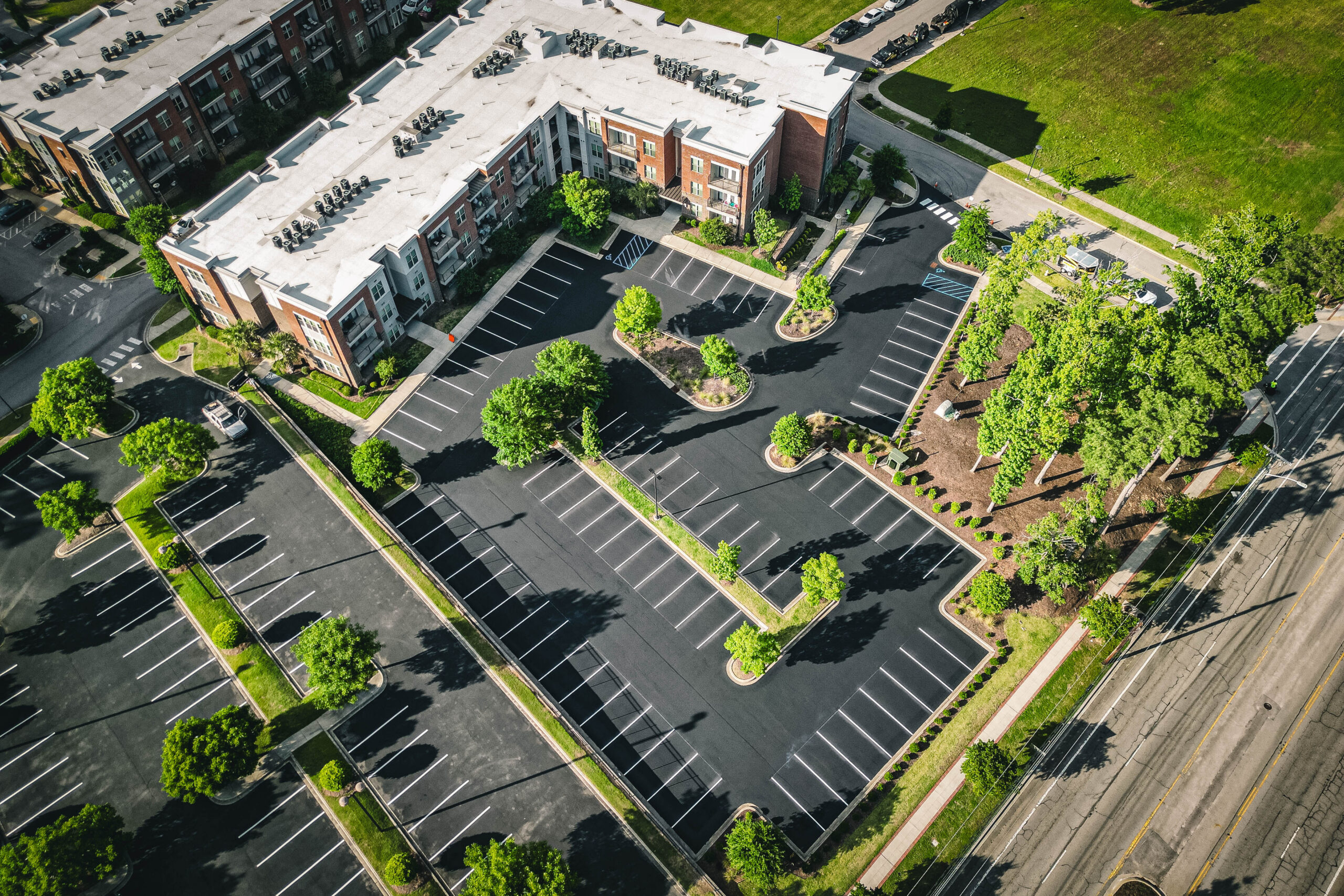
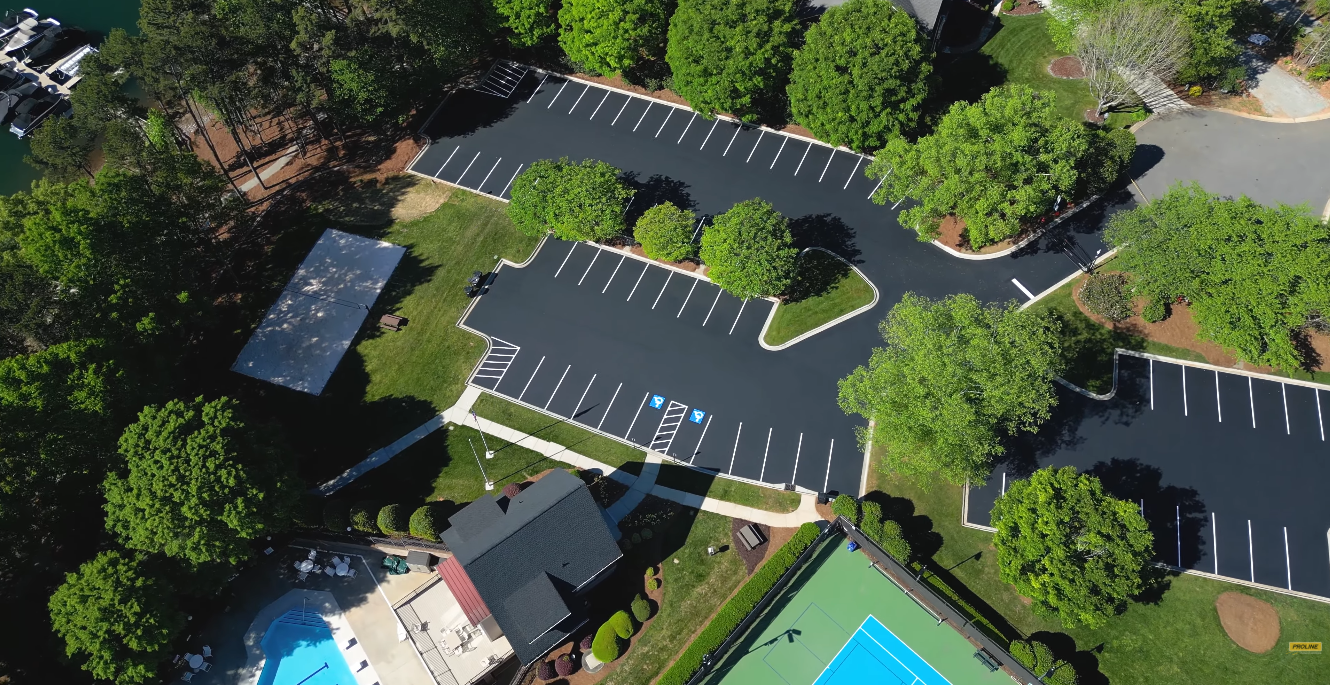
The NCDOT tells their crews to only apply the paint when both air and pavement temps are at 40°F and rising. In one recent winter the NC State Climate Office reported a statewide average from Dec to Feb of 41.6°F. So we’re talking about Carolina winters that are pretty much right at the edge of what paint can cope with. We stripe apartment communities all over North and South Carolina and in a number of other states for ProLine Parking Lot Maintenance, and the question we get from the managers every January is, ‘Do you stripe at all?’ ‘The straight answer is ‘yes for some lines and some days and no for the rest.’ This guide will show you precisely how we make that decision.
The Short Answer
You can repaint the faded parking lines in winter provided three things line up: the temperature is above the paint’s minimum, the pavement is dry and clean, and the forecast allows the paint time to cure. You should also repaint the right lines first. The fire lanes, accessible stalls, stop bars, and entrance arrows can’t wait for spring, but a full lot restripe for the sake of appearance usually can. Keep in mind that federal and local accessibility regulations may require accessible stalls to be freshly marked and fully visible at all times. Check your jurisdiction’s requirements to make sure you stay in compliance when scheduling winter painting for these areas.
NCDOT’s training manual states that paint in NC lasts about two years (depending on traffic and how often the plows run). If your lines are more than two years old, then winter wear has almost certainly pushed them past the point where the public can see them.
What the Temperature Rules Actually Say
Each marking material has its own minimum. The Texas Department of Transportation has its minimum air and pavement surface temperatures listed as follows: 40F for water-based paint, 35F for epoxy, 35F for methyl methacrylate, and 55F for thermoplastic. Standard apartment lot paint is in the first group.
Low-temp paint changes the game. CDOT will allow low-temperature waterborne paint at 35°F and above, but only if the temperature is expected to remain at or above 35°F for a minimum of 24 hours. INDOT uses a similar 35°F and rising rule for their cold temperature waterborne paint. We take the 24-hour rule for every winter job as a matter of course, as a freeze that hits an hour after we’ve painted can completely kill the bond.
Moisture and Dirt Matter More Than the Thermometer
A warm afternoon is of no use if the pavement is damp. The Texas DOT manual makes it quite clear that moisture on the surface is likely to result in a poor bond between the marking and the pavement and that an unclean surface is the principal cause of debonding. The Kansas DOT specification likewise prohibits painting on damp or frosted surfaces.
Carolina lots create their own moisture problems. The stalls on the north side of the building stay frosty long after the sun gets to the center of the lot. Leaf litter, sand from the storm response, and salt residue all remain. We sweep or blow every line prior to painting and will simply skip any area that still has frost or damp patches.
Which Faded Lines to Repaint Now and Which to Hold
Use the table to sort your lines by urgency.
| Line Type | Repaint in Winter? | Why | What We Require |
| Fire lane curbs and markings | Yes, on the first workable day | Emergency access depends on them | Dry curb face, paint minimum met |
| Accessible stalls, access aisles, and symbols | Yes | Residents with disabilities need clear spaces; confirm local requirements with your code official | Dry pavement, matching the existing layout |
| Stop bars, crosswalks, and entrance arrows | Yes | Collision risk rises where drivers cannot see them | Temperature rising, no rain forecast |
| Faded stall lines that remain partly visible | Usually wait | The risk is low, and spring weather gives a better bond | Reassess after the next inspection |
| Full-lot restripe or new layout | Wait until spring | Needs several dry days and finished repairs | Patches and sealcoat complete first |
| Lines over fresh patches or open cracks | Wait | New asphalt and cracks need repair before paint | Repair, then restripe |
How We Find a Painting Window in the Carolinas
We don’t do winter striping by the calendar. We’re looking for a window with a dry surface and a stable temperature.
In the Charlotte area and the Triad, winter days often creep above 50 in the daytime even after a frosty morning. We start painting when the pavement temp hits the minimum, and we stop when it starts to come down in the afternoon. In the mountains around Asheville and Boone, the windows come less frequently, so we’ll hold the paint for the fire lanes and accessible stalls until we get a decent stretch of mild weather. Down near the coast, we’re more focused on moisture, as the humidity and fog will keep the pavement damp even if the temp looks okay.
If your property is outside the Carolinas, be aware that winter conditions and timing can vary significantly by region. Property managers in other states should consult with a qualified local contractor who understands the temperature, moisture, and material requirements for their specific area.
Our Go or No-Go Checklist Before We Paint
On the morning of a winter striping job, we confirm each of the following:
- Air and pavement temperature: Both meet the paint’s minimum and trend upward
- Forecast: No freeze or rain is expected during the paint’s drying period
- Surface: Pavement is dry, clean, and free of frost
- Wind: Gusts do not blow overspray onto cars or ruin the line edge
- Existing layout: We have photos and measurements of the old lines to match
- Traffic control: We have barricades or cones to keep vehicles off the wet paint
If anything fails, we just stop and reschedule rather than paint a line that’s going to peel.
Protect Winter Paint From Plows and Freeze-Thaw Cycles
Fresh lines have two winter enemies. One is a plow. We’ve got a guide on how snowplow blades can actually scrape the parking lines right off the pavement at apartment complexes, and we’d recommend you pass that on to your snow contractor prior to the storm. Make sure your snow contractor knows to keep blades slightly raised when plowing newly striped areas, avoid using metal blades if possible, and plow in the direction of the lines to reduce the risk of tearing up fresh paint. Ask them to use rubber or polyurethane blade edges when available and to avoid piling snow directly on freshly painted zones. The other is the freeze/thaw cycle. We look at that in why parking lot markings can crack after a number of freeze/thaw cycles. If cracks run right through a line, then we’d recommend repairing the pavement first, as the paint won’t adhere over a moving crack.
Repaint With Purpose, Not by the Calendar
You can do winter repaints on the faded parking lines where the temp, the moisture, and the forecast all work in your favor. You should start with the safety lines. Cosmetic restriping, new layouts, and lines over fresh repairs all go in the spring. Get in touch with ProLine Parking Lot Maintenance, and we’ll come out and inspect your lot, prioritize your faded lines, and then schedule the winter work for the first window that meets the conditions.
Plan the Right Time to Repaint Faded Apartment Parking Lines
Faded parking lines can create confusion for residents and make apartment parking lots harder to navigate during winter. However, freezing temperatures, moisture, and unsuitable pavement conditions can prevent traffic paint from curing and adhering properly. ProLine Parking Lot Maintenance helps apartment property managers plan professional parking lot restriping based on weather conditions and pavement readiness. Contact our team to discuss your parking lot marking needs and prepare your property for clear, visible parking lines when conditions allow.
Contact UsFrequently Asked Questions
How soon can residents park on freshly painted lines in winter?
Water-based paint dries to a no-track in a very short time, and NCDOT’s manual gives a typical no-track time of one to two minutes based on air and pavement temperature. Cold, damp, or windy conditions will obviously extend that time, so we don’t go with the best-case scenario. We keep the cones/barricades in place until we go out and test the line by touch and confirm it won’t track. We then go ahead and open each section and let your leasing office know which stalls are ready. That’s the way we keep the paint off the residents’ tires and protect the new lines from being damaged on day one.
How many coats of paint should we expect, and how thick should they be?
For permanent markings, NCDOT’s training manual calls for two layers of paint at 15 mils each. Apartment lots don’t adhere to highway specs, but we do use the same principle: thin coats peel and thick coats crack. We’ll apply a second coat on any pavement that is rough, porous, or very faded to give the line sufficient thickness. On new asphalt, we’ll apply a second coat to prevent the dark asphalt from bleeding through the paint. We’ll confirm the number of coats in your estimate so you know precisely what you’re buying.
Does ProLine serve properties outside the Carolinas, and what do we do where winter painting is impossible?
We service apartment communities all over the country, and our approach is very much tailored to the climate in each region. In the northern states where the pavement is effectively frozen for months at a time, we don’t go in for permanent paint at all and will simply schedule the striping for the first real stretch of warm weather in the spring. In the meantime, we can assist with your planning for any temporary measures such as cones, signs, and the like for fire lanes and accessible spaces. In the southern states, where it’s only a matter of occasional freezes, we often find there are quite mild winter windows and will paint during those. We provide you with a written schedule for each site so you know which ones we can paint at that time and which ones we have to hold off on.
How should we sequence repainting with sealcoating and crack repair?
We’d recommend you do your pavement repairs first, then your sealcoat when the weather permits, and finally your striping. Any paint applied prior to the sealcoat will be covered, and any paint applied prior to the crack repair will be damaged by the sealant and patching. A good sequence of work will also keep your overall cost down, as you’ll only be painting each line once rather than twice. If winter does force you to repaint your safety lines early, we’ll mark them as temporary in your plan and then repaint them after the spring work. That plan will prevent any wasted expenditure and will keep your lot looking consistent.
Do reflective glass beads change the winter decision?
Reflective beads make lines easier to see at night, and they matter most on lots with weak lighting, such as rear parking areas and entrance drives. The Texas DOT manual notes that wind affects the accuracy of drop-on bead application, so beads should not go down on very windy days. We apply beads while the paint is still wet, which means we need calm, dry weather for the full job. For most stall lines, beads add cost without much benefit, so we usually recommend them for fire lanes, crosswalks, and entrance stop bars. We discuss your lighting and traffic patterns before we add them to the scope.