Concrete Curbs: The Complete Guide to Enhancing Curb Appeal and Property Value
Concrete curbs are essential infrastructure elements that define parking lot boundaries, guide traffic flow, and significantly enhance the aesthetic appeal of commercial properties and residential neighborhoods. Well-designed and properly maintained concrete curbs create a professional first impression, improve safety, and protect landscaping while adding substantial value to real estate investments. Whether you’re a property manager overseeing multiple commercial spaces or a facility director responsible for municipal infrastructure, understanding the importance of concrete curbs is crucial to maintaining attractive, functional properties.
What Are Concrete Curbs and Why Do They Matter?
Concrete curbs are concrete barriers installed along the edges of parking areas, roadways, and landscaped sections to define boundaries and control vehicle movement. These structural elements serve multiple critical functions that go far beyond simple aesthetics.
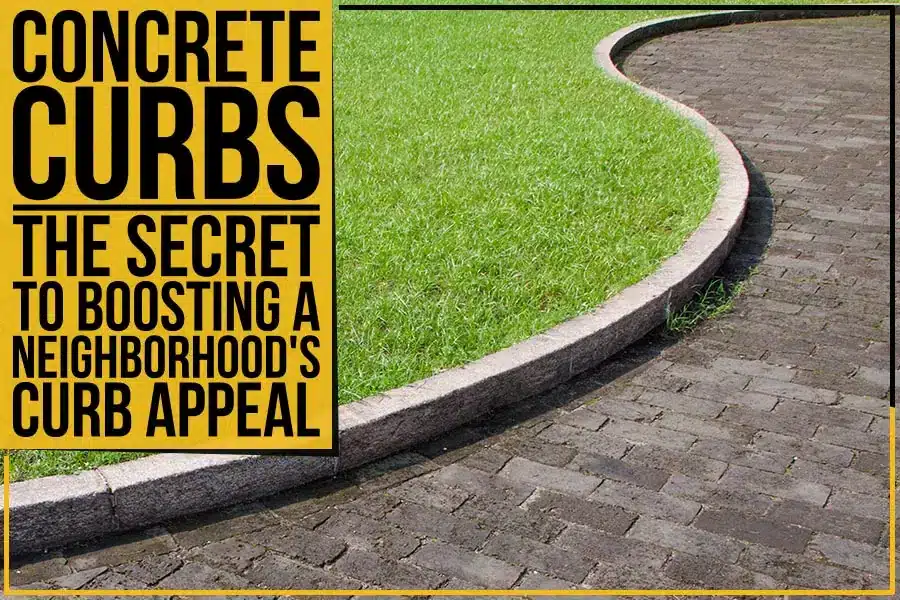
Beyond their functional role, concrete curbs establish the visual foundation of any property’s exterior appearance. They create clean, organized lines that make parking lots and driveways appear more spacious and professionally maintained. Properties with well-installed, regularly maintained concrete curbs consistently rank higher in visual appeal surveys compared to those with deteriorating or absent curb systems.
Key Benefits of Quality Concrete Curbs
Enhanced Curb Appeal and First Impressions
First impressions matter significantly in commercial real estate, where potential clients form opinions within seconds of arriving at a property. Concrete curbs frame parking areas with precision, creating visual boundaries that make spaces appear organized, clean, and professionally maintained. This enhanced appearance directly influences customer perception and can increase foot traffic to retail establishments and office buildings.
Attractive concrete curbs also define landscaped areas, making garden beds and vegetation appear more deliberate and aesthetically curated. This distinction between paved and planted areas creates visual contrast that enhances overall property design and increases real estate market values.
Improved Safety and Traffic Control
Concrete curbs provide critical physical boundaries that guide vehicle movement, prevent unauthorized parking, and protect pedestrians from errant vehicles. By clearly defining driving lanes and parking boundaries, curbs reduce confusion and accidents while making properties safer for employees, customers, and delivery personnel.
Well-maintained curbs also prevent vehicles from driving onto sidewalks or into landscaped areas where injuries and property damage could occur. This protective function proves especially valuable in high-traffic commercial properties where safety liability remains a primary concern.
Cost Savings Through Property Protection
Concrete curbs protect landscaping, building foundations, and utility areas from vehicle damage. By preventing vehicles from driving over planted areas, curbs eliminate expensive lawn damage, protect tree root systems, and reduce costly landscape replacement and maintenance expenses.
Additionally, properly installed curbs prevent vehicles from damaging building foundations and underground utilities. This protective barrier function saves property owners thousands of dollars annually in preventative maintenance and emergency repairs.
Increased Property Value and ROI
Research consistently demonstrates that commercial properties with well-maintained concrete curbs command higher lease rates and resale values compared to properties with poor curb conditions. This improvement in property valuation makes concrete curb maintenance an attractive investment for property managers seeking to maximize real estate returns.
Properties maintained to professional standards, including quality concrete curbs and striping, consistently attract premium tenants and justify higher rental rates. For facility directors managing municipal properties, this translates to increased tax base values and community property appeal.
Concrete Curbs vs. Alternative Curbing Solutions
Property managers often evaluate different curbing materials and designs to determine the best solution for their specific needs, budget constraints, and environmental conditions. The following comparison table outlines the key differences between popular curbing options:
| Curb Type | Durability | Maintenance Requirements | Cost | Aesthetic Appeal | Environmental Impact |
|---|---|---|---|---|---|
| Concrete Curbs | Excellent (20-40 years) | Moderate (periodic sealing) | Medium | Professional, clean lines | Recyclable, durable reduces replacement |
| Asphalt Curbs | Fair (8-15 years) | High (frequent resealing, repairs) | Low | Less defined appearance | Requires regular petroleum-based treatments |
| Plastic Composite Curbs | Good (15-25 years) | Low (minimal maintenance) | High | Modern appearance | Recycled material option available |
| Stamped Concrete Curbs | Excellent (20-40 years) | Moderate (sealing, pattern maintenance) | Medium-High | Decorative, attractive finishes | Durable reduces replacement frequency |
| Painted Steel Curbs | Fair (10-18 years) | High (rust prevention, repainting) | Low-Medium | Industrial appearance | Requires petroleum-based coatings |
Concrete curbs emerge as the optimal choice for most commercial applications due to their superior durability, reasonable maintenance requirements, and professional appearance. While stamped concrete offers enhanced aesthetics, standard concrete curbs provide exceptional value and longevity for property managers prioritizing cost-effectiveness and reliable performance.
Maintaining Concrete Curbs for Long-Term Performance
Regular Cleaning and Inspection
Concrete curbs require regular cleaning to maintain appearance and prevent deterioration. Pressure washing removes accumulated dirt, oil stains, and algae growth that accumulate over time. Professional cleaning not only improves aesthetics but also identifies cracks, spalling, and other damage requiring prompt attention before problems escalate.
Facility managers should establish quarterly inspection schedules to assess curb condition, identify maintenance needs, and address damage before winter weather and freeze-thaw cycles worsen existing problems. Early detection of minor issues prevents expensive emergency repairs and maintains property appeal year-round.
Sealing and Protection
Applying protective sealants to concrete curbs extends their lifespan by preventing water penetration, reducing freeze-thaw damage, and minimizing staining. Professional sealcoating services create a protective barrier that shields concrete from UV exposure, road salt, and chemical damage while enhancing color and appearance.
For Charlotte-area properties, regular sealcoating proves especially important given seasonal temperature fluctuations and frequent precipitation. Professional sealcoating services protect concrete investments and maintain curb appeal through changing seasons.
Addressing Cracks and Damage
Small cracks in concrete curbs can expand rapidly under freeze-thaw cycles and vehicle stress, leading to spalling and structural compromise. Professional crack sealing services address minor damage before it necessitates expensive curb replacement. Early intervention prevents water infiltration that accelerates concrete deterioration.
More severe damage, including broken corners, large sections of missing concrete, or structural failure, requires complete curb replacement. Professional contractors can remove damaged sections and install new concrete curbs that match existing systems while restoring property appearance and functionality.
Concrete Curbs and Parking Lot Line Striping
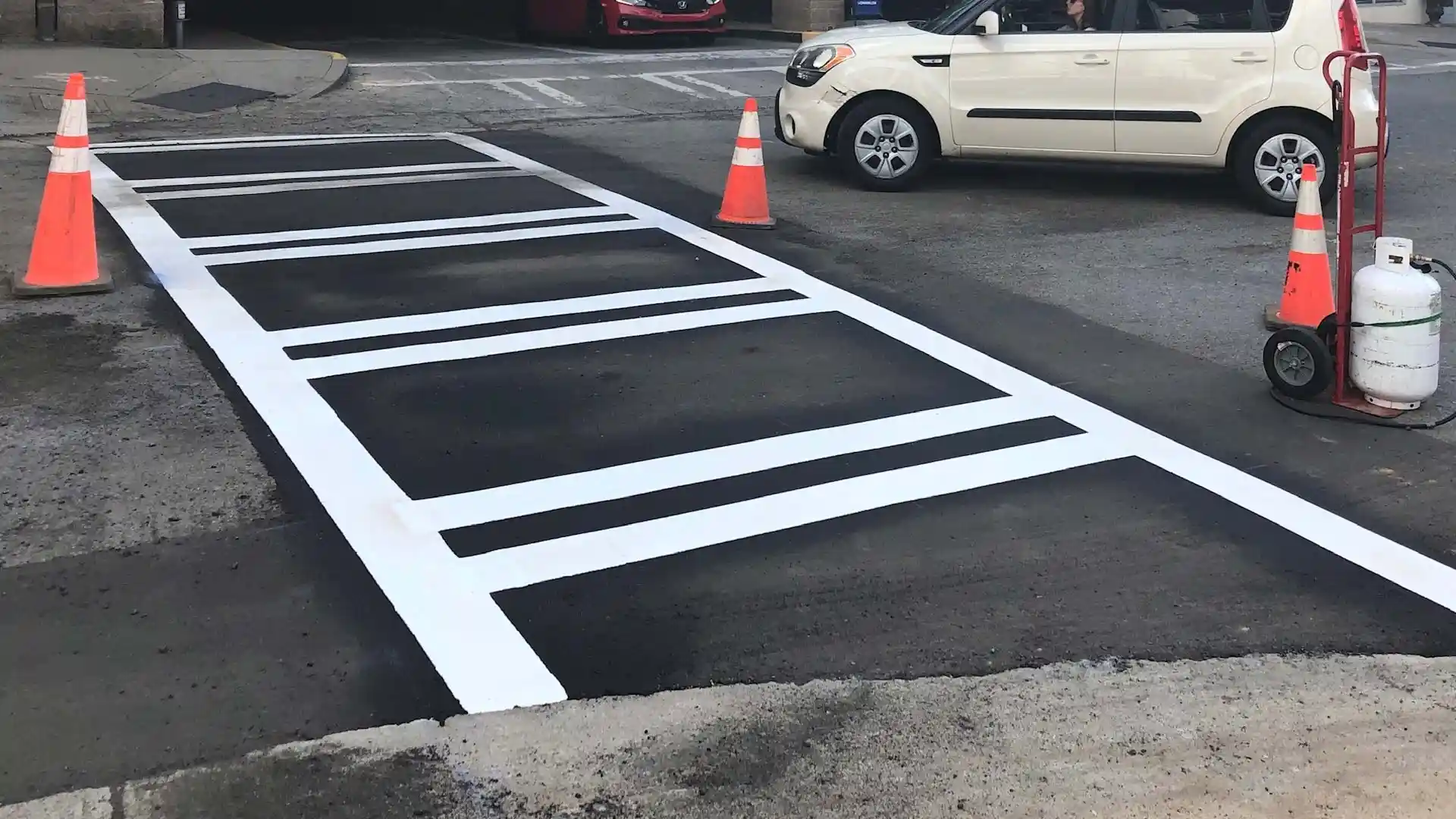
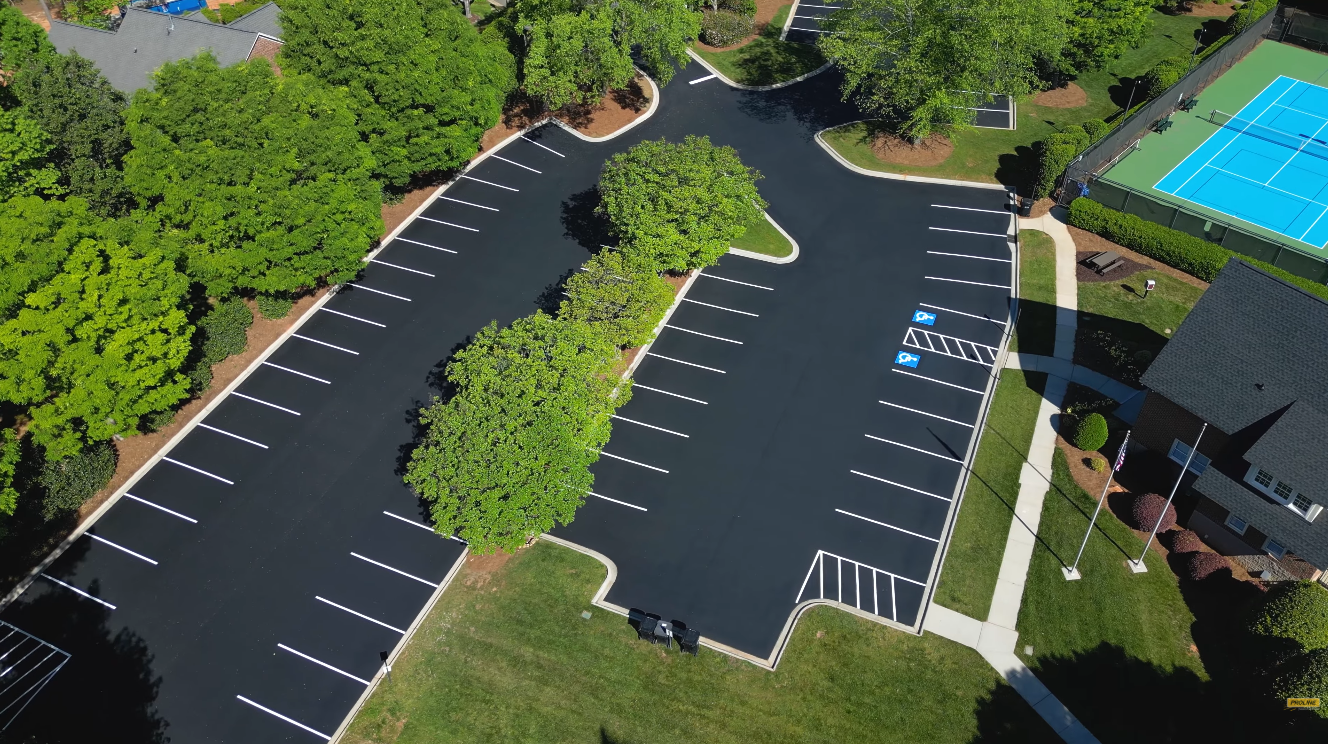
Concrete curbs work in conjunction with parking lot striping to create organized, professional parking areas. Clear parking space lines, directional arrows, and handicapped space markings complement curb systems by maximizing parking efficiency and guiding vehicle movement safely.
Properties that invest in both quality concrete curbs and professional line striping services achieve the highest levels of curb appeal and operational functionality. This integrated approach creates organized, visually attractive parking areas that reflect positively on property management and tenant satisfaction.
Complete Parking Lot Maintenance Solutions
Concrete curbs represent just one component of comprehensive parking lot maintenance programs. Professional facility management includes pothole repair, crack sealing, striping refresh, and seasonal maintenance services that work together to maintain property appearance and functionality.
Property managers should evaluate pothole repair services and crack sealing solutions as part of integrated maintenance plans that protect asphalt, concrete, and curb systems simultaneously. This comprehensive approach maximizes property longevity while maintaining consistent aesthetic appeal.
Frequently Asked Questions About Concrete Curbs
How long do concrete curbs typically last?
Well-maintained concrete curbs typically last 20-40 years depending on climate, traffic volume, and maintenance practices. In the Charlotte, North Carolina area, professional sealcoating and regular maintenance help maximize curb lifespan by protecting against freeze-thaw damage and UV exposure. Proper installation and timely repair of minor damage directly extends the functional life of concrete curb systems.
What causes concrete curbs to crack and spall?
Concrete curbs fail for several primary reasons: freeze-thaw cycles in which water penetrates concrete, freezes, and expands causing internal stress; vehicle impact damage from aggressive driving or parking; salt and chemical exposure that accelerates deterioration; and poor initial installation or inferior concrete quality. Environmental factors combined with inadequate maintenance create conditions for accelerated curb failure and increased replacement costs.
Can damaged concrete curbs be repaired or must they be replaced?
The answer depends on damage severity. Minor cracks and surface damage can be addressed through professional crack sealing and concrete repair techniques that extend curb life. However, extensive spalling, structural failure, large missing sections, or curbs that no longer provide adequate traffic control typically require complete replacement. Professional contractors can assess damage and recommend the most cost-effective solution.
How often should concrete curbs be sealed?
Concrete curbs should be sealed every 2-3 years in most climates to maintain maximum protection. High-traffic commercial properties and areas experiencing harsh winters may benefit from more frequent sealing applications. Professional sealcoating contractors evaluate existing curb condition and recommend appropriate treatment schedules based on specific site conditions and maintenance history.
What is the cost range for installing new concrete curbs?
Concrete curb installation costs vary based on linear footage, concrete quality, local labor rates, and site conditions. Typical installation costs range from $25-$50 per linear foot for standard concrete curbs, though stamped or decorative options command premium pricing. Property managers should obtain multiple quotes from professional contractors and factor curb installation into long-term capital improvement budgets.
Protecting Your Property Investment with Professional Curb Maintenance
Concrete curbs represent a critical yet often overlooked component of professional property maintenance programs. These essential elements enhance curb appeal, improve safety, protect landscaping and buildings, and directly increase property values. Property managers and facility directors who prioritize concrete curb maintenance demonstrate their commitment to maintaining attractive, well-organized, professionally managed properties.
Whether you’re responsible for a single commercial property or manage an entire municipal infrastructure system, investing in quality concrete curbs and professional maintenance services delivers measurable returns through increased property values, reduced damage costs, and enhanced tenant satisfaction. The relatively modest investment in curb maintenance produces significant benefits that compound year after year.
Get Professional Concrete Curb Services from Proline Parking Lot Maintenance
Proline Parking Lot Maintenance serves Charlotte, North Carolina and surrounding areas with comprehensive parking lot maintenance and concrete curb services. Our experienced team specializes in curb installation, repair, sealcoating, and complete parking lot maintenance solutions that protect your property investment.
Whether you need new concrete curbs installed, existing curbs repaired, or professional maintenance to extend curb lifespan, Proline delivers quality workmanship and professional service. We combine competitive pricing with guaranteed results to ensure your property maintains maximum appeal and functionality.
Contact Proline Parking Lot Maintenance today for a free estimate on concrete curb services:
Phone: 704-530-5366
Website: prolineplm.com
Service Area: Charlotte, NC and surrounding regions
Let our professional team assess your concrete curb needs and recommend cost-effective solutions that enhance property appearance while protecting your investment. Proline delivers the expertise, equipment, and service quality that Charlotte property managers and facility directors trust for all their parking lot maintenance needs.