The Best Parking Lot Sealers: Types, Comparison, and Application Guide
Choosing the right parking lot sealer directly impacts your pavement’s protection, appearance, and longevity. Different sealer types offer distinct advantages and disadvantages depending on your Charlotte parking lot’s needs, climate exposure, and budget. Understanding sealer options helps you make informed decisions that extend pavement life and protect your property investment.
Why Parking Lot Sealcoating Matters
Sealcoating creates a protective barrier that prevents water infiltration, UV oxidation, and chemical damage. The seal fills surface voids and cracks, blocking moisture before it reaches the asphalt base. Quality sealcoating extends pavement life by 5-10 years and maintains property appearance through enhanced color and gloss. Without regular sealcoating, Charlotte parking lots deteriorate rapidly from water damage and oxidation.
Protection Against Water Damage
Water penetration is the primary cause of pavement failure in Charlotte’s humid climate. Sealcoating prevents water from entering the asphalt structure where it weakens base layers and creates potholes. Sealed pavement maintains integrity much longer than unsealed surfaces exposed to frequent rainfall.
UV and Oxidation Protection
North Carolina’s strong sun exposure oxidizes asphalt binder, making pavement brittle and crack-prone. Quality sealcoat reflects UV rays and slows oxidation significantly. This protection maintains pavement flexibility and prevents the premature cracking that leads to water infiltration.
Chemical and Fluid Resistance
Parking lot sealers protect against gasoline, oil, salt, and other chemicals that deteriorate unsealed asphalt. These fluids break down asphalt binder, creating soft spots that become potholes. Sealed pavement resists fluid damage and maintains structural integrity longer.
Coal Tar Sealcoating: Traditional Protection
Coal tar sealers have protected parking lots for decades and remain popular for their durability and cost-effectiveness. Coal tar is derived from coal processing and creates a thick, durable barrier. These sealers offer excellent water resistance and chemical protection but have environmental considerations.
Coal Tar Advantages
Coal tar sealers are highly durable, lasting 3-5 years between applications. They provide excellent slip resistance, improving lot safety. Coal tar creates deep black color that enhances lot appearance significantly. The thick consistency fills surface voids effectively, sealing small cracks. Cost-effectiveness makes coal tar attractive for budget-conscious property managers.
Coal Tar Disadvantages
Environmental regulations increasingly restrict coal tar use due to PAH (polycyclic aromatic hydrocarbons) content. Coal tar can leach into groundwater and storm drains, posing environmental risks. Many states have banned or limited coal tar use. High VOC (volatile organic compound) content creates strong odors and requires specific safety precautions during application.
Charlotte Availability
Coal tar remains available in North Carolina but is increasingly phased out. Some environmental-conscious buyers prefer alternatives. Coal tar applications are acceptable but trending away from standard recommendations. Consider future restrictions when choosing coal tar for long-term lot protection.
Asphalt Emulsion Sealcoating: The Modern Standard
Asphalt emulsion sealers have become the industry standard, offering durability comparable to coal tar with fewer environmental concerns. These water-based products blend asphalt cement with water and additives, creating effective protection. Asphalt emulsion dominates Charlotte market applications for environmental and performance reasons.
Asphalt Emulsion Advantages
Water-based formulas reduce environmental impact and VOC emissions significantly. Asphalt emulsion is environmentally friendly and complies with all regulations. These sealers provide excellent water protection and UV resistance comparable to coal tar. Application is faster and easier than coal tar, reducing labor costs. The medium black color enhances lot appearance professionally.
Asphalt Emulsion Disadvantages
Durability is slightly less than premium coal tar, typically lasting 2-4 years. Water-based formulas require proper weather conditions—rain or humidity within 24 hours of application ruins the coating. Cure time is longer than coal tar, requiring traffic control for extended periods. Cost is moderate—more than some alternatives but less than premium products.
Ideal Use Cases
Asphalt emulsion is ideal for most Charlotte properties seeking quality protection without environmental concerns. Commercial properties, corporate campuses, and retail centers typically choose asphalt emulsion. Properties with stormwater runoff concerns particularly benefit from environmentally friendly formulation.
\n\nAcrylic-Based Sealcoatings: Premium Appearance
Acrylic sealers offer premium appearance with exceptional gloss and color retention. These water-based products add aesthetic appeal while providing protection. Acrylic sealers are popular for properties where appearance significantly impacts business perception.
Acrylic Sealer Advantages
Acrylic sealers provide the most vibrant black color and high-gloss appearance. They maintain color and appearance longer than other options, typically staying rich for years. These sealers are environmentally friendly with low VOC content. Excellent UV protection prevents oxidation and fading. Quick drying allows faster lot reopening.
Acrylic Sealer Disadvantages
Acrylic sealers cost 30-50% more than asphalt emulsion. Durability is moderate, typically lasting 2-3 years. These sealers provide less slip resistance than coal tar or asphalt emulsion. Water damage protection is adequate but not as comprehensive as thicker alternatives. Higher cost makes acrylic impractical for large lots with tight budgets.
Best Applications
Premium retail centers, upscale office parks, and high-profile commercial properties benefit most from acrylic sealers. Properties where first impressions and appearance directly impact business success justify premium pricing. Properties with strong environmental commitment appreciate acrylic’s low VOC profile.
Oil-Based and Proprietary Sealers
Specialty oil-based and proprietary formulations offer unique benefits for specific applications. These products often combine multiple technologies for enhanced performance. However, availability and application requirements vary significantly.
Oil-Based Sealer Characteristics
Oil-based sealers penetrate deeper into asphalt than water-based alternatives, potentially offering superior protection. These products maintain flexibility better than some water-based options. However, oil-based sealers are becoming increasingly difficult to source due to environmental regulations. VOC content is higher than water-based alternatives. Application requires specific weather conditions.
Proprietary Blend Benefits
Manufacturers continuously develop improved formulations combining benefits of multiple sealer types. Advanced proprietary blends often offer superior durability and appearance. However, these premium products cost significantly more. Proprietary formulations may require specific application equipment or expertise.
Comparison Table: Sealer Types and Performance
| Sealer Type | Cost | Durability | Water Protection | Appearance | Environmental Impact | Charlotte Ideal |
|---|---|---|---|---|---|---|
| Coal Tar | Low-Medium | Excellent (3-5 yrs) | Excellent | Deep Black | High | Not Recommended |
| Asphalt Emulsion | Medium | Good (2-4 yrs) | Excellent | Medium Black | Low | Recommended |
| Acrylic | High | Good (2-3 yrs) | Good | Premium Gloss | Low | Conditionally Recommended |
| Oil-Based | Medium-High | Very Good (3-4 yrs) | Very Good | Moderate | Medium-High | Not Recommended |
Choosing the Best Sealer for Charlotte Climate
Charlotte’s climate characteristics should influence sealer selection. Heavy rainfall, humidity, UV exposure, and occasional temperature fluctuations create specific challenges. The best sealer balances climate protection with environmental responsibility and budget constraints.
Water Protection Priority
Charlotte’s 43+ inches annual rainfall makes water protection the top priority. Coal tar and asphalt emulsion both provide excellent water resistance. The thick consistency of these sealers effectively blocks moisture penetration. Given frequent rainfall, robust water protection justifies regular reapplication every 2-3 years.
UV and Oxidation Defense
Strong North Carolina sun exposure oxidizes asphalt aggressively. All quality sealers provide UV protection, but acrylic sealers offer the best long-term color retention. For properties where appearance matters significantly, acrylic’s superior UV performance justifies premium cost. Standard sealers require more frequent reapplication to maintain color.
Environmental Considerations
Charlotte’s stormwater regulations increasingly restrict coal tar use. Environmental-conscious property owners should avoid coal tar entirely. Asphalt emulsion and acrylic sealers meet environmental requirements and comply with current regulations. Professional contractors increasingly recommend environmentally responsible alternatives.
Cost-Benefit Analysis
Budget-conscious property managers should choose asphalt emulsion, which offers excellent protection at moderate cost. Acrylic sealers are justified only when appearance provides measurable business benefit. For most Charlotte commercial properties, asphalt emulsion provides optimal cost-benefit balance.
Sealcoating Application Methods and Best Practices
Proper application technique dramatically affects sealer performance and longevity. Professional application ensures even coverage, correct thickness, and full protection. Weather conditions, surface preparation, and curing requirements significantly impact results.
Surface Preparation Requirements
Thorough surface preparation is essential for quality sealcoating. Clean surfaces must be free of dirt, oil, and loose material. Pressure washing removes debris and contaminants. Crack sealing before sealcoating prevents water from entering through existing fissures. Proper preparation ensures excellent sealer adhesion and maximum protection.
Application Equipment and Technique
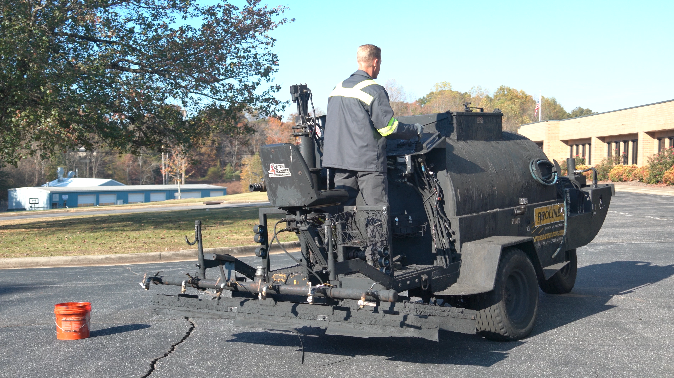
Professional contractors use spray equipment for even, consistent application. Hand squeegees ensure complete coverage in corners and edges. Multiple thin coats provide better protection than single thick applications. Experienced applicators maintain consistent thickness throughout the lot. Equipment quality directly impacts final appearance and protection.
Weather and Curing Conditions
Ideal sealcoating weather is 50-80°F with low humidity and no rain in the forecast. Cold temperatures slow curing; heat accelerates it. Rain within 24 hours of application destroys water-based sealers. Professional contractors monitor weather closely and reschedule if conditions aren’t suitable. Proper curing requires 24-48 hours of dry conditions.
Traffic Control and Reopening
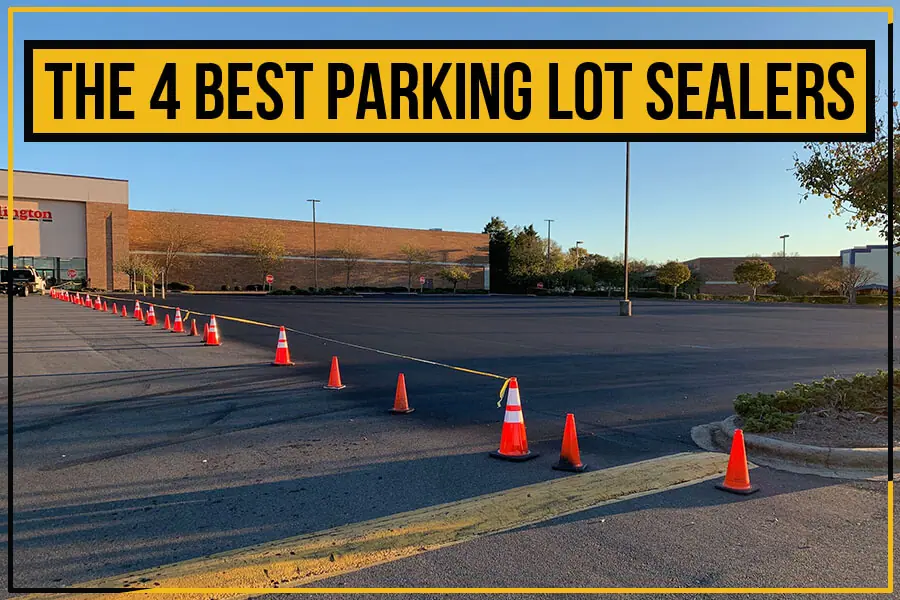
Sealcoated lots must remain closed until full cure is achieved. Premature traffic causes material displacement and uneven appearance. Professional contractors maintain traffic control until surfaces are completely cured. Proper closure prevents customer complaints and ensures quality results.
Professional vs. DIY Sealcoating Decisions
While DIY sealcoating seems cost-effective, professional application delivers significantly better results. Understanding the differences helps property owners make informed decisions about when to hire professionals.
Equipment and Expertise Requirements
Professional spray equipment costs $5,000-$10,000 and requires training to operate correctly. Hand application with squeegees is slow and produces inconsistent results. Professional crews apply sealer evenly and efficiently. Equipment expertise ensures optimal material coverage and appearance.
Material Quality and Cost
Professional contractors purchase materials in bulk at better prices than retail availability. High-quality professional-grade sealers outperform consumer products significantly. Material durability differences mean professional sealing lasts longer and requires less frequent reapplication. Initial material cost savings with DIY quickly disappear through more frequent reapplications.
Safety and Environmental Compliance
Professional contractors follow environmental regulations, disposal requirements, and safety protocols. DIY applications may violate environmental standards. Safety equipment requirements for sealcoating chemicals are often overlooked by inexperienced applicators. Professional compliance protects you from legal liability.
Result Quality and Warranty
Professional sealcoating produces uniform, attractive appearance lasting years. DIY results often show streaks, thin spots, and uneven coverage. Professional work includes guarantees; DIY mistakes have no recourse. The quality difference justifies professional hiring for commercial properties where appearance impacts business perception.
\n\nMaintenance and Reapplication Schedules
Regular reapplication extends sealcoating protection and parking lot lifespan. Maintenance schedules depend on sealer type, traffic volume, and climate exposure. Understanding reapplication timing prevents premature deterioration.
Monitoring Sealer Condition
Sealcoating gradually wears away through traffic and weathering. When water no longer beads on the surface, the seal is degrading. Once the seal effectiveness diminishes, water infiltration accelerates. Regular inspections identify when reapplication is needed before protection is completely lost.
Recommended Reapplication Timing
Coal tar sealers typically need reapplication every 3-5 years. Asphalt emulsion requires reapplication every 2-4 years depending on traffic. Acrylic sealers last 2-3 years before color begins fading. High-traffic lots need more frequent reapplication than lightly-used properties. Charlotte’s climate with heavy rainfall may require more frequent reapplication than national averages.
Seasonal Application Planning
Spring and fall are ideal sealcoating seasons in Charlotte. Spring applications prepare lots for heavy summer rainfall. Fall applications provide UV protection before oxidation accelerates. Avoid winter applications when temperatures are too cold and summer applications when humidity prevents proper curing. Planning seasonal applications ensures optimal protection year-round.
Frequently Asked Questions About Parking Lot Sealers
How long does sealcoating last in Charlotte’s climate?
Quality professional sealcoating lasts 2-4 years in Charlotte’s humid climate with heavy rainfall. Asphalt emulsion typically lasts 2-4 years, while premium options may last slightly longer. High-traffic areas wear faster than lightly-used sections. Regular inspections help determine when reapplication is needed before protection completely fails.
Is coal tar sealer still available and legal in North Carolina?
Coal tar remains legally available in North Carolina but environmental regulations increasingly limit its use. Some municipalities have restricted coal tar applications. Environmental impact and future regulatory changes make coal tar a risky choice for long-term lot protection. Asphalt emulsion provides comparable protection without environmental concerns.
Can I apply sealcoat over existing sealcoat?
Yes, sealcoat can be applied over existing sealer if the existing coat is still bonded properly. However, professional cleaning ensures good adhesion. Peeling, flaking, or loose existing sealer must be removed before reapplication. Over-application without removing loose material reduces durability. Professional assessment determines whether cleaning or removal is necessary.
What’s the cost difference between professional and DIY sealcoating?
DIY material costs $0.10-$0.25 per square foot. Professional sealcoating costs $0.30-$0.75 per square foot depending on sealer type and lot condition. Initial cost difference seems significant, but professional durability and quality often justify the expense. For a 10,000 square foot lot, professional sealcoating costs $3,000-$7,500 but lasts longer and looks significantly better than DIY alternatives.
Should I seal my parking lot every year?
Annual sealcoating is excessive and wasteful. Most lots need reapplication every 2-4 years depending on sealer type and traffic. Applying new sealer over intact existing sealer wastes material without increasing protection. Professional inspections determine when reapplication actually benefits your lot rather than guessing at annual intervals.
Complete Parking Lot Sealing Services in Charlotte
Choosing the right sealer and professional application is crucial for protecting your Charlotte parking lot investment. Proline Parking Lot Maintenance specializes in comprehensive sealcoating services using quality materials suited to Charlotte’s climate. We assess your lot condition and recommend the optimal sealer type for your specific needs and budget.
Beyond sealcoating, our complete service menu includes crack sealing, pothole repair, line striping, and stenciling services. We coordinate all your parking lot maintenance needs through one professional contractor. Our experienced crews ensure excellent results and customer satisfaction on every project.
Protect your parking lot with professional sealcoating today. Contact Proline Parking Lot Maintenance at 704-530-5366 or visit prolineplm.com for a free assessment and sealcoating recommendation. We’ll help you choose the best sealer for your Charlotte parking lot and deliver professional application that extends your pavement lifespan significantly.