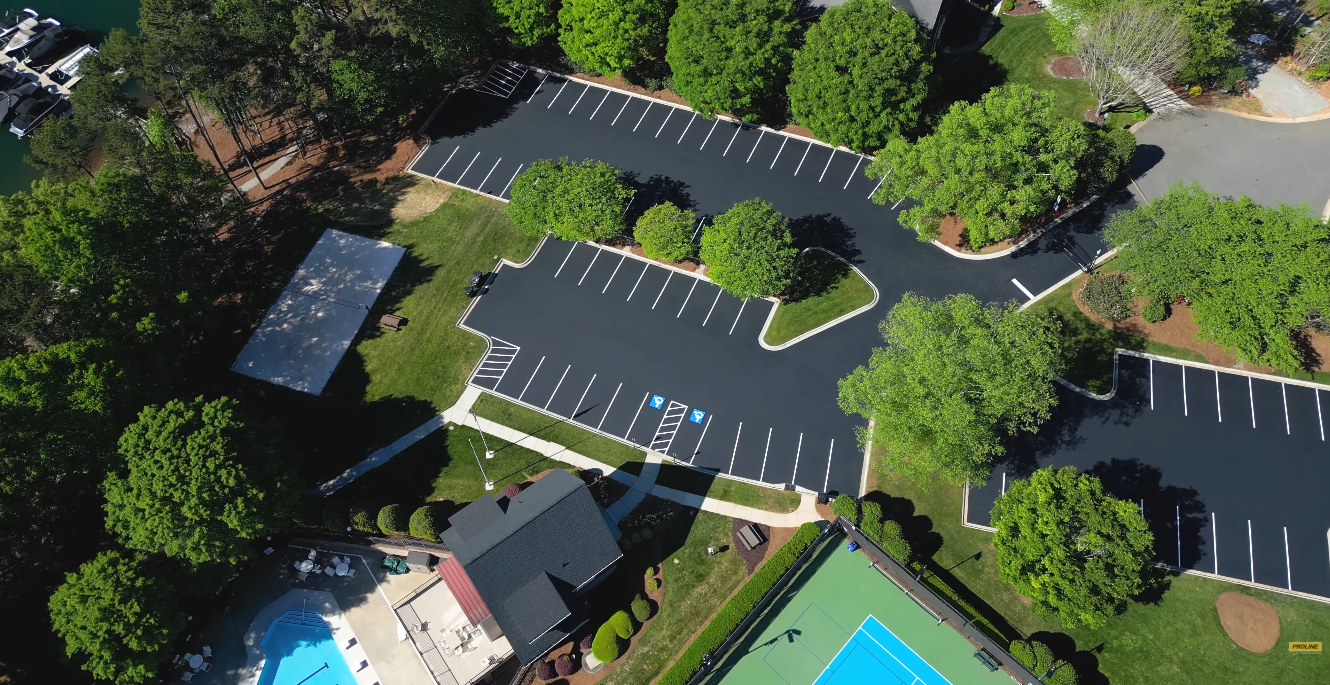
Complete Guide to Asphalt Maintenance: Extend Pavement Life & Protect Your Investment
Asphalt maintenance is the systematic care and treatment of paved surfaces to prevent deterioration, extend lifespan, and maintain safe, professional-looking parking lots and driveways. For property managers, facility directors, and business owners across Charlotte and the surrounding region, understanding the fundamentals of asphalt maintenance represents one of the most cost-effective investments you can make in your commercial property.
Many facility managers treat asphalt as a “set it and forget it” asset. However, pavement failure doesn’t happen overnight—it’s the cumulative result of deferred maintenance, environmental exposure, and traffic wear. By implementing a strategic asphalt maintenance program, you can add years to your pavement’s life and avoid expensive full-replacement projects that can exceed six figures.
Why Asphalt Maintenance Should Be Your Top Priority
Asphalt is a composite material consisting of aggregate (stones, sand, and gravel) bound together by bitumen, a petroleum-based binder. Once installed, asphalt is continuously exposed to ultraviolet (UV) radiation, extreme temperatures, water infiltration, and heavy vehicle traffic. Without regular maintenance intervention, these forces break down the material’s structural integrity.
The costs associated with poor asphalt maintenance decisions accumulate rapidly. A parking lot that receives no preventative maintenance might last 15-20 years before requiring replacement. That same lot, with proper asphalt maintenance, can safely serve 25-35 years or longer. The difference is thousands of dollars in avoided expenses and operational disruptions.
Beyond financial considerations, well-maintained pavement enhances curb appeal, communicates professionalism to customers and clients, reduces liability from trip hazards, and ensures safer conditions for pedestrians and vehicles.
Understanding the Five Essential Asphalt Maintenance Strategies
1. Sealcoating: The First Line of Defense
Sealcoating is a protective layer applied to asphalt surfaces to shield the pavement from UV rays, water infiltration, and chemical damage. This preventative treatment is fundamental to any comprehensive asphalt maintenance plan. Sealcoating acts as a waterproof barrier that prevents water from penetrating the pavement structure, which is the primary cause of pavement failure in wet climates.
Professional sealcoating services should be applied every 2-3 years for optimal protection. The investment in sealcoating—typically $0.10 to $0.30 per square foot—returns multiples in extended pavement life. Property managers who skip sealcoating often face premature deterioration requiring expensive repairs within 5-7 years.
2. Crack Sealing: Stopping Problems Before They Spread
Crack sealing is the targeted repair of linear fractures in asphalt before they expand into larger problem areas. Even small cracks allow water to penetrate the pavement layers below the surface, where it causes subgrade erosion and eventual pothole formation. By addressing cracks early, you prevent exponential damage progression.
Professional crack sealing uses specialized materials that remain flexible as temperatures fluctuate, preventing the seal from reopening. A proactive crack sealing program costs approximately $0.50 to $2.00 per linear foot—a fraction of the cost to repair potholes or overlay sections of failed pavement.
3. Pothole Repair: Addressing Immediate Safety Hazards
Potholes are visible evidence that asphalt maintenance has failed. These depressions form when water-weakened pavement layers collapse under traffic pressure. Beyond being eyesores, potholes create trip hazards for pedestrians and can damage customer vehicles—exposing property owners to liability claims.
Professional pothole repair involves removing failed pavement, addressing underlying moisture issues, and patching with proper asphalt mix and compaction. When addressed immediately, pothole repair costs are minimal. When ignored, isolated potholes expand into larger areas of failed pavement requiring more extensive—and expensive—solutions.
4. Line Striping: Maintaining Functionality and Safety
While not strictly asphalt maintenance in the structural sense, parking lot line striping is essential pavement management. Clear, visible striping improves traffic flow, enhances safety, and maintains professional appearance. Line striping deteriorates from traffic wear, UV exposure, and environmental conditions, requiring renewal every 12-18 months in commercial applications.
5. Regular Inspection and Documentation
Effective asphalt maintenance begins with systematic inspection. Professional pavement condition assessments identify issues early, before they become major problems. Annual inspections, with detailed documentation and photographs, create a maintenance history that justifies budget allocations and prevents costly surprises.
Asphalt Maintenance Timeline: What to Do When
Understanding when to perform specific maintenance tasks is critical to maximizing pavement lifespan. The following timeline represents industry best practices for commercial asphalt in the Charlotte, North Carolina climate:
| Timeframe | Maintenance Task | Estimated Cost Range |
|---|---|---|
| Immediate (upon identification) | Pothole repair, trip hazard remediation | $150–$500 per pothole |
| Quarterly | Inspection, debris removal, drainage checks | $0 (routine) |
| Annually | Formal pavement condition assessment | $200–$500 |
| Every 12–18 months | Line striping refresh, marking touch-ups | $0.03–$0.10 per sq. ft. |
| Every 2–3 years | Sealcoating application | $0.10–$0.30 per sq. ft. |
| As needed (typically 2–5 years) | Crack sealing maintenance | $0.50–$2.00 per linear ft. |
| Every 7–10 years | Asphalt overlay or resurfacing | $1.50–$3.00 per sq. ft. |
| Every 20–30 years | Complete pavement reconstruction | $5.00–$12.00 per sq. ft. |
Proactive vs. Reactive: The True Cost of Asphalt Maintenance Decisions
The difference between proactive and reactive asphalt maintenance is often the difference between manageable expenses and budget-breaking emergencies. Consider two hypothetical commercial parking lots over a 20-year period:
Scenario A – Proactive Maintenance Approach: Annual inspections ($200), sealcoating every 3 years ($15,000 for 50,000 sq. ft.), crack sealing as needed ($2,000/year average), and line striping every 18 months ($5,000). Total 20-year cost: approximately $85,000. Result: Pavement in excellent condition, ready for another 10+ years of service.
Scenario B – Reactive (Neglect) Approach: No preventative maintenance for 10 years, then emergency pothole repairs ($8,000), expanded patching ($15,000), finally complete reconstruction ($350,000) in year 15. Total 20-year cost: approximately $373,000. Result: Service interruption, safety hazards, and potential liability exposure.
In this realistic scenario, proactive asphalt maintenance costs roughly 23% of reactive replacement. That’s a return on investment of 330%—and that calculation doesn’t account for operational disruption, safety liabilities, or brand damage from deteriorated facilities.
Environmental Factors Affecting Charlotte-Area Pavement
Charlotte, North Carolina experiences distinct seasonal weather patterns that accelerate asphalt deterioration without proper maintenance. The region experiences:
- High UV exposure: North Carolina’s latitude and clear-sky days cause significant UV degradation of asphalt binder
- Temperature extremes: Summer temperatures exceeding 90°F and winter freezes below 32°F create expansion and contraction stress
- Moisture infiltration: The region’s precipitation (44+ inches annually) supplies abundant water to penetrate unsealed pavement
- Heavy traffic: Charlotte’s growth as a major business hub means increased vehicle loads on commercial parking facilities
These environmental conditions make proactive asphalt maintenance particularly critical in the Charlotte area. Pavement that receives adequate sealcoating and crack sealing resists these stressors far more effectively than neglected surfaces.
Budgeting for Asphalt Maintenance: Avoid Financial Surprises
Professional facility managers budget for asphalt maintenance on an annual basis. A recommended annual budget for asphalt maintenance represents approximately 5-10% of your pavement replacement cost. For a 50,000 square foot lot (typical for medium-sized commercial properties), this translates to $2,500-$5,000 annually in preventative maintenance spending—a modest investment compared to replacement costs exceeding $250,000.
By allocating funds systematically across sealcoating, crack sealing, line striping, and inspections, you distribute costs evenly and avoid the budget shock of emergency repairs or full replacement projects.
Frequently Asked Questions About Asphalt Maintenance
How often should commercial asphalt be sealcoated?
Commercial asphalt should be sealcoated every 2-3 years in the Charlotte area. Frequency depends on traffic volume, UV exposure, and the previous sealcoat condition. High-traffic areas like shopping centers may benefit from more frequent applications. Annual inspections help determine the optimal timing for your specific property.
What’s the difference between seal coating and asphalt repair?
Sealcoating is a preventative treatment applied to intact asphalt to protect it from future damage. Asphalt repair addresses existing problems—cracks, potholes, or failed sections. Think of sealcoating as preventative medicine and repairs as treatment of existing conditions. Both are essential components of complete asphalt maintenance.
Can asphalt maintenance extend pavement life indefinitely?
No. Asphalt is a finite-life material that eventually reaches the end of its service life. However, comprehensive maintenance can extend that lifespan from 15-20 years to 25-35 years or longer. At some point, resurfacing or reconstruction becomes necessary. Regular maintenance maximizes the time between major capital projects.
How does water damage relate to asphalt maintenance needs?
Water is the primary cause of asphalt failure. When water penetrates through cracks or unsealed surfaces, it weakens the base layers and causes expansion/contraction stress. Proper asphalt maintenance—particularly sealcoating and crack sealing—creates barriers that keep water out. This is why water management through drainage and timely seal maintenance is so critical.
What’s the best time of year to perform asphalt maintenance in Charlotte?
Spring and early fall offer ideal conditions for most asphalt maintenance work in Charlotte. Sealcoating, crack sealing, and line striping all require moderate temperatures (typically 50-85°F) and dry conditions. Summer heat and winter moisture make these seasons less ideal. Schedule maintenance during spring (April-May) or fall (September-October) for optimal results and contractor availability.
Partner with Proline Parking Lot Maintenance for Your Asphalt Maintenance Needs
Developing and implementing an effective asphalt maintenance program requires specialized knowledge, professional equipment, and consistent execution. At Proline Parking Lot Maintenance, we’ve spent years helping Charlotte-area property managers, facility directors, and business owners extend their pavement assets and avoid costly emergency repairs.
Whether you need a comprehensive maintenance plan for an existing lot, sealcoating services to protect your investment, crack sealing to stop problems before they escalate, or pothole repair to address immediate safety concerns, our experienced team understands the unique challenges of maintaining commercial pavement in the Charlotte region. We work with property owners to develop customized asphalt maintenance programs that fit your budget and operational needs.
Don’t wait until your pavement fails—contact Proline Parking Lot Maintenance today for a professional asphalt assessment and maintenance consultation. Call us at 704-530-5366 or visit prolineplm.com to schedule your complimentary property evaluation. Our team is ready to help you maximize your pavement investment and keep your property safe, professional, and functional for years to come.