Water expands by about 9 percent when it freezes, according to the U.S. Geological Survey, and that small change is enough to push paint off asphalt. The State Climate Office of North Carolina tracks the repeated freeze and thaw swings that hit the Piedmont and mountains every winter. Each swing gives moisture another chance to creep under a stall line and lift it. By the time a resident emails the office about a faded stall, the damage has usually been there for weeks.
We run the striping crews for The ProLine Parking Lot Maintenance, and we see the same pattern at the apartment communities, shopping centers, and medical offices all over North and South Carolina. The managers will always hear about winter damage from the residents first and from their own inspection last. That’s why this guide is designed so you can identify winter damage to your parking lot striping on your own schedule, so you’re the first to know and not some resident who’s sent you an angry email.
Why Winter Damage Stays Hidden Until Someone Complains
Striping rarely fails all at once. The paint loses its bond at the edges first, then starts to thin under the tyres and then finally fades in the wheel paths. Each stage is pretty minor when you’re looking at it from a golf cart or a car window at midday.
Three things hide the problem from you:
- Low winter sun washes out the contrast so the faded lines look perfectly fine at noon.
- Wet asphalt darkens so even the weakest lines come out sharp after the rain.
- Parked cars effectively cover up the worst of the stalls so you only ever see the damage in the empty spaces.
We check with those blind spots in mind and would recommend you do the same.
Walk the Lot at the Right Time
We walk a lot at sunrise or in the last hour before sunset. The low angle of the sun casts shadows across the raised paint edges, so the peeling flakes and lifted corners are very obvious. We also walk once after the surface has dried from rain, as the wetness of the pavement will hide the fading.
Plan your walk for the first dry weekday after a freeze rather than the morning after. Frost can hide the real damage, and thawing paint can look much worse than it is. If you want to know how a cold night affects fresh paint in the first place, then have a read of our post on whether freezing temperatures can stop parking lot paint from curing at all. That post goes into the film issues that manifest themselves as the damage below.
Damage Types and How to Confirm Each One
| What you see | Likely winter cause | How I confirm it | Urgency |
| Lines that look chalky or powdery | Paint failed to form a solid film in the cold | Rub a gloved finger across the line and check for residue | Medium |
| Small flakes or sheets lifting at the edges | Moisture trapped under the paint, then freeze and thaw | Scrape gently with a putty knife and see if paint peels in pieces | High |
| Dull lines in tire paths only | Traffic wear on thin paint | Compare the wheel path with the stall edge | Medium |
| Stained or blotchy lines | Deicer residue or leaf tannin stains | Rinse a small spot with water and check for color return | Low |
| Lines that vanish near cracks | Freeze and thaw movement in the asphalt | Look for a crack running through or beside the line | High |
| Hazy white film on the paint | Trapped moisture or salt bloom | Wipe the spot dry and watch whether the haze returns | Medium |
| Missing ADA symbols or access aisle hatching | Wear on thick, high-use markings | Check every accessible space against the plan | High |
Build a Field Checklist for Your Team
We give every property manager and maintenance tech this list before they walk a lot:
- Take a phone, a clipboard with a site map, a putty knife, and a roll of orange marking tape.
- Stand at the end of each row and look down the line of stalls for the fading.
- Check all the stop bars, crosswalks, fire lanes, and arrows at the entrances and exits.
- Scrape a few spots with the putty knife to test adhesion.
- Photograph each problem with a landmark of some sort (a building letter, a light pole number, etc.).
- Mark the damaged area with a short piece of tape so the crew can find it when they come to look.
- Record the date, the weather, and the pavement in your notes.
Keep a Photo Log Organized by Stall Number
A photo log turns the disparate observations into a work order. Every photo is tagged with the building, row, and stall number, and we take a wide and a close-up of each problem. We note whether the damage is in a drive lane, a fire lane, or an accessible space, as those are the areas that matter most.
Keep one log per property and update it after each walk. When you send me the log, we can see which problems are recurring in the same spot (this invariably points to drainage or traffic patterns rather than just paint wear). Our guide on how to protect newly applied parking lot markings from the early winter weather explains exactly how we avoid those repeats on new work.
Check Safety and Accessibility Markings First
Fading in a decorative stall is a problem for the residents, but fading in a safety zone is a risk. We start off by checking the accessible spaces and access aisles,, as these are the ones that have to comply with the 2010 ADA Standards for Accessible Design. The U.S. Access Board also has guidance on accessible parking space dimensions. After that I go on to the crosswalks, stop bars, and fire lanes, which will be governed by the FHWA Manual on Uniform Traffic Control Devices where it applies. The National Asphalt Pavement Association points out that pavement condition will have an impact on the life of the markings, so we’ll also be looking at the cracks and surface wear in the vicinity of any damaged line.
When to Inspect Across the Carolinas
Freeze timing is different in different areas, so we tailor our inspection calendar accordingly. We use the National Weather Service office in Greenville-Spartanburg for the Upstate and western Carolinas and the South Carolina State Climatology Office for the Midlands and coastal areas.
| Region | First inspection | Second inspection | What we watch most |
| Asheville, Boone, and the mountains | After the first hard freeze, usually late October or November | After the last major thaw in March | Lifting paint from freeze and thaw cycles |
| Charlotte, Greensboro, Raleigh | Mid December | Late February | Chalky film and cracks near lines |
| Columbia and the Midlands | Early January | Mid March | Wear in wheel paths and stains from leaves |
| Charleston, Myrtle Beach, Wilmington | January | March | Moisture haze, salt bloom, and wet-weather fading |
Final Advice From the Striping Crew
You can spot winter damage to your parking lot striping before anyone even has a complaint if you go out and walk the lot at the right time, test the suspect areas, and record every instance by stall number. Start with the safety markings, then move on to the rest of the lot. For best results, plan to inspect your lot at least once a month during the winter, and schedule additional walks immediately after any major freeze or snowfall event. At a minimum, aim for a thorough inspection in December and another one in the spring. This regular schedule will only take a couple of hours each time and can save you weeks of resident complaints.
If you manage an apartment community, a shopping center, a church, a school, or a medical office in North or South Carolina, then call The ProLine Parking Lot Maintenance. We’ll walk your lot with you, check the lines, and let you know exactly where the problems are.
Get Reliable Parking Lot Striping Even as Temperatures Drop
Freezing temperatures can interfere with parking lot paint curing, leading to poor adhesion, uneven finishes, and premature marking deterioration. At ProLine Parking Lot Maintenance, we help property managers plan parking lot striping projects around suitable weather conditions to support long-lasting results. Whether you need new pavement markings or restriping for your apartment community, our team can help you prepare your parking lot for changing seasonal conditions.
Contact Us TodayFrequently Asked Questions
Can I tow vehicles from stalls where the lines have faded?
Towing rules are going to be dictated by your state, your city, and the signs that are actually on the property. In NC and SC, the state laws and local ordinances will dictate the signage and notice requirements. Faded lines can be a weakness if a driver comes along and says the stall wasn’t properly marked. I’d recommend restriping the affected stalls prior to you enforcing the rules there. Get your property attorney to confirm what the local requirements are before you authorize any tow.
Can a drone or a night inspection help me find fading lines?
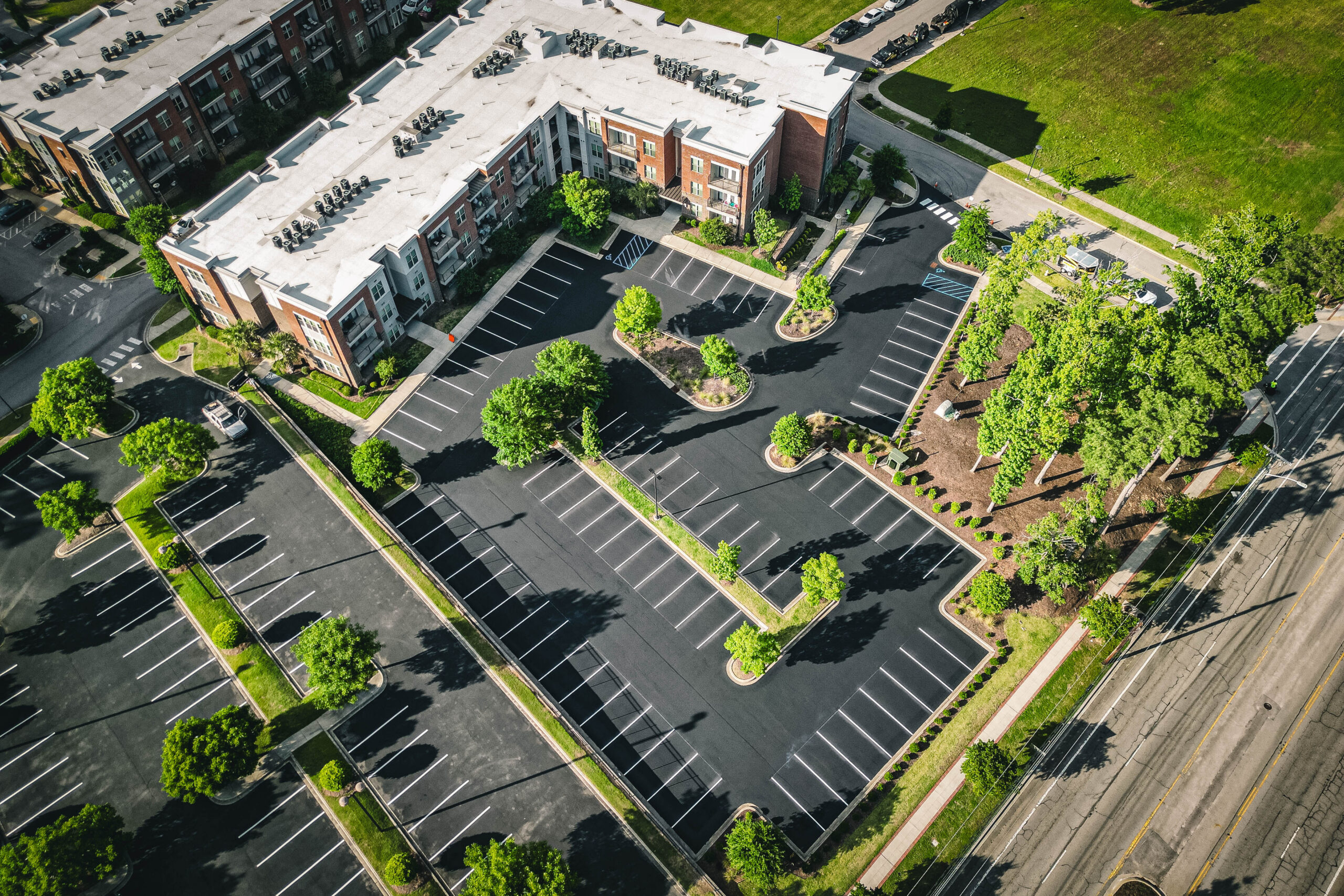
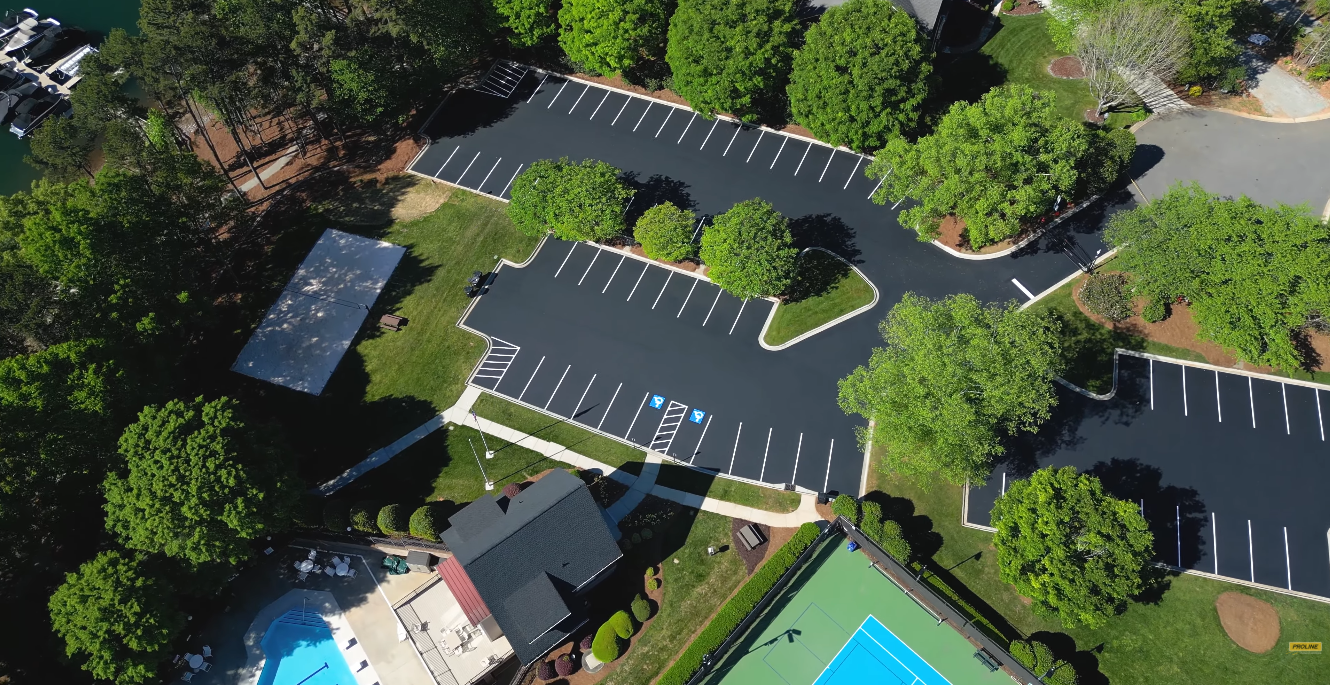
A drone will give you a bird’s-eye view of the whole site and will show you the pattern wear that you simply can’t see from the ground. A night inspection with the vehicle headlights will show you how reflective the lines are, which is obviously important for drive lanes and crosswalks. Neither of those methods in any way replaces a ground walk, as you still need to touch the paint and check the adhesion. We use the drone for large shopping centers and the night drive for sites that have a lot of evening traffic. You can use both as a first pass before you do the full walk.
How do I set up a system so residents report striping problems early?
Create one email address or one online form that goes directly to your maintenance coordinator. Ask the residents to include the stall number, a photo, and the date that they first noticed the problem. Put up a small sign near the mailboxes or the leasing office with the contact details. Respond to all reports within two working days so the residents see that their reports are being acted upon. Add each report to your photo log so that you can identify any recurring problem areas.
Can I touch up a few worn spots myself with a can of paint?
You can use hand paint for a very minor cosmetic touch-up, but the end result is often going to look rather uneven against the original lines. You can end up with a mismatch of paint types and colors, and the thin touch-up will wear off much quicker in the wheel path. It will also fail on a cold or damp surface (even in a very small area). Hand painting should never be used in place of markings in accessible areas, fire lanes, or crosswalks, as those areas have to meet certain dimensions. Our advice would be to call a striping contractor for anything beyond a few inches of line.
How do I tell normal wear from damage that I should have a contractor review?
Normal wear will manifest itself as even fading in the wheel paths and high traffic lanes after a year or so of use. Damage will be evident as lifting, flaking, a chalky film, or lines that disappear right up to the crack or drain. Take photos with a ruler or a coin by the affected area to give a good idea of the scale. Take a photo of the damaged area and compare it with a protected area (e.g., a stall at the edge of the lot which sees very little traffic). Send the photos and the stall numbers to your contractor and ask for a written assessment so you have a record.