Complete Guide to Parking Lot Optimization: Maximize Value, Safety, and Functionality
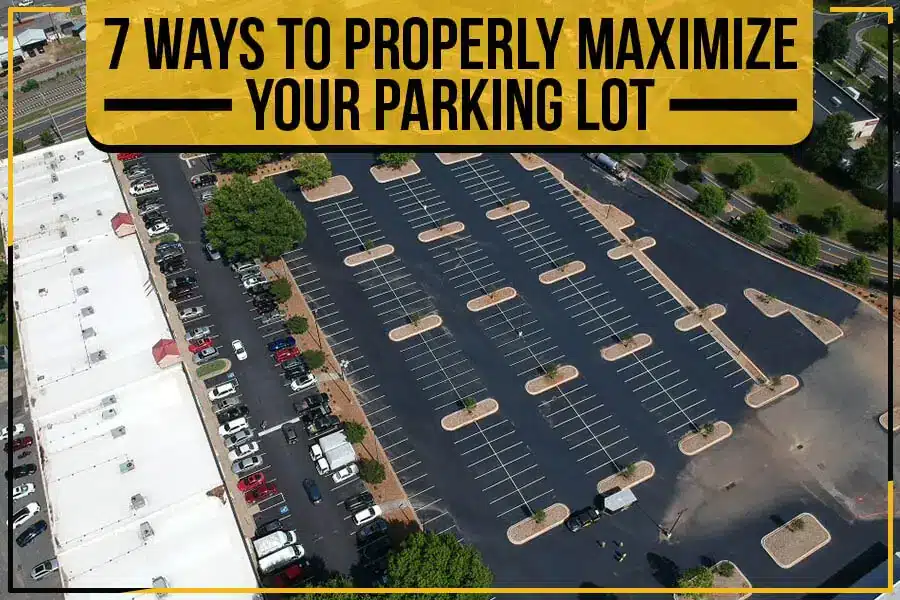
Parking lot optimization represents a strategic approach to managing one of your most valuable commercial assets. For property managers, facility directors, and business owners across Charlotte and beyond, a well-maintained parking lot directly impacts property value, tenant satisfaction, customer perception, and operational efficiency. This comprehensive guide explores seven essential strategies to properly optimize your parking lot and maximize its return on investment.
Understanding Parking Lot Optimization and Its Business Impact
Parking lot optimization involves deliberate actions to enhance functionality, safety, aesthetics, and longevity of your pavement infrastructure. Unlike basic maintenance, optimization focuses on strategic improvements that generate measurable returns through reduced liability, improved property appeal, and extended asphalt lifespan. Property managers who implement comprehensive optimization strategies report higher occupancy rates, improved tenant retention, and increased property valuations.
The parking lot represents far more than a utilitarian space—it’s often the first impression customers and tenants receive. A poorly maintained lot signals neglect and creates safety concerns, while an optimized parking area demonstrates professional management and attention to detail. This distinction directly affects your bottom line through tenant renewal rates, customer frequency, and property appraisal values.
Strategy 1: Implement Preventive Sealcoating Programs
Sealcoating serves as a protective barrier against UV rays, water penetration, and chemical damage—the primary culprits behind pavement deterioration. This preventive treatment extends your asphalt surface’s lifespan by three to five years and restores a fresh, well-maintained appearance that positively influences property perception.
Property managers should schedule sealcoating every two to three years as part of a proactive maintenance plan. The investment typically ranges from $0.05 to $0.15 per square foot, yet prevents far costlier repairs down the road. By addressing pavement preservation early, you avoid the exponential costs associated with advanced deterioration requiring complete resurfacing.
Learn more about professional sealcoating services at Proline’s sealcoating solutions.
Strategy 2: Address Cracks Before They Become Major Problems
Crack sealing represents one of the most cost-effective optimization strategies available to facility managers. Small cracks expand exponentially when water penetrates the pavement structure, eventually reaching the base layer and causing catastrophic failure. Addressing cracks when they’re small prevents them from evolving into potholes and large-scale repairs.
A proactive crack-sealing program catches damage in its early stages when remediation costs remain minimal. Professional crack sealing fills fissures with specialized materials that prevent water intrusion and further deterioration. This preventive approach transforms a reactive maintenance stance into strategic asset management.
Conduct quarterly inspections during different seasons to identify new cracks as they develop. Spring and fall transitions, when freeze-thaw cycles are most active, often reveal new damage that warrants immediate attention.
Strategy 3: Rapid Pothole Repair and Prevention
Potholes represent visible evidence of poor maintenance and create genuine safety liabilities for vehicles and pedestrians. Beyond the aesthetic damage, untreated potholes expand quickly and can damage customer vehicles—creating liability exposure and negative publicity. Property owners bear responsibility for maintaining safe premises, making pothole repair a legal and operational priority.
Professional pothole repair services restore pavement safety and appearance through proper preparation, filling, and compaction techniques. Temporary patch solutions provide short-term relief but ultimately fail, requiring repeated repairs. Strategic pothole management involves both immediate repair and addressing the underlying conditions causing premature pavement failure.
Implement a rapid response protocol where reported potholes are assessed and repaired within one business day when possible. This demonstrates operational excellence and reduces liability exposure.
Strategy 4: Professional Line Striping and Pavement Markings
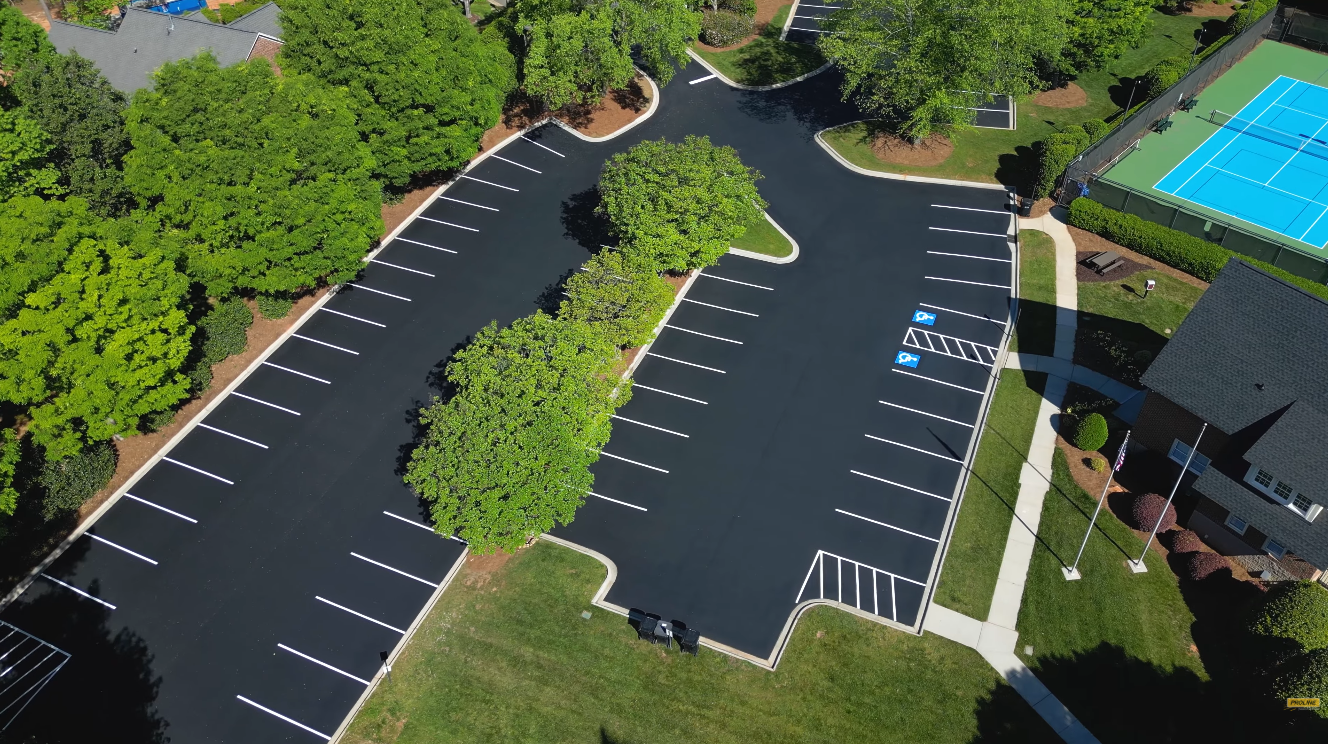
Parking lot line striping optimizes traffic flow, enhances safety, and maximizes usable parking capacity. Clear, well-maintained striping guides drivers efficiently through your lot, reduces confusion, and minimizes accident risk. Faded or missing lines create chaotic traffic patterns and underutilize available space.
Professional line striping services refresh parking space markings, directional arrows, handicap spaces, fire lanes, and loading zones. This investment typically costs $0.02 to $0.05 per square foot and delivers immediate visual improvements while enhancing operational functionality. Updated striping often reveals that lots can accommodate more parking spaces through optimized layouts.
Restripe parking lots annually or every 18 months, depending on traffic volume and weather exposure. Seasonal refreshing before peak seasons (summer for retail, fall for office complexes) maximizes the visual and functional benefits.
Strategy 5: Strategic Pavement Stenciling and Safety Markings
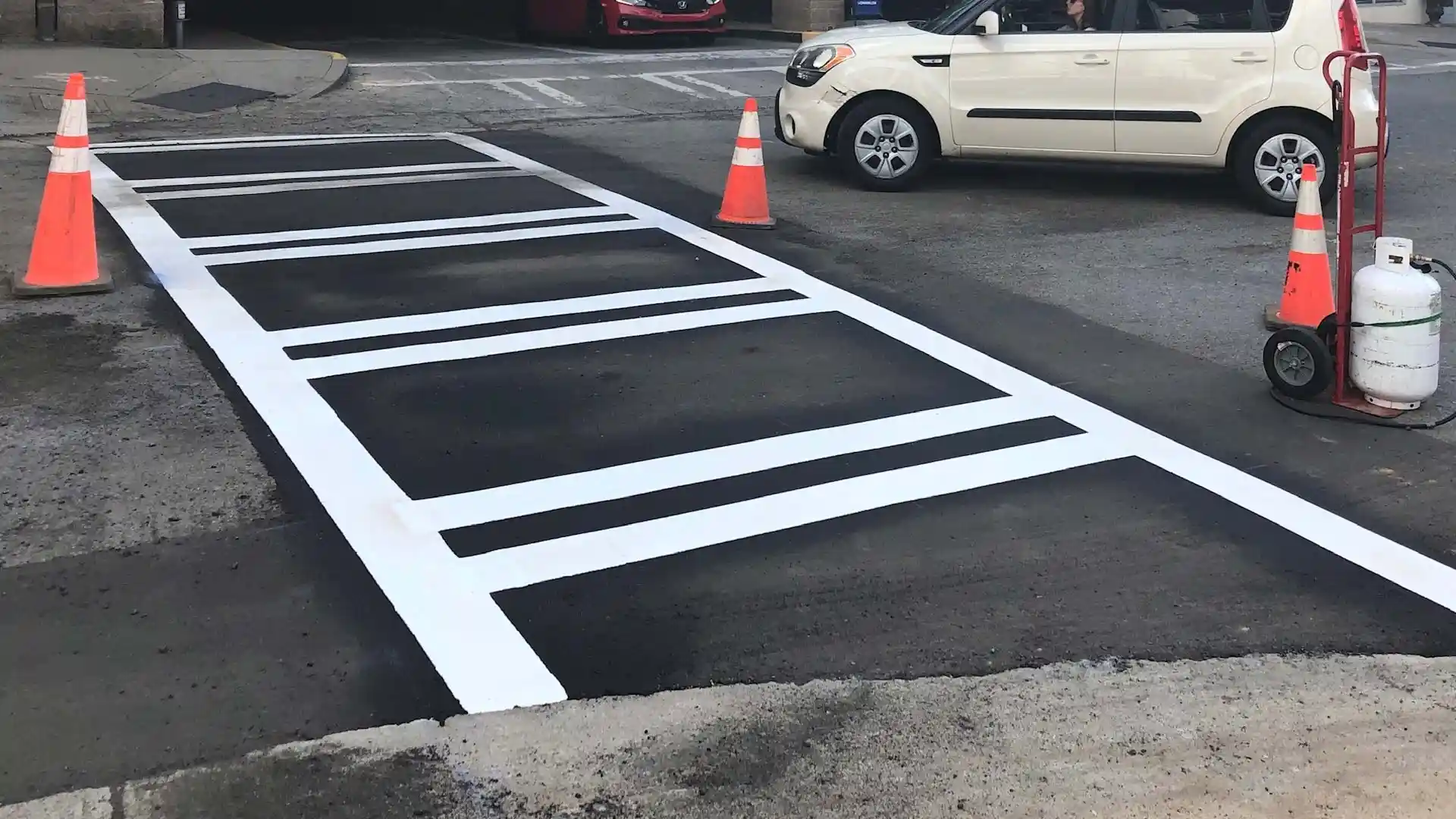
Pavement stenciling communicates critical information directly to drivers and pedestrians through painted messages and symbols. Reserved parking designations, speed limit indicators, pedestrian pathways, and hazard warnings all contribute to parking lot safety and operational clarity.
Professional stenciling and pavement markings create durable, professional communication tools that guide behavior and prevent accidents. From “No Parking” zones to delivery bay markings, strategic stenciling prevents costly errors and reinforces safety protocols. Businesses with clear, visible markings experience fewer parking violations, traffic conflicts, and safety incidents.
Audit your parking lot to identify areas where additional stenciling would improve clarity or safety. Common opportunities include pedestrian crosswalk markings, adjacent-business access warnings, and emergency vehicle route demarcation.
Strategy 6: Drainage Optimization and Water Management
Proper drainage prevents water accumulation, which accelerates pavement degradation and creates safety hazards including puddles, hydroplaning risks, and slippery surfaces. Water trapped beneath the pavement surface causes subsurface erosion, leading to base layer failure and catastrophic pavement collapse.
During lot inspection, evaluate drainage patterns during and after rainfall. Identify low spots where water pools and develop remediation strategies such as base repairs, surface regrading, or drain infrastructure enhancement. Proper drainage investment prevents far costlier structural repairs and extends overall pavement lifespan.
Incorporate drainage considerations into any resurfacing or reconstruction projects. Modern parking lot design emphasizes efficient water management as a core component of asset longevity.
Strategy 7: Comprehensive Maintenance Scheduling and Asset Tracking
Systematic maintenance scheduling ensures consistent care and prevents oversight. Property managers juggling multiple responsibilities benefit enormously from documented maintenance calendars that track sealcoating cycles, line striping schedules, crack-sealing inspections, and seasonal assessments.
Develop a master maintenance plan that specifies timing for each optimization activity throughout the year. Document completed work, costs, and contractor information for future reference and budgeting. This systematic approach prevents expensive emergency repairs by catching issues early and maintaining consistent care standards.
Implement quarterly walkthrough inspections where you document conditions via photos, video, and written notes. This creates a visual record of deterioration patterns and helps prioritize capital investments strategically.
Parking Lot Optimization Strategies Comparison Table
| Optimization Strategy | Average Cost Per Square Foot | Lifespan Extended | Primary ROI Benefit | Timeline Priority |
|---|---|---|---|---|
| Sealcoating | $0.05–$0.15 | 3–5 years | Extended asphalt life | Every 2–3 years |
| Crack Sealing | $0.25–$0.75 per linear foot | Prevents major failure | Prevents pothole formation | As needed (quarterly inspections) |
| Pothole Repair | $50–$150 per pothole | Immediate safety restoration | Liability reduction | Within 24 hours of discovery |
| Line Striping | $0.02–$0.05 | 12–18 months | Safety and capacity optimization | Annually or as faded |
| Pavement Stenciling | $0.03–$0.08 | 18–24 months | Safety communication and compliance | As needed with striping refresh |
| Drainage Repairs | $0.50–$2.00+ | Prevents structural failure | Prevents catastrophic damage | As part of major repairs |
| Comprehensive Resurfacing | $1.50–$3.00 | 10–15 years | Complete restoration | When patches exceed 25% of surface |
Frequently Asked Questions About Parking Lot Optimization
How often should I perform sealcoating on my commercial parking lot?
Most property managers should sealcoat parking lots every two to three years. However, the optimal interval depends on local climate conditions, traffic volume, and existing pavement condition. Lots in harsh climates with freeze-thaw cycles may benefit from more frequent application, while lightly trafficked surfaces in stable climates might extend intervals to three years. A professional assessment helps determine your specific lot’s ideal sealcoating schedule.
What’s the difference between temporary pothole patching and professional repair?
Temporary patches address surface damage without properly preparing the underlying base, resulting in rapid failure and repeated repairs. Professional pothole repair involves removing damaged material completely, preparing the base properly, and using appropriate asphalt mixtures applied in correct layers and thoroughly compacted. While professional repair costs more initially, it prevents the cycle of repeated temporary fixes and ultimately saves money through fewer total repairs.
Can improved line striping actually increase my parking capacity?
Yes, professional line striping assessment often identifies layout inefficiencies that reduce available parking. By optimizing space dimensions, directional flow, and access patterns, property managers frequently accommodate 5–15% additional parking spaces without expanding the physical lot. This increased capacity directly increases revenue for leased lot situations or improves operational convenience for facility-dependent businesses.
How do I know if my parking lot needs crack sealing versus full resurfacing?
If cracks cover less than 15% of the pavement surface and the base structure remains sound, crack sealing extends lifespan economically. When cracks exceed 25% of surface area, appear interconnected in an alligator pattern, or accompany significant base failure, resurfacing becomes necessary. A professional pavement assessment evaluates both visible damage and underlying structural integrity to recommend the appropriate intervention level.
What’s the typical ROI timeline for parking lot optimization investments?
Preventive maintenance strategies (sealcoating, crack sealing, striping) deliver ROI through extended pavement lifespan and avoided emergency repairs—typically recovering their cost 3–5 times over compared to reactive approaches. A $5,000 sealcoating investment extending the lot’s life by three years avoids a $30,000 resurfacing project, generating clear ROI within months. Additionally, improved aesthetics and functionality support higher property valuations and tenant retention, creating secondary financial benefits beyond pavement preservation.
Getting Started with Your Parking Lot Optimization Plan
Parking lot optimization doesn’t require choosing between all strategies simultaneously. Begin with a professional pavement assessment to identify your lot’s specific condition, remaining lifespan, and prioritized improvement opportunities. This diagnostic approach guides strategic investment decisions, ensuring your maintenance budget generates maximum returns.
Document your lot’s current condition with dated photos and notes. Schedule seasonal inspections to monitor changes. Develop a multi-year maintenance plan that balances preventive care with strategic improvements. This systematic approach transforms parking lot management from reactive problem-solving into proactive asset optimization.
Whether you manage a small retail center, large office complex, or apartment community, these seven optimization strategies apply universally. The specific investment timeline and intensity will vary based on your lot’s age, condition, climate, and operational demands—but the principle remains constant: strategic, preventive investment in parking lot optimization delivers measurable returns through extended asset lifespan, improved safety, enhanced operational efficiency, and increased property value.
Contact Proline for Professional Parking Lot Optimization Services
Proline Parking Lot Maintenance brings two decades of expertise to parking lot optimization across Charlotte and the surrounding region. Whether you need a comprehensive assessment, strategic maintenance planning, or specific services like sealcoating, crack sealing, pothole repair, line striping, or pavement stenciling, our professional team delivers results that maximize your asset’s value and lifespan.
Don’t let deferred maintenance compound into expensive emergency repairs. Contact Proline today at 704-530-5366 or visit prolineplm.com to schedule your free parking lot assessment. Our team will evaluate your specific situation, recommend optimization strategies tailored to your needs and budget, and help you develop a maintenance plan that protects your investment for years to come.