
5 Critical Factors to Consider Before Installing Speed Bumps in Your Parking Lot
Speed bumps are traffic calming devices designed to slow vehicle movement in parking lots and are among the most cost-effective safety investments commercial property managers can make. Before investing in speed bump installation, property managers and business owners in the Charlotte metropolitan area should evaluate five essential factors that directly impact safety, liability, cost, and long-term performance.
What Are Speed Bumps and Why Do Parking Lots Need Them?
Speed bumps are raised pavement features, typically 3 to 4 inches high and 12 feet wide, installed across parking lot driving surfaces to force vehicles to reduce speed. Speed bumps differ from speed humps, which are gentler and wider, accommodating faster speeds. When properly installed by experienced pavement contractors, speed bumps significantly reduce vehicle-pedestrian accidents, decrease parking lot liability claims, and improve overall property safety—critical considerations for commercial properties serving Charlotte, Concord, and surrounding areas.
Factor 1: Traffic Flow and Parking Lot Layout
Your parking lot’s layout determines whether speed bumps will effectively slow traffic without creating dangerous bottlenecks or congestion. Assess your current traffic patterns and identify high-risk zones where vehicles commonly exceed safe speeds.
How Layout Impacts Speed Bump Placement
Speed bumps work best in parking lots with clear, linear traffic aisles and predictable vehicle flow. Properties with multiple entrance/exit points, circular patterns, or complex layouts may require multiple speed bumps—increasing costs to $500–$1,500 per bump installation. Large parking lots (10,000+ square feet) typically need 2–4 speed bumps; smaller lots (under 5,000 square feet) may require only one. Strategic placement near pedestrian crossings, building entrances, and high-traffic zones maximizes safety impact while minimizing unnecessary vehicle deceleration in low-risk areas.
Emergency Access and ADA Compliance Considerations
Speed bumps cannot be placed across fire lanes, emergency exits, or ADA-accessible routes. Verify your parking lot’s fire code requirements and accessibility standards before committing to placement. The Americans with Disabilities Act (ADA) mandates that handicapped-accessible parking spaces and connecting routes remain unobstructed; speed bump placement must account for this. Consult local Charlotte or Mecklenburg County building officials if unclear on regulations.
Factor 2: Pavement Condition and Underlying Asphalt Quality
Installing speed bumps on deteriorated, cracked, or poorly maintained asphalt leads to costly failures, safety hazards, and customer complaints. The underlying pavement condition directly determines installation success and longevity.
Assess Your Current Asphalt Condition
Before speed bump installation, have a professional pavement contractor evaluate asphalt condition. Parking lots with extensive cracking, potholes, rutting, or raveling are not suitable for speed bumps until repairs are completed. Patched or repaired areas should be properly sealed and fully cured before speed bump installation. If your parking lot shows signs of significant wear—faded or missing line markings, visible damage, or a rough surface—consider sealcoating or crack sealing as preparatory work. The typical cost for pavement prep ranges from $0.50–$2.00 per square foot depending on damage severity.
Sealcoating and Crack Sealing Benefits Before Installation
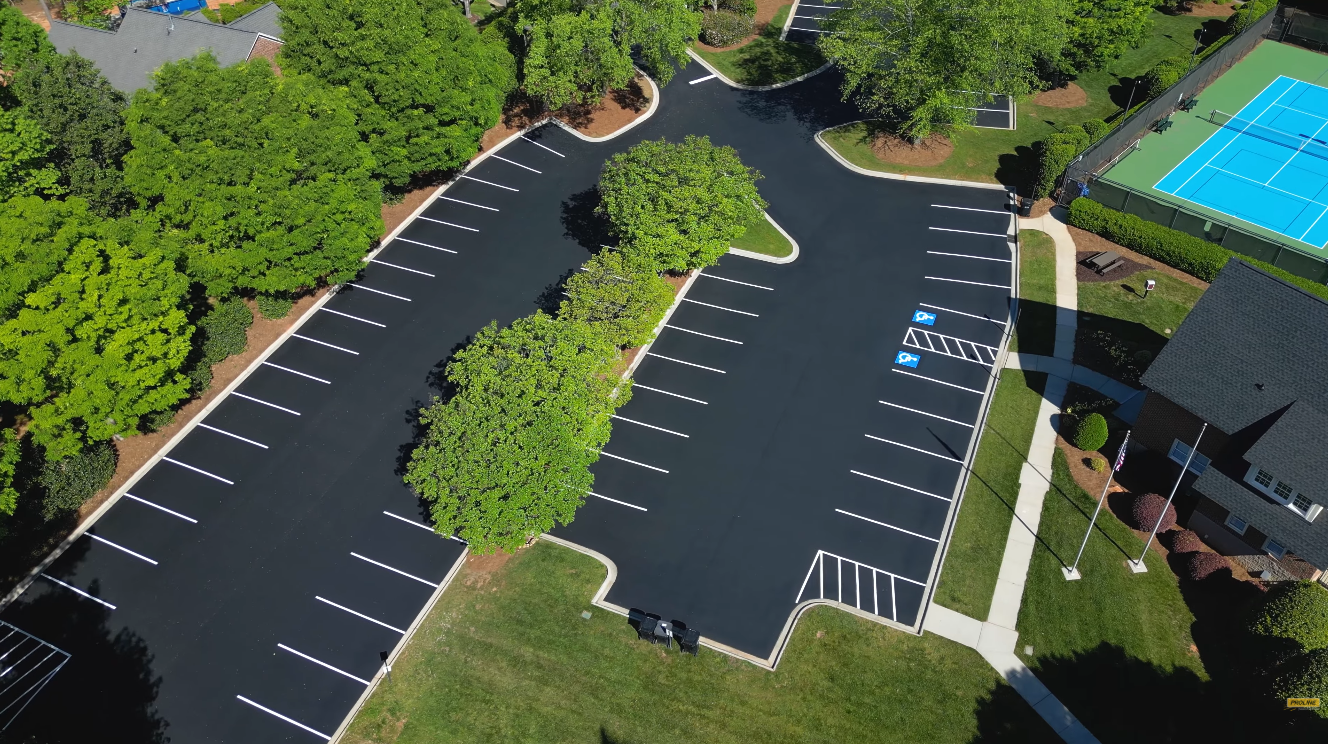
Proline Parking Lot Maintenance recommends sealcoating before speed bump installation to ensure a solid, stable foundation. Sealcoating protects asphalt from oxidation and water infiltration, typically costing $0.10–$0.25 per square foot. This protective layer extends pavement life 3–5 years and provides a cleaner surface for speed bump adhesion. Crack sealing ($1–$3 per linear foot) addresses smaller fissures before they expand. Combining these services before speed bump installation prevents future maintenance headaches and protects your investment.
Factor 3: Vehicle Type and Suspension Systems Used in Your Lot
Different vehicles respond differently to speed bumps. Commercial properties serving delivery fleets, service vehicles, or mixed-use facilities must account for the variety of vehicles accessing the parking lot.
Speed Bumps and Vehicle Damage Concerns
Standard speed bumps (3–4 inches high) are designed for passenger vehicles and SUVs with standard suspensions. Low-clearance vehicles—including sports cars, luxury sedans, and some delivery vans—may sustain damage when crossing poorly designed or excessively tall bumps. Approach angles, suspension flex, and wheelbase length all affect impact severity. For parking lots serving primarily low-clearance vehicles, speed humps (1.5–2 inches) are preferable to bumps, or alternative traffic calming methods such as raised crosswalks or pavement markings and stenciling may be more appropriate.
Delivery Fleet Considerations
If your commercial property receives frequent delivery trucks or has dedicated loading zones, speed bumps in those areas may cause vehicle damage claims or deter service providers. Consult with your facility’s primary delivery services regarding their vehicles and suspension tolerances. Some properties install speed bumps only in non-delivery parking areas, using alternative traffic control methods in service zones.
Factor 4: Drainage and Water Management
Improper drainage around speed bumps causes water pooling, asphalt erosion, and premature pavement failure. Water management is a critical but often overlooked factor in speed bump installation.
How Speed Bumps Affect Water Flow
Speed bumps create barriers to water runoff, potentially causing water to accumulate on one side of the bump. Over time, standing water infiltrates underlying asphalt layers, weakening the foundation and creating potholes near the bump perimeter. Charlotte’s subtropical climate, with significant spring and summer rainfall (45–50 inches annually), makes drainage critical. If your parking lot already has drainage issues—visible water pooling, algae growth, or soft asphalt edges—address these before speed bump installation. Proper slope, catch basins, and sub-surface drainage should be evaluated by a drainage specialist.
Drainage Solutions and Prevention
Work with your contractor to ensure speed bumps are installed on properly sloped surfaces with adequate crown and side drainage. Permeable speed bump materials and slots along bump edges can improve drainage. Post-installation, monitor for water accumulation during heavy rain. If ponding occurs, additional drainage modifications (such as trench drains or redirected gutters) may be necessary at a cost of $500–$2,000 depending on scope. Regular sealcoating and maintenance helps protect asphalt from water damage around bump installations.
Factor 5: Cost, Material Selection, and Maintenance Requirements
Speed bump installation costs, material durability, and ongoing maintenance significantly impact long-term return on investment. Understanding these financial factors helps property managers make informed decisions.
Speed Bump Installation Costs
Speed bump costs vary by material and installation method. Asphalt-installed bumps cost $500–$1,200 per unit; rubber or composite bumps range $300–$800. A mid-sized commercial lot (8,000–12,000 square feet) with 3–4 speed bumps typically runs $2,000–$4,800 installed. Additional costs include pavement prep ($0.50–$2.00 per sq ft), potential pothole repairs ($75–$300 per hole), and line restriping around bumps ($1–$3 per linear foot). Always request a detailed quote that itemizes all components.
Material Comparison: Asphalt vs. Rubber vs. Composite
| Material | Lifespan | Cost per Unit | Maintenance | Best For |
|---|---|---|---|---|
| Asphalt | 5–8 years | $500–$1,200 | Resurfacing every 3 years; sealcoating | Permanent installations, aesthetic consistency |
| Rubber Modular | 8–10 years | $300–$800 | Minimal; occasional replacement of fasteners | Temporary solutions; high-traffic areas |
| Composite (recycled plastic) | 10–15 years | $400–$1,000 | Annual inspection; weather-resistant | Eco-conscious properties; wet climates |
Asphalt bumps integrate seamlessly with parking lot surfaces and require less upfront investment but need regular maintenance. Rubber and composite bumps have higher upfront costs but require less maintenance over time. For Charlotte-area properties planning to maintain the speed bump for 7+ years, composite materials offer the best lifecycle value.
Ongoing Maintenance and Replacement Timelines
All speed bumps require periodic maintenance. Asphalt bumps need resealing every 2–3 years ($100–$300 per bump) and may require resurfacing at 5–8 years. Rubber bumps need annual fastener checks and replacement after 8–10 years. Budget $200–$500 annually per bump for maintenance and inspections. Plan for full replacement cycles: asphalt bumps every 5–8 years, rubber every 8–10 years, and composite every 10–15 years.
How Speed Bumps Complement Your Broader Maintenance Plan
Speed bump installation works best as part of a comprehensive parking lot maintenance strategy. Coordinate bump installation with other critical services to maximize safety and property value.
Integration with Sealcoating and Crack Repair
Install speed bumps on recently sealcoated or crack-sealed surfaces for optimal durability. Timing these services together (within 30 days) reduces contractor mobilization costs and ensures coordinated pavement protection. Schedule sealcoating 1–2 years after speed bump installation to extend overall lot lifespan.
Pairing with Line Striping and Stenciling
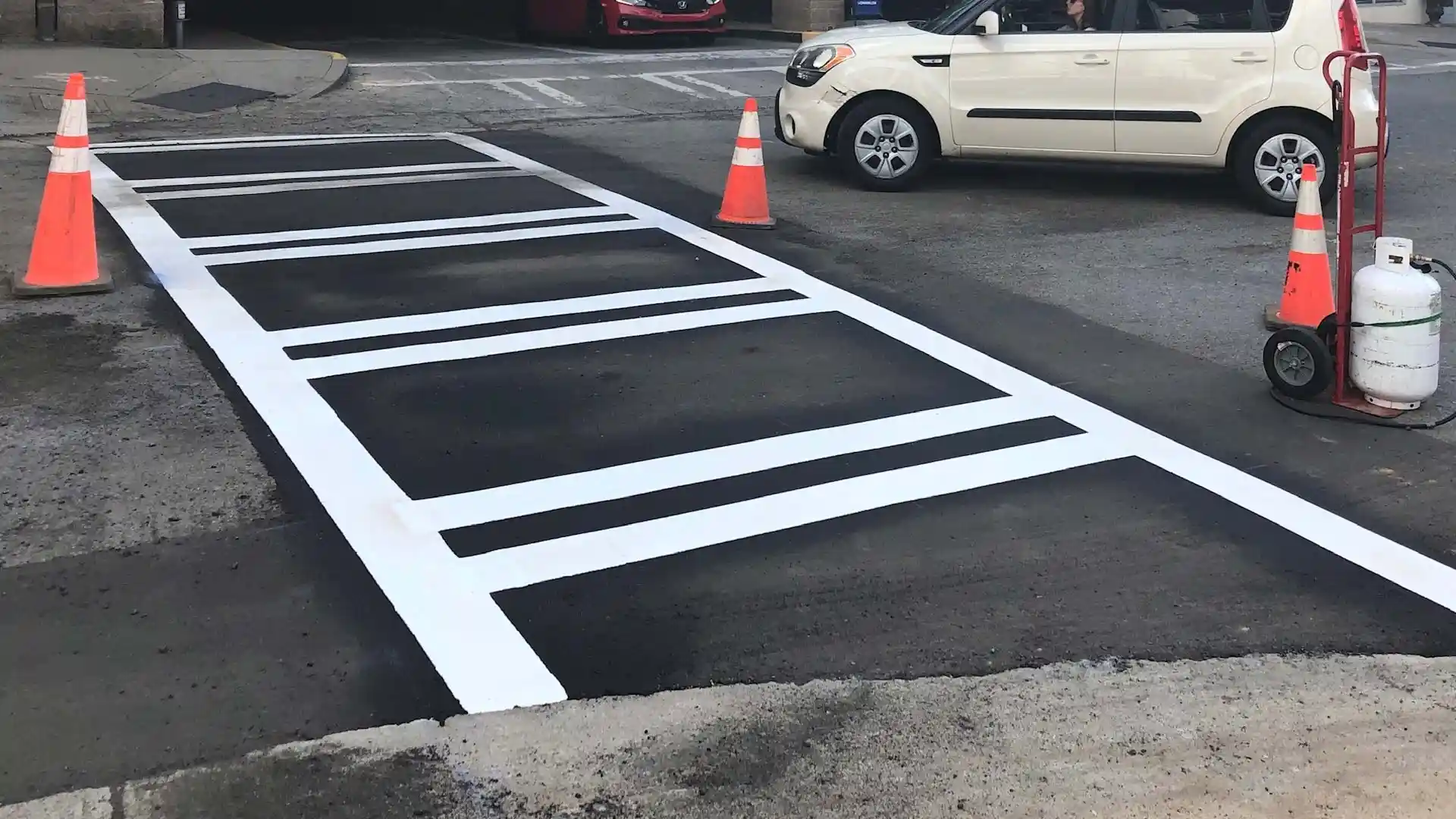
Professionally installed line striping and stenciling clearly delineate speed bump locations, improving driver awareness and reducing liability. Reflective bump markings and high-visibility paint increase nighttime safety. Budget $1–$3 per linear foot for striping around bumps.
Frequently Asked Questions
How long does speed bump installation take?
Standard speed bump installation typically takes 1–2 days for a small lot (1–2 bumps). Larger projects with multiple bumps, drainage modifications, or asphalt repairs may require 3–5 days. Most contractors schedule installation during off-hours or weekends to minimize parking lot disruption. Plan for 24–48 hours of curing before allowing vehicle traffic.
Are speed bumps required by code for commercial parking lots?
Speed bumps are not universally mandated by building code, but many municipalities encourage or require traffic calming devices in high-pedestrian areas. Charlotte and North Carolina building codes do not specifically mandate speed bumps, but HOAs, commercial property managers, and insurance companies often require them as liability mitigation. Check your local ordinances and HOA rules; consult your liability insurance provider about discount incentives for traffic calming installations.
Can speed bumps cause vehicle damage?
Properly designed and installed speed bumps should not cause damage to vehicles with standard suspensions at safe speeds (typically 5–15 mph). However, low-clearance vehicles crossing bumps at high speeds may sustain damage to undercarriage components, alignment, or suspension. Clear signage, proper speed bump height (3–4 inches max), and driver awareness reduce damage risk. Most modern speed bumps are designed to accommodate standard passenger vehicles without harm.
How do speed bumps affect parking lot drainage?
Improperly installed speed bumps can disrupt water flow and cause pooling. Professional installation includes assessment of existing drainage patterns and may require drainage modifications (trench drains, slope adjustment, permeable bump materials). Proper design ensures bumps function as intended without creating water management problems.
What’s the difference between speed bumps and speed humps?
Speed bumps are 3–4 inches high and designed for slow (5–15 mph) speeds, while speed humps are 1.5–2 inches high and accommodate moderate speeds (15–25 mph). Humps are gentler on vehicles and better for high-traffic areas. For parking lots where minimal speed reduction is desired, humps are preferable. For maximum safety in loading zones or high-pedestrian areas, bumps are more effective.
Can I install speed bumps myself, or do I need a professional?
Speed bump installation requires proper assessment of pavement condition, drainage, and ADA compliance—tasks best handled by licensed pavement contractors. DIY rubber bump installation may be possible for very small residential applications, but commercial properties should engage professionals to ensure code compliance, proper drainage design, and warranty coverage. Professional installation provides liability protection and ensures optimal long-term performance.
Protect Your Parking Lot Investment with Professional Installation
Speed bumps are effective, cost-efficient safety tools when properly evaluated and installed. The five factors outlined—traffic flow, pavement condition, vehicle types, drainage, and lifecycle costs—require expert assessment before installation. Skipping this analysis often leads to costly failures, safety liability, and customer dissatisfaction.
If you operate a commercial property in the Charlotte metropolitan area—whether in Charlotte, Concord, Mooresville, or surrounding regions—Proline Parking Lot Maintenance can evaluate your specific parking lot needs and recommend the optimal traffic calming solution. We provide comprehensive pavement assessment, professional speed bump installation, and coordinated sealcoating, line striping, and asphalt repair services to ensure your entire parking lot functions safely and maintains value for years to come.
Ready to improve safety and protect your property? Contact Proline Parking Lot Maintenance today at 704-530-5366 or visit us at prolineplm.com for a free parking lot evaluation and cost estimate. Let our experienced team help you make informed decisions about speed bumps and comprehensive lot maintenance tailored to your Charlotte-area property.