Complete Guide to Asphalt Maintenance: Extend Your Pavement Lifespan
Asphalt maintenance is the systematic approach to preserving, protecting, and extending the functional life of asphalt surfaces through planned interventions and preventive care. When properly maintained, asphalt pavements can last 20-30 years, delivering exceptional value for property owners across the Charlotte, NC region. Neglecting maintenance, however, dramatically shortens pavement lifespan and escalates repair costs exponentially.
Your parking lot, driveway, or commercial asphalt surface represents a significant investment. The difference between a well-maintained asset and a deteriorating liability often comes down to one critical factor: taking action before problems become crises. This comprehensive guide reveals the essential asphalt maintenance strategies that property managers and facility directors should implement immediately.
Why Asphalt Maintenance Should Be Your Top Priority
Asphalt pavements are under constant assault. UV rays break down the binding agents that hold aggregate particles together. Temperature fluctuations create stress cycles that generate cracks. Water infiltrates these cracks, freezing and expanding beneath the surface. Traffic loads compound every structural weakness, accelerating deterioration.
Without intervention, minor surface damage evolves into potholes, alligator cracking, and eventually, complete structural failure. At that stage, full-depth replacement becomes necessary—a far more expensive proposition than preventive maintenance. Strategic asphalt maintenance stops this progression at early, manageable stages.
The Four Essential Measures for Maximum Asphalt Lifespan
Professional property management demands a maintenance strategy built on four complementary interventions. Together, these measures create a comprehensive defense against asphalt deterioration while maximizing your return on the original investment.
1. Seal Coating: Your First Line of Defense
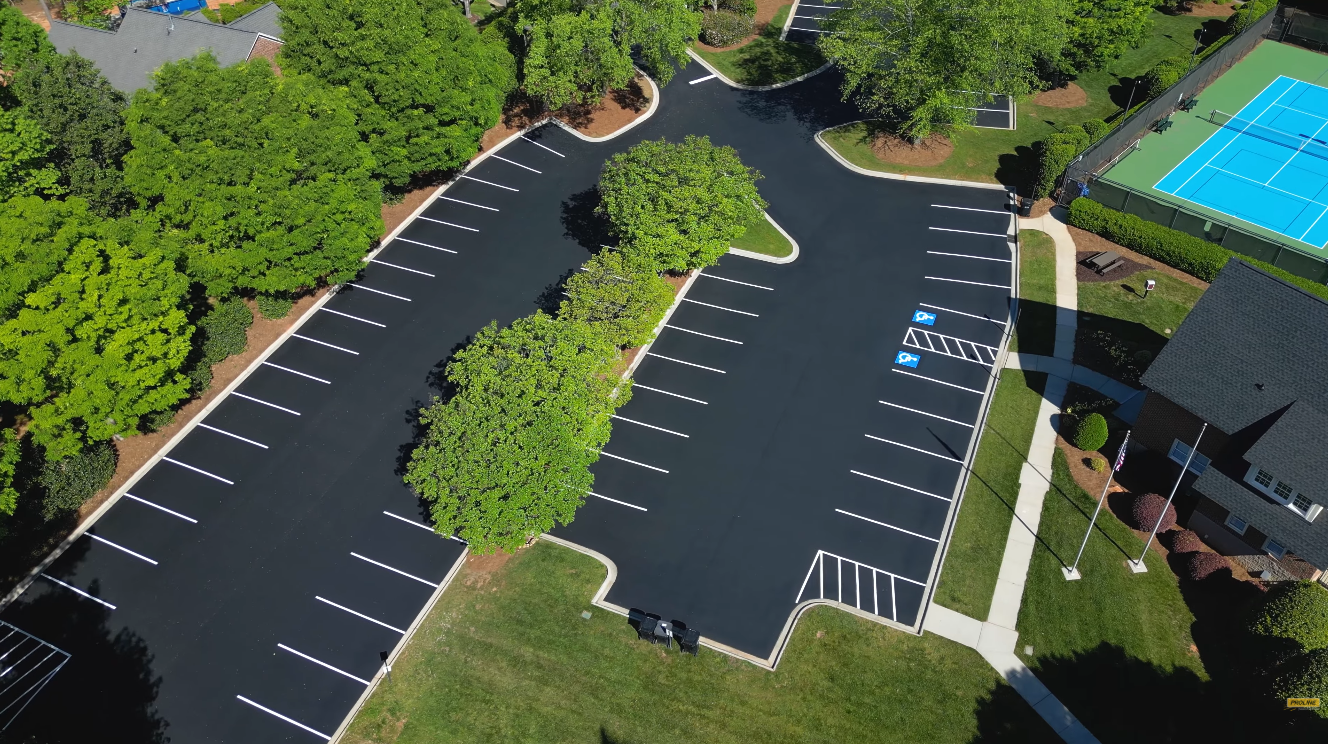
Seal coating represents the most cost-effective asphalt maintenance intervention available. This protective layer acts as a barrier between your asphalt surface and the elements that cause degradation. A quality seal coat prevents water infiltration, blocks UV radiation, and extends asphalt lifespan by 10+ years when applied strategically.
Professional sealcoating should be applied every 2-3 years on heavily trafficked surfaces, and every 3-5 years on standard-use parking lots. The treatment is most effective when applied to young asphalt (within 6 months of installation) and as soon as minor damage becomes visible. Early application prevents expensive crack expansion and patchwork repairs.
At Proline Parking Lot Maintenance, our professional sealcoating services utilize premium materials and application techniques that maximize durability and appearance. We assess your specific surface conditions and recommend custom schedules tailored to your traffic patterns and climate exposure.
2. Crack Filling: Stop Deterioration Before It Spreads
Cracks in asphalt create entry points for water and freeze-thaw damage. What begins as a hairline surface crack can rapidly expand into a network of structural damage if left unaddressed. Proactive crack filling seals these vulnerabilities before water penetration occurs, preventing exponential damage escalation.
Different crack types require different treatment approaches. Linear cracks benefit from specialized crack-filling compounds. Alligator cracking (interconnected patterns) indicates structural issues that may require asphalt milling and overlays. Potholes demand immediate attention to prevent traffic hazards and underlying base damage.
Proline’s crack sealing services employ professional-grade materials that flex with temperature changes and remain durable through multiple seasons. We prioritize cracks systematically, addressing the most problematic areas first to maximize damage prevention per dollar invested. Combined with regular inspections, crack sealing maintains structural integrity and prevents cascade failures.
3. Proper Drainage: The Hidden Foundation of Asphalt Maintenance
Water is asphalt’s primary enemy. Inadequate drainage creates standing water that seeps through surface cracks and weakens the base layers beneath the visible asphalt. This subsurface damage remains invisible until pavement suddenly fails catastrophically. Proper drainage prevents water accumulation before damage begins.
Effective drainage systems incorporate proper surface slope (typically 2% minimum), functional catch basins, clear storm drain systems, and permeable base materials that prevent water saturation. During asphalt maintenance planning, professional contractors evaluate existing drainage performance and recommend enhancements that protect your investment long-term.
Many property owners overlook drainage during maintenance discussions, focusing exclusively on surface treatments. However, addressing drainage issues simultaneously with sealcoating and crack filling creates a truly comprehensive asphalt maintenance strategy. Water management prevents the vast majority of accelerated pavement failure.
4. Regular Inspections: The Foundation of Preventive Strategy
Structured asphalt maintenance programs begin with comprehensive inspections that identify problems at the earliest stages. Professional assessment reveals which areas need immediate attention, which surfaces can extend their service life through sealcoating, and which components require drainage improvements.
Inspections should occur at minimum seasonally, and ideally quarterly in areas experiencing significant temperature variation or heavy traffic. Spring inspections evaluate winter damage. Summer assessments track sun damage and thermal cracking. Fall reviews identify maintenance priorities before winter weather. Early detection of problems prevents expensive emergency repairs and extends overall asphalt lifespan.
Proline’s inspection protocols document current conditions with detailed photography and analysis, providing property managers with clear maintenance recommendations and realistic timeline projections. This data-driven approach enables budgeting accuracy and prevents reactive crisis management.
Asphalt Maintenance Schedule Comparison
Understanding recommended timing for different maintenance interventions helps property managers schedule work efficiently and budget accurately. The following table provides guidance for typical commercial parking lots in the Charlotte, NC area, adjusted for local climate conditions and traffic patterns.
| Maintenance Task | Initial Application | Frequency | Typical Cost (per sq ft) | Prevents Damage Worth |
|---|---|---|---|---|
| Professional Inspection | Year 1 | Quarterly to Annually | $0.02-0.05 | $0.50-2.00 |
| Sealcoating | 6-12 months post-install | Every 2-3 years | $0.15-0.30 | $1.00-3.00 |
| Crack Filling | As cracks appear | Annually or as needed | $0.25-0.75 | $2.00-5.00 |
| Pothole Repair | Immediately upon discovery | As needed | $1.50-3.00 | $5.00-15.00 |
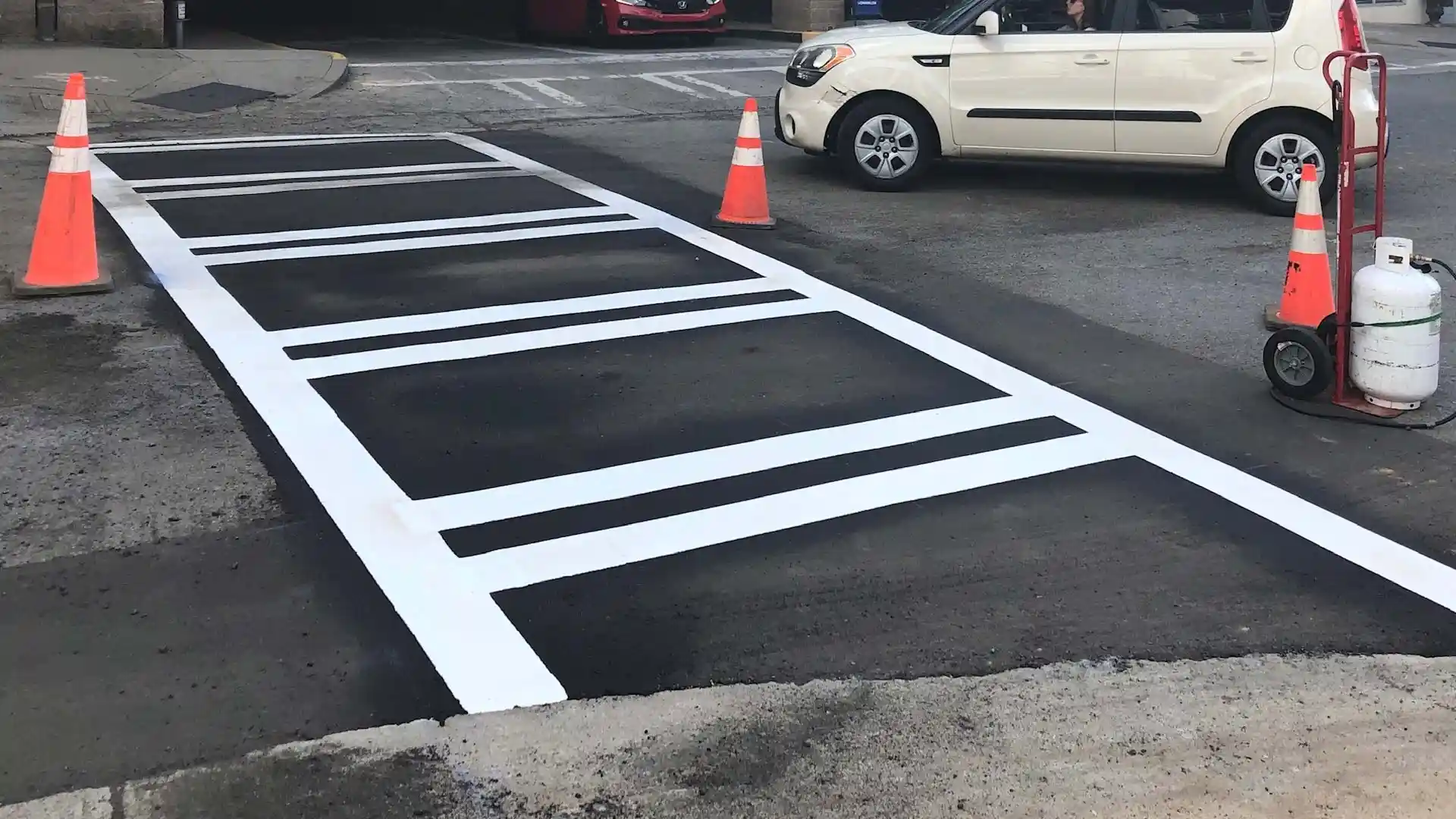
| Line Striping/Marking | Installation or after sealcoat | Every 1-2 years | $0.04-0.08 | $0.20-0.50 |
This comparison illustrates a fundamental economic principle: preventive asphalt maintenance costs far less than emergency repairs. A $0.15-0.30 per square foot sealcoat prevents $1.00-3.00 per square foot in future damage. Regular crack filling at $0.25-0.75 prevents pothole repairs costing $1.50-3.00. The math strongly favors proactive maintenance strategies.
Integrating Asphalt Maintenance into Your Facility Management Plan
Successful asphalt maintenance requires more than isolated interventions. A comprehensive facility management approach integrates pavement care with overall property asset preservation. Property managers should establish annual budgets based on facility age, traffic patterns, and climate conditions, then implement maintenance on a predictable schedule.
Documentation proves essential. Maintain detailed records of all inspections, maintenance activities, and repairs. This history helps contractors understand your surface evolution and recommend appropriate future interventions. It also provides documentation for insurance purposes and capital asset accounting.
Coordinate sealcoating, crack filling, pothole repairs, and line striping services strategically. After crack filling hardens, apply sealcoat over the entire surface. After sealcoat cures fully, refresh line striping. This sequence maximizes the effectiveness of each intervention and creates a cohesive, professional appearance.
Frequently Asked Questions About Asphalt Maintenance
How often should commercial parking lots receive sealcoating?
Most commercial parking lots benefit from sealcoating every 2-3 years. However, heavily trafficked areas may need treatment annually, while lightly used surfaces can extend intervals to 4-5 years. Professional inspections help determine optimal timing for your specific facility. New asphalt should receive its first seal coat within 6-12 months of installation to maximize the protective benefit before significant UV damage occurs.
What’s the difference between crack filling and pothole repair?
Crack filling addresses linear surface cracks before they penetrate deeply or widen significantly. This preventive measure seals the crack with flexible material and typically costs $0.25-0.75 per square foot. Pothole repair addresses failure that has already occurred—typically indicating water damage to base layers. Repairs involve removing deteriorated material, treating the base if necessary, and installing new asphalt. The cost ranges from $1.50-3.00 per square foot due to the more extensive work required. Prevention through early crack filling saves approximately 75% compared to pothole repair costs.
Can poor drainage really cause asphalt failure?
Yes, absolutely. Water infiltration is responsible for approximately 80% of asphalt pavement failures. When water seeps beneath the asphalt surface, it weakens the base materials and causes freeze-thaw damage during winter months. Standing water accelerates this deterioration exponentially. Proper drainage systems—including adequate slope, functional storm drains, and base layer preparation—prevent water accumulation and are essential for any asphalt maintenance strategy. Addressing drainage issues should be integrated into your overall facility preservation plan.
What is the most cost-effective asphalt maintenance approach?
The most cost-effective approach combines regular professional inspections with preventive interventions applied before major damage develops. Budget typically breaks down as: 40% inspections and planning, 30% sealcoating and crack filling, 20% drainage and base maintenance, 10% emergency repairs. This preventive strategy costs roughly $0.40-0.60 per square foot annually for well-maintained commercial parking lots. Reactive facilities that wait for visible failure may pay $1.50-3.00+ per square foot annually when emergency repairs become necessary. Preventive asphalt maintenance typically reduces long-term costs by 50-70%.
How do I determine if my asphalt needs immediate attention?
Watch for these warning signs: alligator cracking (interconnected fracture patterns), potholes of any size, standing water that doesn’t drain within 24 hours, loose aggregate or raveling, rutting (depression tracks), or rapid surface deterioration. Any visible water pooling indicates drainage problems requiring immediate professional assessment. Potholes present safety hazards and demand emergency repair. Large areas of alligator cracking suggest structural failure beginning beneath the surface. When you notice any of these conditions, contact a professional asphalt maintenance contractor immediately to prevent escalating damage.
Professional Asphalt Maintenance for Charlotte, NC Properties
Asphalt maintenance becomes significantly more effective when executed by experienced professionals who understand local climate conditions, traffic patterns, and seasonal challenges. The Charlotte, NC area presents unique conditions—hot summers that accelerate UV damage, occasional winter freeze-thaw cycles, and heavy rainfall during certain seasons. Professional contractors account for these variables when developing maintenance recommendations.
Property managers and facility directors benefit from partnering with a single contractor who understands their specific facility, maintains historical records, and proactively recommends interventions based on ongoing assessment. This relationship approach prevents costly surprises and ensures consistent, professional-quality results across all maintenance activities.
Take Action: Implement Your Asphalt Maintenance Strategy Today
Don’t let deferred maintenance transform a strategic asset into a liability. Every day without proper asphalt maintenance allows further deterioration. The four essential measures outlined in this guide—sealcoating, crack filling, proper drainage, and regular inspections—work together to extend asphalt lifespan dramatically while reducing long-term costs.
Contact Proline Parking Lot Maintenance today for a comprehensive facility assessment and customized asphalt maintenance plan. Our experienced team has helped property managers across the Charlotte area maximize pavement investment through professional, data-driven maintenance strategies.
Proline Parking Lot Maintenance
Charlotte, NC
Phone: 704-530-5366
Website: prolineplm.com