
Parking Lot Design: Essential Considerations for Property Managers and Facility Directors
Parking lot design is a critical investment for property managers, facility directors, and commercial property owners across Charlotte, Rock Hill, and the greater North Carolina and South Carolina regions. A well-designed parking lot serves as a critical customer touchpoint, improving safety, accessibility, and overall property value. Strategic parking lot design requires careful consideration of multiple factors, from traffic flow patterns to regulatory compliance, ensuring your facility meets modern standards while supporting operational efficiency.
At Proline Parking Lot Maintenance, we partner with property managers throughout the Carolinas to assess, improve, and maintain parking lots that reflect professional standards and exceed tenant and visitor expectations. This comprehensive guide explores the essential parking lot design considerations every property leader should understand.
Understanding Parking Lot Design Fundamentals
Parking lot design encompasses multiple interconnected systems working together to create safe, functional, and aesthetically pleasing parking environments. Effective parking lot design balances user experience, regulatory compliance, safety standards, and long-term maintenance requirements. Whether you’re renovating an existing lot or planning new construction, understanding these design fundamentals helps you make informed decisions that protect your investment.
The primary goal of parking lot design is creating an orderly, predictable space where drivers can safely park and navigate. This requires thoughtful planning across space dimensions, traffic patterns, accessibility requirements, and clear visual communication. When executed properly, good parking lot design actually reduces accidents, improves customer satisfaction, and minimizes maintenance costs over time.
The Four Essential Parking Lot Design Considerations
1. Parking Space Dimensions and Configuration
Standard parking space sizing forms the foundation of effective parking lot design. The most common standard parking space measures 9 feet wide by 19 feet long, providing adequate room for most vehicles while maximizing lot utilization. This dimension is established by the International Parking Institute and adopted by most municipalities across North Carolina and South Carolina.
However, parking lot design must account for varying space types and user needs. Compact spaces typically measure 8 feet by 16 feet and can comprise up to 10-15% of total spaces if your facility serves primarily personal vehicles. Accessible spaces for individuals with disabilities must meet ADA requirements, with standard accessible spaces measuring 8 feet wide with an additional 5-foot access aisle, or 96 inches wide for van-accessible spaces with an 8-foot access aisle.
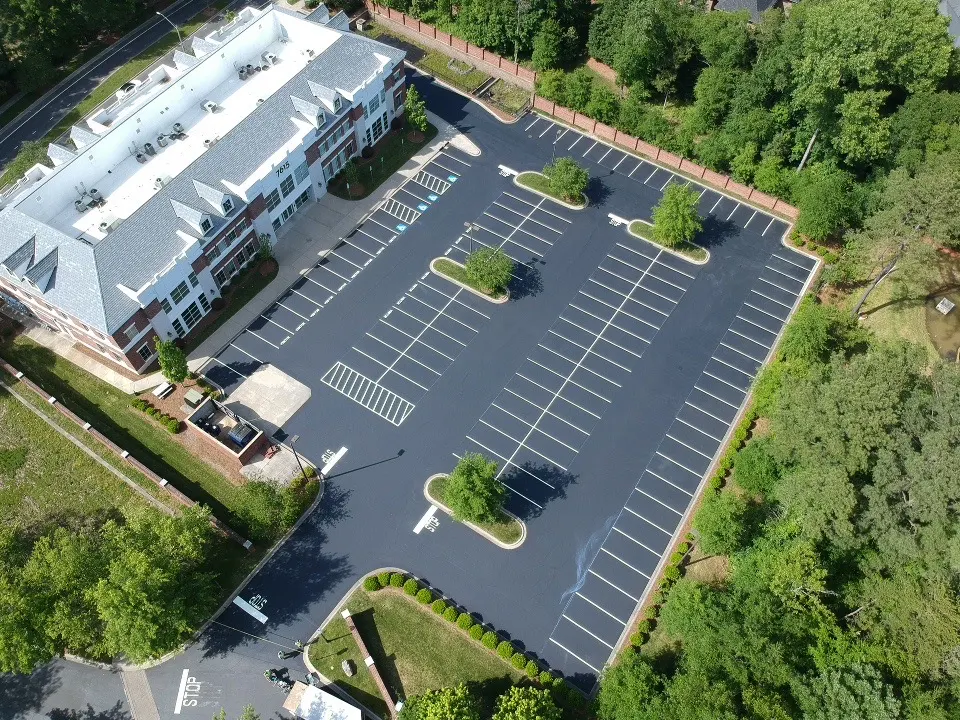
Strategic space configuration also influences traffic flow and safety. Angled spaces (typically 45 degrees) encourage unidirectional traffic and faster parking, while perpendicular spaces maximize capacity but require wider drive aisles. Your parking lot design should align angled or perpendicular spaces with overall traffic patterns to minimize conflicts and congestion.
2. Traffic Flow and Circulation Patterns
Traffic flow management is critical to parking lot design, directly affecting safety, efficiency, and user experience. Poorly designed traffic patterns create bottlenecks, increase accident risk, and frustrate customers. Conversely, well-planned circulation directs vehicles logically through the lot, minimizes turning movements, and clearly designates directional flow.
Effective parking lot design typically includes one-way traffic aisles that clearly separate entry and exit routes. Drive aisle width varies based on space configuration: standard aisle widths range from 18-24 feet for two-way traffic and 12-16 feet for one-way traffic. Your design should minimize crossing paths between pedestrians and vehicles by separating pedestrian walkways from driving lanes.
Consider sight lines during your parking lot design planning. Vehicles entering and exiting spaces must have clear visibility of approaching traffic. Landscaping, bollards, and architectural elements should be positioned thoughtfully to maintain sightlines while providing aesthetic appeal. Additionally, your traffic flow design should accommodate emergency vehicle access, ensuring fire trucks and ambulances can navigate the lot without obstruction.
3. ADA Compliance and Accessibility Standards
Americans with Disabilities Act (ADA) compliance is non-negotiable in parking lot design and represents both a legal requirement and an ethical commitment to inclusive access. The ADA establishes specific requirements for accessible parking spaces, access aisles, accessible routes, and passenger loading zones. Failure to meet ADA standards exposes property owners to liability while excluding individuals with disabilities from your facility.
Your parking lot design must include a calculated percentage of accessible spaces based on total lot capacity. For lots with 1-25 spaces, provide 1 accessible space; 26-50 spaces require 2 spaces; 51-75 spaces require 3 spaces; and the percentage increases for larger lots. Each accessible space requires a minimum 5-foot wide access aisle for standard spaces, or an 8-foot wide aisle for van-accessible spaces. These aisles must connect to accessible routes that lead to building entrances or pedestrian pathways.
Beyond space dimensions, parking lot design should ensure accessible routes feature level surfaces with maximum 1:20 (5%) slope. Curb ramps must be provided where accessible routes meet curbs, with properly angled transitions to prevent tripping hazards. Signage marking accessible spaces must meet specific height and visibility requirements. Consulting with accessibility specialists during parking lot design planning ensures compliance and prevents costly retrofits.
4. Signage and Visual Communication Systems
Clear, professional signage is integral to parking lot design, guiding users safely and efficiently through your facility. Directional signs, space designation markers, and regulatory notices communicate critical information that influences driver behavior and legal compliance. Inadequate or confusing signage creates frustration, increases accidents, and undermines the user experience.
Effective parking lot design incorporates directional signage at lot entrances and key decision points, clearly indicating traffic flow direction, designated routes for customer versus employee parking, and accessible parking locations. Space-level marking systems—using painted symbols, numbers, and directional arrows—reinforce parking lot organization and help drivers locate available spaces quickly. Your signage should be visible, legible, and consistent throughout the facility.
Regulatory signage indicates parking restrictions, no-parking zones, loading areas, and reserved spaces. Standard symbols communicate critical information universally, reducing reliance on text-based signage. Well-designed parking lot signage systems minimize confusion, reduce accidents, and reflect professional property management standards.
Parking Lot Design Standards: A Comparison
Understanding how different design choices impact your parking lot helps you make informed decisions aligned with your facility’s specific needs. The following table compares key parking lot design variables:
| Design Element | Standard Configuration | Compact Option | Optimal Aisle Width |
|---|---|---|---|
| Space Dimensions | 9′ W x 19′ L | 8′ W x 16′ L | N/A |
| Accessible Space | 8′ W x 19′ L + 5′ aisle | 8′ W x 16′ L + 5′ aisle | N/A |
| Van Accessible | 8′ W x 19′ L + 8′ aisle | 8′ W x 16′ L + 8′ aisle | N/A |
| Two-Way Aisle | N/A | N/A | 18-24 feet |
| One-Way Aisle | N/A | N/A | 12-16 feet |
| Drive-Through Lane | N/A | N/A | 20-25 feet |
Implementing Professional Parking Lot Design
Creating and maintaining a professionally designed parking lot requires systematic planning and ongoing maintenance. The design phase establishes the foundation for long-term performance, while professional maintenance protects your investment and sustains the quality standards your users expect.
Design Planning Best Practices
Begin your parking lot design process by conducting a comprehensive site analysis that evaluates topography, drainage, soil conditions, and existing infrastructure. Next, calculate your required parking capacity based on local zoning regulations and anticipated usage patterns. Develop traffic circulation plans that minimize conflicts while accommodating peak-demand periods.
Your parking lot design should integrate professional landscaping strategically. Well-placed vegetation and hardscaping improve aesthetics and sightlines while reducing maintenance liability. Consider permeable paving materials in your design to manage stormwater effectively and demonstrate environmental stewardship—increasingly important for properties seeking LEED certification or green building recognition.
Maintenance and Preservation
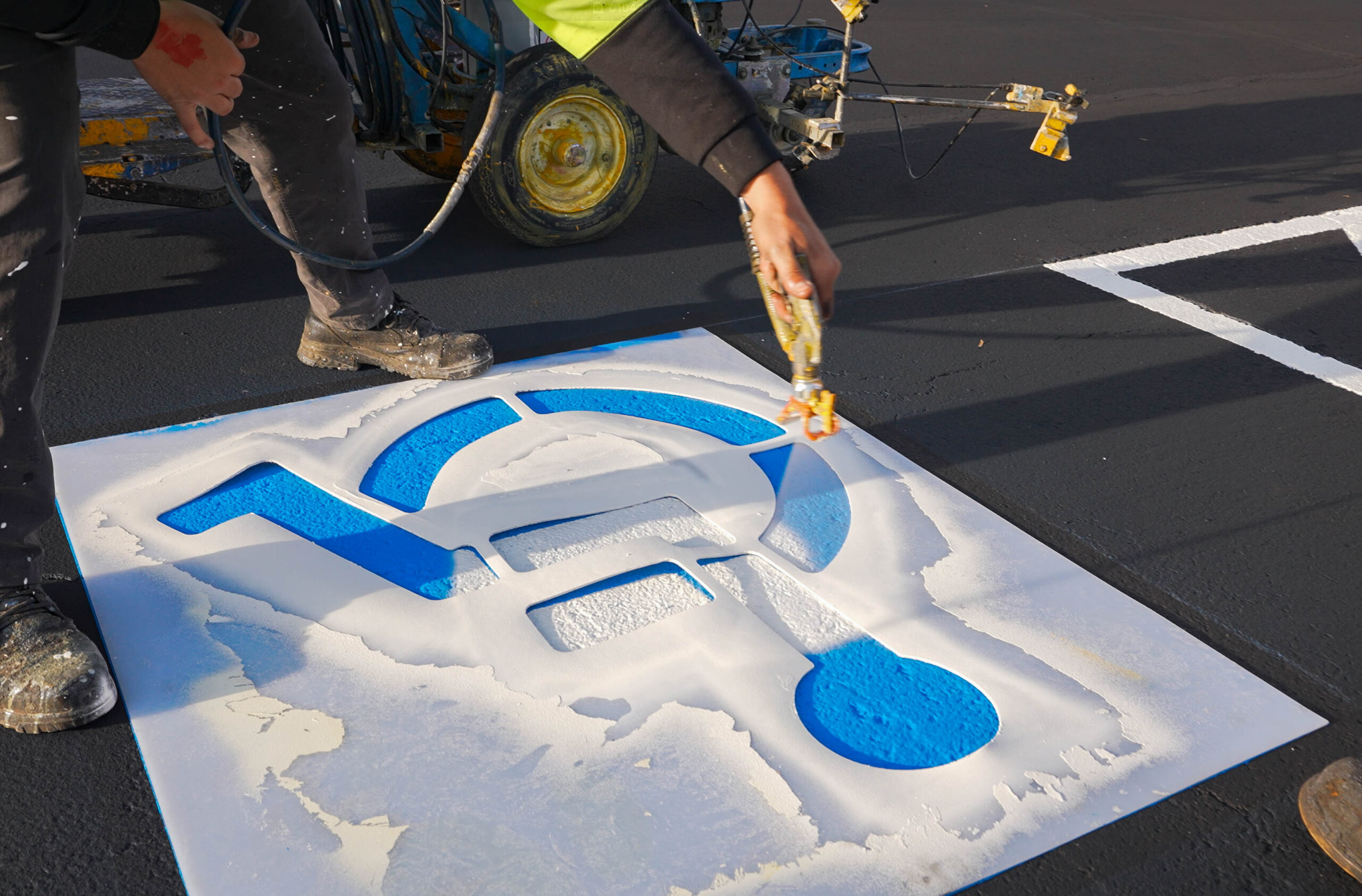
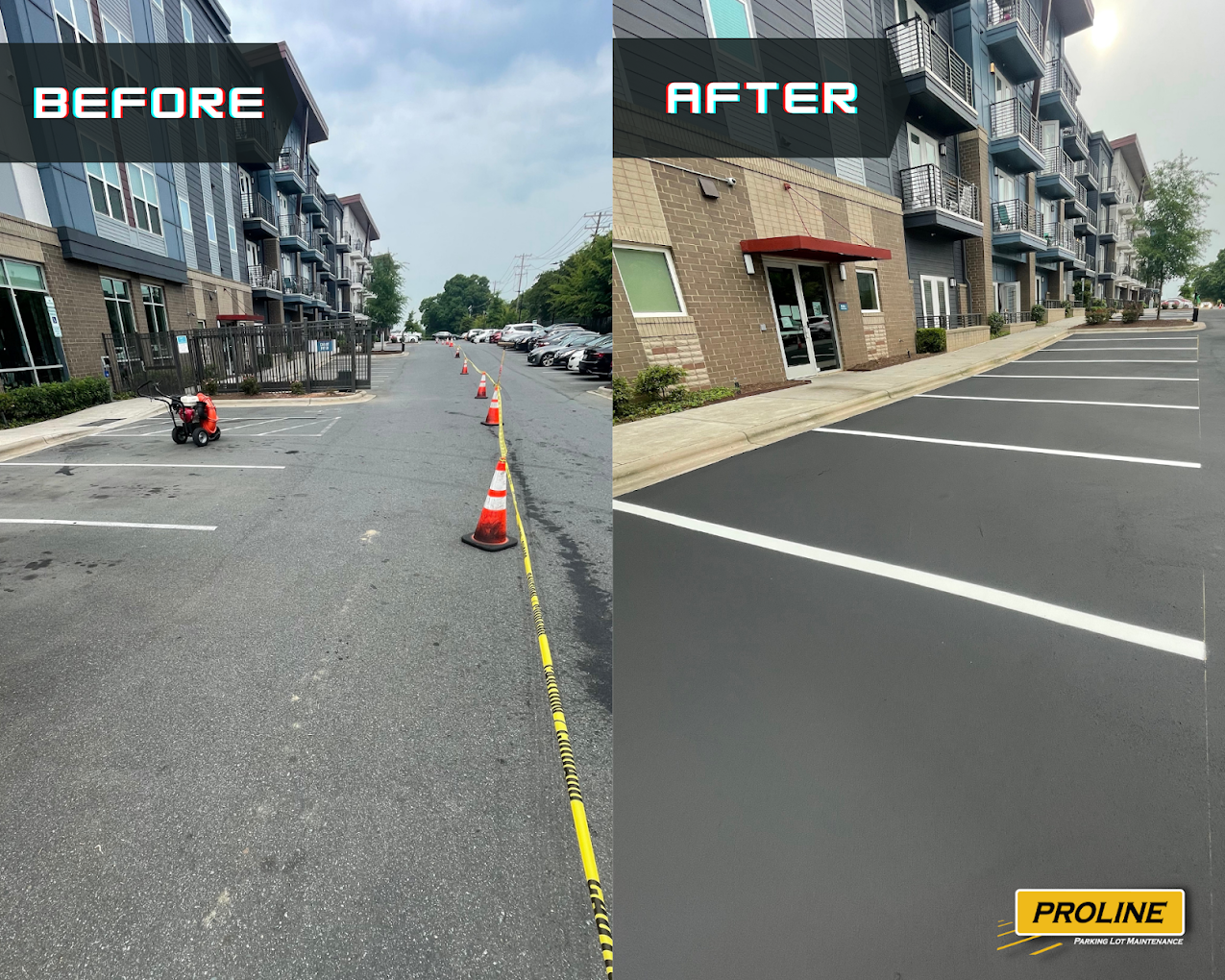
Professional parking lot design is only effective when combined with systematic maintenance. Pavement marking systems—including line striping and stenciling pavement markings—require regular refreshing to maintain visibility and regulatory compliance. Many property managers fail to prioritize marking maintenance until spaces become unreadable, creating safety and liability concerns.
Asphalt and concrete surfaces require proactive care to prevent deterioration. Sealcoating protects asphalt from oxidation and water infiltration, extending pavement life significantly. Prompt pothole repair prevents small damage from developing into expensive structural failures. Regular power washing removes debris and stains, preserving the professional appearance your parking lot design establishes.
Parking Lot Design Frequently Asked Questions
What Is the Standard Parking Space Size for Parking Lot Design?
The standard parking space measures 9 feet wide by 19 feet long, established by the International Parking Institute and adopted across North Carolina and South Carolina. This dimension accommodates most personal vehicles while balancing capacity and usability. Compact spaces measuring 8 feet by 16 feet can comprise 10-15% of total spaces for facilities serving primarily personal vehicles. ADA-accessible spaces require 8 feet width with a 5-foot access aisle, while van-accessible spaces need 8 feet width with an 8-foot aisle.
How Does Parking Lot Design Impact Safety?
Well-executed parking lot design directly reduces accidents and injuries through several mechanisms. Clear traffic flow patterns minimize vehicle-to-vehicle conflicts and unpredictable driver movements. Adequate sightlines prevent collisions between vehicles and pedestrians. Proper spacing between parking spaces prevents doors from striking adjacent vehicles. Accessible routes and marked pedestrian walkways separate foot traffic from vehicular traffic. Professional signage systems communicate parking rules and directional information clearly, reducing driver confusion that often causes accidents.
What Are the ADA Requirements for Parking Lot Design?
The Americans with Disabilities Act mandates specific parking lot design standards ensuring accessibility for individuals with disabilities. Required accessible spaces increase with lot size: 1-25 spaces require 1 accessible space; 26-50 spaces require 2; 51-75 spaces require 3. Each accessible space requires a 5-foot access aisle for standard spaces or 8-foot aisle for van-accessible spaces. Accessible routes must feature level surfaces (maximum 1:20 slope), proper curb ramps, and connections to building entrances. Van-accessible spaces must be designated and signed appropriately. ADA compliance is legally mandatory and reflects inclusive property management practices.
How Should Parking Lot Design Account for Different Vehicle Types?
Comprehensive parking lot design accommodates various vehicle sizes and user needs. Standard spaces (9′ x 19′) suit most personal vehicles effectively. Compact spaces (8′ x 16′) can serve smaller vehicles in facilities with predictable usage. Larger facilities benefit from designating a limited number of oversized spaces (10′ x 20′) for trucks, vans, or vehicles with roof racks. Accessible spaces must meet ADA dimensions regardless of vehicle type. Some modern parking lot designs incorporate dedicated spaces for electric vehicles with charging infrastructure, reflecting evolving transportation trends. Your design should reflect the typical vehicles users bring to your facility.
Why Is Professional Parking Lot Maintenance Necessary After Design Implementation?
Even excellent parking lot design deteriorates without systematic maintenance. Pavement marking systems fade over time, reducing their effectiveness in guiding traffic and communicating parking regulations. Asphalt and concrete surfaces suffer from weather exposure, vehicle traffic, and deterioration. Potholes, cracks, and surface damage develop into expensive structural problems if left unaddressed. Signage degrades and becomes illegible. Professional maintenance through line striping, sealcoating, pothole repair, and regular power washing preserves your parking lot design’s original quality and protects your long-term investment. Most property managers find that proactive maintenance costs far less than reactive repairs or complete resurfacing.
Professional Parking Lot Design Support for Charlotte and the Carolinas
Effective parking lot design requires technical expertise, compliance knowledge, and understanding of local regulatory requirements. Property managers and facility directors across Charlotte, Rock Hill, and throughout North Carolina and South Carolina can leverage professional guidance to optimize their parking facilities. Proline Parking Lot Maintenance provides comprehensive parking lot services supporting property managers at every stage—from design consultation and initial implementation through ongoing maintenance and seasonal care.
Whether you’re redesigning an existing lot, addressing specific traffic or safety concerns, or maintaining professional standards across your facility portfolio, Proline’s experienced team understands parking lot design principles and local regulatory standards. We serve property managers throughout the Charlotte area and broader Carolinas region, providing reliable, professional parking lot maintenance that keeps your facility functioning optimally and looking professionally maintained year-round.
Ready to improve your parking lot design or address specific maintenance concerns? Contact Proline Parking Lot Maintenance today. We’re located in Charlotte, NC, and serve the greater Carolinas region with professional parking lot design assessment and maintenance services.
Proline Parking Lot Maintenance
Charlotte, NC
Phone: 704-530-5366
Website: prolineplm.com