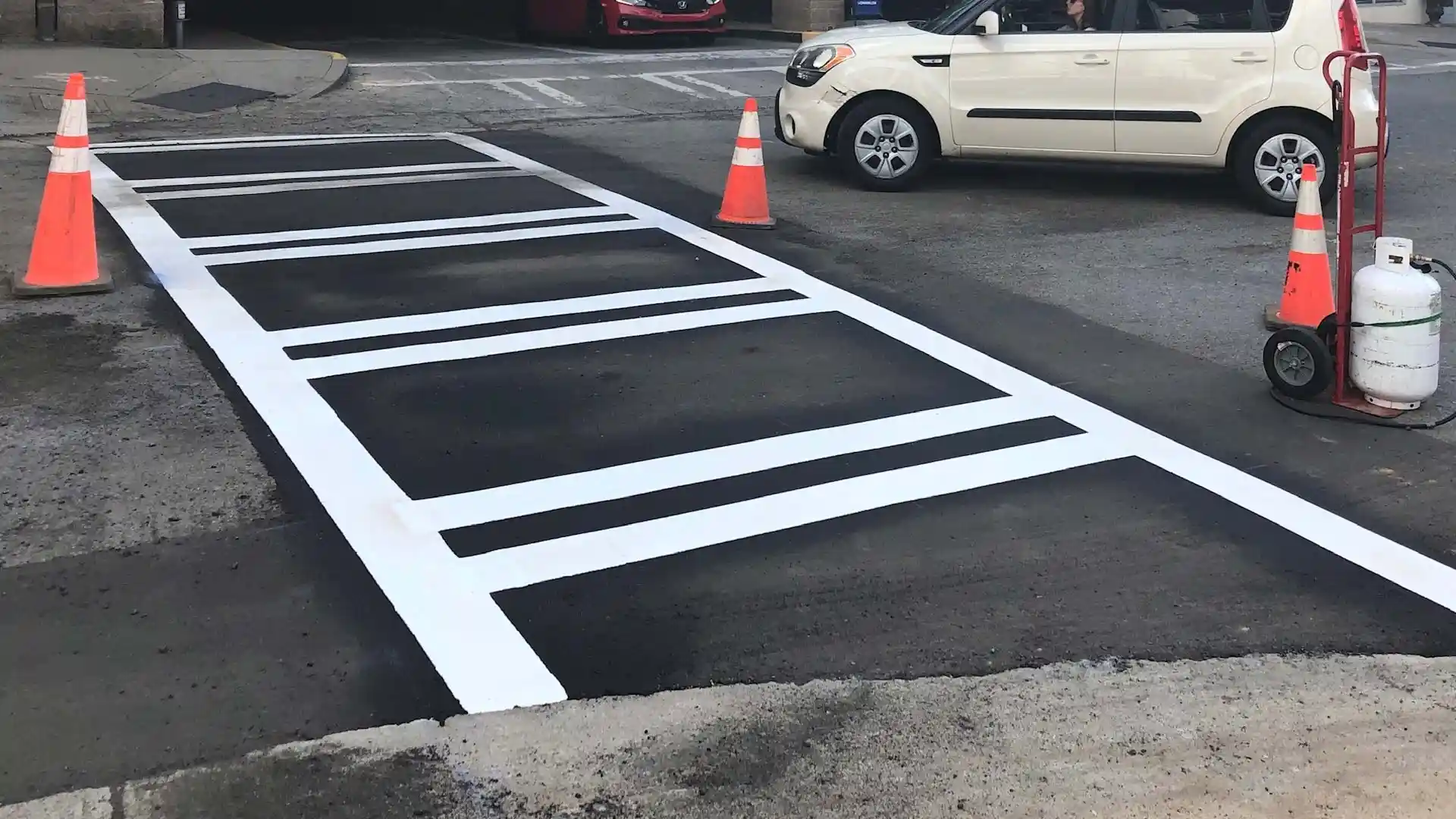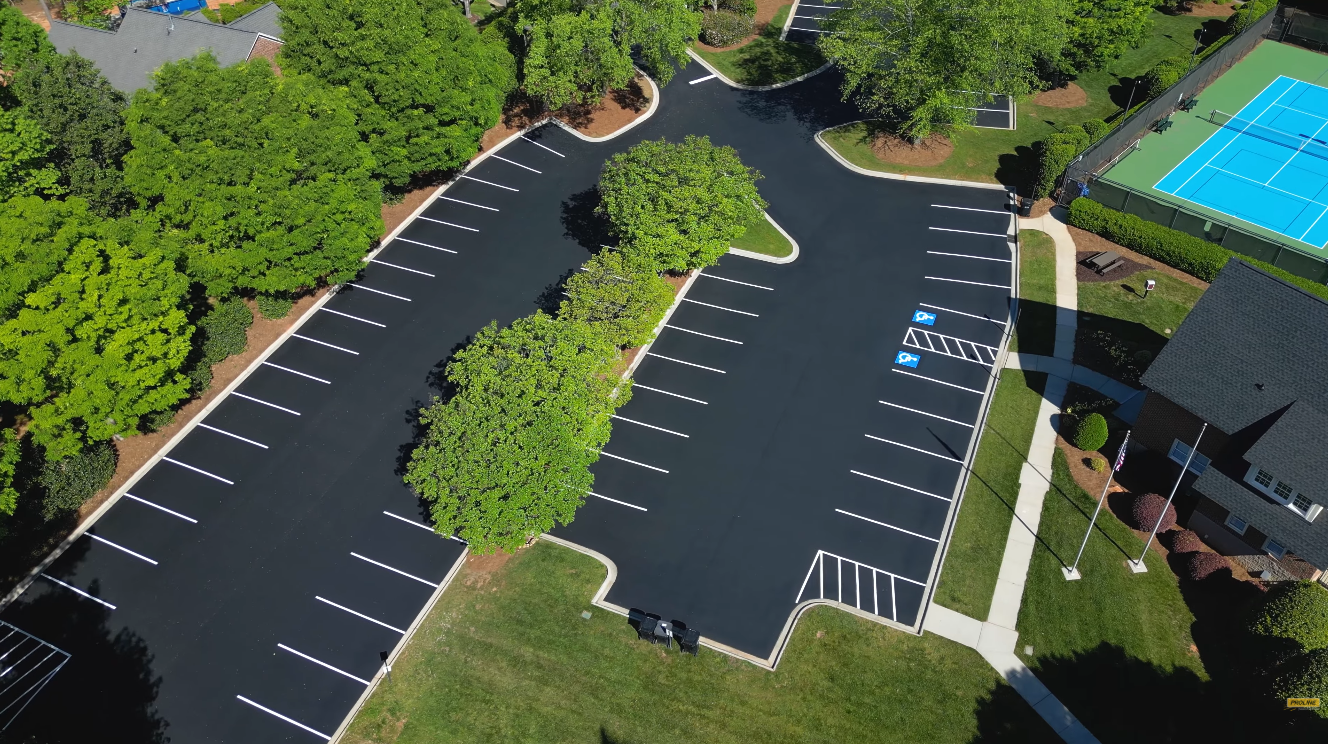
Fresh parking lot line striping improves safety, enhances property appearance, and ensures ADA compliance. Faded lines deteriorate faster than fresh markings because they don’t protect the underlying asphalt as effectively.
Parking Lot Maintenance Budget: Your 2026 Planning Guide for Spring Services
Spring is here, and your parking lot is ready for its seasonal renewal. Whether you manage a commercial property, office complex, or retail center in the Carolinas, planning your parking lot maintenance budget in advance ensures you get the best pricing and professional service. Waiting until summer means higher costs, longer wait times, and potential safety hazards for your tenants and customers.
At Proline Parking Lot Maintenance, we’ve helped hundreds of Charlotte, NC property managers develop smart, cost-effective maintenance schedules for their asphalt surfaces. This guide walks you through everything you need to know about budgeting for spring parking lot maintenance in 2026.
Why Spring Is The Critical Season For Parking Lot Budgeting
Winter weather takes a toll on asphalt surfaces. Freeze-thaw cycles, salt, moisture penetration, and temperature fluctuations create cracks, potholes, and surface deterioration that accelerate throughout spring and summer.
The window between March and May is when most property managers can schedule maintenance work without disrupting seasonal tenant activity or customer traffic. Contractors are still relatively available before the summer rush, and weather conditions are ideal for sealcoating, crack sealing, and line striping applications.
More importantly, addressing minor damage now prevents expensive major repairs later. A small crack sealed this spring could cost $50-200. Left untreated, that same crack becomes a pothole requiring extensive patching and asphalt replacement at $500-2,000 or more.
Understanding Your Parking Lot Maintenance Budget Components
A comprehensive parking lot maintenance budget accounts for several distinct service categories. Understanding each component helps you allocate funds properly and avoid unexpected expenses during your spring project.
1. Crack Sealing and Minor Repairs
Crack sealing is one of the most cost-effective preventive maintenance measures available. Professional crack sealing fills surface cracks before they expand into larger problems, extending your asphalt’s lifespan significantly.
Typical crack sealing costs range from $0.50 to $1.50 per linear foot, depending on crack depth and width. A parking lot with 500 linear feet of cracks might budget $250-750 for this service alone. The investment prevents moisture infiltration that causes structural damage to the asphalt base.
2. Pothole Repair and Patching
Pothole repair addresses damage that’s already beyond the crack stage. Spring is prime time for pothole identification and repair before tenant complaints and liability issues emerge.
Budget $150-400 per pothole for professional repair, which includes proper cleaning, tack coat application, and quality patching material. Most properties have 3-8 potholes requiring spring repair depending on age and climate stress.
3. Sealcoating
Sealcoating is your parking lot’s primary defense against UV rays, water, and chemical damage. Professional sealcoating protects asphalt surfaces, extends their lifespan by 2-3 years, and improves aesthetic appeal to customers and visitors.
Sealcoating typically costs $0.08-0.20 per square foot, depending on surface condition and application method. A 10,000 square foot parking lot would budget $800-2,000 for professional sealcoating. This is best done after crack sealing and pothole repairs are complete.
4. Line Striping and Pavement Markings
Fresh parking lot line striping improves safety, enhances property appearance, and ensures ADA compliance. Faded lines deteriorate faster than fresh markings because they don’t protect the underlying asphalt as effectively.
Budget $0.10-0.30 per linear foot for professional line painting, or $1-2 per parking space for complete striping packages. A 100-space parking lot typically costs $1,500-3,000 for full re-striping with updated safety markings and directional indicators.
Parking Lot Maintenance Budget Breakdown by Service
| Service Type | Unit Cost Range | Typical Project Size | Estimated Budget |
|---|---|---|---|
| Crack Sealing | $0.50-$1.50/lin. ft. | 500 linear feet | $250-$750 |
| Pothole Repair | $150-$400 each | 5 potholes | $750-$2,000 |
| Sealcoating | $0.08-$0.20/sq. ft. | 10,000 sq. ft. lot | $800-$2,000 |
| Line Striping | $0.10-$0.30/lin. ft. | 100 spaces | $1,500-$3,000 |
| Complete Spring Package | Varies | 10,000 sq. ft. property | $3,300-$7,750 |
This table represents typical pricing for commercial parking lots in the Charlotte, NC and surrounding Carolinas region. Actual costs vary based on current surface condition, climate history, and specific service requirements.
How To Get Accurate Quotes For Your Spring Project
Getting multiple quotes is essential for budgeting accuracy and ensuring competitive pricing. Request proposals from at least three qualified contractors, including detailed breakdowns of each service component.
What To Include In Your Quote Request
- Precise parking lot dimensions and total square footage
- Current condition assessment (cracks, potholes, fading)
- Specific services needed (sealing, patching, striping, etc.)
- Timeline and weather considerations
- Detailed material specifications and application methods
- Warranty or performance guarantees
- Insurance and bonding requirements
Detailed quotes help you compare apples-to-apples rather than making decisions based on total price alone. The lowest bid isn’t always the best value if it uses inferior materials or employs inexperienced crews.
Budget Strategies For Spring 2026 Parking Lot Maintenance
Strategy 1: Prioritize Preventive Maintenance
Allocate funds for crack sealing and minor repairs first, then add sealcoating and line striping as budget allows. Preventive measures cost less than reactive repairs and extend your overall maintenance timeline.
Strategy 2: Phase Services Across Multiple Years
If your budget is limited, prioritize the most critical areas this spring and plan additional services for next year. Many contractors can create multi-year maintenance plans that spread costs while maintaining adequate protection for your asphalt investment.
Strategy 3: Bundle Services For Volume Discounts
Contractors often provide better pricing when you bundle multiple services in a single project. Requesting quotes for complete maintenance packages (sealing plus striping, for example) may reduce per-unit costs significantly.
Strategy 4: Schedule During Off-Peak Times
Early spring scheduling (March-April) is typically more affordable than late spring or early summer scheduling. Contractors have more availability and haven’t yet hit seasonal pricing peaks, allowing you to negotiate better rates.
Hidden Costs To Account For In Your Budget
Professional parking lot maintenance involves several costs beyond the primary service charges. Understanding these expenses prevents budget surprises and ensures realistic planning.
Surface Prep and Cleaning
Quality surface preparation includes pressure washing and debris removal. Budget $100-300 for this critical step, which ensures better adhesion and longer-lasting results for sealcoating and repairs.
Traffic Control and Signage
If your parking lot must remain partially operational during maintenance, contractors need to implement traffic control measures, parking restrictions, and safety signage. Budget $200-500 for proper traffic management, especially for large commercial properties.
Drainage Repairs
Inadequate drainage causes most premature pavement failure. While not always necessary, addressing minor drainage issues costs $300-1,000 and dramatically extends your parking lot’s usable life.
ADA Compliance Updates
If your line striping includes updated accessible parking spaces, accessible route markings, or bumper blocks, budget an additional $500-1,500 depending on the number of spaces requiring updates.
Questions To Ask Your Parking Lot Contractor
Before selecting a contractor for your spring project, ensure you understand their experience, materials, and guarantees. Ask these critical questions during your consultation.
How Long Will These Services Last?
Quality sealcoating lasts 2-3 years, crack sealing lasts 3-4 years, and professional striping lasts 18-24 months. A contractor should provide realistic timelines for each service and explain factors that affect durability, such as climate, traffic volume, and maintenance practices.
What Materials Will You Use?
Request specific information about sealcoating products, patching materials, and striping paints. Quality contractors use premium materials that provide better protection and longer-lasting results, even if upfront costs are slightly higher.
Do You Offer Warranty or Guarantees?
Reputable contractors stand behind their work with written warranties. Typical guarantees cover workmanship and material performance, protecting your investment if premature failure occurs.
Can You Provide References From Similar Projects?
Request references from commercial property managers or facility directors with similar-sized parking lots. Speaking directly with previous clients reveals honest information about the contractor’s reliability, professionalism, and quality standards.
What Is Your Insurance and Licensing Status?
Verify that contractors carry comprehensive general liability insurance and workers’ compensation coverage. Proper licensing and bonding protect you from liability issues and ensure the contractor meets professional standards.
Planning Your Multi-Year Parking Lot Maintenance Investment
A single season of maintenance sets the foundation for a sustainable, cost-effective multi-year strategy. Consider developing a long-term maintenance calendar that prioritizes services based on your parking lot’s condition, budget, and operational needs.
Year one might focus on crack sealing, pothole repair, and basic sealcoating. Year two could add comprehensive line striping and drainage improvements. Year three might involve seal reapplication and surface refreshing. This phased approach spreads costs while maintaining consistent protection for your asphalt investment.
Regular maintenance extends your parking lot’s lifespan from 15-20 years to 25-30 years. Over a parking lot’s lifetime, the cost savings from preventive maintenance dwarf the initial investment in spring 2026 services.
Professional Parking Lot Maintenance Makes Budget Sense
Property managers who invest in professional spring parking lot maintenance protect their properties, enhance tenant and customer experiences, and reduce long-term capital expenses. The window for scheduling 2026 spring services is now—early spring offers the best pricing, contractor availability, and weather conditions.
Whether you need comprehensive service or targeted repairs, understanding your parking lot maintenance budget helps you make smart investment decisions. Reach out to experienced contractors now to receive detailed quotes and create your spring maintenance plan before April ends.
Contact Proline For Your Spring 2026 Parking Lot Maintenance Budget
At Proline Parking Lot Maintenance, we help Charlotte, NC property managers develop smart, cost-effective parking lot budgets that protect their asphalt investments. Our team specializes in sealcoating, crack sealing, pothole repair, and professional line striping throughout North Carolina and South Carolina.
Don’t wait until summer when costs rise and availability drops. Request your detailed spring 2026 maintenance quote today and let our experts help you maximize your parking lot maintenance budget.
Proline Parking Lot Maintenance
Charlotte, NC
Phone: 704-530-5366
Website: prolineplm.com