
Parking Lot Maintenance Plans: The Complete ROI Guide for Property Managers
A parking lot maintenance plan is a proactive strategy that combines regular inspections, preventive repairs, and scheduled treatments to preserve asphalt pavement and protect your property investment. Rather than waiting for expensive emergency repairs, strategic maintenance keeps your lot in top condition while dramatically reducing long-term costs and liability exposure.
Property managers and facility directors across North Carolina and South Carolina face a critical decision: invest in preventive parking lot maintenance or absorb the escalating costs of reactive repairs. Most choose reactive maintenance simply because they don’t understand the financial impact of proactive planning. This guide reveals exactly how a structured parking lot maintenance plan delivers measurable ROI through extended pavement life, reduced emergency repairs, enhanced property value, and decreased liability risk.
Why Property Managers Are Switching to Parking Lot Maintenance Plans
The shift toward parking lot maintenance plans reflects a fundamental change in how successful businesses approach facility management. Property managers recognize that parking lots are far more than convenient spaces—they’re critical assets that directly influence customer perception, tenant satisfaction, and overall property value.
Without structured maintenance, parking lots deteriorate predictably. Small cracks expand into potholes. Surface wear creates trip hazards and liability exposures. Property values decline as curb appeal suffers. Insurance claims increase. The financial impact accelerates exponentially once pavement damage reaches critical stages.
A parking lot maintenance plan reverses this trajectory by addressing issues before they become expensive catastrophes. This proactive approach transforms a reactive cost center into a strategic asset protection initiative.
How Parking Lot Maintenance Plans Deliver Financial Returns
1. Extends Pavement Life by Years (Protecting Your Largest Investment)
Standard asphalt pavement typically lasts 15-20 years without intervention. However, neglected lots often fail within 7-10 years due to water intrusion, oxidation, and cumulative damage. A structured parking lot maintenance plan extends pavement lifespan to 20-25+ years—directly multiplying your return on the initial pavement investment.
Consider this timeline: A 20,000-square-foot lot costs approximately $80,000-$100,000 to repave completely. With annual maintenance spending of $2,000-$4,000, you protect that $100,000 asset and delay replacement by 5-10 additional years. Over a 25-year planning horizon, this difference translates to $50,000+ in preserved value.
Preventive treatments like professional sealcoating create a protective barrier against UV rays, water penetration, and chemical damage. Regular crack sealing prevents water from reaching the base layers where it causes catastrophic failures. These interventions directly extend pavement lifespan and protect your asset value.
2. Reduces Emergency Repair Costs by 70-80% or More
Emergency parking lot repairs represent the most expensive category of maintenance spending. A single large pothole repair costs $150-$400. A section of deep patching runs $3-$8 per square foot. Major drainage problems demand $5,000+ in corrective work. These emergency interventions drain budgets and disrupt operations.
Planned maintenance distributes costs across the year and prioritizes cost-effective preventive treatments. Professional crack sealing costs just $0.25-$0.75 per linear foot and prevents $2,000+ in pothole repairs down the road. This economic reality explains why forward-thinking property managers view maintenance spending as investment rather than expense.
Timely pothole repair catches damage at early stages when solutions are affordable. Structured sealcoating prevents moisture intrusion before it weakens subgrades. Planned maintenance means smaller, scheduled expenses instead of crushing emergency bills.
3. Improves Property Value and Tenant Satisfaction
Commercial real estate appraisers evaluate parking lot condition as a core component of property assessment. Well-maintained lots support premium rental rates, faster tenant acquisition, and stronger property valuations. Neglected lots signal poor management and trigger tenant dissatisfaction.
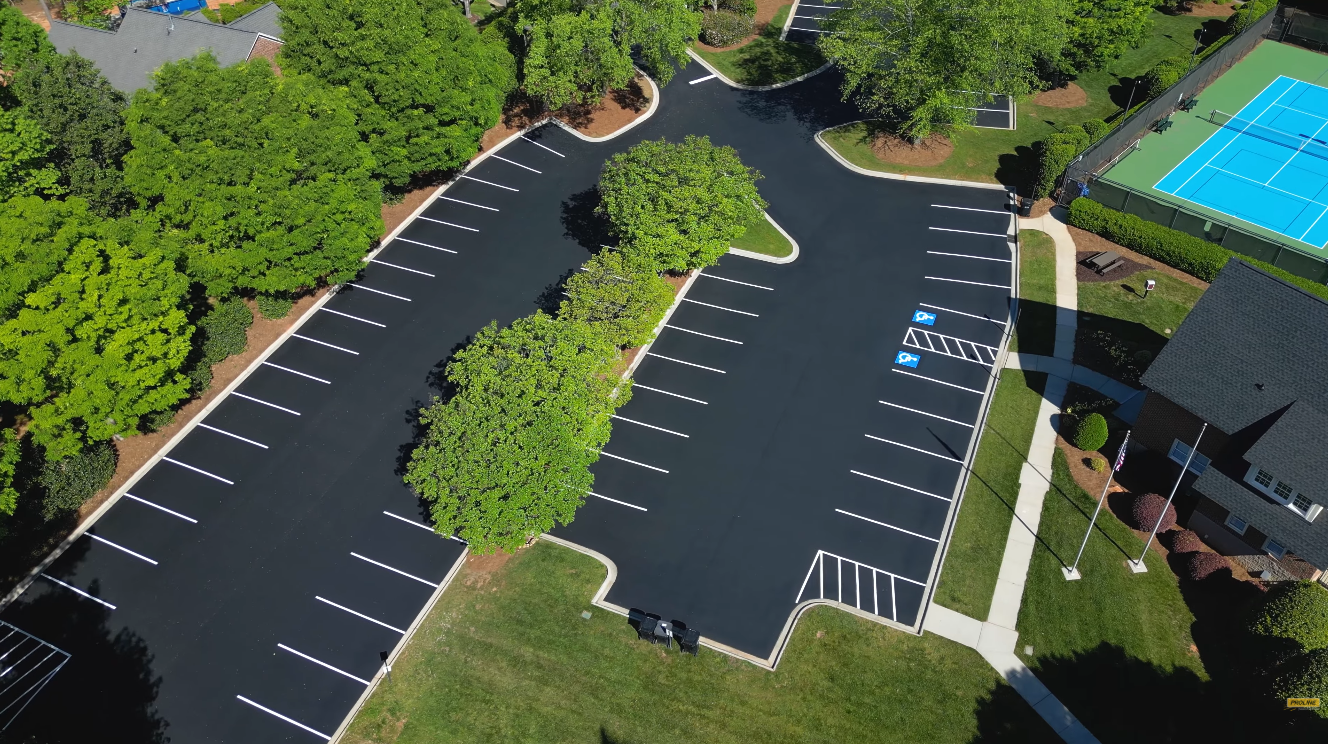
A professional parking lot maintenance plan demonstrates commitment to property excellence. Fresh line striping improves wayfinding and safety perception. Clean, crack-free pavement conveys competent management. These visual cues directly influence tenant retention and premium pricing power.
Studies show that property maintenance quality influences tenant renewal rates and lease rates. Properties with visibly maintained parking lots command 5-10% premium lease rates compared to poorly maintained alternatives. Over a 100,000-square-foot commercial property, this difference generates $50,000+ in additional annual revenue.
4. Eliminates Costly Liability Exposures
Poorly maintained parking lots create direct liability risks. Potholes cause vehicle damage claims. Cracked, uneven surfaces cause trip-and-fall injuries. Water pooling creates safety hazards. Insurance companies recognize these patterns and increase premiums or restrict coverage for properties with documented maintenance neglect.
A structured parking lot maintenance plan creates documented evidence of prudent property stewardship. Regular inspections identify hazards before they cause injury. Professional repairs meet industry standards. This documentation reduces insurance claims, supports favorable premium negotiations, and protects against negligence allegations.
Property managers at retail centers, apartment complexes, and commercial parks consistently report that proactive maintenance reduces slip-and-fall claims and vehicle damage claims by 40-60%. Lower claim frequency directly translates to lower insurance costs and reduced liability exposure.
Understanding the True Cost of Neglect: Maintenance vs. No-Plan Comparison
The financial gap between planned maintenance and reactive repair becomes obvious when you compare realistic 10-year cost scenarios. The following table illustrates typical costs for a 20,000-square-foot parking lot:
| Expense Category | With Maintenance Plan | Without Maintenance Plan | Cumulative Difference |
|---|---|---|---|
| Annual Sealcoating & Preventive Care | $3,000-$4,000/year | $0/year | $30,000-$40,000 |
| Regular Crack Sealing & Small Repairs | $1,500-$2,000/year | $500-$1,000/year (emergency only) | $5,000-$10,000 |
| Emergency Pothole & Major Repairs | $1,000-$2,000/year | $8,000-$12,000/year | -$70,000 |
| Pavement Replacement at Year 10 | Not Needed (extends to Year 20) | $80,000-$100,000 | -$80,000-$100,000 |
| Insurance Premium Adjustments | -5% to -10% reduction | +10% to +15% increase | $2,000-$5,000/year savings |
| 10-Year Total Cost | $65,000-$85,000 | $145,000-$200,000+ | $80,000-$115,000+ savings |
This comparison reveals the devastating financial impact of reactive maintenance. Over a 10-year planning horizon, properties without maintenance plans face emergency expenses that dwarf annual planned maintenance costs. Properties with structured plans delay major replacement, maintain insurance advantages, and preserve asset value—generating $80,000-$115,000+ in net savings.
Essential Components of a Comprehensive Parking Lot Maintenance Plan
Effective parking lot maintenance plans combine regular assessments, seasonal treatments, and strategic repairs. Understanding these components helps property managers evaluate whether they have adequate coverage.
Professional Inspections and Condition Assessments
Qualified inspectors evaluate pavement condition, drainage systems, structural integrity, and safety hazards. Annual assessments identify emerging issues before they escalate into expensive problems. Documentation creates a maintenance history that supports insurance claims and property valuations.
Seasonal Preventive Treatments
Sealcoating in spring and fall protects pavement from UV damage and moisture intrusion. Crack sealing prevents water penetration that causes base layer failure. These preventive investments cost a fraction of replacement therapy.
Scheduled Repairs and Patching
Rather than emergency pothole repairs, planned maintenance addresses issues during optimal weather windows and in coordinated batches. This scheduling reduces traffic disruption and per-unit repair costs.
Drainage System Maintenance
Proper drainage prevents water pooling and prevents expensive base layer damage. Cleaning storm drains and maintaining grading ensures water moves away from pavement surfaces.
Line Striping and Markings
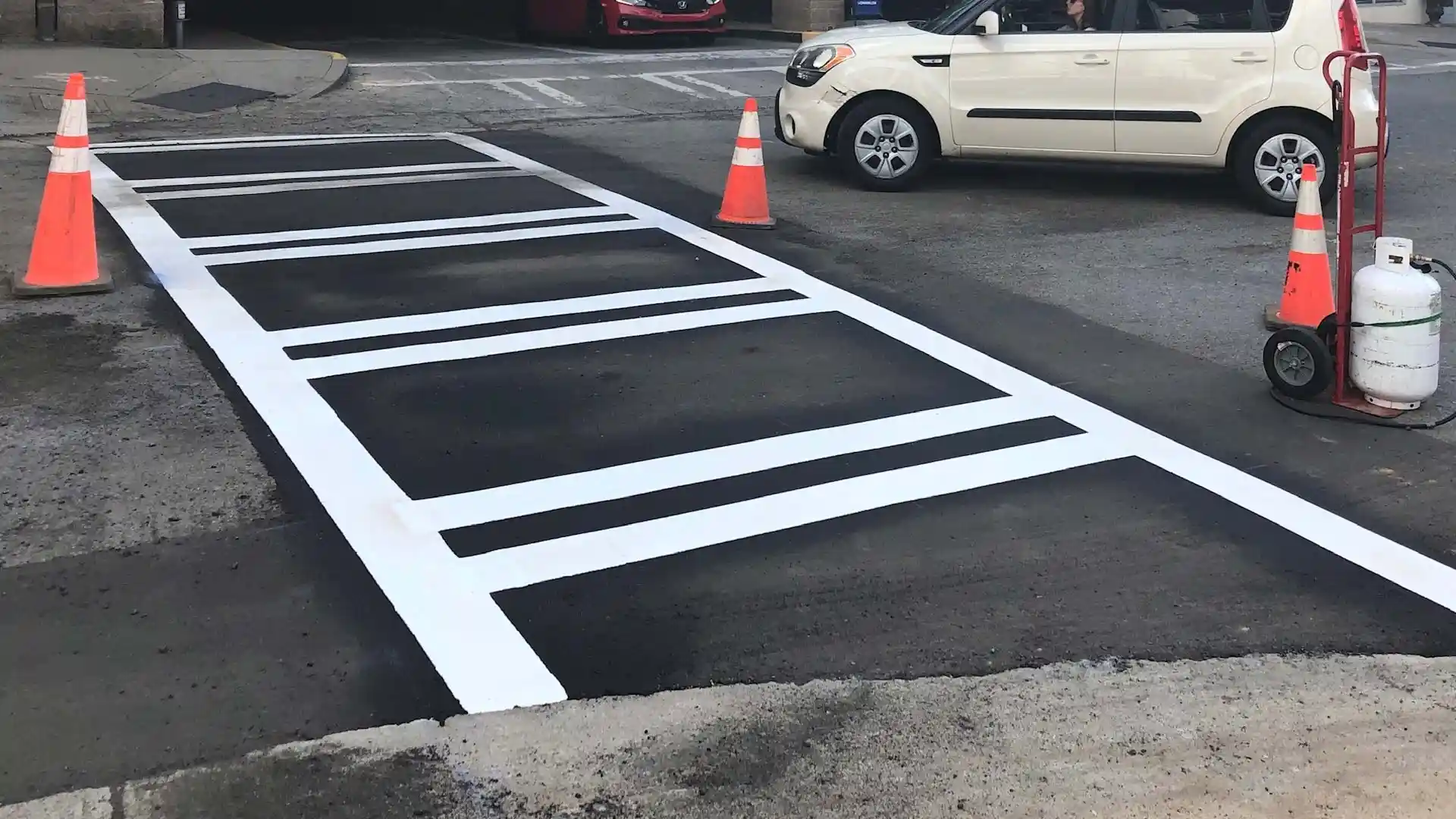
Fresh parking lot line striping maintains safety, improves wayfinding, and demonstrates property care. Faded markings reduce safety perception and suggest inadequate maintenance.
Frequently Asked Questions About Parking Lot Maintenance Plans
How Much Does a Typical Parking Lot Maintenance Plan Cost?
Annual maintenance costs range from $2,000-$6,000 for a 20,000-square-foot lot, depending on pavement condition and treatment intensity. This works out to $0.10-$0.30 per square foot annually—a fraction of the cost to replace that pavement ($4-$5 per square foot). Property managers should view this investment through a 15-25 year lifecycle rather than annual budget cycles.
Can I Start a Maintenance Plan on an Older Lot?
Absolutely. Even lots that have been neglected for years benefit significantly from planned maintenance. An initial assessment identifies the most critical issues, and a phased approach spreads costs across multiple years. Even starting maintenance mid-way through a pavement’s life delays replacement and reduces emergency expenses dramatically.
What’s the Difference Between Sealcoating and Crack Sealing?
Sealcoating applies a protective coating across the entire pavement surface, blocking UV rays and water penetration. Crack sealing targets specific cracks with specialized materials to prevent water intrusion. Both are essential—sealcoating provides broad protection while crack sealing addresses existing damage before it spreads.
How Often Should Parking Lots Be Sealed?
Professional sealcoating typically occurs every 2-3 years, depending on climate, traffic volume, and UV exposure. Carolina’s hot summers accelerate UV degradation, making biennial sealcoating particularly important for properties in North Carolina and South Carolina. Regular sealcoating is one of the most cost-effective pavement preservation investments available.
Should Property Managers Handle Maintenance In-House or Hire Professionals?
Professional parking lot maintenance contractors bring specialized equipment, industry expertise, and quality assurance that in-house teams typically cannot replicate. Professional work meets industry standards, carries performance warranties, and documentation supports insurance and valuation processes. For property managers focused on core operations, outsourcing maintenance to specialists like Proline delivers better results at competitive costs.
The Bottom Line: Parking Lot Maintenance Plans Drive Real ROI
The evidence is clear: structured parking lot maintenance plans deliver measurable financial returns through extended pavement life, eliminated emergency repairs, enhanced property values, and reduced liability exposure. The only question isn’t whether to invest in maintenance—it’s how quickly property managers can transition from reactive repair spending to strategic asset protection.
Properties across North Carolina and South Carolina that implemented parking lot maintenance plans consistently report higher tenant satisfaction, lower insurance costs, and significantly extended pavement lifespan. These aren’t theoretical benefits—they’re documented outcomes that justify every dollar invested in preventive maintenance.
Forward-thinking property managers view parking lot maintenance plans as core business strategy rather than discretionary expense. They understand that every dollar invested in prevention eliminates three to five dollars in future emergency repairs. They recognize that well-maintained properties command premium lease rates and attract quality tenants. They appreciate that documented maintenance demonstrates prudent stewardship and reduces liability risk.
Ready to Implement a Parking Lot Maintenance Plan?
Proline Parking Lot Maintenance brings 15+ years of experience protecting parking lot assets across North Carolina and South Carolina. Our comprehensive maintenance plans combine professional inspections, preventive treatments, and strategic repairs to maximize pavement lifespan and minimize long-term costs.
We specialize in sealcoating, crack sealing, pothole repair, line striping, and complete pavement management. Whether you’re beginning maintenance on a neglected lot or optimizing an existing program, our team develops customized plans that fit your property, your budget, and your timeline.
Contact Proline Parking Lot Maintenance today for your free parking lot assessment and maintenance plan recommendation.
Proline Parking Lot Maintenance
Charlotte, NC
Phone: 704-530-5366
Website: prolineplm.com